
What the Supreme Court's TPS Ruling Means for 350,000 Haitian and Syrian Families Now
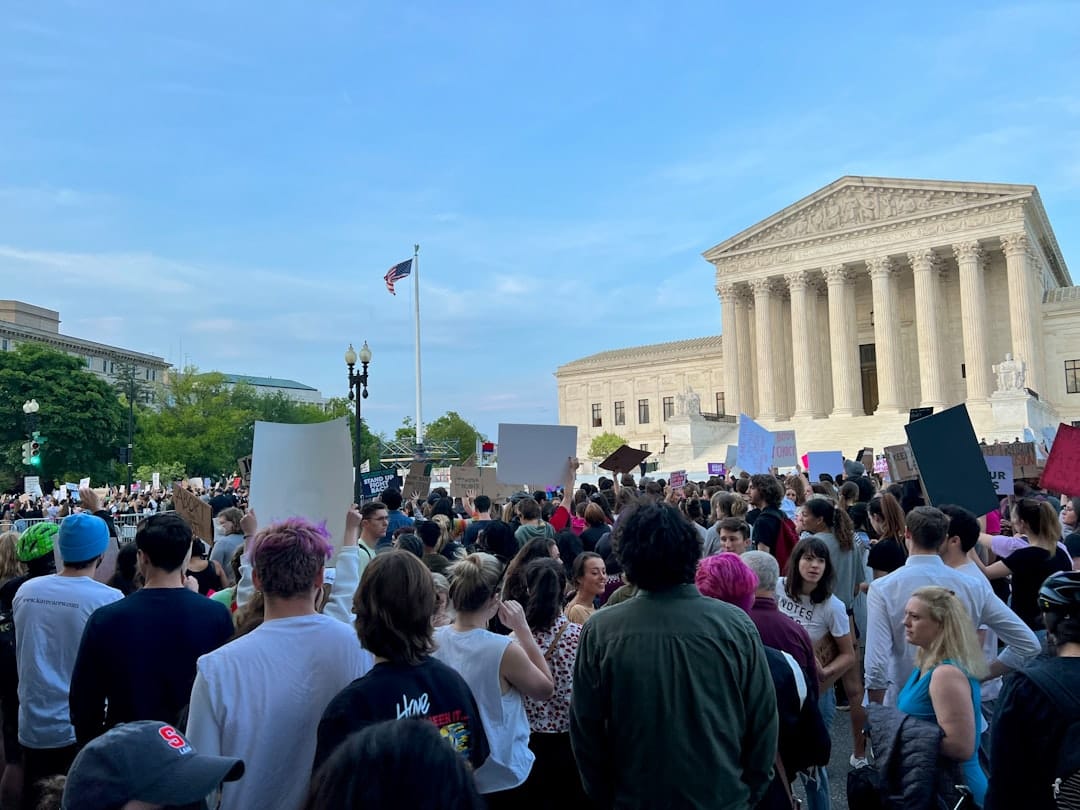
Washington D.C., MMN Correspondent: On June 25, 2026, the Supreme Court issued a 6-3 decision that allows the federal government to end Temporary Protected Status for approximately 350,000 Haitian nationals and 6,100 Syrians. This ruling clears the way for what could become one of the largest shifts in U.S. immigration policy in decades. But what does this actually mean for the people who have built lives here under these protections?
Temporary Protected Status was created under the Immigration Act of 1990. It offers a legal pathway for people from countries facing armed conflict, environmental disasters, or other extraordinary conditions. Haiti received TPS after the 2010 earthquake that killed over 230,000 people and displaced millions. Syria received it in 2012 as the country descended into a civil war that displaced over 12 million people. These are not abstract numbers. These are people who have been living, working, and contributing to communities across the United States.
Under TPS, individuals can legally reside and work in the U.S. for up to 18 months at a time, with extensions based on conditions in their home countries. Many have used this time to start businesses, send children to school, and become integral parts of local economies. Now, with this ruling, those protections can be removed. The question on many minds is: what happens next?
The Supreme Court's decision overturns lower court rulings that had blocked the administration's termination plans. Justice Samuel Alito wrote the majority opinion, stating that the law governing TPS explicitly bars judicial review of executive decisions to end designations. He also dismissed claims of racial bias, saying the plaintiffs did not prove that race motivated the administration's actions.
But the dissenting justices saw things differently. Justice Elena Kagan pointed to public statements made during Donald Trump's 2024 presidential campaign, including false claims that Haitian immigrants were abducting and consuming pets. She wrote that these statements “fairly shout, in their racial undertones and overtones alike, that race entered into the President's resolve to remove Haitians from this country.” Justices Sonia Sotomayor and Stephen Breyer joined her dissent, calling the ruling both legally flawed and morally indefensible.
This decision does not only affect Haiti and Syria. TPS is currently active for citizens of nine countries, including Sudan, Venezuela, Yemen, and Nicaragua. Advocacy groups warn that this ruling sets a precedent that could be used to dismantle protections for others. If the administration follows through, it could lead to mass deportations, family separations, and significant disruption in communities nationwide.
Jill Habig, CEO of the Public Rights Project, which filed amicus briefs on behalf of 47 cities and local governments, described the decision as a community-wide emergency. “Families will be separated, local economies will take a hit, and people will be forced back to countries in the grip of violence, instability, and humanitarian collapse,” she said. Small businesses that rely on TPS workers, schools serving immigrant children, and healthcare providers treating long-term residents all face potential disruption.
On the same day, the Supreme Court upheld another immigration policy: the requirement that asylum seekers must physically set foot on U.S. soil before they can apply for protection. This revives a 2016 Obama-era policy known as “metering,” which limits the number of asylum claims processed daily at border crossings due to facility capacity. Under this framework, migrants intercepted on the Mexican side of the border while waiting in line at official ports of entry are now denied the right to request asylum, regardless of their circumstances.
Justice Alito described the case as “straightforward,” arguing that arriving in a country requires physical presence within its borders. Critics argue this ignores the reality faced by desperate asylum seekers who are often turned away without being allowed to enter or present their cases. Justice Sotomayor predicted dire consequences: “More people will die. More people will attempt to cross the border illegally, and some will make it while others will not.” Data from previous years supports this concern. According to the U.S. Border Patrol, nearly 800 people died attempting to cross the border in 2023 alone.
The Trump administration welcomed both rulings as victories for the rule of law and national sovereignty. James Percival, general counsel for the Department of Homeland Security, said, “The T in TPS stands for TEMPORARY, yet many of these designations became de facto amnesty.” He framed the decision as restoring balance to immigration policy and preventing what he called an unchecked expansion of humanitarian status.
Economists estimate that TPS recipients contribute over $30 billion annually to the U.S. economy through taxes, consumer spending, and labor. Removing them could lead to significant economic losses, particularly in sectors like agriculture, healthcare, and hospitality, where they are heavily represented. This raises an interesting question: how will communities adapt if these workers are no longer present?
As the clock ticks toward implementation, thousands of affected individuals are scrambling to prepare. Some are seeking legal alternatives, others are trying to secure permanent residency or citizenship. Legal aid organizations report surges in demand for consultations, but resources remain limited. The coming months will reveal how this decision reshapes lives, communities, and the broader immigration landscape in the United States.
Related in Global Trend

Global Trend
Meta’s AI Image Tool Vanishes Days After Launch: What Happened to Your Instagram Photos?
Just days after its flashy debut, Meta’s new AI image generation feature has been pulled from the platform. The tool, part of the Muse Image rollout, let users of Meta’s AI chatbot create artificial images by pulling content from public Instagram accounts. Think about that for a…
Read More...
Global Trend
Middle East Travelers Are Flocking to Thailand for Wellness: Here’s What’s Driving the 2026 Boom
What if the next luxury vacation didn’t just pamper you but actually changed how you feel long after you return home? That’s the question Thailand is asking Middle East travelers right now. And the answer is reshaping how people from the Gulf plan their getaways. The Tourism Aut…
Read More...
Global Trend
How SK Hynix Raised $26.5 Billion in Its US Debut: What It Means for AI Chip Investors
Imagine walking into a room where the world’s biggest money managers are all fighting for a piece of the same company. That’s exactly what happened when SK Hynix, the South Korean memory chip giant, stepped onto the Nasdaq stage in July 2026. The result? A staggering $26.5 billi…
Read More...
Global Trend
What Happens When Bieber, Madonna, Shakira, and BTS Share the World Cup Stage?
Imagine this: It’s July 19, 2026, and the world is watching. Not just for the final whistle of the FIFA World Cup, but for something that’s never happened before. For the first time in the tournament’s history, a Super Bowl style halftime show is about to unfold at MetLife Stadi…
Read More...
Global Trend
80 Targets Hit: What the US Strikes on Iran Mean for Global Oil Routes
The world’s most critical oil passageway just became the epicenter of a major military confrontation. The United States has launched sweeping airstrikes across Iran’s southern coast, hitting more than 80 locations after three commercial tankers came under attack in the Strait of…
Read More...
Global Trend
Travel Before the Crowds: Why the Two Weeks Before School Holidays Are Your Best Bet for a Peaceful Summer Escape
Picture this: warm sand beneath your feet, a gentle sea breeze, and the sound of waves instead of the chatter of crowds. That’s the reality for travelers who discover a simple truth about summer vacations. The best time to go isn’t when everyone else does. It’s the two weeks rig…
Read More...
Global Trend
Faster Patents in Europe and China: What the New EPO-CNIPA PPH Pilot Means for Your Innovation Timeline
What if you could cut months off the time it takes to secure a patent in both Europe and China? Starting August 1, 2026, that possibility becomes reality. The European Patent Office (EPO) and China National Intellectual Property Administration (CNIPA) are launching a new bilater…
Read More...
Global Trend
What Happened in a Utah Courtroom When Charlie Kirk’s Family Came Face to Face With His Accused Killer?
On a quiet Tuesday morning in May 2026, a Utah courtroom became the center of a story that has haunted America for months. The family of Charlie Kirk, the 31-year-old conservative activist and founder of Turning Point USA, sat just feet away from the man accused of ending his li…
Read More...
Global Trend
4 New Luxury Travel Mindsets Reshaping Asia Pacific: How Gen Z Is Redefining High End Tourism
What does luxury mean to a generation that grew up with Instagram, climate anxiety, and a craving for meaning? A sweeping study of 2,800 affluent travelers across eight Asia Pacific markets—China, Japan, South Korea, Australia, India, Singapore, Thailand, and Indonesia—has uncov…
Read More...
Global Trend
How Europe and China Are Cutting Patent Wait Times by 40% Starting August 2026
Imagine filing a single patent application and watching it sail through two of the world’s largest intellectual property offices with minimal friction. That vision becomes reality on August 1, 2026, when the European Patent Office (EPO) and the China National Intellectual Proper…
Read More...