
Where Do $40 Billion in Caribbean Tourism Dollars Really Go? CHTA and FIU Launch Landmark Study
We compile, generate and translate using Artificial Intelligence from the below given source. Macro Micro News is responsible for its editorial publication.
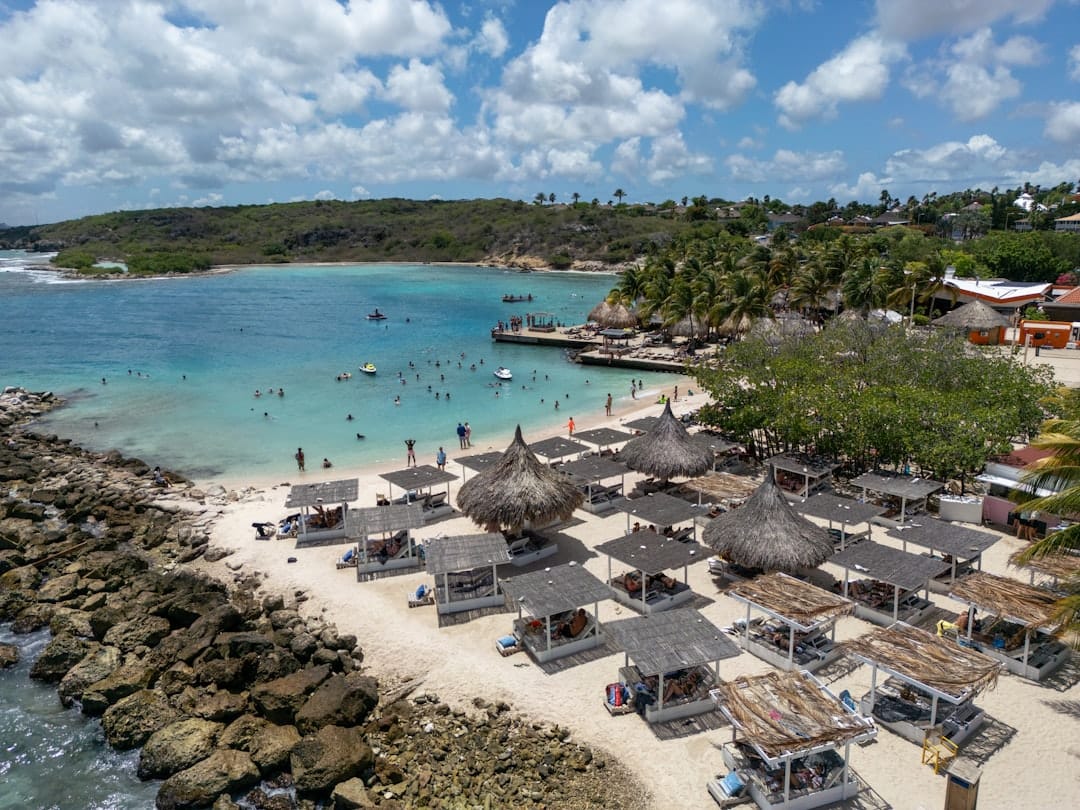
Miami, Florida, MMN Correspondent: Tourism has long been the beating heart of the Caribbean economy. A pressing question continues to hover over the region: how much of the money visitors spend actually stays in Caribbean communities? A new partnership between the Caribbean Hotel and Tourism Association (CHTA) and Florida International University (FIU) is designed to answer that question with data, not guesswork.
Tourism is the leading economic sector in most Caribbean destinations. It generates foreign exchange earnings, tax revenue, employment, and investment. In 2025, the Caribbean welcomed an estimated 35 million stayover visitors, a level beyond pre-pandemic arrivals and clear proof of the region's global appeal. Visitor spending is estimated to have exceeded US$40 billion. That scale creates enormous demand for food, beverages, manufactured goods, entertainment, and countless other tourism related inputs. The real question is how much of that demand can be met by local and regional suppliers.
FIU's Chaplin School of Hospitality & Tourism Management, ranked the number one hospitality program in Florida, is leading the study. Dean Michael Cheng described the effort as a landmark partnership. “By providing robust data and actionable insights, this study will help identify opportunities to strengthen regional supply chains, foster entrepreneurship, and maximize tourism's contribution to sustainable economic development across the Caribbean,” Cheng said. The research team will combine desk analysis of tourism, trade, and investment data with field research. Surveys will reach hotels, restaurants, cruise operators, attractions, and tour operators. Interviews will include government ministries, suppliers, and investor groups. A simulation modelling approach will turn sample data into national and regional estimates of tourism demand and spending patterns.
The study will measure demand in several critical areas: agricultural products, manufactured goods, entertainment services, and other inputs needed by the hospitality and tourism sector. It will map supply chains between tourism businesses and domestic producers, estimate economic leakages by product and service category, identify investment opportunities, and assess the capacity of regional suppliers to meet industry demand. This is an applied initiative. The goal is to inform policy, trade facilitation, and investment decisions that deepen economic linkages and create more opportunities for Caribbean producers and entrepreneurs.
The initiative builds on earlier work in Jamaica, where a Tourism Demand Study was conducted in 2014 and 2015. That project revealed how hotels and other tourism businesses spend and where local suppliers could step in. The new Caribbean-wide study takes a broader approach. CHTA and FIU will examine at least six Caribbean jurisdictions, selected to reflect different levels of tourism intensity, geographic diversity, and tourism product mix. The sample includes large all-inclusive and cruise focused destinations as well as boutique and specialty markets. National Hotel and Tourism Associations and regional institutions will be engaged throughout the project to ensure the findings are useful across the region.
Economic leakage is a central concern for tourism dependent economies. Many Caribbean hotels and resorts rely on imported food, beverages, furniture, building materials, and professional services. Some imports are unavoidable, and reducing over reliance on imports can increase the local economic impact of tourism. The pandemic highlighted this dynamic, as border closures and disrupted supply chains made overseas sourcing difficult. At the same time, travelers are increasingly drawn to authentic, locally rooted experiences. Regional farmers, manufacturers, artisans, and creative enterprises have a real opportunity to become reliable suppliers to the tourism industry, and they need data and business support to move forward.
The research will provide that support by identifying where demand exists and what it would take for local businesses to capture more of it. A resort that imports frozen vegetables could be connected to nearby farms. A restaurant chain that imports furniture could learn about regional woodworkers. A cruise port that imports entertainment could build partnerships with local musicians and artists. By quantifying these opportunities, the study will help governments, development partners, and investors allocate resources more effectively.
The project is guided by CHTA's Linkages Task Force, chaired by Immediate Past President Nicola Madden-Greig. “Tourism must continue to serve as a catalyst for entrepreneurship and economic empowerment, creating opportunities for Caribbean people to derive greater value from the industry and build generational wealth,” Madden-Greig said. “This study will provide the data and insights necessary to create new opportunities for local businesses and strengthen economic resilience across the region.”
CHTA President Sanovnik Destang also emphasized the strategic importance of the work. “This important work underscores our broader vision for a more inclusive, resilient and sustainable tourism sector,” Destang said. He noted that the study complements CHTA's efforts in human resource development, climate resilience, and industry competitiveness. “This study will help ensure that more of tourism's economic benefits remain within the Caribbean and contribute to long-term prosperity for our people,” he added.
Vanessa Ledesma, Chief Executive Officer of CHTA, highlighted the practical benefits for members. “Strengthening the connection between our tourism sector and local economies is one of the most powerful ways to build lasting value for Caribbean communities,” Ledesma said. “By understanding precisely where demand lies and where opportunities exist to source locally and regionally, we can help our members manage costs, support Caribbean producers, and reinforce the resilience of the industry.” She praised FIU's regional expertise and research capacity, calling the university a strong partner for this work.
Upon completion, CHTA will share the final report, executive summary, and policy briefs with members and regional stakeholders, including governments and development partners. The findings are expected to guide investments in agriculture, manufacturing, creative industries, and trade facilitation. For tourism businesses, the study could mean lower costs, more reliable supply chains, and richer guest experiences. For local producers, it could mean new contracts, greater visibility, and improved access to the tourism market.
The Caribbean stands at a crossroads. With record arrivals and more than US$40 billion in visitor spending, the potential to create a more inclusive and resilient tourism economy has never been greater. The partnership between CHTA and FIU is a significant step toward turning that potential into measurable progress. By understanding exactly where tourism related demand lies and how supply chains work, the region can take deliberate action to keep more tourism wealth in the Caribbean. In doing so, it can strengthen the connection between tourism and the agricultural, manufacturing, and creative sectors around it, and build an industry that creates shared prosperity across the region. This research project is also a roadmap for a more sustainable and prosperous Caribbean.
Related in Global Trend
Politics
Europe's Competitiveness Comeback: 6 Battlegrounds Every Business Leader Must Watch
What happens when the old economic certainties fade? You build new ones. Ursula von der Leyen took the stage at La Rencontre des Entrepreneurs de France, held at Roland Garros, and delivered a straightforward message to business leaders: Europe will produce, invest and protect.…
Read More...
Scientific Research
See the Ocean Breathe: Sentinel-6B Tracks El Niño and Rising Sea Levels Across 90% of Earth
. Hundreds of miles above Earth, satellites are watching the ocean breathe. The surface rises and falls with warmth, and those small changes tell a huge story about the planet. Sentinel-6B joined that story in November 2025, and it is already showing what a single satellite can…
Read More...
Politics
Europeans, Electrification Is Europe's Way Out After Two Energy Crises. Here's the 46% by 2040 Plan
Can Europe ever feel truly secure about its energy future? After two major energy crises in five years, that question is front and center. European Commission President Ursula von der Leyen used her video address to the Offshore Northern Seas conference in Stavanger to deliver a…
Read More...
Politics
European Commission’s Major Decisions: €4.5M Fuel Aid, Pratt & Whitney Case, LNG Shipping, Ukraine’s 35th Independence Day – What They Mean for You
One decision could ease the pressure on fishing businesses dealing with expensive fuel. Another might give aircraft maintenance providers more freedom to source used parts. Then there’s a new LNG shipping venture, a day of remembrance, and a huge vote of confidence in Ukraine. A…
Read More...
Global Trend
EPAC 2026 Enrolment Open Until 15 September: Which Modular Patent Administration Exam Module Will You Pass First?
The next European Patent Administration Certification (EPAC) examination is set for 5 November 2026, with enrolment open until 15 September. This year brings a major change. The examination is fully modular. Each successfully completed module leads to an EPO Diploma, and candida…
Read More...
Global Trend
ATM 2026: Experience-Led Growth Is Transforming Middle East Hospitality. Are You Ready?
What does the next era of Middle East hospitality look like? The answer will take shape at Arabian Travel Market 2026, where the region’s hotel leaders, investors and technology pioneers gather from 14 to 17 September at Dubai World Trade Centre. The theme “Travel 2040: Driving…
Read More...
Global Trend
Planning a Festive Escape? Anguilla Named No. 1 Caribbean Destination for 2026 by Virtuoso
If you are planning a festive escape, this is a name you need to know. Virtuoso has just placed Anguilla at the top of the Caribbean for festive travel, and the news carries serious weight. The island is now ranked No. 1 in the region and No. 3 globally for the 2026 holiday seas…
Read More...
Global Trend
Canada in Autumn: 5 Quaint Towns, Harvest Festivals, and Food Trails You'll Want to Explore This Fall
Autumn in Canada shows up with arms full of red and gold. The nights get cooler, the air smells like wood smoke, and small towns suddenly have something to celebrate. If you're planning a fall trip, this is the season to hit the road and explore vineyards, harbours, farm fields,…
Read More...
Global Trend
Discover Ancient Blessings and Modern Elephant Science at World Elephant Day 2026 in Thailand’s Golden Triangle
World Elephant Day has become one of the most important dates on the conservation calendar. Every 12 August, the global community looks closely at the challenges elephants face and the people who care for them. In 2026, Anantara Golden Triangle Elephant Camp & Resort turned the…
Read More...
Global Trend
Here's What 250 Days at Sea Mean for USS Abraham Lincoln's 5,000 Sailors: Food Shortages, Broken Toilets, and No End Date
Imagine a floating city with 5,000 people on board, hundreds of aircraft, and no port in sight. That has been daily life for the crew of the USS Abraham Lincoln for more than 250 days. The carrier left California in November with an initial destination of the South China Sea. In…
Read More...