
Your Next iPhone, iPad, or Mac Could Cost More: Tim Cook Explains Why Memory Prices Are Soaring
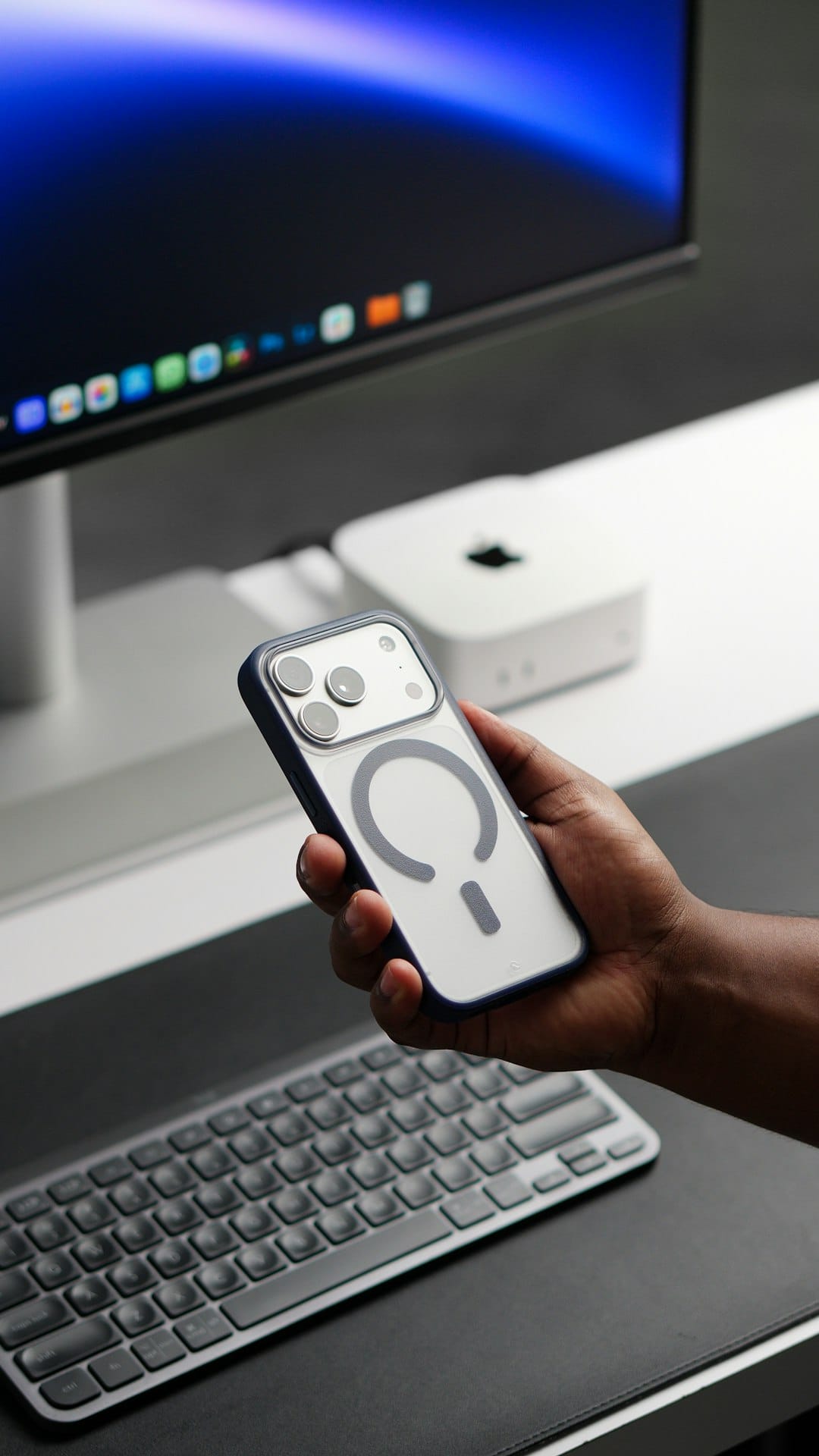
Cupertino, California, MMN Correspondent: If you have been eyeing a new iPhone, iPad, or Mac, you might want to pay close attention to what Apple’s CEO just said. Tim Cook recently stepped forward with a rare and candid admission: the cost of memory has climbed so high that Apple can no longer absorb it quietly. The company is now looking at raising prices across its most popular devices.
This is not a small shift. For years, Apple has worked hard to keep its pricing steady, even when the global economy wobbled. But the current situation is different. A worldwide shortage of RAM, driven by an explosion in demand from artificial intelligence, cloud computing, and massive data centers, has pushed memory costs up by more than 40 percent in the last twelve months. Some high end memory modules have jumped over 60 percent. That kind of pressure eventually reaches the products you hold in your hands.
Cook put it plainly: “We are doing our best to mitigate the huge increases being passed to us, and we have been trying to shield our customers. But the situation has become unsustainable.” Those words mark a turning point. Apple is known for its careful pricing strategy, but even the most disciplined internal cost cutting and supplier negotiations have limits.
You may have already noticed the first signs. In March, Apple quietly removed the base model of the Mac Studio that sold for $599. Now the only version available starts at $799 with 512GB of RAM. That is a clear signal that the company is steering toward higher end configurations as raw material costs climb. Analysts expect similar moves across other product lines, especially the next iPhone lineup expected in 2026. Those phones will likely need more memory to run advanced AI features like on device machine learning and real time language processing, and that extra capability comes with a higher price tag.
The rumored MacBook Neo, Apple’s next generation laptop, is also under the microscope. Some reports suggest Apple might keep the $699 model with 512GB of storage but could raise the starting price of lower tier versions or reduce the standard RAM in entry level units to balance the books. This approach mirrors what competitors like Microsoft and Lenovo are already doing as they face the same memory shortages.
But this is not just an Apple story. The ripple effects are spreading across the entire tech industry. Data centers run by Google, Amazon, and Meta are experiencing delays in server deployments because high speed memory modules are hard to come by. Semiconductor giants like SK Hynix, Micron, and Samsung are running their factories at full capacity, yet they still cannot keep up. New fabrication plants are under construction, but they will not reach full output until at least 2027.
Part of the challenge is the industry’s transition to newer memory technologies. DDR5 and LPDDR5X chips offer faster speeds and better energy efficiency, which is great for performance, but they cost significantly more to manufacture. On top of that, geopolitical tensions and export restrictions on semiconductor materials have added another layer of complexity, especially for companies that rely on Asian chip production.
For you, the consumer, this means a few things. Prices on flagship devices could rise anywhere from 5 to 15 percent depending on the product and region. You might also see Apple offering more affordable models with less RAM or storage, while keeping premium configurations at higher price points. And if you are planning to buy a popular model, you might face longer wait times as supply chains adjust.
Still, there is a positive side. Apple continues to invest heavily in its own silicon, like the M series chips used in Macs and iPads. These chips are designed to manage memory more efficiently, which could reduce the company’s long term dependence on volatile third party suppliers. That kind of vertical integration gives Apple more control over performance and power consumption, and it could eventually help stabilize prices.
Industry experts believe memory costs may start to level off by late 2027, once new manufacturing facilities come online and the AI driven demand surge reaches a plateau. Until then, Apple and other tech giants will have to navigate a tricky balance between managing costs, keeping supply chains resilient, and meeting customer expectations.
What is happening here is bigger than one company. It is a reminder that technological progress always comes with economic trade offs. The devices we rely on for work, creativity, and connection are deeply tied to global supply networks and the raw materials that power them. The price adjustments ahead may feel inconvenient, but they also reflect a world where innovation and economics are more intertwined than ever.
Related in Gadgets

Gadgets
How a Fake Cease-and-Desist Letter Targeted Flock Safety: What It Reveals About Trust in Surveillance Tech
In July 2026, a single image sent social media into a frenzy. A cease-and-desist letter, supposedly from Flock Safety, was circulating fast. It claimed the company had ordered a public lecture series in Newport Beach to stop discussing its surveillance technology. The post came…
Read More...
Gadgets
Microsoft’s Carbon Footprint Jumps 25%: What AI’s Energy Hunger Means for Your Digital Future
Microsoft just dropped a number that’s turning heads in the tech world: a 25% spike in carbon emissions for 2025. That’s 34 million metric tons of CO₂ equivalent, and it’s not a small blip. It’s a direct signal that the race to build smarter AI is colliding with the planet’s lim…
Read More...
Gadgets
7 Ways Meta's Always-On Smart Glasses Could Change How You Remember Everything
Imagine a pair of glasses that quietly listens to your conversations, notes the faces you meet, and remembers where you left your keys without you ever asking. Meta is reportedly building exactly that: a new generation of smart glasses designed to run in an always-on mode, captu…
Read More...
Gadgets
Meta Smart Glasses Update: Camera Disabled Instantly If Privacy Light Is Blocked or Removed
Imagine you are wearing a pair of smart glasses that can record video with a simple tap. Now imagine someone nearby covers the tiny light that tells you the camera is on. Until recently, that was possible. But Meta just changed the rules. The company has released a new software…
Read More...
Gadgets
Hoto PixelDrive Cordless Screwdriver Hits $60: The Smart Tool DIYers Have Been Waiting For
If you have ever struggled with a stubborn screw in a dark corner or stripped the head of a tiny fastener while assembling furniture, you know the frustration. The Hoto PixelDrive cordless screwdriver is now available for $59.99, down from its usual $80. This is the first time i…
Read More...
Gadgets
Inside the $75,000 AI Schools Where Your Child Becomes a Beta Tester for Tomorrow's Learning
Walk into an Alpha School classroom, and you won't see a teacher at the front of the room. Instead, you will find rows of students wearing lightweight headsets, their eyes fixed on adaptive screens that shift content in real time based on their facial expressions and response sp…
Read More...
Gadgets
Can a Space Tug Save NASA’s Swift Observatory Before It Burns Up? The 9-Month Rescue Mission You Need to Know About
Imagine a satellite that has spent more than two decades unraveling the universe’s most violent explosions. Now imagine it’s falling. That’s the reality NASA faced earlier this year when the Swift Observatory, a workhorse of astrophysics, began a slow but steady descent toward E…
Read More...
Gadgets
Amazon Fire HD 10 Just Got Faster: 4GB RAM Upgrade in 2026 – What It Means for You
If you have been eyeing a budget tablet that can keep up with your daily multitasking, Amazon just gave you a reason to pay closer attention. In a move that flew under the radar, the company quietly boosted the RAM on its popular Fire HD 10 from 3GB to 4GB. This change, confirme…
Read More...
Gadgets
From 600,000 Discs a Day to Microlenses: What Sony’s Austrian Factory Pivot Means for AR, Cars, and Your Future
Imagine a factory that once stamped out 600,000 PlayStation discs every single day. Now imagine that same facility, just a few years later, shaping tiny lenses that bend light for self-driving cars and augmented reality glasses. That’s exactly what’s happening in Thalgau, Austri…
Read More...
Gadgets
Apple’s 2027 MacBook Pro: Touchscreen, M7 Chip, and a Design Shift You’ll Want to See
Apple is quietly preparing to rewrite the rules for its entry-level MacBook Pro. If the latest reports from industry insiders hold true, the laptop you might buy in 2027 will look, feel, and behave nothing like the one on shelves today. The company is planning a complete overhau…
Read More...