
15 Years Free: How Donor Stem Cells Erased a Rare Autoimmune Disease in Two Patients
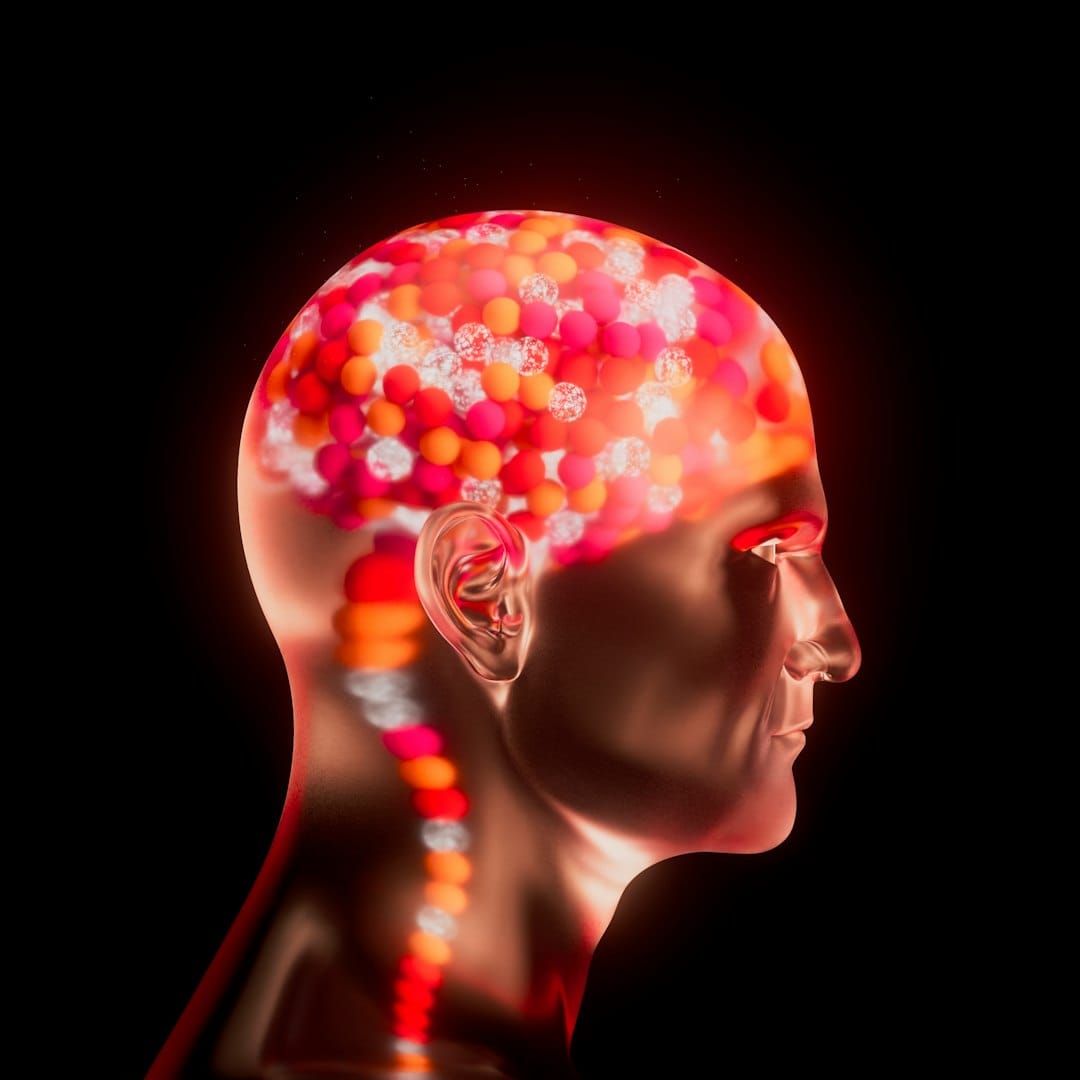
Milan, Italy, MMN Correspondent: Imagine living with a disease that attacks your own body, causing sudden blindness, paralysis, and the constant threat of death. Now imagine being completely free of it for over 15 years. That is the reality for two individuals who received an experimental stem cell therapy for neuromyelitis optica spectrum disorder (NMOSD), a rare autoimmune condition that targets the spinal cord and optic nerves.
This is not a story of managing symptoms or slowing progression. It is a story of resetting the entire immune system using donor stem cells, and the results have been nothing short of transformative. The patients, a man and a woman, have not experienced a single relapse since their treatments in 2009 and 2010. No medications. No flare-ups. No detectable antibodies that cause the disease.
How did this happen? The therapy is called allogeneic hematopoietic stem cell transplantation, or allo-HSCT. Unlike older approaches that use a patient's own stem cells, this method introduces healthy stem cells from a compatible donor. The first patient received cells from his sister. The second from an unrelated donor. Before the infusion, both underwent a conditioning regimen with chemotherapy drugs fludarabine and treosulfan, plus a monoclonal antibody to clear out the B cells responsible for producing harmful autoantibodies.
The goal was not just to suppress the faulty immune system but to replace it entirely with a new, non-reactive one. And it worked. The man regained full mobility, returned to work, and fathered two children. The woman improved her upper limb function and no longer needs daily medication. Both achieved a level of independence they had not known in years.
What makes this outcome particularly remarkable is the duration. Over 15 years without a single relapse. Researchers are cautious about using the word cure, but in clinical terms, this is a functional cure. The new immune systems are fully integrated and tolerant, showing no signs of attacking the central nervous system. Post-transplant monitoring confirmed that neither patient developed graft-versus-host disease, a serious complication where donor cells attack the recipient's tissues. A short course of prophylactic immunosuppressants and targeted antibodies helped prevent that.
This approach has been used successfully for certain cancers and blood disorders like leukemia and sickle cell anemia. But applying it to an autoimmune condition like NMOD was unprecedented. The study, led by neurologist Massimo Filippi from IRCCS San Raffaele Hospital in Milan and biomedical engineer Jiao Jiao Li from the University of Technology Sydney, represents the first documented use of allo-HSCT for this disease.
Why does using donor cells matter so much? In autologous transplants, where a patient's own stem cells are used, residual memory B cells can persist and reinitiate attacks. By introducing entirely new immune cells from a healthy donor, the risk of recurrence drops significantly. The immune system gets a complete reboot, free from the programming that caused it to attack the body in the first place.
The implications extend far beyond these two individuals. NMOSD affects about 1 in 100,000 people globally, disproportionately impacting young adults, especially women. Clinical trials are now being considered to evaluate this therapy in larger groups of patients, particularly those who do not respond to conventional treatments. If similar outcomes can be replicated, the field of regenerative medicine may be on the verge of a new era where chronic autoimmune illnesses are not just managed but potentially eradicated.
This breakthrough also raises broader questions. Could this approach work for other autoimmune diseases like multiple sclerosis, lupus, or type 1 diabetes? The success of this intervention suggests that the human immune system can be reprogrammed to stop attacking itself. Researchers are already working to refine protocols, improve donor matching, and reduce risks associated with high-dose chemotherapy and immunosuppression.
For patients and families affected by NMOSD, this story is more than scientific progress. It is a beacon of hope. The journey from near-total disability to full independence, sustained over more than a decade, demonstrates that even the most aggressive autoimmune diseases may one day be conquerable through innovative medical science. The future looks increasingly promising, and the evidence is clear: the immune system can be reset, and lives can be transformed.
Related in Scientific Research
Scientific Research
How Soft Lithium Dendrites Crack Hard Ceramic Batteries: The Discovery That Could Triple EV Range
Imagine a battery that powers your phone for five days, charges your electric car in under 15 minutes, and never catches fire. That’s the promise of solid-state batteries. But for years, a tiny, stubborn problem has kept them stuck in labs: lithium dendrites. These microscopic,…
Read More...
Scientific Research
450,000 Barred Owls Could Be Shot to Save the Spotted Owl: Here’s Why Scientists Say It’s Working
Imagine walking through a silent forest at midnight. You hear a call—a deep, rhythmic hoot—and you raise a shotgun. This isn’t a scene from a thriller. It’s the front line of one of the most ambitious and controversial conservation experiments in American history. In the dense f…
Read More...
Scientific Research
50 Year Quantum Riddle Solved: How Heidelberg Physicists Bridged Two Opposing Particle Theories
Imagine trying to describe a single dancer moving through a crowded dance floor. One theory says the dancer pulls nearby people along, creating a small moving cluster. Another theory says if the dancer stands perfectly still, the crowd around them changes so completely that the…
Read More...
Scientific Research
9 Entangled Particles Found in a Crystal You Can Hold: What This Means for Quantum Tech
Imagine holding a small crystal in your hand, one that fits comfortably in your palm. Now imagine that inside that crystal, particles are connected in a way that defies everything we thought we knew about the quantum world. That is exactly what a team of researchers at TU Wien i…
Read More...
Scientific Research
30 Years Later: Scientists Finally Identify Rye Pollen Molecules That Slow Tumors – What This Means for Cancer Therapy
For nearly three decades, a quiet mystery sat at the edge of natural medicine. Two molecules found in rye pollen seemed to slow tumor growth in animal studies. But no one could figure out their exact shape. That puzzle has now been solved by researchers at Northwestern Universit…
Read More...
Scientific Research
55 Million Affected: Scientists Just Found a New Way Alzheimer’s Kills Brain Cells – And How to Stop It
For decades, the question of how Alzheimer’s disease actually destroys brain cells has been one of the most stubborn mysteries in medicine. We knew toxic proteins like amyloid and tau build up inside neurons. We knew cells eventually die. But the exact mechanism? That was the mi…
Read More...
Scientific Research
UK Heatwave Alert: Temperatures Hit 34°C This Week – Are You Ready for the Third Scorcher of 2026?
Here we go again. The United Kingdom is bracing for its third major heatwave of 2026, with thermometers expected to climb past 34°C in southern and eastern regions. This isn’t just another warm spell – it’s a week-long event that has health officials on high alert from Saturday,…
Read More...
Scientific Research
Quantum Time Reversal Achieved: 5 Ways This Breakthrough Could Power Future Tech
What if you could rewind a moment in time not in your memory, but in the physical world itself? That question has moved from the pages of science fiction into the lab. Researchers at Los Alamos National Laboratory have just demonstrated something extraordinary: they can make qua…
Read More...
Scientific Research
6 Inventors Just Won Europe’s Top Prize – Here’s What They Created That Could Change Your Life
What do oat milk, a malaria vaccine, and recycled EV batteries have in common? They are all powered by the minds of six inventors who just took home the 2026 European Inventor Award. The European Patent Office (EPO) streamed the ceremony live from Berlin, and the winners did not…
Read More...
Scientific Research
7 Reasons Why a Remote Arctic Research Station Is Now the World's Most Watched Geopolitical Hotspot
Imagine a place so quiet that the loudest sound is the crunch of snow under your boots. A place built for science, not strategy. That was the Arctic research station on Svalbard just a few years ago. Today, that same outpost is the center of a global tug-of-war. What changed? Th…
Read More...