
180 Million Year Old Microbial Mats Found in Deep Sea Turbidites: What This Means for the Search for Life Beyond Earth
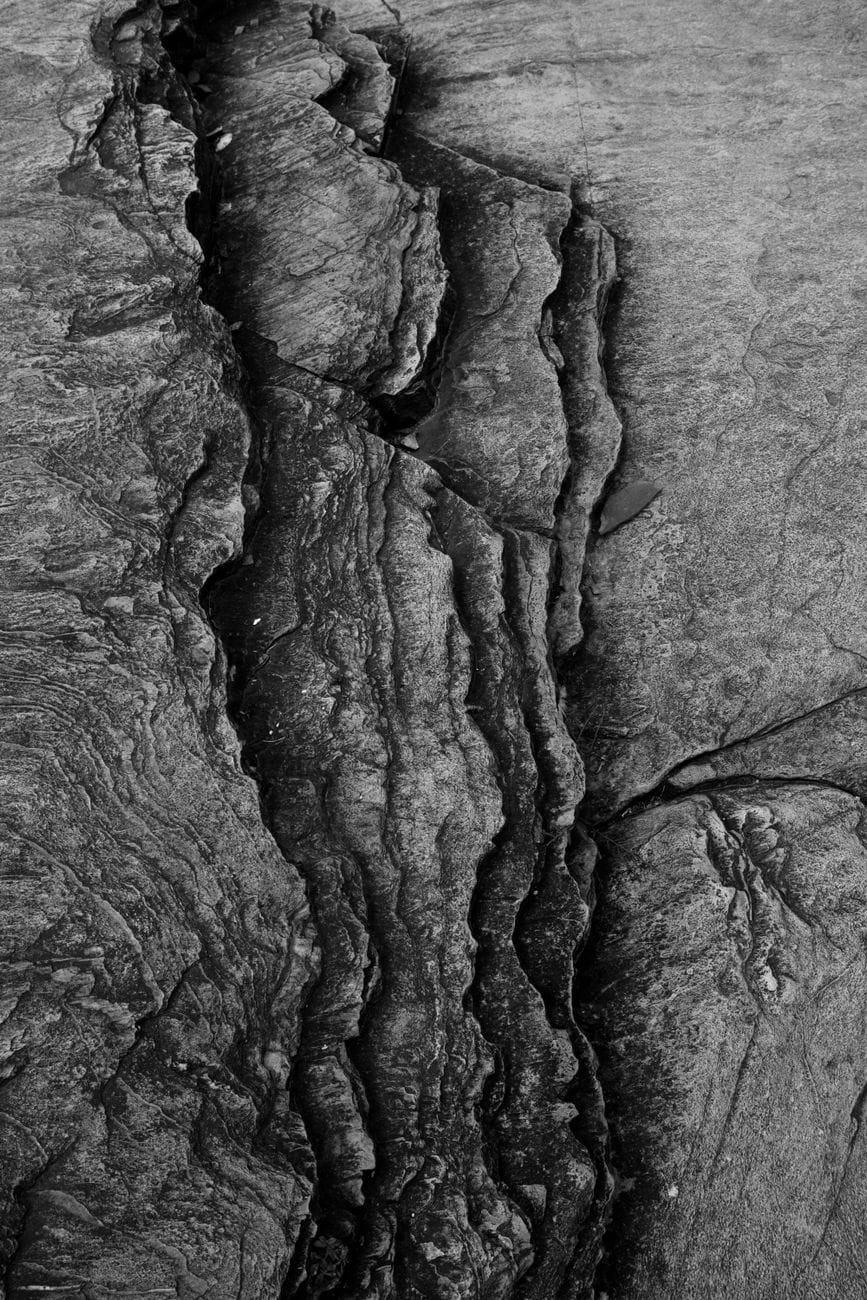
Dadès Valley, Morocco, MMN Correspondent: Imagine trekking across ancient rock layers in a remote Moroccan valley, expecting to find nothing more than ordinary sedimentary patterns. That is exactly what happened to Dr. Rowan Martindale, a paleoecologist and geobiologist from The University of Texas at Austin. She was walking with colleagues through the rugged Dadès Valley when something caught her eye. At first glance, it looked like delicate ripple marks on a stone surface. But these were not ordinary ripples. They were wrinkle structures formed by bacteria that lived in total darkness, more than 180 meters below the ocean surface.
This discovery came from turbidite deposits, which are layers created by underwater avalanches of sediment. Scientists have long believed that such deep sea environments could not support the kind of microbial mats that leave behind these distinctive textures. Those mats were thought to require sunlight for photosynthesis. But here, in rocks dating back approximately 180 million years to the Jurassic era, the evidence tells a different story. The bacteria that created these structures did not rely on sunlight at all. They used chemosynthesis, drawing energy from inorganic chemicals like hydrogen sulfide and methane.
Wrinkle structures are essentially fossilized microbial communities. When bacteria and algae grow across sandy surfaces, they bind the sediment together, forming tiny ridges and depressions. Over time, these patterns can become preserved in rock. For decades, scientists have used them as markers of early life, especially in rocks older than 540 million years. Finding them in deep water settings was considered nearly impossible because of the lack of sunlight and the constant disturbance from burrowing animals.
Martindale and her team, including Stéphane Bodin from Aarhus University, set out to verify what they had found. They started by confirming the geological context. The sediment layers were indeed turbidites, deposited under high energy flows in deep water. Grain size analysis and stratigraphic layering confirmed this. Next, they examined the chemical composition of the rock. Directly beneath the wrinkle structures, they found elevated levels of organic carbon. That carbon enrichment is a strong signal of biological activity, pointing directly to the presence of living organisms.
To understand how life could exist without sunlight, the researchers turned to modern oceanographic data. Submersible missions equipped with high definition cameras have captured microbial mats flourishing in abyssal zones, far below the photic zone where light cannot penetrate. These communities rely on chemosynthesis, a process where bacteria derive energy from inorganic chemicals. Such ecosystems thrive near hydrothermal vents, cold seeps, and other nutrient rich areas on the deep seafloor.
The breakthrough came when the team reconstructed the environmental conditions of the Jurassic seafloor. Turbidite flows would have transported organic matter and nutrients from shallower regions into deeper basins. As this material decomposed, oxygen levels in the sediment dropped, creating anoxic pockets ideal for chemosynthetic microbes. During quiet intervals between debris flows, bacterial mats could colonize the seafloor, forming intricate networks that developed wrinkles over time. Only when a new turbidite flow buried the mat intact did preservation become possible, locking in a snapshot of ancient microbial life.
This discovery reshapes the narrative of early life on Earth. It suggests that microbial ecosystems were far more resilient and widespread than previously believed, capable of adapting to extreme conditions using alternative metabolic pathways. More importantly, it opens up entirely new avenues for exploration. Geologists may now need to re evaluate other deep sea sedimentary deposits, especially turbidites, that were once dismissed as sterile or too disturbed to preserve biological signatures.
The implications extend beyond Earth. If chemosynthetic microbial mats can leave behind detectable structures in deep sea sediments, similar features might be found in extraterrestrial environments such as the icy moons of Jupiter and Saturn, Europa and Enceladus. Those subsurface oceans may harbor life sustained by chemical energy rather than sunlight.
Scientists now emphasize the need for controlled laboratory experiments to simulate the formation of wrinkle structures in dark, low oxygen environments. Understanding the precise mechanisms of mat growth, stability, and fossilization will help distinguish biogenic patterns from abiotic ones in future field studies.
This finding also underscores a broader shift in astrobiology and paleobiology. The recognition that life may not require sunlight to flourish is gaining ground. Instead, life may thrive in hidden realms where chemical gradients fuel entire ecosystems. The idea that microbial life could persist in the deep sea millions of years ago, even under harsh conditions, challenges the very definition of habitable zones.
As research continues, the global scientific community is being urged to expand its search beyond traditional models. Ancient deep sea turbidites, once overlooked, may now be considered prime candidates for uncovering some of Earth’s earliest biological records. The story of life’s origins, long thought to unfold in sunlit shallows, may instead have begun in the dark, silent depths of ancient oceans.
With each new discovery, the boundaries of what we know about life’s resilience grow wider. The wrinkle structures in Morocco’s Dadès Valley are no longer just geological curiosities. They are windows into a forgotten chapter of Earth’s history, revealing that life, in its most primitive forms, may have been far more adaptable, persistent, and widespread than ever imagined.
Related in Scientific Research
Scientific Research
How Soft Lithium Dendrites Crack Hard Ceramic Batteries: The Discovery That Could Triple EV Range
Imagine a battery that powers your phone for five days, charges your electric car in under 15 minutes, and never catches fire. That’s the promise of solid-state batteries. But for years, a tiny, stubborn problem has kept them stuck in labs: lithium dendrites. These microscopic,…
Read More...
Scientific Research
450,000 Barred Owls Could Be Shot to Save the Spotted Owl: Here’s Why Scientists Say It’s Working
Imagine walking through a silent forest at midnight. You hear a call—a deep, rhythmic hoot—and you raise a shotgun. This isn’t a scene from a thriller. It’s the front line of one of the most ambitious and controversial conservation experiments in American history. In the dense f…
Read More...
Scientific Research
50 Year Quantum Riddle Solved: How Heidelberg Physicists Bridged Two Opposing Particle Theories
Imagine trying to describe a single dancer moving through a crowded dance floor. One theory says the dancer pulls nearby people along, creating a small moving cluster. Another theory says if the dancer stands perfectly still, the crowd around them changes so completely that the…
Read More...
Scientific Research
9 Entangled Particles Found in a Crystal You Can Hold: What This Means for Quantum Tech
Imagine holding a small crystal in your hand, one that fits comfortably in your palm. Now imagine that inside that crystal, particles are connected in a way that defies everything we thought we knew about the quantum world. That is exactly what a team of researchers at TU Wien i…
Read More...
Scientific Research
30 Years Later: Scientists Finally Identify Rye Pollen Molecules That Slow Tumors – What This Means for Cancer Therapy
For nearly three decades, a quiet mystery sat at the edge of natural medicine. Two molecules found in rye pollen seemed to slow tumor growth in animal studies. But no one could figure out their exact shape. That puzzle has now been solved by researchers at Northwestern Universit…
Read More...
Scientific Research
55 Million Affected: Scientists Just Found a New Way Alzheimer’s Kills Brain Cells – And How to Stop It
For decades, the question of how Alzheimer’s disease actually destroys brain cells has been one of the most stubborn mysteries in medicine. We knew toxic proteins like amyloid and tau build up inside neurons. We knew cells eventually die. But the exact mechanism? That was the mi…
Read More...
Scientific Research
UK Heatwave Alert: Temperatures Hit 34°C This Week – Are You Ready for the Third Scorcher of 2026?
Here we go again. The United Kingdom is bracing for its third major heatwave of 2026, with thermometers expected to climb past 34°C in southern and eastern regions. This isn’t just another warm spell – it’s a week-long event that has health officials on high alert from Saturday,…
Read More...
Scientific Research
Quantum Time Reversal Achieved: 5 Ways This Breakthrough Could Power Future Tech
What if you could rewind a moment in time not in your memory, but in the physical world itself? That question has moved from the pages of science fiction into the lab. Researchers at Los Alamos National Laboratory have just demonstrated something extraordinary: they can make qua…
Read More...
Scientific Research
6 Inventors Just Won Europe’s Top Prize – Here’s What They Created That Could Change Your Life
What do oat milk, a malaria vaccine, and recycled EV batteries have in common? They are all powered by the minds of six inventors who just took home the 2026 European Inventor Award. The European Patent Office (EPO) streamed the ceremony live from Berlin, and the winners did not…
Read More...
Scientific Research
7 Reasons Why a Remote Arctic Research Station Is Now the World's Most Watched Geopolitical Hotspot
Imagine a place so quiet that the loudest sound is the crunch of snow under your boots. A place built for science, not strategy. That was the Arctic research station on Svalbard just a few years ago. Today, that same outpost is the center of a global tug-of-war. What changed? Th…
Read More...