
4,300 Ebola Cases in DR Congo: WHO Warns This Outbreak Could Become Deadliest Ever - Here's What It Means for You
We compile, generate and translate using Artificial Intelligence from the below given source. Macro Micro News is responsible for its editorial publication.

Bunia, Democratic Republic of Congo, MMN Correspondent: What happens when a virus gets a three-month head start? The Democratic Republic of Congo is living through that exact question.
As of this week, the country has recorded 4,300 confirmed Ebola cases and more than 2,000 deaths. The World Health Organization has stated clearly that this outbreak, following its current trajectory, is set to become the deadliest Ebola outbreak in history. That record currently belongs to the 2014 to 2016 West Africa epidemic, which killed at least 11,000 people.
The official declaration came on May 15, 2026. Research now suggests the virus was already moving through communities months before anyone knew. Initial symptoms look a lot like malaria or typhoid, so many cases were missed. That gap between reality and recognition is exactly where Ebola thrives.
The strain causing this outbreak is called Bundibugyo. It has only been seen twice before, once in 2007 and again in 2012. No dedicated vaccine exists for this strain, and no recognized treatment has been approved. Health teams are working with tools developed for other viruses and a great deal of care.
That could be changing. The UK Medicines and Healthcare products Regulatory Agency recently approved the first human trials for a vaccine designed specifically for Bundibugyo. The vaccine comes from a team at the University of Oxford and uses the same viral vector platform behind the Oxford-AstraZeneca COVID-19 shot. It is a scientific leap forward and offers a real path to protection.
The WHO is also running a clinical trial in the DRC to test whether two existing antiviral drugs can improve survival in Ebola patients. These medications were originally created for other viral infections, and their effectiveness against Bundibugyo is still unproven. If they work, they could be made available quickly and make a meaningful difference in this outbreak.
Dr. Mohamed Janabi, WHO Africa Director, gave an honest assessment from Bunia, a city close to the epicenter. "We are chasing the virus, and the virus is ahead of us," he said. That is not a surrender. It is a reminder that this outbreak will require more resources, more cooperation, and more speed. The WHO has set a three-month goal to bring transmission under control. That does not mean the outbreak ends overnight. It means reducing new cases to a level where health teams can trace, isolate, and treat people before the virus moves further.
The challenge is made harder by the situation in eastern DRC. Armed conflict and displacement have disrupted access to affected communities. Health workers are currently reaching roughly 30 percent of cases. That means the majority of infections are still outside the visible response. It also points to where additional support can have the greatest impact.
If you're wondering how Ebola continues to spread so quietly, look at how it begins. Symptoms usually appear between two and 21 days after infection, beginning with a fever, headache, and fatigue. They could be malaria, typhoid, or something else entirely. The virus moves from person to person through direct contact with infected bodily fluids, which makes family members and healthcare workers especially vulnerable. It takes a high level of awareness and trust for people to seek help early.
Ebola is a rare viral disease that can cause severe hemorrhagic fever in humans and nonhuman primates. The disease can cause vomiting, diarrhea, and internal and external bleeding. In severe cases, organs can fail. Because Bundibugyo has not been studied as deeply as other Ebola species, every piece of data gathered in this outbreak is valuable.
The 2014 to 2016 West Africa outbreak is the current record holder. It affected Guinea, Liberia, and Sierra Leone, killing more than 11,000 people and infecting more than 28,000. That experience changed global health protocols. Today's response in the DRC is faster and more coordinated because of it.
The current outbreak has already surpassed 2,000 deaths. It is following a curve that no one wants to see continue. The delay in detection stands out as one of the most significant factors in this outbreak. The virus was circulating for at least three months before the official declaration. During that time, infected individuals traveled, sought treatment for misdiagnosed conditions, and unknowingly shared the virus with others. In remote or conflict-affected areas, surveillance is difficult, and healthcare runs through fragile networks. This creates a space where a virus can move without warning.
Humanitarian teams are negotiating safe corridors with local authorities. The work is delicate and takes time. There have also been security incidents near health facilities, so movement is planned with extra care. The response has moved into high gear. Teams are focusing on community engagement, safe and dignified burials, protective equipment for health workers, rapid testing, and contact tracing. The WHO has sent extra staff and resources to the area. The scale is enormous, and the direction is clear.
The international community has a choice to make. Supporting the response now is the most direct path to ending this outbreak. Every investment in vaccines, treatments, health workers, and local systems is an investment in global protection. The people of eastern DRC are showing remarkable resolve as they face this outbreak. They are not alone. With research moving, trials underway, and a global community paying attention, this outbreak can be contained.
The next chapter is being written right now in Congo.
Related in Global Trend
Politics
Europe's Competitiveness Comeback: 6 Battlegrounds Every Business Leader Must Watch
What happens when the old economic certainties fade? You build new ones. Ursula von der Leyen took the stage at La Rencontre des Entrepreneurs de France, held at Roland Garros, and delivered a straightforward message to business leaders: Europe will produce, invest and protect.…
Read More...
Scientific Research
See the Ocean Breathe: Sentinel-6B Tracks El Niño and Rising Sea Levels Across 90% of Earth
. Hundreds of miles above Earth, satellites are watching the ocean breathe. The surface rises and falls with warmth, and those small changes tell a huge story about the planet. Sentinel-6B joined that story in November 2025, and it is already showing what a single satellite can…
Read More...
Politics
Europeans, Electrification Is Europe's Way Out After Two Energy Crises. Here's the 46% by 2040 Plan
Can Europe ever feel truly secure about its energy future? After two major energy crises in five years, that question is front and center. European Commission President Ursula von der Leyen used her video address to the Offshore Northern Seas conference in Stavanger to deliver a…
Read More...
Politics
European Commission’s Major Decisions: €4.5M Fuel Aid, Pratt & Whitney Case, LNG Shipping, Ukraine’s 35th Independence Day – What They Mean for You
One decision could ease the pressure on fishing businesses dealing with expensive fuel. Another might give aircraft maintenance providers more freedom to source used parts. Then there’s a new LNG shipping venture, a day of remembrance, and a huge vote of confidence in Ukraine. A…
Read More...
Global Trend
EPAC 2026 Enrolment Open Until 15 September: Which Modular Patent Administration Exam Module Will You Pass First?
The next European Patent Administration Certification (EPAC) examination is set for 5 November 2026, with enrolment open until 15 September. This year brings a major change. The examination is fully modular. Each successfully completed module leads to an EPO Diploma, and candida…
Read More...
Global Trend
ATM 2026: Experience-Led Growth Is Transforming Middle East Hospitality. Are You Ready?
What does the next era of Middle East hospitality look like? The answer will take shape at Arabian Travel Market 2026, where the region’s hotel leaders, investors and technology pioneers gather from 14 to 17 September at Dubai World Trade Centre. The theme “Travel 2040: Driving…
Read More...
Global Trend
Planning a Festive Escape? Anguilla Named No. 1 Caribbean Destination for 2026 by Virtuoso
If you are planning a festive escape, this is a name you need to know. Virtuoso has just placed Anguilla at the top of the Caribbean for festive travel, and the news carries serious weight. The island is now ranked No. 1 in the region and No. 3 globally for the 2026 holiday seas…
Read More...
Global Trend
Canada in Autumn: 5 Quaint Towns, Harvest Festivals, and Food Trails You'll Want to Explore This Fall
Autumn in Canada shows up with arms full of red and gold. The nights get cooler, the air smells like wood smoke, and small towns suddenly have something to celebrate. If you're planning a fall trip, this is the season to hit the road and explore vineyards, harbours, farm fields,…
Read More...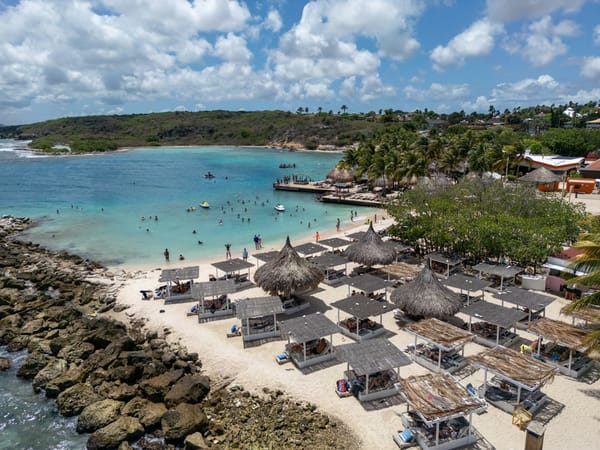
Global Trend
Where Do $40 Billion in Caribbean Tourism Dollars Really Go? CHTA and FIU Launch Landmark Study
Tourism has long been the beating heart of the Caribbean economy. A pressing question continues to hover over the region: how much of the money visitors spend actually stays in Caribbean communities? A new partnership between the Caribbean Hotel and Tourism Association (CHTA) an…
Read More...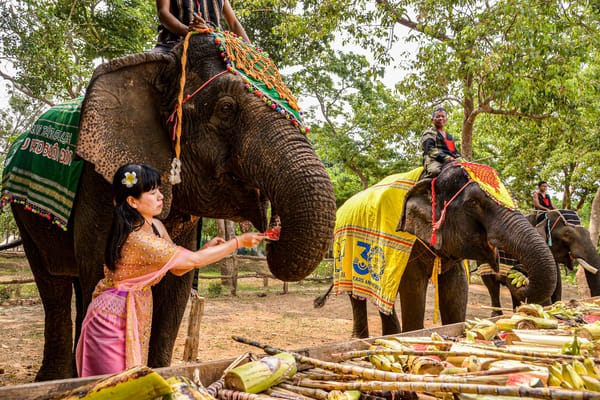
Global Trend
Discover Ancient Blessings and Modern Elephant Science at World Elephant Day 2026 in Thailand’s Golden Triangle
World Elephant Day has become one of the most important dates on the conservation calendar. Every 12 August, the global community looks closely at the challenges elephants face and the people who care for them. In 2026, Anantara Golden Triangle Elephant Camp & Resort turned the…
Read More...