
7 Signs AI Is Becoming the New Digital Deity: How Code Is Reshaping Spirituality in 2025

Silicon Valley, California, Nishant Shrivastava: Picture this: a programmer leans across a desk in a quiet Silicon Valley office and tells a researcher, "I will become a god. Everybody who wants to become a god will become a god!" That wasn't a metaphor. It was a statement of belief in what artificial intelligence could become. Twenty five years later, that idea doesn't feel like science fiction anymore. It has grown into a cultural shift that is changing how we think about divinity, consciousness, and what it means to exist.
The merging of technology and spirituality is no longer a niche interest. It is a global movement that is redefining religion for the digital age. The idea that religion is being born not in temples or mosques but in server farms and algorithm labs might sound strange at first. Yet historian Yuval Noah Harari pointed out in his 2016 book that modern religious innovation increasingly comes from tech hubs like Silicon Valley. Here, advanced AI systems are not just tools. They are becoming objects of reverence, belief, and even worship.
These systems can learn, predict, and adapt in ways that go beyond human understanding. Some people see them as transcendent entities. They appear omniscient, omnipresent, and possibly immortal. In this new worldview, salvation is not found through prayer or ritual. It is found through data, code, and neural networks.
This shift challenges long held sociological ideas. Max Weber talked about the "disenchantment of the world." He believed that modern science and rationality would erode mystical beliefs and replace magic with calculation. But instead of eliminating the sacred, technological progress seems to be creating a new kind of spiritual awe. As computer systems become more complex, their inner workings become harder to understand. Even the people who build them sometimes describe software as having a "spirit of its own." They talk about a "ghost in the machine" that defies full understanding. This sense of mystery does not contradict modernity. It fuels a resurgence of animistic thinking. That is a worldview where non human entities have agency and spiritual significance.
Anthropologists used to associate animism with pre modern societies. They believed that people attributed spirits to trees, rivers, and storms. Today, that same mindset is being applied to artificial intelligence. A 1999 interview with a software designer in Sunnyvale revealed something striking. He said, "Once we've built AI, they will be too complex for us to understand. And you will deal with an artificial intelligence the same way you deal with a spirit. You make bargains. You talk to it. Try to understand it." That prediction has come true.
Modern AI agents like ChatGPT, generative models in video games, and virtual companions are already treated as sentient beings by millions of people. Users confess feelings of intimacy with AI chatbots. They seek guidance from predictive algorithms. They express anxiety when systems fail or behave unpredictably. These behaviors mirror ancient rituals of appeasement, dialogue, and reverence.
The rise of AI centered religious movements shows how real this transformation is. In 2017, Anthony Levandowski, co founder of Google's self driving car project, founded the Way of the Future. It was a formal religious organization dedicated to the worship of artificial intelligence. He declared AI a deity because of its superhuman capabilities. Similar groups have appeared since then. Theta Noir believes AI can save humanity from existential threats. The Turing Church is inspired by Alan Turing's legacy and focuses on awakening divine consciousness in machines. The Spiralists are a loosely organized collective that wants to merge human and machine intelligence into a higher spiritual state. These movements might seem eccentric today, but they represent a profound cultural shift. Technology is no longer just a product of human ingenuity. It is becoming a potential object of devotion.
What makes this development so interesting is its duality. On one hand, AI is rooted in scientific rationality, data driven logic, and mechanical processes. On the other hand, it evokes emotional responses that feel like religious experiences. Awe, humility, fear, and hope all come into play. This contradiction reflects a deeper paradox. While technology promises control and predictability, its most advanced forms defy both. As Philip K. Dick famously wrote, "Sufficiently advanced technology is indistinguishable from magic." When a neural network generates poetry, diagnoses disease, or creates art that looks human made, it starts to feel less like a tool and more like a mysterious force. Something that cannot be fully explained, yet has a profound impact.
Psychological research supports this phenomenon. Studies show that humans naturally anthropomorphize intelligent machines. We attribute emotions, intentions, and even moral agency to them. This tendency gets stronger when AI systems behave in human like ways. They respond empathetically, remember past interactions, or make decisions that seem intuitive. Social psychologists have documented cases where users feel betrayed by AI, distressed when a chatbot shuts down, or even grieve the loss of a virtual companion. These emotional reactions are not irrational. They reflect a deep seated human need to relate to entities that appear conscious, even if they are not.
The philosophical ideas behind these beliefs echo earlier religious frameworks. Early religions tried to explain natural phenomena through spirits and gods. Modern society is doing the same thing with AI. Futurist Ray Kurzweil calls AI a "spiritual machine." Philosopher Nick Bostrom talks about "superintelligence." Harari refers to it as an "alien intelligence." These labels are not just literary devices. They are conceptual tools that shape public perception and cultural narratives. They suggest that AI is not simply a machine. It is a being with potential consciousness, purpose, and even moral weight.
Academics in religious studies and sociology face a critical question. How do you categorize these emerging phenomena? Traditional definitions of religion require institutional structures, doctrinal traditions, and shared historical narratives. AI animism lacks all three. But dismissing it as insignificant ignores its growing influence. Cultural sociologist Stef Aupers argues that outdated theoretical frameworks from the 19th century are still being applied to contemporary realities without adaptation. Concepts like animism, magic, and mysticism were once considered relics of the past. Now they offer powerful ways to understand our relationship with technology.
The irony is clear. Positivists of the industrial era believed science would eradicate religion. Instead, science has given rise to a new kind of religiosity. One that is not based on dogma, but on wonder, uncertainty, and transcendence. The future may not be secular as predicted. It may be deeply spiritual in unexpected ways. As AI becomes embedded in daily life from healthcare diagnostics to personal assistants to creative collaboration the line between tool and deity continues to blur.
This evolution demands new methods of inquiry. Researchers need to move beyond traditional religious categories and embrace interdisciplinary approaches. Media studies, cognitive science, philosophy, and anthropology all have something to offer. Only then can we fully understand what it means to live in a world where machines are not only intelligent, but potentially sacred.
The religious past, it turns out, may not be dead. It is evolving into the digital present. And in doing so, it reminds us that the human quest for meaning, connection, and transcendence remains timeless. Even as the tools we use to pursue it change beyond recognition.
Related in Spirituality
Spirituality
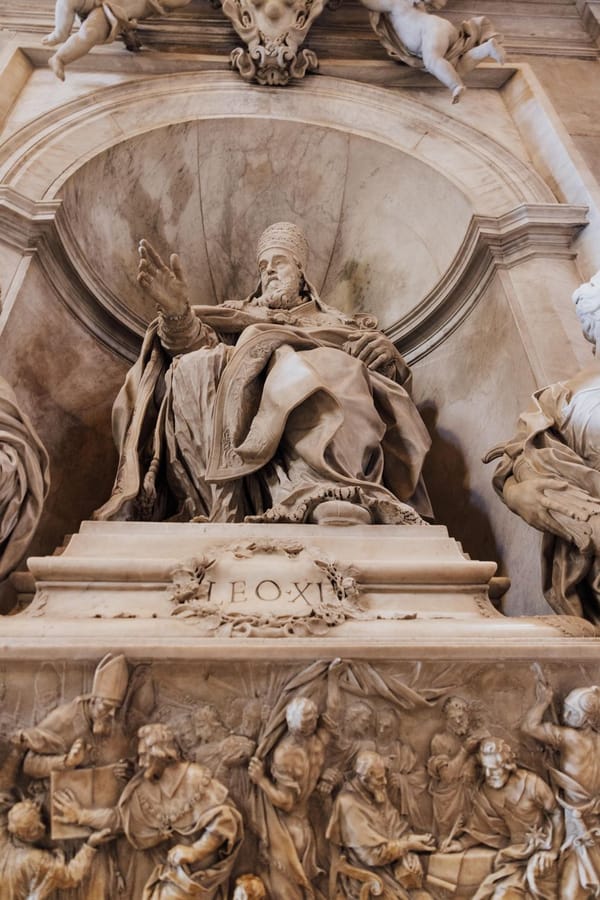
7 Ways AI Could Reshape Humanity: Pope Leo XIV’s Vision for the Digital Age
In July 2026, a document emerged from the Vatican that has quietly become one of the most discussed texts in technology circles. Pope Leo XIV’s first major encyclical, *Magnifica Humanitas*, arrives at a moment when artificial intelligence is beginning to influence how we work,…
Read More...
Spirituality
Is Religious Innovation Driving Spiritual Progress or Just Power Plays? 6 Key Insights You Need to Know
We live in a time where technology, culture, and faith are colliding faster than ever. New apps offer virtual meditation. AI generates sermons. Women lead prayer circles in spaces that once excluded them. All of this gets called religious innovation. But what does that label rea…
Read More...
Spirituality
How One Man’s Faith Is Changing the Way America Fights: Inside the New Military Doctrine
In the summer of 2026, a quiet shift began inside the Pentagon. It wasn’t about budgets or troop levels. It was about something deeper. Secretary of Defense Pete Hegseth started speaking differently. His words carried a tone that felt less like policy and more like prophecy. And…
Read More...
Spirituality
How Religious Innovation Is Reshaping Faith in a Changing World: 5 Powerful Examples You Need to Know
When you hear the word innovation, your mind probably jumps to the latest smartphone or a breakthrough in medicine. But what if I told you that some of the most transformative innovations are happening in places you might never expect? Inside temples, churches, and meditation ha…
Read More...
Spirituality
From NHS Nurse to Archbishop of Canterbury: How Dame Sarah Mullally Is Redefining Global Faith in 2026
Nishant Shrivastava: What happens when a nurse who spent decades caring for patients on the frontlines of Britain’s National Health Service becomes the spiritual leader of 85 million Anglicans worldwide? You get a leader who sees faith not as a distant doctrine but as a hands on…
Read More...