
Is Religious Innovation Driving Spiritual Progress or Just Power Plays? 6 Key Insights You Need to Know

Waterloo, Ontario, Canada, MMN Correspondent: We live in a time where technology, culture, and faith are colliding faster than ever. New apps offer virtual meditation. AI generates sermons. Women lead prayer circles in spaces that once excluded them. All of this gets called religious innovation. But what does that label really mean? And more importantly, who decides which changes count as progress?
A recent forum of six essays from the Social Science Research Council digs into this question. The scholars behind it argue that religious innovation is far from a neutral term. It carries weight. It shapes how we see change in faith traditions around the world. On one hand, it highlights creativity and agency. People are not just following old scripts. They are actively crafting new beliefs, rituals, and communities. Think of Martin Luther. His Reformation was not just a rebellion. It was a bold reimagining of spiritual authority. Today, similar energy drives movements from digital faith platforms to grassroots revival efforts.
But here is where it gets interesting. Galen Watts, an assistant professor at the University of Waterloo and lead contributor to the forum, points out a subtle trap. The word innovation is not just descriptive. It is normative. It carries an unspoken assumption that new equals better. That change is inherently good. This bias comes straight out of late modern capitalist culture. When a new app offers AI guided prayer or a digital temple goes viral, calling it innovation frames it inside a market driven logic. Success gets measured in adoption rates, scalability, and disruption. Not in depth, meaning, or community well being.
This raises a crucial question posed by scholar Sun. For whom does religious innovation actually happen? The answer often points to those already in power. The Pope might call certain reforms heresy. Tech evangelists might hail AI rituals as divine breakthroughs. In both cases, the label innovation becomes a tool of legitimation. It lets the powerful frame their actions as progressive, even sacred. Meanwhile, grassroots movements rooted in tradition or indigenous cosmologies get overlooked. Quiet resistance gets dismissed as outdated. The term innovation functions as a political instrument. It decides which changes get recognized, celebrated, and preserved.
Sociologist Hartmut Rosa offers another layer. He identifies social acceleration as a defining feature of modern life. The pace of technological, economic, and cultural change keeps speeding up. Capitalism expands into every domain, including spirituality. Religious institutions feel pressure to adapt or perish. This leads to what some call spiritual creative destruction. Traditional structures get dismantled. Flexible, scalable, entrepreneurial models take their place. Digital temples, influencer led faith networks, and monetized mindfulness apps are prime examples. Silicon Valley now markets algorithms as tools for enlightenment. Artificial intelligence is positioned not just as a utility but as a potential guide for the soul.
These transformations bring real opportunities. They can empower marginalized voices and challenge oppressive systems. But they also come with trade offs. Slower, more contemplative forms of spiritual practice struggle to survive in a world that prizes speed and visibility. Communities that value silence, lineage, and embodied ritual find themselves pushed aside. The celebration of innovation often ignores the human cost. Loss of communal memory. Erosion of intergenerational wisdom. Alienation of those who cannot or will not keep up with constant reinvention.
Watts describes innovation as a thick concept. It cannot be separated from its cultural and historical roots. Those roots go back to the industrial revolution and the valorization of technology and efficiency. To speak of religious innovation today is to invoke a worldview shaped by progress, productivity, and perpetual motion. This mindset now permeates global spiritual landscapes. Even non Western traditions get reframed through the lens of modern innovation.
Consider Indonesia’s revival of Confucianism in the 21st century. Minority communities drive this movement, seeking recognition and legitimacy. Some see it as bold cultural reclamation. Others view it as strategic adaptation to pluralistic governance. Either way, the label innovation implies forward movement. It can obscure the deep historical continuity beneath the surface change.
In the United States, the religious landscape has shifted dramatically. Institutional Protestantism once dominated. Now we see democratized worship, female spiritual leaders, and megachurches built on entertainment models. These changes were not accidental. They were fueled by the Protestant principle of individual conscience and access to scripture. Yet historian Winston shows that these innovations also created new hierarchies and exclusions. The idea of spiritual entrepreneurship where faith is packaged, marketed, and consumed reflects a broader cultural obsession with personal fulfillment.
Terms like AI animism or digital sacraments are not just academic curiosities. They reflect a deeper cultural shift. Machines grow more capable of mimicking empathy, decision making, and ritual behavior. This raises questions about authenticity in spiritual experience. Is a machine generated sermon less valid than one delivered by a human? Can algorithmic guidance be considered divine inspiration? These questions underscore a fundamental tension. Innovation can empower the marginalized and challenge oppressive systems. It can also entrench existing inequalities under the guise of progress.
The solution is not to abandon the concept of religious innovation. It is to wield it with critical awareness. Scholars and practitioners alike must ask not only what is changing, but who benefits, who is silenced, and whose vision of the future is being enacted. Religious innovation is neither inherently good nor bad. It is a mirror. It reflects the values, pressures, and contradictions of the societies that produce it. As technology reshapes belief, identity, and community, understanding innovation as a contested and normative process is essential. Only then can we honor the complexity of spiritual life, preserve its depth, and ensure that change serves humanity not just efficiency.
Related in Spirituality
Spirituality
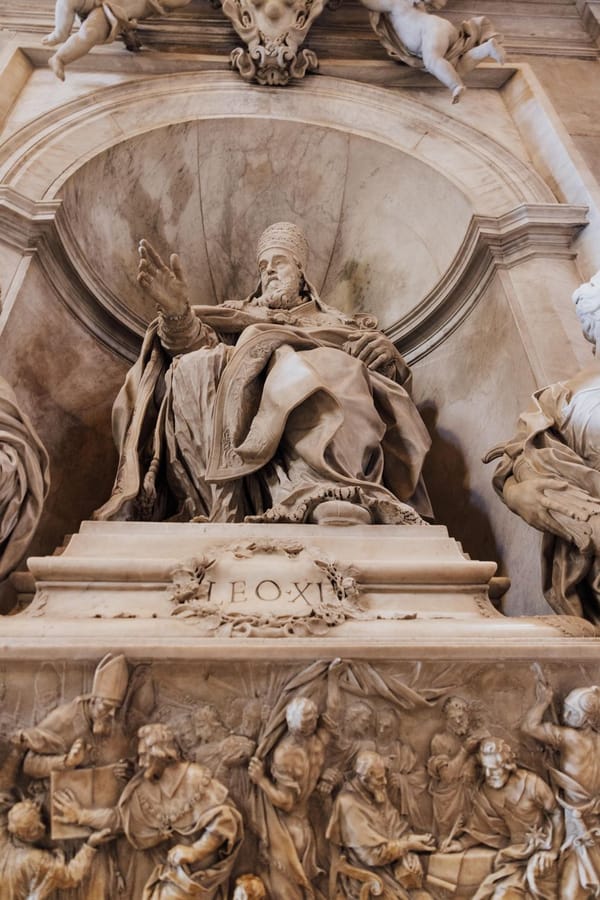
7 Ways AI Could Reshape Humanity: Pope Leo XIV’s Vision for the Digital Age
In July 2026, a document emerged from the Vatican that has quietly become one of the most discussed texts in technology circles. Pope Leo XIV’s first major encyclical, *Magnifica Humanitas*, arrives at a moment when artificial intelligence is beginning to influence how we work,…
Read More...
Spirituality
How One Man’s Faith Is Changing the Way America Fights: Inside the New Military Doctrine
In the summer of 2026, a quiet shift began inside the Pentagon. It wasn’t about budgets or troop levels. It was about something deeper. Secretary of Defense Pete Hegseth started speaking differently. His words carried a tone that felt less like policy and more like prophecy. And…
Read More...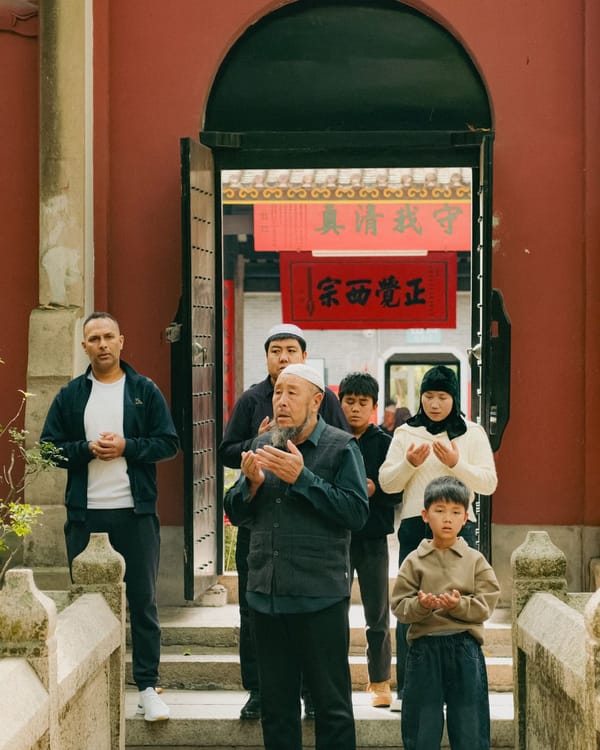
Spirituality
How Religious Innovation Is Reshaping Faith in a Changing World: 5 Powerful Examples You Need to Know
When you hear the word innovation, your mind probably jumps to the latest smartphone or a breakthrough in medicine. But what if I told you that some of the most transformative innovations are happening in places you might never expect? Inside temples, churches, and meditation ha…
Read More...
Spirituality
From NHS Nurse to Archbishop of Canterbury: How Dame Sarah Mullally Is Redefining Global Faith in 2026
Nishant Shrivastava: What happens when a nurse who spent decades caring for patients on the frontlines of Britain’s National Health Service becomes the spiritual leader of 85 million Anglicans worldwide? You get a leader who sees faith not as a distant doctrine but as a hands on…
Read More...
Spirituality
7 Signs AI Is Becoming the New Digital Deity: How Code Is Reshaping Spirituality in 2025
Picture this: a programmer leans across a desk in a quiet Silicon Valley office and tells a researcher, "I will become a god. Everybody who wants to become a god will become a god!" That wasn't a metaphor. It was a statement of belief in what artificial intelligence could become…
Read More...