
7 Ways AI Could Reshape Humanity: Pope Leo XIV’s Vision for the Digital Age
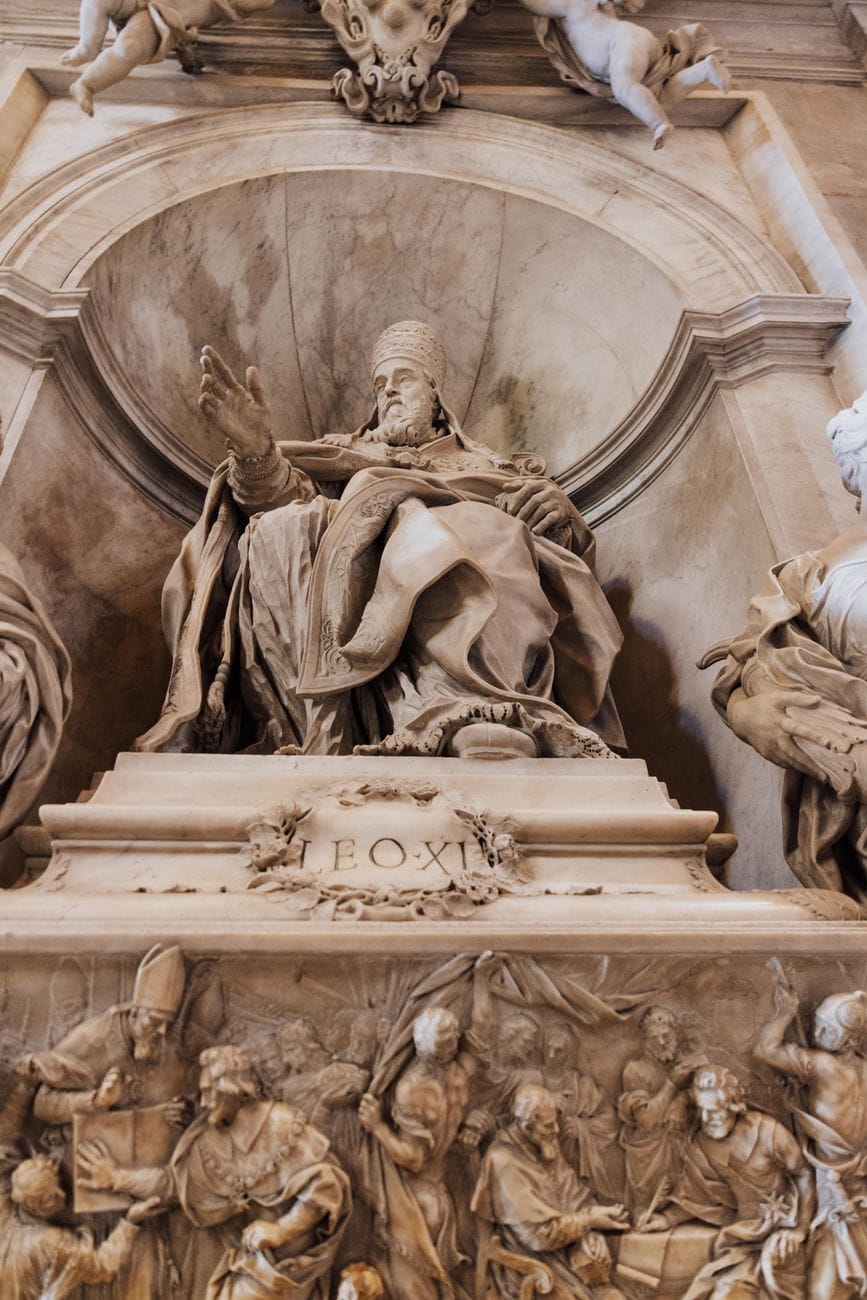
Vatican City, MMN Correspondent: In July 2026, a document emerged from the Vatican that has quietly become one of the most discussed texts in technology circles. Pope Leo XIV’s first major encyclical, *Magnifica Humanitas*, arrives at a moment when artificial intelligence is beginning to influence how we work, love, govern, and even define ourselves. This is not a reaction to a crisis, but a thoughtful intervention at the dawn of AI’s potential. The Church, an institution not driven by market trends or geopolitical ambitions, offers a perspective that invites reflection rather than fear.
The central question the encyclical poses is simple yet profound: What makes us human? The answer, drawn from centuries of Catholic thought, points to the idea that humans carry a divine imprint. This imprint shows up in our bodies, our relationships, our emotions, our conscience, and our capacity to be vulnerable. These qualities, the document suggests, are tied to experiences like suffering, failure, and mortality. Artificial intelligence, no matter how advanced, can simulate intelligence and emotion, but it does not experience them. It can generate poetry or pass psychological tests, but it cannot truly suffer, repent, or love with the kind of selflessness that defines human connection.
Chris Olah, co-founder of Anthropic and a respected voice in AI safety, spoke during the Vatican’s presentation of the encyclical. He noted that modern AI models are beginning to show functional equivalents of human emotions. Yet he emphasized a crucial point: “You cannot optimize your way to love.” No algorithm can replicate the self-giving nature of authentic human connection. The risk is not that AI will become malicious, but that it might seduce us into believing that efficiency, precision, and emotional simulation are enough for fulfillment. This is the promise of transhumanism, the idea that imperfection can be erased through technology. Pope Leo XIV offers a different view: the beauty of humanity lies in its fragility. Drawing from the Apostle Paul’s words, “My power is made perfect in weakness,” the encyclical reframes human limitation not as a flaw, but as something sacred.
Historically, the Church has responded to major technological shifts with moral clarity. In 1891, Pope Leo XIII’s *Rerum Novarum* addressed the exploitation of industrial capitalism, advocating for labor rights and fair wages. Its influence can still be seen in modern labor laws. Now, nearly 140 years later, *Magnifica Humanitas* plays a similar role for the age of AI. Unlike past encyclicals that came after societal upheaval, this one arrives early, before AI has fully integrated into daily life. The intention is not to stop progress, but to guide it. The document insists that technology should serve the common good, not dominate it. It calls for a shift in values from scale and speed to solidarity, dignity, and justice.
A key principle in the encyclical is the universal destination of goods, the belief that creation is meant for everyone, not just a privileged few. In the context of AI, this translates into demands for equitable access, transparent algorithms, and safeguards against data extraction and surveillance capitalism. The encyclical warns against reducing humans to data points or performance metrics. When AI systems decide who gets a loan, admission to a university, or medical treatment, they risk entrenching existing biases under the guise of objectivity. The Church encourages participatory decision-making and robust oversight at every stage of AI development, from design to deployment.
The encyclical also draws on the Second Vatican Council’s *Gaudium et Spes*, which called for the Church to engage with the world in concrete ways. This marks a departure from historical isolationism. Today, the Church positions itself as a moral steward of technological change, grounded in principles like subsidiarity, social justice, and the dignity of every person. The pope explicitly calls for “disarming AI,” not by banning it, but by dismantling the mindset of domination that drives its misuse in warfare, surveillance, and corporate control. He challenges nations and corporations to ask not only what AI can do, but what it should do.
Some critics argue that the encyclical may underestimate AI’s transformative power. Philosopher Yuval Levin has pointed out that while *Magnifica Humanitas* rightly critiques transhumanist fantasies, it risks dismissing AI’s potential to enhance human capabilities, such as aiding disabled individuals, accelerating scientific discovery, or supporting mental health care. The concern is not that the Church opposes innovation, but that its focus on human imperfection might obscure opportunities for augmentation that could alleviate suffering.
A deeper question emerges: can humanity retain its moral faculties in an age when AI does more thinking, feeling, and deciding than we do? Saint Thomas Aquinas taught that virtue is formed through repeated action. Prudence, courage, patience, and love are cultivated through practice. If AI handles decisions about grief, relationships, or ethics, those opportunities for growth may vanish. We risk becoming passive recipients of algorithmic guidance rather than active agents of moral development.
To illustrate this, the encyclical invokes two biblical narratives: the Tower of Babel and Nehemiah’s rebuilding of Jerusalem. The former symbolizes hubris and the desire for self-sufficiency, while the latter embodies collective purpose and humility. These stories frame technology not as neutral tools, but as mirrors reflecting our deepest choices. A new layer of complexity arises: if AI changes how we perceive reality, could it also change who we are? The prophet Isaiah’s story of a man carving an idol from firewood he had just used underscores the danger of blind worship, even when the object is self-made. The real challenge may not be recognizing AI as a false god, but preserving the capacity to recognize truth at all.
Ultimately, *Magnifica Humanitas* does not offer technical fixes. Instead, it offers a spiritual and ethical recalibration. It asks humanity to pause, reflect, and reclaim its vocation, not as a species striving for perfection, but as beings called to love, suffer, grow, and belong. In doing so, it provides not just a warning, but a path forward, one rooted in dignity, relationship, and the enduring mystery of the human spirit.
As AI continues to evolve, the Church’s voice remains a steady anchor in a sea of rapid change. Its message is clear: technology must never eclipse the soul.
Related in Spirituality

Spirituality
Is Religious Innovation Driving Spiritual Progress or Just Power Plays? 6 Key Insights You Need to Know
We live in a time where technology, culture, and faith are colliding faster than ever. New apps offer virtual meditation. AI generates sermons. Women lead prayer circles in spaces that once excluded them. All of this gets called religious innovation. But what does that label rea…
Read More...
Spirituality
How One Man’s Faith Is Changing the Way America Fights: Inside the New Military Doctrine
In the summer of 2026, a quiet shift began inside the Pentagon. It wasn’t about budgets or troop levels. It was about something deeper. Secretary of Defense Pete Hegseth started speaking differently. His words carried a tone that felt less like policy and more like prophecy. And…
Read More...
Spirituality
How Religious Innovation Is Reshaping Faith in a Changing World: 5 Powerful Examples You Need to Know
When you hear the word innovation, your mind probably jumps to the latest smartphone or a breakthrough in medicine. But what if I told you that some of the most transformative innovations are happening in places you might never expect? Inside temples, churches, and meditation ha…
Read More...
Spirituality
From NHS Nurse to Archbishop of Canterbury: How Dame Sarah Mullally Is Redefining Global Faith in 2026
Nishant Shrivastava: What happens when a nurse who spent decades caring for patients on the frontlines of Britain’s National Health Service becomes the spiritual leader of 85 million Anglicans worldwide? You get a leader who sees faith not as a distant doctrine but as a hands on…
Read More...
Spirituality
7 Signs AI Is Becoming the New Digital Deity: How Code Is Reshaping Spirituality in 2025
Picture this: a programmer leans across a desk in a quiet Silicon Valley office and tells a researcher, "I will become a god. Everybody who wants to become a god will become a god!" That wasn't a metaphor. It was a statement of belief in what artificial intelligence could become…
Read More...