
Alaska’s Glaciers Lose Three Weeks of Ice for Every Degree of Warming – What Satellite Radar Reveals
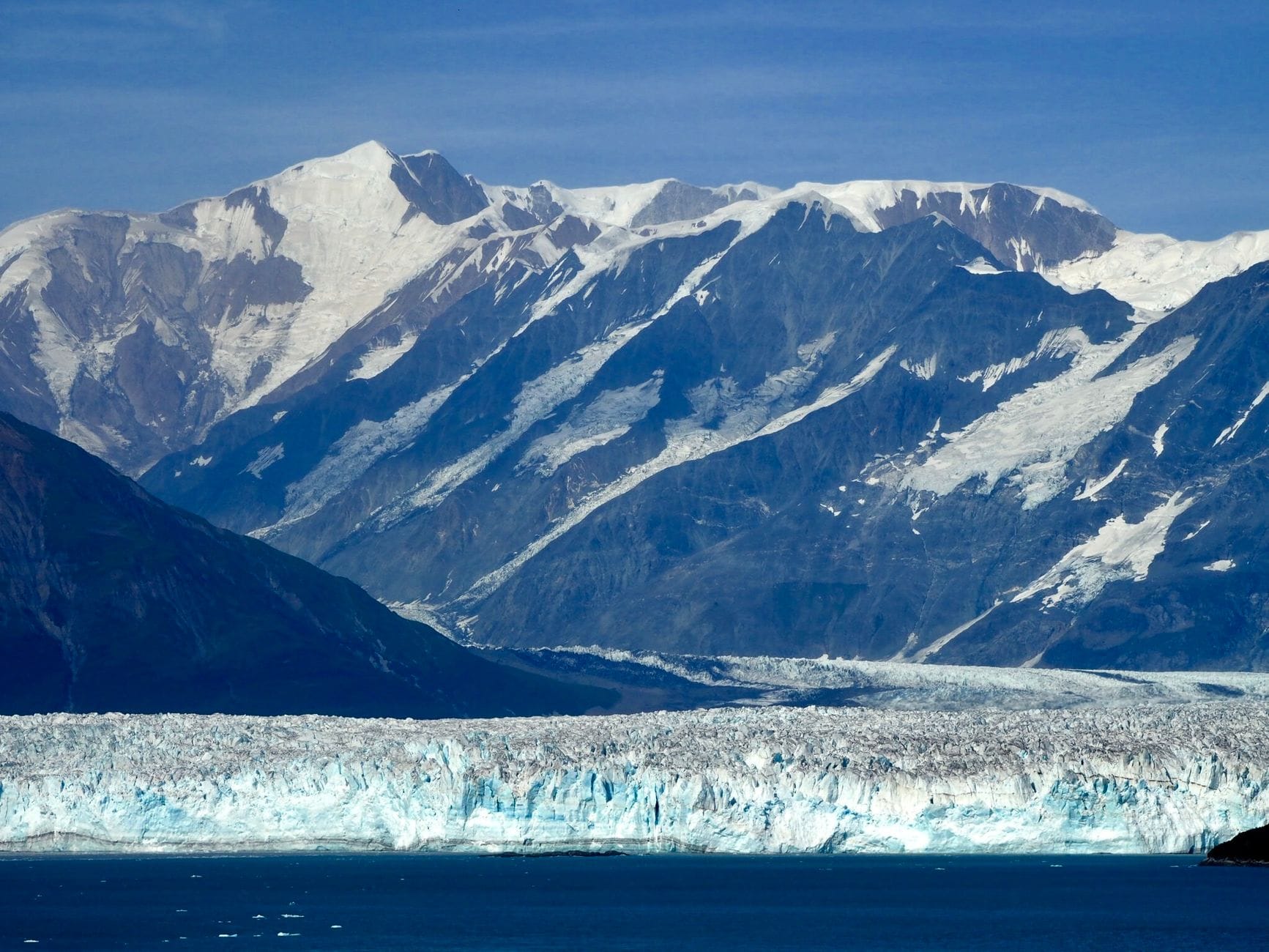
Anchorage, Alaska, MMN Correspondent: What happens when you give a glacier a little extra warmth? A new satellite study has an answer that might change how we think about ice loss in the far north. Researchers have found that for every single degree Celsius the summer temperature rises, Alaska’s glaciers lose about three weeks of their protective cold season. That is not a slow shift. That is a rapid, measurable response to a warming planet.
The study, published in the journal Nature, was led by Albin Wells, a recent Ph.D. graduate from Carnegie Mellon University, alongside David Rounce and Mark Fahnestock from the University of Alaska Fairbanks. They looked at more than 3,000 glaciers across Alaska, each one larger than half a square mile. To track them, they used radar data from Europe’s Sentinel-1 satellites, collected between mid-2016 and 2024. This is the first time such a large number of glaciers have been monitored continuously, year round, without relying on clear skies or daylight.
Why does that matter? Because traditional methods of watching glaciers depend on optical images taken in late summer. Clouds, shadows, and sudden snowfalls often hide the true picture. But synthetic aperture radar, or SAR, sends microwave pulses down to the ground. It sees through clouds. It works at night. It gives scientists a steady, reliable view of what is actually happening on the ice.
The team introduced a new way to measure this: melt days. A melt day is counted when an entire glacier is actively melting for a full 24 hour period, or when smaller melting sections add up to cover the whole surface. By tracking these melt days, the researchers noticed a clear pattern. Each degree of warming adds roughly 21 days to the melt season. That is three weeks of extra exposure to sun and warmth, which means more ice turning into water and flowing into the ocean.
One of the most dramatic examples came from the 2019 Alaska heat wave. From June 23 to July 10, temperatures across much of the state soared 20 to 30 degrees above normal. Anchorage hit 90 degrees Fahrenheit, far above its typical summer highs in the mid 60s. The heat pushed snowlines up by nearly 350 feet in elevation. That is the kind of change normally seen two months later in a typical year. During that event, glaciers lost up to 28 percent more of their protective snow cover than in average years. Without that snow, the darker ice underneath absorbs more sunlight, which speeds up melting even further.
“Our ability to quantify these changes is really important,” Wells said. “Melt extents and snowlines are proxies for glacier mass balance, the crucial measure of whether a glacier is gaining or losing ice over time.” When glaciers lose more mass than they gain, they retreat. That contributes to sea level rise and alters the ecosystems that depend on seasonal meltwater.
The study also revealed a fascinating difference between coastal and inland glaciers. Coastal glaciers, influenced by moist maritime air, experience higher summer melt and more winter snowfall. Inland glaciers face longer cold spells but still suffer from extended melt seasons as temperatures rise. Both types are losing ice at similar rates, but the internal dynamics are different. Understanding these differences helps scientists build better climate models and predict what might happen in other parts of the world.
Alaska’s glaciers are not just a local story. They hold an immense volume of freshwater, and their rapid response to temperature shifts offers a real time laboratory for understanding how glaciers might behave in the Himalayas, Patagonia, and Greenland. The Sentinel-1 satellites, with their 12 day revisit cycle and wide coverage, make it possible to monitor these regions continuously without sending teams into dangerous terrain.
This research delivers a clear message: Alaska’s glaciers are changing their seasonal rhythms in response to even modest temperature rises. Each degree of warming brings a measurable extension of the melt season. That affects water resources, marine ecosystems, and coastal communities. The tools now exist to track these changes in real time, giving scientists and policymakers the data they need to anticipate and adapt to a warming world.
Related in Scientific Research
Scientific Research
How Soft Lithium Dendrites Crack Hard Ceramic Batteries: The Discovery That Could Triple EV Range
Imagine a battery that powers your phone for five days, charges your electric car in under 15 minutes, and never catches fire. That’s the promise of solid-state batteries. But for years, a tiny, stubborn problem has kept them stuck in labs: lithium dendrites. These microscopic,…
Read More...
Scientific Research
450,000 Barred Owls Could Be Shot to Save the Spotted Owl: Here’s Why Scientists Say It’s Working
Imagine walking through a silent forest at midnight. You hear a call—a deep, rhythmic hoot—and you raise a shotgun. This isn’t a scene from a thriller. It’s the front line of one of the most ambitious and controversial conservation experiments in American history. In the dense f…
Read More...
Scientific Research
50 Year Quantum Riddle Solved: How Heidelberg Physicists Bridged Two Opposing Particle Theories
Imagine trying to describe a single dancer moving through a crowded dance floor. One theory says the dancer pulls nearby people along, creating a small moving cluster. Another theory says if the dancer stands perfectly still, the crowd around them changes so completely that the…
Read More...
Scientific Research
9 Entangled Particles Found in a Crystal You Can Hold: What This Means for Quantum Tech
Imagine holding a small crystal in your hand, one that fits comfortably in your palm. Now imagine that inside that crystal, particles are connected in a way that defies everything we thought we knew about the quantum world. That is exactly what a team of researchers at TU Wien i…
Read More...
Scientific Research
30 Years Later: Scientists Finally Identify Rye Pollen Molecules That Slow Tumors – What This Means for Cancer Therapy
For nearly three decades, a quiet mystery sat at the edge of natural medicine. Two molecules found in rye pollen seemed to slow tumor growth in animal studies. But no one could figure out their exact shape. That puzzle has now been solved by researchers at Northwestern Universit…
Read More...
Scientific Research
55 Million Affected: Scientists Just Found a New Way Alzheimer’s Kills Brain Cells – And How to Stop It
For decades, the question of how Alzheimer’s disease actually destroys brain cells has been one of the most stubborn mysteries in medicine. We knew toxic proteins like amyloid and tau build up inside neurons. We knew cells eventually die. But the exact mechanism? That was the mi…
Read More...
Scientific Research
UK Heatwave Alert: Temperatures Hit 34°C This Week – Are You Ready for the Third Scorcher of 2026?
Here we go again. The United Kingdom is bracing for its third major heatwave of 2026, with thermometers expected to climb past 34°C in southern and eastern regions. This isn’t just another warm spell – it’s a week-long event that has health officials on high alert from Saturday,…
Read More...
Scientific Research
Quantum Time Reversal Achieved: 5 Ways This Breakthrough Could Power Future Tech
What if you could rewind a moment in time not in your memory, but in the physical world itself? That question has moved from the pages of science fiction into the lab. Researchers at Los Alamos National Laboratory have just demonstrated something extraordinary: they can make qua…
Read More...
Scientific Research
6 Inventors Just Won Europe’s Top Prize – Here’s What They Created That Could Change Your Life
What do oat milk, a malaria vaccine, and recycled EV batteries have in common? They are all powered by the minds of six inventors who just took home the 2026 European Inventor Award. The European Patent Office (EPO) streamed the ceremony live from Berlin, and the winners did not…
Read More...
Scientific Research
7 Reasons Why a Remote Arctic Research Station Is Now the World's Most Watched Geopolitical Hotspot
Imagine a place so quiet that the loudest sound is the crunch of snow under your boots. A place built for science, not strategy. That was the Arctic research station on Svalbard just a few years ago. Today, that same outpost is the center of a global tug-of-war. What changed? Th…
Read More...