
Are Mandatory iPads in Irish Schools Worth the Cost? What Parents Need to Know
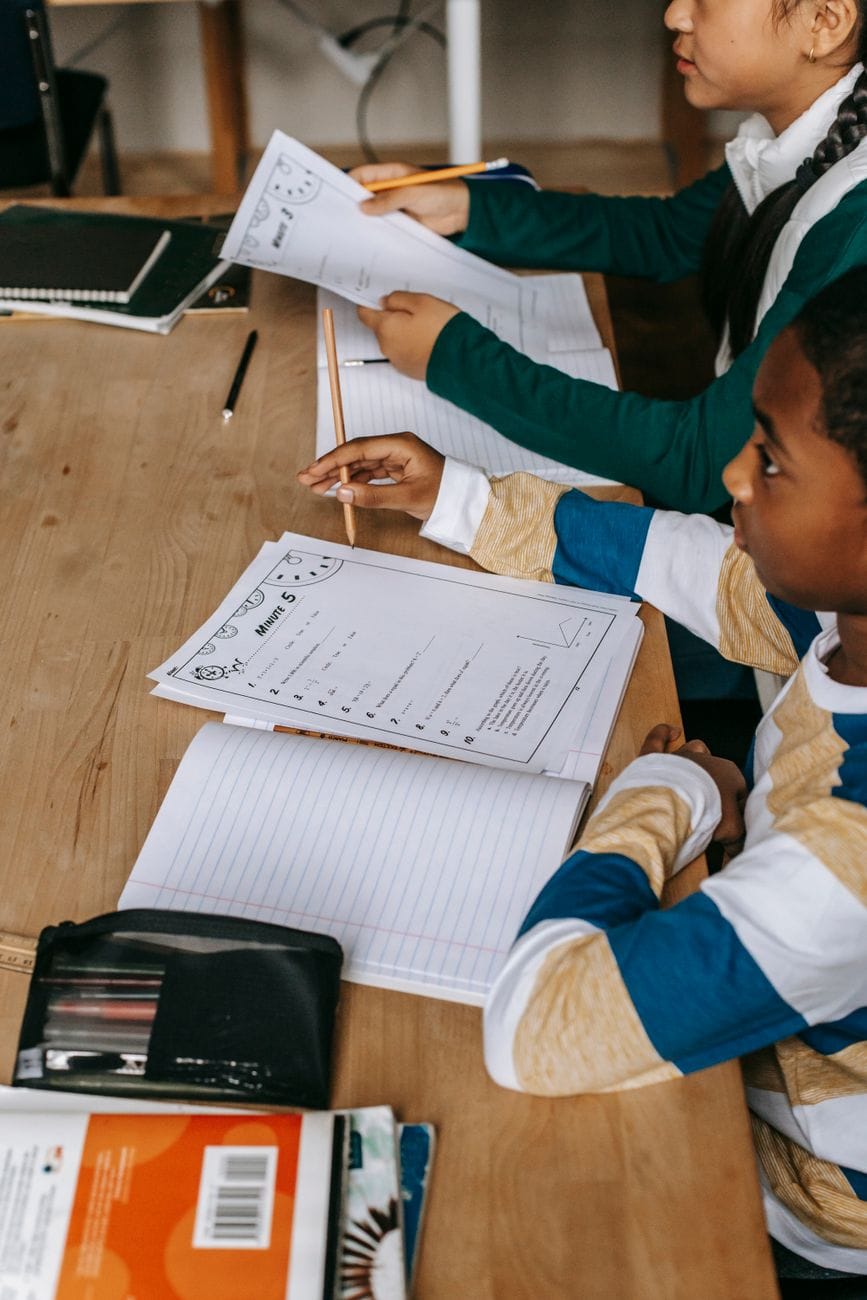
Dublin, Ireland, MMN Correspondent: Picture this: you are already stretching your monthly budget to cover rising grocery bills and energy costs. Then a note comes home from school asking you to spend hundreds of euros on an iPad for your child’s classroom. For families across Ireland, this scenario is becoming increasingly common, and it is raising an important question: is this expense truly necessary for a quality education?
Olivia Larkin, a Monaghan educator and parent, has been vocal about her concerns. She sees the pressure on families from both sides: as a teacher watching classroom trends and as a mother managing her own household budget. Larkin points out that free textbooks are already available for primary and special school students, as well as under the Free Education Scheme in post-primary schools. So why, she asks, are families being asked to pay for devices that may not even improve learning outcomes?
The push for iPads in schools did not happen by accident. Device manufacturers and educational technology companies have invested heavily in marketing directly to teachers and school administrators. They offer training sessions, incentives, and glossy presentations that make digital tools seem essential for modern education. But here is the thing: the evidence tells a more nuanced story.
A study from neuroscientists at Teachers College, Columbia University found that students who learned from printed materials showed better comprehension, retention, and focus compared to those using screens. Screen based learning, the research suggests, activates different cognitive pathways that can lead to shallower information processing and more distractions. Similar findings have emerged from Norway, where educators noticed that students using textbooks developed deeper understanding and performed better on long term assessments than their peers who relied on digital devices.
This is not just academic theory. Countries like Finland, Estonia, and South Korea, often held up as global education leaders, are now rethinking their reliance on classroom technology. Some have even scaled back digital initiatives and returned to traditional methods centered on books and paper based exercises. Their reasoning? Concerns about student well being, attention spans, and actual academic outcomes. Meanwhile, Ireland appears to be heading in the opposite direction, integrating iPads into daily instruction without clear evidence that this improves learning.
Let us talk about the financial reality for Irish families. With inflation projected to reach 5% in the coming year and food prices expected to rise again in September, household budgets are already under strain. According to the Economic and Social Research Institute (ESRI), more than half a million Irish households are currently behind on utility payments. Adding the cost of an iPad, which can run several hundred euros per child, feels like an unreasonable ask for many. A family with three school aged children could face a bill exceeding €1,800, a significant chunk of monthly income for most households.
Proponents of classroom technology often argue that digital devices enhance learning. But the research does not consistently support this claim. Multiple longitudinal studies show that while technology can be helpful for accessing online resources or multimedia content, it does not automatically improve academic performance. In fact, when used without careful oversight, screens can reduce concentration, lower reading comprehension, and increase behavioral issues. Teachers report that students are easily distracted by notifications, social media, and non educational apps, which undermines the purpose of classroom instruction.
There is also the issue of equity. Some families can afford to buy iPads, while others cannot. This creates a divide in access and opportunity that runs counter to the principles of fair education. Even when schools provide devices, the expectation that students bring them home for homework can widen the gap. Students without devices at home may fall behind, not because of ability, but because of access. That is a problem worth addressing.
Meanwhile, free textbooks remain a powerful alternative. Under Ireland’s Free Education Scheme, eligible students receive all necessary textbooks at no cost. These materials are carefully vetted, aligned with the curriculum, and designed to meet national standards. They offer a consistent, distraction free learning experience that supports deep reading and critical thinking, skills that are foundational for lifelong success.
The contrast between free textbooks and costly iPad mandates is striking. As Larkin emphasizes, asking parents to spend hundreds of euros on devices when high quality printed materials are already available feels not just impractical, but unfair. In a country where over 40% of households report difficulty covering basic expenses, such policies risk alienating families and eroding trust in the education system.
Looking ahead, experts suggest a balanced approach: integrate technology thoughtfully and only where it has proven benefits. This could mean using shared classroom devices, investing in school wide IT infrastructure, and prioritizing teacher training over individual student purchases. Digital literacy is important, but it should not come at the expense of financial equity or proven teaching methods.
Ireland stands at a crossroads in its educational journey. The choice ahead is about prioritizing fairness, affordability, and effectiveness. The evidence points to books as a foundation for deep learning. The data shows that screens can be distracting and expensive when used without careful planning. And the voices of parents and educators remind us that policies should not place undue financial burdens on families during challenging economic times.
The future of education should be measured not by device counts or tech upgrades, but by student outcomes, equity, and well being. When free textbooks are already available and proven effective, the case for mandatory iPad purchases becomes less about innovation and more about misplaced priorities.
Related in Politics

Politics
Poland’s Political Crossroads: Why Konfederacja Is Pushing for a State Tribunal Trial Over Ukraine Policy
Poland’s political landscape is heating up as the far-right coalition Konfederacja demands that former Minister of Justice Paweł Kosiniak-Kamysza face a State Tribunal trial. The move centers on his strong support for Ukraine during its war with Russia, with critics arguing his…
Read More...
Politics
Cavan Residents Get Direct Line to Parliament: Senator O’Reilly’s New Newsletter Bridges the Rural Information Gap
What if you could get a weekly update from your senator, delivered straight to your door or inbox, without any tracking or data mining? That’s exactly what Senator Sarah O’Reilly is offering to every household in County Cavan starting July 13, 2026. The initiative, announced on…
Read More...
Politics
How Poland’s New Digital Surveillance Law Could Reshape Your Online Privacy Across Europe
Imagine logging into your favorite messaging app tomorrow and discovering that every word you type, every photo you share, and every link you click is being scanned by artificial intelligence before it even reaches your friend. That scenario is no longer hypothetical. It is now…
Read More...
Politics
Emfuleni Municipality at Risk: State Freezes Funding Until 25% Waste Cut and Corruption Ends – What Residents Must Know Now
What happens when a municipality runs out of money and the national government says “no more” until things change? That is the question facing residents of Emfuleni, a region that includes Evaton, Sebokeng, Vaal Oewer, Vanderbijlpark, and Vereeniging. On July 9, 2026, the Nation…
Read More...
Politics
Volkswagen Faces 100,000 Job Cuts: Is Germany’s EV Dream Crumbling?
Deep in the heart of Germany’s industrial belt, a quiet storm is brewing. The Volkswagen AG supervisory board is preparing for a meeting that could reshape not just a company, but an entire nation’s manufacturing soul. Four German factories may close. Up to 100,000 jobs could va…
Read More...
Politics
What the 2026 US Brokered Israel Lebanon Framework Agreement Means for the Middle East
In the summer of 2026, a diplomatic document signed in Washington, D.C., has set the Middle East ablaze with debate. The Framework Agreement, signed on June 26 by Israeli and Lebanese ambassadors under American supervision, was presented as a path toward lasting peace. Instead,…
Read More...
Politics
Electricity Tariff Suspension in Mogalakwena: What R100 to R200 Hike Pause Means for Your Energy Bills and South Africa’s Fair Pricing Future
MMN Correspondent: In early July 2026, the Mogalakwena Local Municipality made a decision that caught the attention of energy watchers across South Africa. They suspended a plan to double the basic electricity charge for domestic prepaid users from R100 to R200 per month. For a…
Read More...
Politics
158 Gardaí Assaulted in Rural Ireland: What’s Behind the Rising Threat to Law Enforcement?
Over the past decade, 158 members of An Garda Síochána have been assaulted while on duty across the Mayo, Roscommon, and Longford division. That’s not just a number. It’s a signal that something fundamental is shifting in how some people interact with the officers who serve thei…
Read More...
Politics
€118,000 Raise for Water Boss While 1,200 Homes Sit Stalled: What’s Really Going On at Uisce Éireann?
Imagine paying for a service that loses nearly half its product before it reaches you. Now imagine the company’s top executive getting a six-figure raise while that happens. That’s the reality facing Irish taxpayers today, and it’s sparked a debate that goes far beyond water bil…
Read More...
Politics
Poland's Defense Dilemma: How $7 Million Missiles Sent to Ukraine Could Leave the Nation Vulnerable Until 2029
What happens when a nation’s most advanced defense systems are quietly shipped across its borders without parliamentary approval? That’s the question rattling Poland’s political and military establishment right now. Reports have surfaced that Poland’s prized PAC-3 MSE intercepto…
Read More...