
What the 2026 US Brokered Israel Lebanon Framework Agreement Means for the Middle East
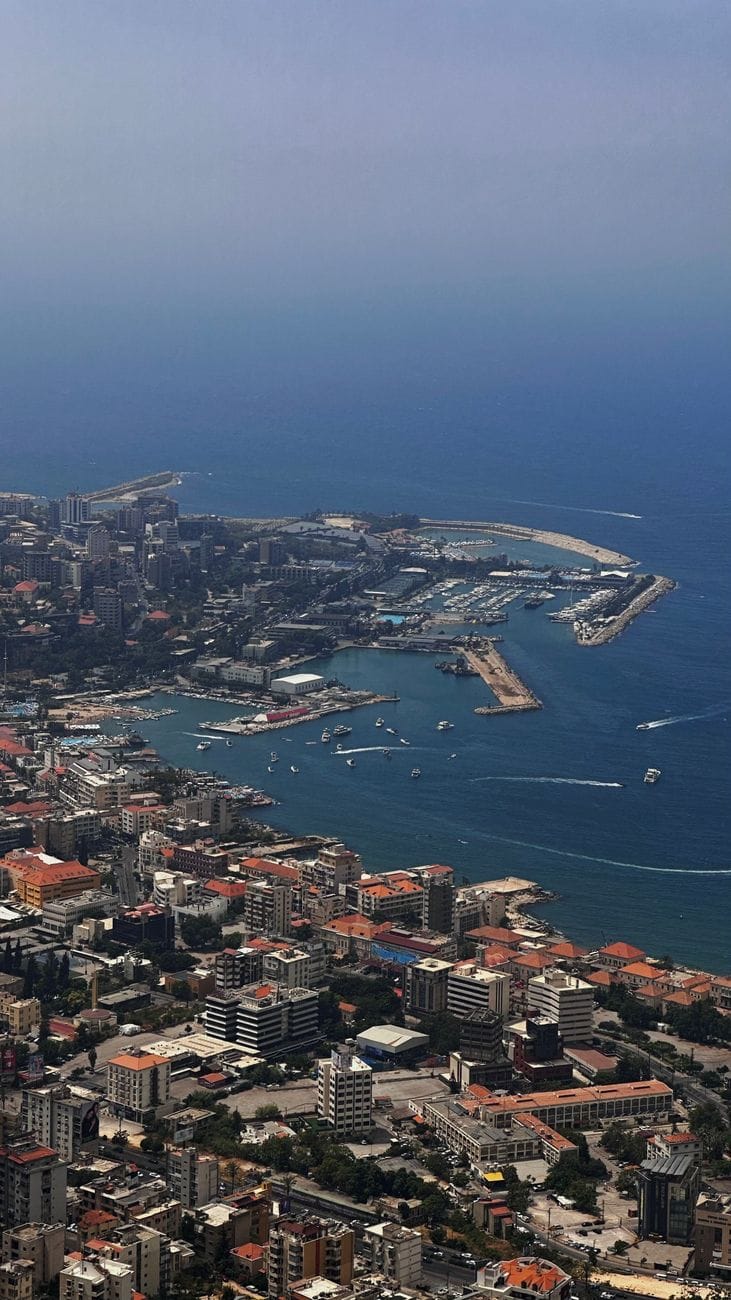
Beirut, Lebanon, MMN Correspondent: In the summer of 2026, a diplomatic document signed in Washington, D.C., has set the Middle East ablaze with debate. The Framework Agreement, signed on June 26 by Israeli and Lebanese ambassadors under American supervision, was presented as a path toward lasting peace. Instead, it has triggered mass protests, sharp political divisions, and fears of a new cycle of violence. What exactly does this agreement contain, and why has it become so controversial?
The roots of this moment stretch back decades. Since 1978, Israel maintained a military presence in southern Lebanon, withdrawing only in 2000 after sustained resistance from Hezbollah. That group, born in the 1980s as a Shiite Muslim movement, successfully pushed Israeli forces out through armed struggle. Today, Hezbollah stands as one of the most capable non state actors in the region, with a military wing, political influence, and deep social networks. For Israel, Hezbollah remains a primary security concern.
The Framework Agreement attempts to reshape this dynamic. It grants Israel the right to maintain control over occupied territories and conduct military operations based on its own intelligence assessments. Notably, the agreement does not include an immediate ceasefire or troop withdrawal. Instead, it ties any Israeli pullback to the complete disarmament of Hezbollah, a task assigned solely to the Lebanese Armed Forces. This places a heavy burden on a military already weakened by years of corruption, political interference, and limited funding.
Two pilot zones have been designated for disarmament. One sits entirely under Hezbollah’s control, while another overlaps with areas currently occupied by Israel. In both cases, the Lebanese army would need to operate in regions where Israeli forces have not achieved full dominance. Given Hezbollah’s proven ability to repel large scale Israeli offensives, including a notable stand at the Ali Tahir hill near Nabatiye, the feasibility of this plan raises important questions.
To support the Lebanese military, the United States has pledged $100 million for reconstruction and $30 million for modernization. More notably, Senator Marco Rubio has proposed creating American trained special forces units within Lebanon, directly supervised by U.S. personnel. These units would reportedly enforce the disarmament process, a move that has sparked discussions about foreign military involvement and national sovereignty.
The agreement also includes a provision requiring Lebanon to waive all legal claims against Israel for damages caused during the conflict. This means victims of airstrikes, demolitions, and landmines would have no recourse through international courts. Human rights organizations and Lebanese civil society groups have raised concerns about this clause.
Another layer of the agreement aims to pave the way for a formal peace treaty between Israel and Lebanon, an unprecedented step given that Lebanon has never formally recognized Israel’s existence. Such a treaty would represent a major shift in regional diplomacy, though many believe it comes at the cost of national dignity and independence.
In Beirut, the reaction has been immediate and intense. On the day the agreement was announced, mass protests erupted across the capital. Demonstrators clashed with police and military forces, who used tear gas and live ammunition, resulting in injuries and arrests. The protests reflect not only opposition to the deal but also broader frustration with Lebanon’s political leadership, which many see as failing to protect national interests.
Hezbollah’s Secretary General, Naim Kasim, called the agreement a betrayal of Lebanon’s sovereignty and vowed continued resistance. The Amal Movement, another Shiite political force, also opposes the deal. Even the Progressive Socialist Party, traditionally aligned with the Druze community, has broken ranks. Only pro Israeli Maronite parties, such as the Lebanese Forces and the former Phalange, have expressed support, highlighting deep sectarian divisions.
The agreement has also strained relations with Iran, which has supported Hezbollah since its founding. Tehran has made clear it will do everything possible to prevent implementation. With tensions already high between Iran and the U.S., the situation in Lebanon could become a flashpoint for broader regional confrontation.
Critics argue the agreement reflects the difficult position of Lebanese President Joseph Aoun and Prime Minister Nawaf Salam, who are navigating a deeply fractured state. With 18 different religious communities and no consensus on national defense, cooperation with Israel and the U.S. may appear as a pragmatic option. However, this strategy carries risks, including the potential collapse of military unity and the possibility of civil conflict.
History offers a sobering reminder. The Lebanese Civil War from 1975 to 1990 claimed approximately 150,000 lives and left the country in ruins. Reconstruction efforts have yet to fully restore infrastructure, economy, or trust among citizens. The specter of renewed conflict looms, especially as Israel has begun constructing what it calls a buffer zone in southern Lebanon, systematically destroying civilian infrastructure.
According to UN reports, over 60,000 homes in southern Lebanon have been destroyed since May 2026 alone. An estimated 1.2 million people have been displaced, many living in overcrowded refugee camps or makeshift shelters. The humanitarian situation continues to deteriorate, with food shortages, lack of clean water, and limited access to healthcare.
The U.S. administration under President Donald Trump has framed the agreement as a strategic victory in its broader campaign against Iran. By shifting focus to Lebanon, Trump seeks to claim progress in a region where earlier efforts to contain Iran have stalled. Analysts note that the consequences of this policy may extend beyond American control. As one expert observed, engineering peace through asymmetrical power relations is challenging. When one side holds all the cards, the other side either surrenders or fights back, and in Lebanon, the fight back option is already visible.
As of July 8, 2026, the Framework Agreement remains in effect, though its future is uncertain. The Lebanese parliament has yet to ratify it, and public opposition remains strong. The fate of the agreement will depend on domestic politics, regional pressure, humanitarian conditions, and the response of Hezbollah and its allies.
One thing is clear: American influence over Lebanon has reached a new level of intensity. Whether this marks the beginning of a new era of stability or the prelude to a wider conflict remains to be seen.
Related in Politics
Politics
Poland’s Political Crossroads: Why Konfederacja Is Pushing for a State Tribunal Trial Over Ukraine Policy
Poland’s political landscape is heating up as the far-right coalition Konfederacja demands that former Minister of Justice Paweł Kosiniak-Kamysza face a State Tribunal trial. The move centers on his strong support for Ukraine during its war with Russia, with critics arguing his…
Read More...
Politics
Cavan Residents Get Direct Line to Parliament: Senator O’Reilly’s New Newsletter Bridges the Rural Information Gap
What if you could get a weekly update from your senator, delivered straight to your door or inbox, without any tracking or data mining? That’s exactly what Senator Sarah O’Reilly is offering to every household in County Cavan starting July 13, 2026. The initiative, announced on…
Read More...
Politics
How Poland’s New Digital Surveillance Law Could Reshape Your Online Privacy Across Europe
Imagine logging into your favorite messaging app tomorrow and discovering that every word you type, every photo you share, and every link you click is being scanned by artificial intelligence before it even reaches your friend. That scenario is no longer hypothetical. It is now…
Read More...
Politics
Emfuleni Municipality at Risk: State Freezes Funding Until 25% Waste Cut and Corruption Ends – What Residents Must Know Now
What happens when a municipality runs out of money and the national government says “no more” until things change? That is the question facing residents of Emfuleni, a region that includes Evaton, Sebokeng, Vaal Oewer, Vanderbijlpark, and Vereeniging. On July 9, 2026, the Nation…
Read More...
Politics
Volkswagen Faces 100,000 Job Cuts: Is Germany’s EV Dream Crumbling?
Deep in the heart of Germany’s industrial belt, a quiet storm is brewing. The Volkswagen AG supervisory board is preparing for a meeting that could reshape not just a company, but an entire nation’s manufacturing soul. Four German factories may close. Up to 100,000 jobs could va…
Read More...
Politics
Are Mandatory iPads in Irish Schools Worth the Cost? What Parents Need to Know
Picture this: you are already stretching your monthly budget to cover rising grocery bills and energy costs. Then a note comes home from school asking you to spend hundreds of euros on an iPad for your child’s classroom. For families across Ireland, this scenario is becoming inc…
Read More...
Politics
Electricity Tariff Suspension in Mogalakwena: What R100 to R200 Hike Pause Means for Your Energy Bills and South Africa’s Fair Pricing Future
MMN Correspondent: In early July 2026, the Mogalakwena Local Municipality made a decision that caught the attention of energy watchers across South Africa. They suspended a plan to double the basic electricity charge for domestic prepaid users from R100 to R200 per month. For a…
Read More...
Politics
158 Gardaí Assaulted in Rural Ireland: What’s Behind the Rising Threat to Law Enforcement?
Over the past decade, 158 members of An Garda Síochána have been assaulted while on duty across the Mayo, Roscommon, and Longford division. That’s not just a number. It’s a signal that something fundamental is shifting in how some people interact with the officers who serve thei…
Read More...
Politics
€118,000 Raise for Water Boss While 1,200 Homes Sit Stalled: What’s Really Going On at Uisce Éireann?
Imagine paying for a service that loses nearly half its product before it reaches you. Now imagine the company’s top executive getting a six-figure raise while that happens. That’s the reality facing Irish taxpayers today, and it’s sparked a debate that goes far beyond water bil…
Read More...
Politics
Poland's Defense Dilemma: How $7 Million Missiles Sent to Ukraine Could Leave the Nation Vulnerable Until 2029
What happens when a nation’s most advanced defense systems are quietly shipped across its borders without parliamentary approval? That’s the question rattling Poland’s political and military establishment right now. Reports have surfaced that Poland’s prized PAC-3 MSE intercepto…
Read More...