
Are Your 5-a-Day Really Protecting Your Heart? New Study Reveals the Missing Nutrient in Most Diets
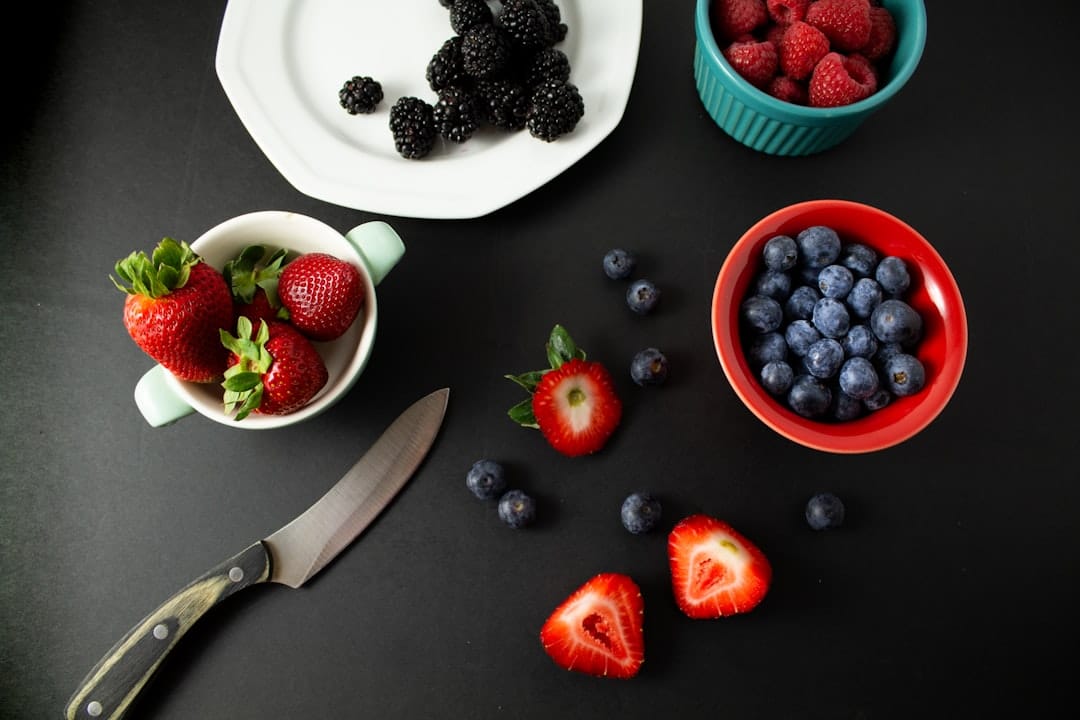
Reading, United Kingdom, MMN Correspondent: You have been told for years to eat your five a day. You are grabbing apples, carrots, spinach, and berries, checking all the boxes on your healthy eating checklist. But what if those efforts are not delivering the heart protection you thought they would? New research reveals a startling truth: simply consuming fruits and vegetables is not enough. The real key lies in choosing the right ones, specifically those rich in flavanols, a powerful group of plant compounds proven to reduce the risk of cardiovascular disease.
A groundbreaking international study involving over 30,000 participants from the UK and the US has found that fewer than 20% of people meet the recommended daily intake of flavanols linked to significant heart health benefits. Even more concerning, many individuals who follow dietary guidelines like the NHS Eatwell Guide or the USDA’s MyPlate still fall short. This suggests that not all produce is created equal when it comes to protecting your heart.
Flavanols are a subclass of flavonoids, naturally occurring compounds found in plants. They act as potent antioxidants, helping to reduce inflammation, improve blood vessel function, and lower blood pressure, all crucial factors in preventing heart disease. Previous clinical trials, including the large-scale COSMOS study, have shown that consuming 500 milligrams of flavanols daily can significantly reduce the risk of dying from cardiovascular issues. Yet, despite this clear benefit, most people remain far below that threshold.
So which foods deliver the highest concentrations of these heart-protecting compounds? The new research identifies several standout sources. A single punnet of plums, about 500 grams, provides roughly 450 milligrams of flavanols, just shy of the target. Cranberries, 250 grams, offer around 300 milligrams, while blackberries, 200 grams, deliver about 250 milligrams. A single cup of green tea contributes approximately 200 milligrams, making it one of the most accessible high-flavanol beverages. Broad beans, 80 grams, cherries, 400 grams, apples with skin, 200 grams, strawberries, 200 grams, blueberries, 150 grams, and even pinto beans, 40 grams, are also excellent sources.
What makes this discovery so transformative is the emphasis on food quality over quantity. Eating five servings of low-flavanol vegetables like iceberg lettuce or zucchini will not provide the same benefits as consuming just two servings of blackberries and a cup of green tea. Dr. Javier Ottaviani, lead researcher from the University of Reading, emphasizes this point: "Most people assume that eating plenty of fruit and vegetables covers this, but what this research shows is that the specific choices you make matter far more than the total amount."
This finding raises serious questions about current dietary recommendations. While the five-a-day message remains valuable, it may need updating to include guidance on which specific fruits and vegetables offer the greatest health returns. Professor Gunter Kuhnle of the University of Reading notes that different produce offers vastly different nutritional profiles beyond basic vitamins and minerals. As science uncovers more about bioactive compounds like flavanols, there is a growing opportunity to refine public health messaging for greater impact.
Interestingly, other recent studies reinforce the importance of flavanols beyond heart health. Research published in early 2026 revealed that the astringent taste caused by flavanols might directly signal the brain, triggering neurological effects similar to a mild physical workout. Another study showed that high-flavanol foods can counteract the decline in blood vessel function that occurs after prolonged sitting, even in physically fit individuals. These findings suggest flavanols play a broader role in vascular and nervous system resilience.
However, there are pitfalls to avoid. One surprising discovery from UC Davis researchers indicates that adding a banana to a smoothie may drastically reduce the absorption of flavanols due to interactions between compounds in the fruit. Similarly, brewing tea with tap water containing residual chlorine can degrade beneficial flavonoid compounds. These nuances highlight how preparation methods and food combinations matter just as much as ingredient selection.
For consumers looking to boost their flavanol intake, simple dietary shifts can yield major results. Swapping a morning orange for a small bowl of blackberries, replacing soda with a cup of green tea, or adding a handful of broad beans to a salad can dramatically increase daily intake without requiring drastic lifestyle changes. Incorporating these foods into regular meals, such as having plums as a dessert, cherries as a snack, or green tea with lunch, can help individuals reach the critical 500-milligram benchmark.
The implications of this research extend beyond individual health. If public health campaigns began emphasizing flavanol-rich foods, they could potentially reduce the global burden of heart disease, which remains the leading cause of death worldwide. With cardiovascular conditions affecting millions annually, even modest improvements in dietary habits could save countless lives.
As awareness grows, food manufacturers and retailers may also respond by highlighting flavanol content on packaging, much like sodium or sugar levels are currently labeled. This could empower consumers to make more informed choices at the grocery store.
Ultimately, the message is clear: eating healthy is not just about volume, it is about precision. To truly protect your heart, focus on nutrient density. Prioritize foods known to be rich in flavanols. Make them part of your daily routine. Because sometimes, the difference between a healthy diet and a heart-protecting one comes down to a single berry, a cup of tea, or a few beans.
In a world where heart disease continues to claim lives, this research offers a simple, science-backed solution, one that starts with what is on your plate.
Related in Scientific Research

Scientific Research
How Soft Lithium Dendrites Crack Hard Ceramic Batteries: The Discovery That Could Triple EV Range
Imagine a battery that powers your phone for five days, charges your electric car in under 15 minutes, and never catches fire. That’s the promise of solid-state batteries. But for years, a tiny, stubborn problem has kept them stuck in labs: lithium dendrites. These microscopic,…
Read More...
Scientific Research
450,000 Barred Owls Could Be Shot to Save the Spotted Owl: Here’s Why Scientists Say It’s Working
Imagine walking through a silent forest at midnight. You hear a call—a deep, rhythmic hoot—and you raise a shotgun. This isn’t a scene from a thriller. It’s the front line of one of the most ambitious and controversial conservation experiments in American history. In the dense f…
Read More...
Scientific Research
50 Year Quantum Riddle Solved: How Heidelberg Physicists Bridged Two Opposing Particle Theories
Imagine trying to describe a single dancer moving through a crowded dance floor. One theory says the dancer pulls nearby people along, creating a small moving cluster. Another theory says if the dancer stands perfectly still, the crowd around them changes so completely that the…
Read More...
Scientific Research
9 Entangled Particles Found in a Crystal You Can Hold: What This Means for Quantum Tech
Imagine holding a small crystal in your hand, one that fits comfortably in your palm. Now imagine that inside that crystal, particles are connected in a way that defies everything we thought we knew about the quantum world. That is exactly what a team of researchers at TU Wien i…
Read More...
Scientific Research
30 Years Later: Scientists Finally Identify Rye Pollen Molecules That Slow Tumors – What This Means for Cancer Therapy
For nearly three decades, a quiet mystery sat at the edge of natural medicine. Two molecules found in rye pollen seemed to slow tumor growth in animal studies. But no one could figure out their exact shape. That puzzle has now been solved by researchers at Northwestern Universit…
Read More...
Scientific Research
55 Million Affected: Scientists Just Found a New Way Alzheimer’s Kills Brain Cells – And How to Stop It
For decades, the question of how Alzheimer’s disease actually destroys brain cells has been one of the most stubborn mysteries in medicine. We knew toxic proteins like amyloid and tau build up inside neurons. We knew cells eventually die. But the exact mechanism? That was the mi…
Read More...
Scientific Research
UK Heatwave Alert: Temperatures Hit 34°C This Week – Are You Ready for the Third Scorcher of 2026?
Here we go again. The United Kingdom is bracing for its third major heatwave of 2026, with thermometers expected to climb past 34°C in southern and eastern regions. This isn’t just another warm spell – it’s a week-long event that has health officials on high alert from Saturday,…
Read More...
Scientific Research
Quantum Time Reversal Achieved: 5 Ways This Breakthrough Could Power Future Tech
What if you could rewind a moment in time not in your memory, but in the physical world itself? That question has moved from the pages of science fiction into the lab. Researchers at Los Alamos National Laboratory have just demonstrated something extraordinary: they can make qua…
Read More...
Scientific Research
6 Inventors Just Won Europe’s Top Prize – Here’s What They Created That Could Change Your Life
What do oat milk, a malaria vaccine, and recycled EV batteries have in common? They are all powered by the minds of six inventors who just took home the 2026 European Inventor Award. The European Patent Office (EPO) streamed the ceremony live from Berlin, and the winners did not…
Read More...
Scientific Research
7 Reasons Why a Remote Arctic Research Station Is Now the World's Most Watched Geopolitical Hotspot
Imagine a place so quiet that the loudest sound is the crunch of snow under your boots. A place built for science, not strategy. That was the Arctic research station on Svalbard just a few years ago. Today, that same outpost is the center of a global tug-of-war. What changed? Th…
Read More...