
Can Humans Regrow Limbs? New Study Shows Mammals Have Dormant Regenerative Abilities
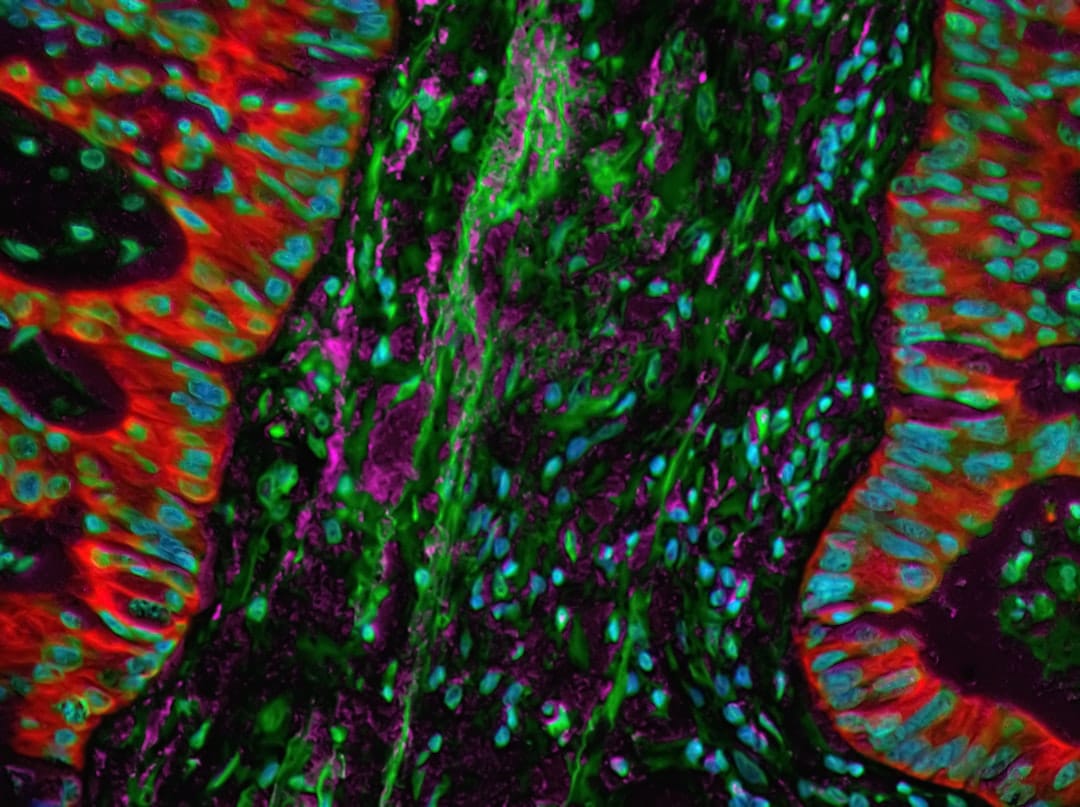
College Station, Texas, MMN Correspondent: For a long time, scientists accepted a simple truth: humans and other mammals cannot regrow lost limbs. Salamanders can do it. Some lizards can do it. But when we get hurt, our bodies form scar tissue. That scar tissue protects us, sure, but it also locks in permanent loss of function. It felt like a biological dead end.
Now, researchers at Texas A&M University’s College of Veterinary Medicine and Biomedical Sciences are asking a different question. What if the ability to regenerate isn’t gone? What if it’s just sleeping?
A new study published in Nature Communications suggests that mammals, including humans, may carry the cellular machinery for regeneration. It just needs the right push. The team found that you don’t need to transplant stem cells from outside the body. Instead, you can guide the cells already present at an injury site to rebuild complex tissues.
The approach uses two well known growth factors: fibroblast growth factor 2 (FGF2) and bone morphogenetic protein 2 (BMP2). But the timing matters. The researchers let the natural wound healing process finish first. The inflammation settled. The wound closed. Only then did they apply FGF2.
That step changed everything. In normal healing, fibroblasts rush in and form scar tissue. But with FGF2, those same cells shifted direction. They formed a blastema like structure, a cluster of undifferentiated cells that serves as the foundation for new growth in animals that regenerate naturally.
Days later, BMP2 was introduced. That signal told the cells to start building bone, ligaments, tendons, and joint tissues. The result was not a perfect replica of the original limb, but it was close. The regenerated tissue included all major components: bone, connective tissues, joints, and ligaments arranged in a pattern that mirrors natural development.
Dr. Ken Muneoka, the lead researcher and a professor in the Department of Veterinary Physiology & Pharmacology, described it as a two phase strategy. First, you move the cells away from scarring. Then, you give them the instructions to rebuild.
This challenges a core assumption in regenerative medicine. For years, the field has focused on bringing in stem cells from embryos or induced pluripotent sources. But this work suggests those cells are already at the injury site. They are just waiting for the right signals.
Dr. Larry Suva, a co author and fellow professor, put it simply. The cells are already there. You just need to learn how to get them to behave the way you want.
The concept is called positional re specification. Cells in the body normally know what to become based on where they are. A cell in your finger knows it should be part of a finger. But this study showed that injured cells can be reprogrammed to form structures different from their original identity. Joint cartilage can grow where only tendon would normally form. That level of adaptability was not expected.
What does this mean for real world medicine? The potential goes beyond regrowing entire limbs. Even small improvements in healing could change outcomes for trauma patients, orthopedic surgeries, and chronic wounds. Less scarring means better mobility, less pain, and fewer long term disabilities.
And the path to human use might be shorter than you think. Both FGF2 and BMP2 are already approved or in clinical trials for other uses. BMP2 is used in spinal fusion surgeries and fracture repair. FGF2 is being tested for diabetic ulcers and tissue repair. Their safety profiles are established, which could speed up regulatory approval for this dual factor approach.
The broader scientific community is starting to rethink evolution. Regeneration was once seen as a trait exclusive to amphibians and certain invertebrates. Now it looks like a latent feature across vertebrates. It is not lost in mammals. It is just suppressed during normal healing.
Dr. Muneoka noted that regenerative failure in mammals can be rescued. Now there is a model to figure out how.
Full limb regeneration in humans is still years or decades away. But the foundation is laid. Future studies will refine the timing, dosage, and delivery of growth factors. They will explore additional molecular signals that could enhance the response.
In the meantime, the implications for wound healing, reconstructive surgery, and sports medicine are already significant. Medical professionals may soon integrate regenerative signaling into standard post injury protocols. Not to achieve full regeneration immediately, but to dramatically improve healing quality and patient outcomes.
This research marks a turning point. It confirms that nature has equipped us with tools for self repair far more sophisticated than previously imagined. The key may not lie in adding new parts. It may lie in awakening what is already within us.
Related in Scientific Research
Scientific Research
How Soft Lithium Dendrites Crack Hard Ceramic Batteries: The Discovery That Could Triple EV Range
Imagine a battery that powers your phone for five days, charges your electric car in under 15 minutes, and never catches fire. That’s the promise of solid-state batteries. But for years, a tiny, stubborn problem has kept them stuck in labs: lithium dendrites. These microscopic,…
Read More...
Scientific Research
450,000 Barred Owls Could Be Shot to Save the Spotted Owl: Here’s Why Scientists Say It’s Working
Imagine walking through a silent forest at midnight. You hear a call—a deep, rhythmic hoot—and you raise a shotgun. This isn’t a scene from a thriller. It’s the front line of one of the most ambitious and controversial conservation experiments in American history. In the dense f…
Read More...
Scientific Research
50 Year Quantum Riddle Solved: How Heidelberg Physicists Bridged Two Opposing Particle Theories
Imagine trying to describe a single dancer moving through a crowded dance floor. One theory says the dancer pulls nearby people along, creating a small moving cluster. Another theory says if the dancer stands perfectly still, the crowd around them changes so completely that the…
Read More...
Scientific Research
9 Entangled Particles Found in a Crystal You Can Hold: What This Means for Quantum Tech
Imagine holding a small crystal in your hand, one that fits comfortably in your palm. Now imagine that inside that crystal, particles are connected in a way that defies everything we thought we knew about the quantum world. That is exactly what a team of researchers at TU Wien i…
Read More...
Scientific Research
30 Years Later: Scientists Finally Identify Rye Pollen Molecules That Slow Tumors – What This Means for Cancer Therapy
For nearly three decades, a quiet mystery sat at the edge of natural medicine. Two molecules found in rye pollen seemed to slow tumor growth in animal studies. But no one could figure out their exact shape. That puzzle has now been solved by researchers at Northwestern Universit…
Read More...
Scientific Research
55 Million Affected: Scientists Just Found a New Way Alzheimer’s Kills Brain Cells – And How to Stop It
For decades, the question of how Alzheimer’s disease actually destroys brain cells has been one of the most stubborn mysteries in medicine. We knew toxic proteins like amyloid and tau build up inside neurons. We knew cells eventually die. But the exact mechanism? That was the mi…
Read More...
Scientific Research
UK Heatwave Alert: Temperatures Hit 34°C This Week – Are You Ready for the Third Scorcher of 2026?
Here we go again. The United Kingdom is bracing for its third major heatwave of 2026, with thermometers expected to climb past 34°C in southern and eastern regions. This isn’t just another warm spell – it’s a week-long event that has health officials on high alert from Saturday,…
Read More...
Scientific Research
Quantum Time Reversal Achieved: 5 Ways This Breakthrough Could Power Future Tech
What if you could rewind a moment in time not in your memory, but in the physical world itself? That question has moved from the pages of science fiction into the lab. Researchers at Los Alamos National Laboratory have just demonstrated something extraordinary: they can make qua…
Read More...
Scientific Research
6 Inventors Just Won Europe’s Top Prize – Here’s What They Created That Could Change Your Life
What do oat milk, a malaria vaccine, and recycled EV batteries have in common? They are all powered by the minds of six inventors who just took home the 2026 European Inventor Award. The European Patent Office (EPO) streamed the ceremony live from Berlin, and the winners did not…
Read More...
Scientific Research
7 Reasons Why a Remote Arctic Research Station Is Now the World's Most Watched Geopolitical Hotspot
Imagine a place so quiet that the loudest sound is the crunch of snow under your boots. A place built for science, not strategy. That was the Arctic research station on Svalbard just a few years ago. Today, that same outpost is the center of a global tug-of-war. What changed? Th…
Read More...