
Could a Memory Protein Be Spreading Alzheimer’s? What New Research Reveals About Tau’s Travels
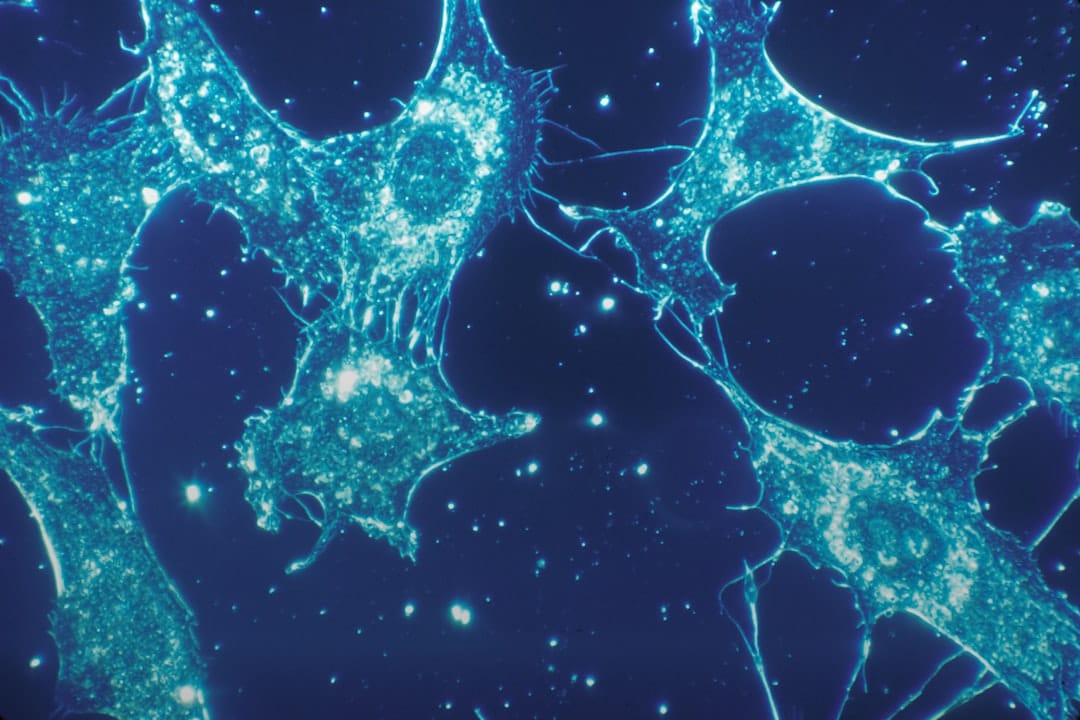
Salt Lake City, MMN Correspondent: For years, the story of Alzheimer’s disease has centered on two main characters: amyloid-beta and tau. Amyloid plaques got most of the blame, but tau—the protein that forms tangled knots inside neurons—has quietly emerged as the real driver of cognitive decline. Now, a team from the University of Utah Health and Washington University in St. Louis has uncovered something unexpected: a protein that normally helps you learn and remember may be helping tau move from cell to cell.
Published in the journal Cell, the study reveals that tau doesn’t spread on its own. It hitches a ride inside tiny bubbles called extracellular vesicles, or EVs. These bubbles are part of a natural communication system between neurons. In a healthy brain, they carry signals that support memory and plasticity. But in Alzheimer’s, they become delivery trucks for toxic tau.
The key player here is a protein called Arc. Arc is essential for synaptic plasticity—the brain’s ability to strengthen connections based on experience. It’s also involved in memory formation. But the new research shows that in diseased brains, tau binds to Arc inside these vesicles. Once loaded, the EVs travel to neighboring neurons and release their cargo. Inside a healthy cell, the tau seeds trigger misfolding of normal tau, starting the tangle process all over again.
What happens when you remove Arc from the equation? In mouse models, the transfer of tau between neurons dropped by nearly 90 percent. Without Arc, tau stayed trapped inside diseased cells, unable to reach healthy ones. That’s a dramatic reduction. It suggests that if we can interrupt this pathway, we might be able to stop the spread of tau—even if existing damage remains.
But here’s where it gets interesting. Arc also helps sick neurons get rid of toxic tau. In mice without Arc, neurons accumulated more tau internally and died faster. So Arc plays a dual role: it helps tau spread, but it also helps cells survive by expelling dangerous buildup. Blocking Arc entirely could backfire, especially in early stages. The smarter approach might be to disrupt the specific interaction between Arc and tau inside the vesicles, or to prevent healthy neurons from taking up those vesicles in the first place.
This opens up a new direction for treatment. Instead of trying to clear amyloid plaques or eliminate tau entirely—approaches that have struggled in clinical trials—scientists could focus on intercepting tau’s journey between cells. Imagine a therapy that neutralizes Arc-tau-laden vesicles or blocks their entry into healthy neurons. It wouldn’t reverse damage that’s already done, but it could slow or stop further cognitive decline, especially if given early.
The relevance isn’t just theoretical. The researchers found Arc and tau together in extracellular vesicles from human brain tissue after death. That suggests the same process happens in people. Clinical applications are still years away, requiring safety testing and precise delivery systems. But the foundation is solid.
Current treatments like aducanumab and lecanemab target amyloid plaques and offer modest benefits with significant risks. This new pathway targets the spread of pathology rather than its initial formation. That shift could allow for earlier intervention, during pre-symptomatic or mild cognitive impairment stages, when treatment might be most effective.
Similar mechanisms are being studied in other neurodegenerative diseases. In Parkinson’s, alpha-synuclein spreads between cells. In ALS, it’s TDP-43. Understanding how proteins move via EVs could transform treatment strategies across multiple conditions.
Beyond therapy, this discovery deepens our understanding of brain biology. Arc is essential for learning and memory. Its involvement in disease propagation highlights the delicate balance between normal function and pathological exploitation. The brain’s own tools can be turned against it.
The study was supported by the National Institutes of Health, the Chan-Zuckerberg Initiative, the Alzheimer’s Association, and several private foundations. These investments reflect a growing global commitment to solving the Alzheimer’s crisis, which affects over 55 million people worldwide and is projected to triple by 2050 if no effective treatments emerge.
As research advances, targeting the Arc-tau transmission pathway could become a cornerstone of future care. With early detection methods improving and biomarkers becoming more accessible, the window for preventive therapies is expanding. A treatment that stops the spread of tau could transform outcomes for millions, preserving independence and quality of life for longer periods.
The journey from mouse model to human medicine is long and complex. But identifying Arc as a key facilitator of tau spread marks a turning point. It shifts the narrative from simply removing toxins to protecting healthy brain networks. By understanding how disease spreads, science moves closer to stopping it—not just slowing it.
Related in Scientific Research
Scientific Research
How Soft Lithium Dendrites Crack Hard Ceramic Batteries: The Discovery That Could Triple EV Range
Imagine a battery that powers your phone for five days, charges your electric car in under 15 minutes, and never catches fire. That’s the promise of solid-state batteries. But for years, a tiny, stubborn problem has kept them stuck in labs: lithium dendrites. These microscopic,…
Read More...
Scientific Research
450,000 Barred Owls Could Be Shot to Save the Spotted Owl: Here’s Why Scientists Say It’s Working
Imagine walking through a silent forest at midnight. You hear a call—a deep, rhythmic hoot—and you raise a shotgun. This isn’t a scene from a thriller. It’s the front line of one of the most ambitious and controversial conservation experiments in American history. In the dense f…
Read More...
Scientific Research
50 Year Quantum Riddle Solved: How Heidelberg Physicists Bridged Two Opposing Particle Theories
Imagine trying to describe a single dancer moving through a crowded dance floor. One theory says the dancer pulls nearby people along, creating a small moving cluster. Another theory says if the dancer stands perfectly still, the crowd around them changes so completely that the…
Read More...
Scientific Research
9 Entangled Particles Found in a Crystal You Can Hold: What This Means for Quantum Tech
Imagine holding a small crystal in your hand, one that fits comfortably in your palm. Now imagine that inside that crystal, particles are connected in a way that defies everything we thought we knew about the quantum world. That is exactly what a team of researchers at TU Wien i…
Read More...
Scientific Research
30 Years Later: Scientists Finally Identify Rye Pollen Molecules That Slow Tumors – What This Means for Cancer Therapy
For nearly three decades, a quiet mystery sat at the edge of natural medicine. Two molecules found in rye pollen seemed to slow tumor growth in animal studies. But no one could figure out their exact shape. That puzzle has now been solved by researchers at Northwestern Universit…
Read More...
Scientific Research
55 Million Affected: Scientists Just Found a New Way Alzheimer’s Kills Brain Cells – And How to Stop It
For decades, the question of how Alzheimer’s disease actually destroys brain cells has been one of the most stubborn mysteries in medicine. We knew toxic proteins like amyloid and tau build up inside neurons. We knew cells eventually die. But the exact mechanism? That was the mi…
Read More...
Scientific Research
UK Heatwave Alert: Temperatures Hit 34°C This Week – Are You Ready for the Third Scorcher of 2026?
Here we go again. The United Kingdom is bracing for its third major heatwave of 2026, with thermometers expected to climb past 34°C in southern and eastern regions. This isn’t just another warm spell – it’s a week-long event that has health officials on high alert from Saturday,…
Read More...
Scientific Research
Quantum Time Reversal Achieved: 5 Ways This Breakthrough Could Power Future Tech
What if you could rewind a moment in time not in your memory, but in the physical world itself? That question has moved from the pages of science fiction into the lab. Researchers at Los Alamos National Laboratory have just demonstrated something extraordinary: they can make qua…
Read More...
Scientific Research
6 Inventors Just Won Europe’s Top Prize – Here’s What They Created That Could Change Your Life
What do oat milk, a malaria vaccine, and recycled EV batteries have in common? They are all powered by the minds of six inventors who just took home the 2026 European Inventor Award. The European Patent Office (EPO) streamed the ceremony live from Berlin, and the winners did not…
Read More...
Scientific Research
7 Reasons Why a Remote Arctic Research Station Is Now the World's Most Watched Geopolitical Hotspot
Imagine a place so quiet that the loudest sound is the crunch of snow under your boots. A place built for science, not strategy. That was the Arctic research station on Svalbard just a few years ago. Today, that same outpost is the center of a global tug-of-war. What changed? Th…
Read More...