
Europe, Pay Attention: Schengen Suspended as 78,000 Migrants at Ceuta Spark a Spain-Italy Border Row
We compile, generate and translate using Artificial Intelligence from the below given source. Macro Micro News is responsible for its editorial publication.
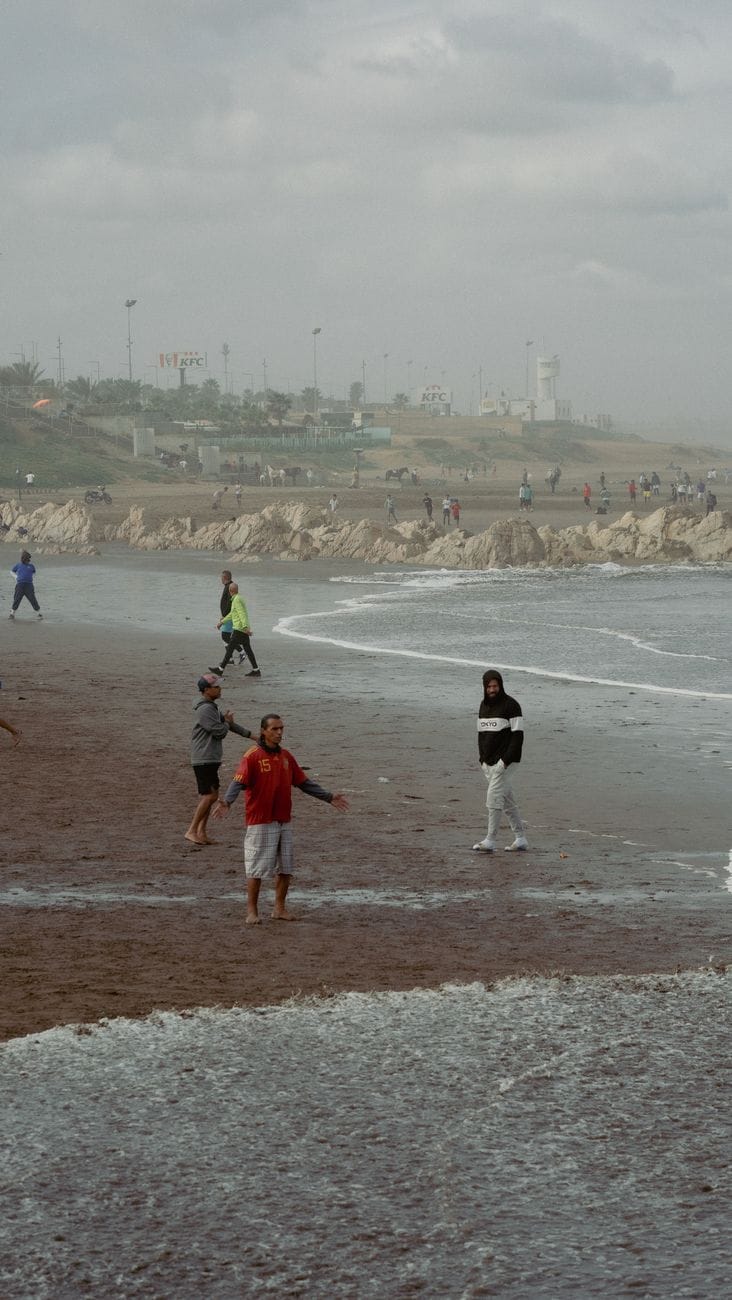
Ceuta, Spain - MMN Correspondent: Europe is watching a strange new reality: two EU member states now run border checks against each other. Spain has imposed passport, nationality, and visa controls on all air and sea arrivals from Italy, a direct response to Italy's decision to restrict travelers coming from Spain. The reciprocal moves put the Schengen area in an unusual spot because the system is built on mutual trust. Think about that for a second.
The sequence started on 30 July 2026, when an estimated 78,000 migrants, mostly from Morocco, attempted to cross into Ceuta in one day. Imagine a border post handling that many people at once. Local services were overwhelmed, and hundreds of migrants were seen lined up on the beaches waiting for aid. Most were returned to Morocco within a few days. Close to 1,400 unaccompanied minors, some described as very young boys and girls, are still in the enclave while officials process cases and work on family reunification.
Italy described its suspension of Schengen as a preventive measure. The government in Rome said the checks were necessary to stop any migrant from Ceuta traveling onward to Italy. Madrid rejected that reasoning and pointed out that those in Ceuta had no legal or practical path into the Schengen zone. Many were already back in Morocco, and the rest remained under Spanish control inside the exclave.
The dispute has become a direct clash between two leaders. Spain's socialist Prime Minister Pedro Sánchez and Italy's conservative Prime Minister Giorgia Meloni have very different ideas about migration policy, and this episode has turned those differences into concrete border checks. Italy, responding to Spain's demand to lift its controls by Sunday, insisted the measures would stay until at least 15 August. Rome also said it would not accept ultimatums and would keep the suspension in place under any circumstances until security and terrorist risks for Italy were completely eliminated.
Spain answered with its own checks. Passengers arriving from Italy, including visitors from other countries traveling through Italy, now face passport, nationality, and visa inspections. The Spanish government says the controls will remain until at least 7 September unless the situation changes. Official language points to persistent irregular migratory pressure in Italy, a reference to the continuing arrivals across the Mediterranean.
The effect on travel has been immediate. Italian officials emphasize that Spanish citizens are exempt from the added checks, with the extra screening aimed at non-EU residents. Reports from El Pais show long queues at several terminals, where flights from Spain are directed to dedicated lines for enhanced checks. Travelers and businesses are watching closely, aware that further escalation could affect tourism and trade between the two countries.
Schengen has seen temporary suspensions before, usually in response to security threats or migration pressure. Italy already has controls on its border with Slovenia. What makes this moment stand out is the bilateral nature. Two EU countries are running reciprocal restrictions on citizens traveling from each other's territory. That is a new stress test for a system designed to make internal borders almost invisible.
The European reaction has been varied. Finland and Denmark expressed support for Italy's reasoning, and the Czech Republic went a step further by calling for Spain's Schengen membership to be temporarily suspended. The EU Migration Commissioner, Magnus Brunner, has suggested that criminal networks spreading disinformation played a role in the mass crossing attempt. The Spanish government shares that view. The exact trigger for the surge is still unclear. Social media activity in Morocco may have created expectations of another attempt. Spanish authorities say they do not anticipate a repeat of last week's events.
Behind the border row lies a longer dispute between Spain and Morocco over Ceuta and Melilla, two Spanish enclaves on the Moroccan coast. Morocco does not recognize them as Spanish territory. A recent ruling by Spain's Supreme Court added another layer. It said migrants intercepted at sea while trying to reach the enclaves cannot be summarily returned to Morocco. Moroccan officials have blamed that ruling for weakening the border deterrent. They told local outlets the dam gave way under the weight of a judge's decision.
The wider question now is what this means for the EU's ability to manage external borders while keeping free movement inside. Migration pressure in the Mediterranean is not new. The challenge is that each country feels the weight differently, and this dispute has exposed how quickly that imbalance can turn into policy friction. There is a real opportunity here for European leaders to discuss a shared approach and prevent bilateral disagreements from multiplying.
For now, the immediate focus stays on Ceuta. Hundreds of minors remain in temporary care, and no one knows exactly when their cases will be resolved. Spanish authorities have announced no plans for another wave of crossings, even as online chatter keeps the situation fluid. The EU has responded carefully, urging Madrid and Rome to keep talking. With both governments standing firm, a quick breakthrough looks unlikely.
The real test is what happens next. If the reciprocal controls stay in place through August and beyond, the Schengen area will look less like a shared travel zone and more like a collection of national decisions. This dispute is about more than two countries. It is about whether Europe can still turn common principles into common action when pressure is high.
Related in Global Trend
Politics
Europe's Competitiveness Comeback: 6 Battlegrounds Every Business Leader Must Watch
What happens when the old economic certainties fade? You build new ones. Ursula von der Leyen took the stage at La Rencontre des Entrepreneurs de France, held at Roland Garros, and delivered a straightforward message to business leaders: Europe will produce, invest and protect.…
Read More...
Scientific Research
See the Ocean Breathe: Sentinel-6B Tracks El Niño and Rising Sea Levels Across 90% of Earth
. Hundreds of miles above Earth, satellites are watching the ocean breathe. The surface rises and falls with warmth, and those small changes tell a huge story about the planet. Sentinel-6B joined that story in November 2025, and it is already showing what a single satellite can…
Read More...
Politics
Europeans, Electrification Is Europe's Way Out After Two Energy Crises. Here's the 46% by 2040 Plan
Can Europe ever feel truly secure about its energy future? After two major energy crises in five years, that question is front and center. European Commission President Ursula von der Leyen used her video address to the Offshore Northern Seas conference in Stavanger to deliver a…
Read More...
Politics
European Commission’s Major Decisions: €4.5M Fuel Aid, Pratt & Whitney Case, LNG Shipping, Ukraine’s 35th Independence Day – What They Mean for You
One decision could ease the pressure on fishing businesses dealing with expensive fuel. Another might give aircraft maintenance providers more freedom to source used parts. Then there’s a new LNG shipping venture, a day of remembrance, and a huge vote of confidence in Ukraine. A…
Read More...
Global Trend
EPAC 2026 Enrolment Open Until 15 September: Which Modular Patent Administration Exam Module Will You Pass First?
The next European Patent Administration Certification (EPAC) examination is set for 5 November 2026, with enrolment open until 15 September. This year brings a major change. The examination is fully modular. Each successfully completed module leads to an EPO Diploma, and candida…
Read More...
Global Trend
ATM 2026: Experience-Led Growth Is Transforming Middle East Hospitality. Are You Ready?
What does the next era of Middle East hospitality look like? The answer will take shape at Arabian Travel Market 2026, where the region’s hotel leaders, investors and technology pioneers gather from 14 to 17 September at Dubai World Trade Centre. The theme “Travel 2040: Driving…
Read More...
Global Trend
Planning a Festive Escape? Anguilla Named No. 1 Caribbean Destination for 2026 by Virtuoso
If you are planning a festive escape, this is a name you need to know. Virtuoso has just placed Anguilla at the top of the Caribbean for festive travel, and the news carries serious weight. The island is now ranked No. 1 in the region and No. 3 globally for the 2026 holiday seas…
Read More...
Global Trend
Canada in Autumn: 5 Quaint Towns, Harvest Festivals, and Food Trails You'll Want to Explore This Fall
Autumn in Canada shows up with arms full of red and gold. The nights get cooler, the air smells like wood smoke, and small towns suddenly have something to celebrate. If you're planning a fall trip, this is the season to hit the road and explore vineyards, harbours, farm fields,…
Read More...
Global Trend
Where Do $40 Billion in Caribbean Tourism Dollars Really Go? CHTA and FIU Launch Landmark Study
Tourism has long been the beating heart of the Caribbean economy. A pressing question continues to hover over the region: how much of the money visitors spend actually stays in Caribbean communities? A new partnership between the Caribbean Hotel and Tourism Association (CHTA) an…
Read More...
Global Trend
Discover Ancient Blessings and Modern Elephant Science at World Elephant Day 2026 in Thailand’s Golden Triangle
World Elephant Day has become one of the most important dates on the conservation calendar. Every 12 August, the global community looks closely at the challenges elephants face and the people who care for them. In 2026, Anantara Golden Triangle Elephant Camp & Resort turned the…
Read More...