
Here's How an Australian Crew Pulled Off a Midwinter Antarctic Rescue at -43°C
We compile, generate and translate using Artificial Intelligence from the below given source. Macro Micro News is responsible for its editorial publication.
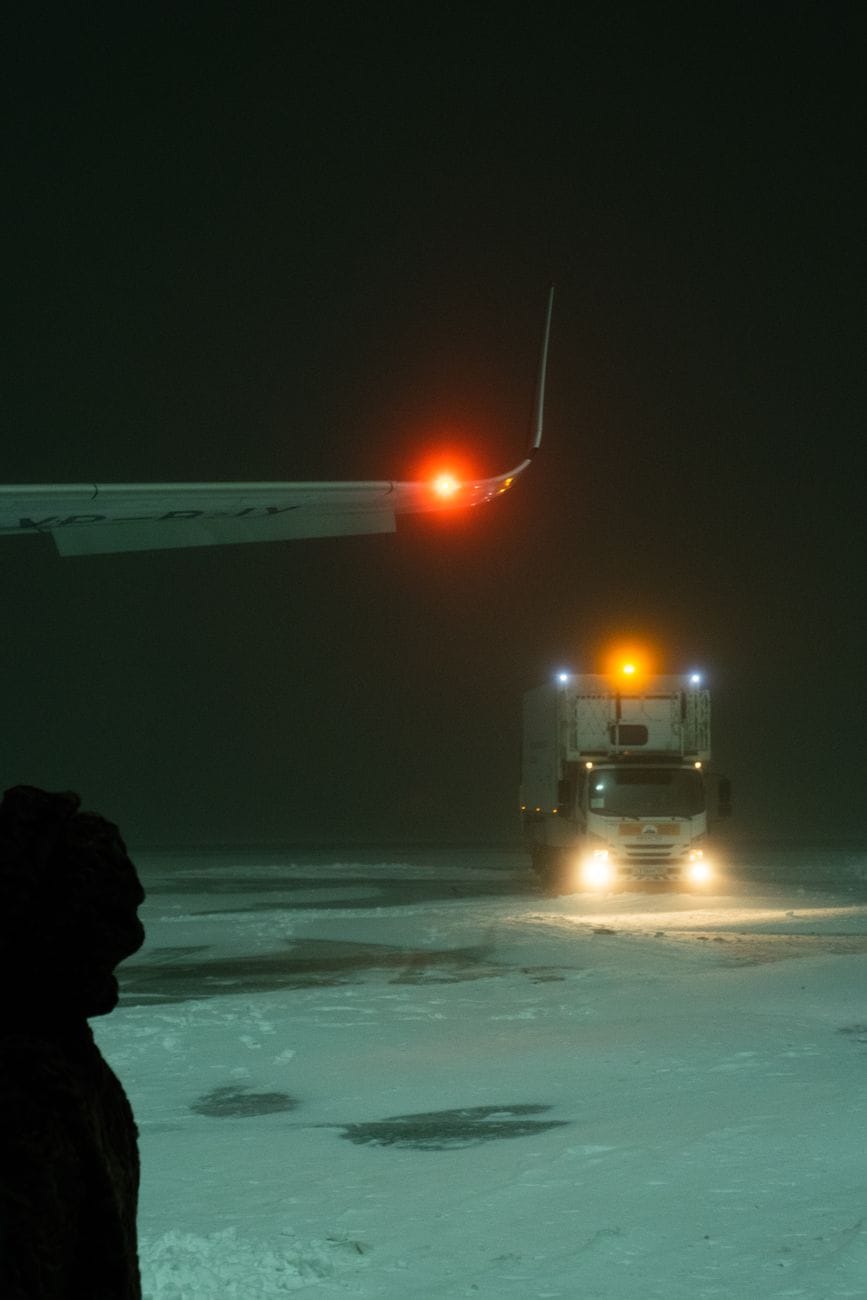
McMurdo Station, Antarctica, MMN Correspondent: Imagine flying a passenger jet over the Southern Ocean in total darkness, knowing that the runway ahead is a strip of ice buried in night. That is the challenge an Australian crew faced in July when they received an urgent call for help from McMurdo Station. A US expedition member was critically ill and needed to reach a hospital in Christchurch, New Zealand, more than 3,500 kilometers away.
The request landed with Skytraders, a Hobart based company that has spent decades mastering polar flight. Their aircraft, an Airbus A319 known as Snowbird 1, is no ordinary airliner. It is fitted with extra fuel tanks, advanced navigation gear and a medical bay that can support a patient over long distances. Within 24 hours of the distress call, a team of engineers, medics and pilots had turned the plane into a fully equipped rescue unit.
The hardest part was the weather. Antarctic winter is dark, cold and full of sudden blizzards, whiteouts and winds that shift without warning. The first takeoff attempt was postponed for 12 hours while meteorologists scanned satellite images for a safe opening. Then, in the early hours of a Friday morning, they found one. Snowbird 1 took off from Hobart and headed south.
You might wonder how anyone finds a runway in total darkness. At McMurdo, the runway has no lights. Pilots use the aircraft's landing lights and the few lit buildings at the station. At -43°C, even those small details matter. The flight took more than five hours through an empty, black sky. As the aircraft approached McMurdo, the outside temperature had dropped to -43°C. Captain Al Wallach, a polar veteran with decades of experience, later described it as right on the edge of what any aircraft can do.
When the wheels touched the ice, the mission was far from complete. The crew kept the engines running to stop them from freezing while the medical team moved the patient into the plane. Frostbite could set in within minutes at that temperature, so every movement counted. Once the patient was safely onboard, Snowbird 1 climbed back into the dark sky and flew to New Zealand. The patient received care and is now recovering well.
What makes a mission like this possible? Preparation, teamwork and a deep understanding of extreme environments. Skytraders deputy chief executive Duncan Mackay noted that this was the closest a civilian airliner had ever operated to the winter solstice. That means no daylight at all, for weeks. Ice can form on wings, hydraulic fluids can thicken, and equipment can fail. The crew trained for all of it.
This rescue was also a reminder of why Antarctic science matters. The continent holds clues to the Earth's climate, from ice cores to ocean currents. Research stations like McMurdo depend on partners around the world. The Antarctic Treaty encourages nations to support each other in emergencies, and this mission showed exactly how that should work. The US Antarctic Program asked for help. Australia answered. A life was saved.
Skytraders has done this before. In March 2020, the company evacuated another US program member from McMurdo when temperatures were -30°C. Each successful rescue strengthens the trust that keeps Antarctic research moving. For the small team wintering over on the ice, knowing that help can arrive from across the ocean makes the isolation a little easier to face.
There is something quietly remarkable about this operation. It did not rely on a lucky break. It relied on people who chose to work in one of the harshest places on Earth and who prepare for the things that could go wrong. The pilot, the meteorologists, the doctors and the ground crew all played a part. Their work is a quiet promise to the researchers on the ice: you are not alone.
As the planet warms, the data gathered in Antarctica becomes even more important. Projects at McMurdo study sea level rise, polar ice sheets and the health of the ocean. Every flight that keeps those researchers safe, whether it is a supply run or a rescue, supports that knowledge. In this way, a single medevac is about more than one patient. It helps keep the door open for science in a place that still has so much to teach us.
The lights of McMurdo Station remain bright through the winter months. They stand as a small spot of warmth in a vast frozen landscape. The Australian crew who landed there in the dark, in the middle of winter, will not forget it. And neither will the person they carried home.
Related in Global Trend

Politics
Europe's Competitiveness Comeback: 6 Battlegrounds Every Business Leader Must Watch
What happens when the old economic certainties fade? You build new ones. Ursula von der Leyen took the stage at La Rencontre des Entrepreneurs de France, held at Roland Garros, and delivered a straightforward message to business leaders: Europe will produce, invest and protect.…
Read More...
Scientific Research
See the Ocean Breathe: Sentinel-6B Tracks El Niño and Rising Sea Levels Across 90% of Earth
. Hundreds of miles above Earth, satellites are watching the ocean breathe. The surface rises and falls with warmth, and those small changes tell a huge story about the planet. Sentinel-6B joined that story in November 2025, and it is already showing what a single satellite can…
Read More...
Politics
Europeans, Electrification Is Europe's Way Out After Two Energy Crises. Here's the 46% by 2040 Plan
Can Europe ever feel truly secure about its energy future? After two major energy crises in five years, that question is front and center. European Commission President Ursula von der Leyen used her video address to the Offshore Northern Seas conference in Stavanger to deliver a…
Read More...
Politics
European Commission’s Major Decisions: €4.5M Fuel Aid, Pratt & Whitney Case, LNG Shipping, Ukraine’s 35th Independence Day – What They Mean for You
One decision could ease the pressure on fishing businesses dealing with expensive fuel. Another might give aircraft maintenance providers more freedom to source used parts. Then there’s a new LNG shipping venture, a day of remembrance, and a huge vote of confidence in Ukraine. A…
Read More...
Global Trend
EPAC 2026 Enrolment Open Until 15 September: Which Modular Patent Administration Exam Module Will You Pass First?
The next European Patent Administration Certification (EPAC) examination is set for 5 November 2026, with enrolment open until 15 September. This year brings a major change. The examination is fully modular. Each successfully completed module leads to an EPO Diploma, and candida…
Read More...
Global Trend
ATM 2026: Experience-Led Growth Is Transforming Middle East Hospitality. Are You Ready?
What does the next era of Middle East hospitality look like? The answer will take shape at Arabian Travel Market 2026, where the region’s hotel leaders, investors and technology pioneers gather from 14 to 17 September at Dubai World Trade Centre. The theme “Travel 2040: Driving…
Read More...
Global Trend
Planning a Festive Escape? Anguilla Named No. 1 Caribbean Destination for 2026 by Virtuoso
If you are planning a festive escape, this is a name you need to know. Virtuoso has just placed Anguilla at the top of the Caribbean for festive travel, and the news carries serious weight. The island is now ranked No. 1 in the region and No. 3 globally for the 2026 holiday seas…
Read More...
Global Trend
Canada in Autumn: 5 Quaint Towns, Harvest Festivals, and Food Trails You'll Want to Explore This Fall
Autumn in Canada shows up with arms full of red and gold. The nights get cooler, the air smells like wood smoke, and small towns suddenly have something to celebrate. If you're planning a fall trip, this is the season to hit the road and explore vineyards, harbours, farm fields,…
Read More...
Global Trend
Where Do $40 Billion in Caribbean Tourism Dollars Really Go? CHTA and FIU Launch Landmark Study
Tourism has long been the beating heart of the Caribbean economy. A pressing question continues to hover over the region: how much of the money visitors spend actually stays in Caribbean communities? A new partnership between the Caribbean Hotel and Tourism Association (CHTA) an…
Read More...
Global Trend
Discover Ancient Blessings and Modern Elephant Science at World Elephant Day 2026 in Thailand’s Golden Triangle
World Elephant Day has become one of the most important dates on the conservation calendar. Every 12 August, the global community looks closely at the challenges elephants face and the people who care for them. In 2026, Anantara Golden Triangle Elephant Camp & Resort turned the…
Read More...