
Is Planet Nine Real? New Discovery of 2023 KQ14 Challenges Everything We Know About the Outer Solar System
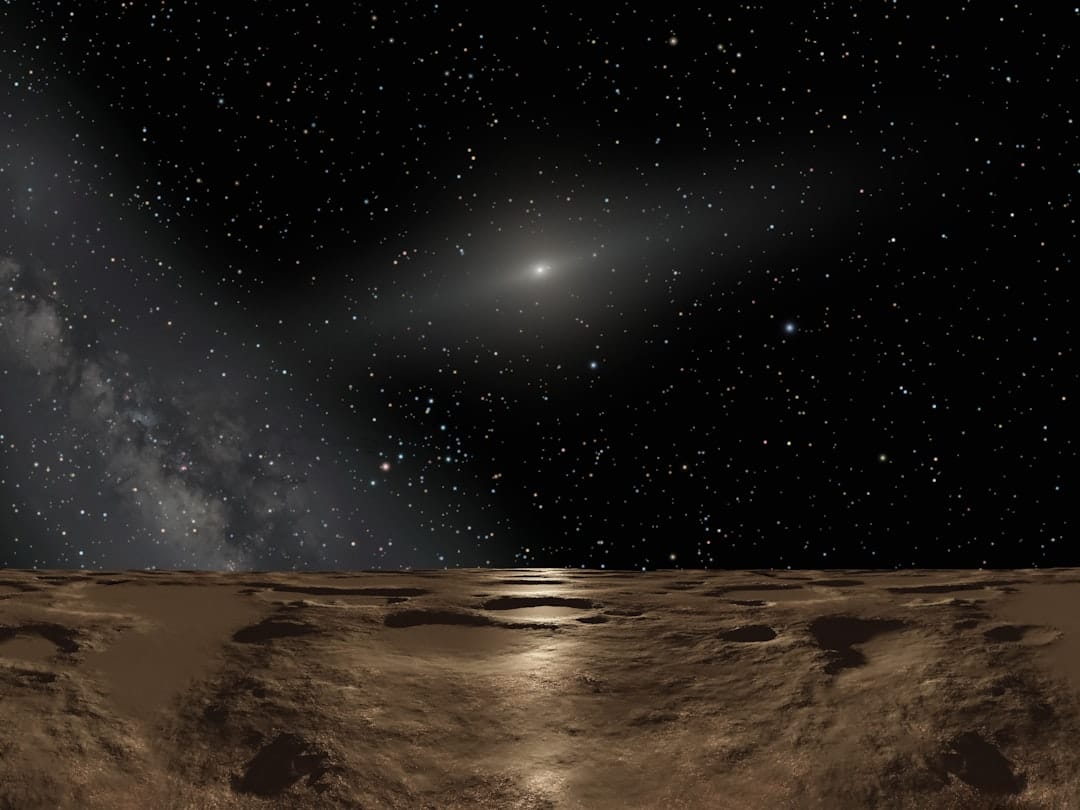
Pasadena, California, MMN Correspondent: For more than a century, astronomers have wondered if a giant, unseen planet is hiding in the darkest corners of our Solar System. The story began with the search for Planet X, a hypothetical world thought to explain oddities in Uranus’s orbit. That mystery was solved in the 1990s when scientists recalculated Neptune’s mass. But the idea refused to die. In 2016, Caltech researchers Konstantin Batygin and Michael Brown revived the hunt with a bold proposal: Planet Nine, a world 5 to 10 times Earth’s mass, orbiting the Sun at distances beyond 400 astronomical units (AU). For context, Neptune sits at just 30 AU.
The evidence for Planet Nine has always been indirect. Astronomers noticed that several distant trans Neptunian objects (TNOs) in the Kuiper Belt share unusual orbital patterns. Their paths are clustered, pointing in similar directions, and many are highly elliptical. The leading explanation? A massive, unseen planet is herding these icy bodies with its gravity, much like Earth shapes the Moon’s orbit as both circle the Sun. This theory gained momentum after the 2018 discovery of a 700 kilometer wide TNO with a strikingly eccentric orbit, which seemed to fit the Planet Nine model perfectly.
But here’s where things get interesting. In 2023, astronomers identified a new object called 2023 KQ14, and it’s throwing a wrench into the whole idea. This object belongs to a rare class known as sednoids, which spend most of their time far beyond Neptune’s reach. To qualify as a sednoid, an object must have a perihelion (closest point to the Sun) of at least 50 AU and an aphelion (farthest point) beyond 400 AU. 2023 KQ14 checks both boxes: its closest approach is about 71 AU, and it swings out to roughly 433 AU. Its orbital cycle takes an astonishing 24,000 years.
What makes 2023 KQ14 so puzzling is its stability. Unlike other TNOs that show signs of gravitational chaos, this object’s orbit appears calm and undisturbed. If Planet Nine were out there pulling strings, you’d expect to see some disruption. Instead, 2023 KQ14 suggests that if a hidden giant exists, it must be even farther away, possibly beyond 500 AU, to avoid leaving a detectable mark. This isn’t a one off anomaly. 2023 KQ14 is the fourth confirmed sednoid ever found, and all four display stable, long term orbits that don’t align neatly with the Planet Nine hypothesis.
So, what else could be going on? Some researchers think the combined gravity of many smaller Kuiper Belt objects might mimic the effect of a single large planet. Others point to ancient events, like the Solar System’s formation or gravitational tugs from passing stars, as possible explanations. There’s even a speculative idea about a primordial black hole, though that remains a long shot without supporting evidence. The point is, the outer Solar System is proving to be more complex than we imagined.
Despite these challenges, the search for Planet Nine is far from over. The sheer number of distant objects with correlated orbits still hints at a large, unseen mass. And detecting such a planet is incredibly difficult. At distances beyond 400 AU, sunlight is millions of times fainter than on Earth. Even our most powerful telescopes struggle to spot objects smaller than a few hundred kilometers across under those conditions. Current sky surveys have only covered a fraction of the area where Planet Nine might be hiding.
Spacecraft missions aren’t a practical option either. Based on Voyager 1’s speed of about 17 kilometers per second, it would take nearly 118 years to reach 500 AU. That’s not happening anytime soon. So, astronomers are relying on ground based observatories and upcoming space telescopes like the Nancy Grace Roman Space Telescope and the Vera C. Rubin Observatory. These instruments will scan the sky with unprecedented precision, potentially uncovering dozens or even hundreds of new TNOs in the coming years.
Each new discovery helps refine our models. If more sednoids with stable, non clustered orbits keep appearing, scientists may need to rethink the entire framework that led to the Planet Nine prediction. But if a few objects finally show the expected gravitational signatures, the case could strengthen. Either way, the outer Solar System is revealing itself as a dynamic, mysterious frontier.
What’s exciting is that this isn’t just a yes or no question. It’s a living scientific investigation, unfolding in real time. The next decade promises to bring groundbreaking insights, reshaping how we understand our cosmic neighborhood. Astronomers continue scanning the dark expanse, hoping to catch a glimpse of a shadowy giant that may be silently shaping the orbits of distant worlds. The answer might be just beyond the edge of what we can see, but we’re getting closer every day.
Related in Scientific Research
Scientific Research
How Soft Lithium Dendrites Crack Hard Ceramic Batteries: The Discovery That Could Triple EV Range
Imagine a battery that powers your phone for five days, charges your electric car in under 15 minutes, and never catches fire. That’s the promise of solid-state batteries. But for years, a tiny, stubborn problem has kept them stuck in labs: lithium dendrites. These microscopic,…
Read More...
Scientific Research
450,000 Barred Owls Could Be Shot to Save the Spotted Owl: Here’s Why Scientists Say It’s Working
Imagine walking through a silent forest at midnight. You hear a call—a deep, rhythmic hoot—and you raise a shotgun. This isn’t a scene from a thriller. It’s the front line of one of the most ambitious and controversial conservation experiments in American history. In the dense f…
Read More...
Scientific Research
50 Year Quantum Riddle Solved: How Heidelberg Physicists Bridged Two Opposing Particle Theories
Imagine trying to describe a single dancer moving through a crowded dance floor. One theory says the dancer pulls nearby people along, creating a small moving cluster. Another theory says if the dancer stands perfectly still, the crowd around them changes so completely that the…
Read More...
Scientific Research
9 Entangled Particles Found in a Crystal You Can Hold: What This Means for Quantum Tech
Imagine holding a small crystal in your hand, one that fits comfortably in your palm. Now imagine that inside that crystal, particles are connected in a way that defies everything we thought we knew about the quantum world. That is exactly what a team of researchers at TU Wien i…
Read More...
Scientific Research
30 Years Later: Scientists Finally Identify Rye Pollen Molecules That Slow Tumors – What This Means for Cancer Therapy
For nearly three decades, a quiet mystery sat at the edge of natural medicine. Two molecules found in rye pollen seemed to slow tumor growth in animal studies. But no one could figure out their exact shape. That puzzle has now been solved by researchers at Northwestern Universit…
Read More...
Scientific Research
55 Million Affected: Scientists Just Found a New Way Alzheimer’s Kills Brain Cells – And How to Stop It
For decades, the question of how Alzheimer’s disease actually destroys brain cells has been one of the most stubborn mysteries in medicine. We knew toxic proteins like amyloid and tau build up inside neurons. We knew cells eventually die. But the exact mechanism? That was the mi…
Read More...
Scientific Research
UK Heatwave Alert: Temperatures Hit 34°C This Week – Are You Ready for the Third Scorcher of 2026?
Here we go again. The United Kingdom is bracing for its third major heatwave of 2026, with thermometers expected to climb past 34°C in southern and eastern regions. This isn’t just another warm spell – it’s a week-long event that has health officials on high alert from Saturday,…
Read More...
Scientific Research
Quantum Time Reversal Achieved: 5 Ways This Breakthrough Could Power Future Tech
What if you could rewind a moment in time not in your memory, but in the physical world itself? That question has moved from the pages of science fiction into the lab. Researchers at Los Alamos National Laboratory have just demonstrated something extraordinary: they can make qua…
Read More...
Scientific Research
6 Inventors Just Won Europe’s Top Prize – Here’s What They Created That Could Change Your Life
What do oat milk, a malaria vaccine, and recycled EV batteries have in common? They are all powered by the minds of six inventors who just took home the 2026 European Inventor Award. The European Patent Office (EPO) streamed the ceremony live from Berlin, and the winners did not…
Read More...
Scientific Research
7 Reasons Why a Remote Arctic Research Station Is Now the World's Most Watched Geopolitical Hotspot
Imagine a place so quiet that the loudest sound is the crunch of snow under your boots. A place built for science, not strategy. That was the Arctic research station on Svalbard just a few years ago. Today, that same outpost is the center of a global tug-of-war. What changed? Th…
Read More...