
Nearly Half of Kidney Transplant Candidates Never Start the Process: What’s Blocking Your Path to a New Kidney?
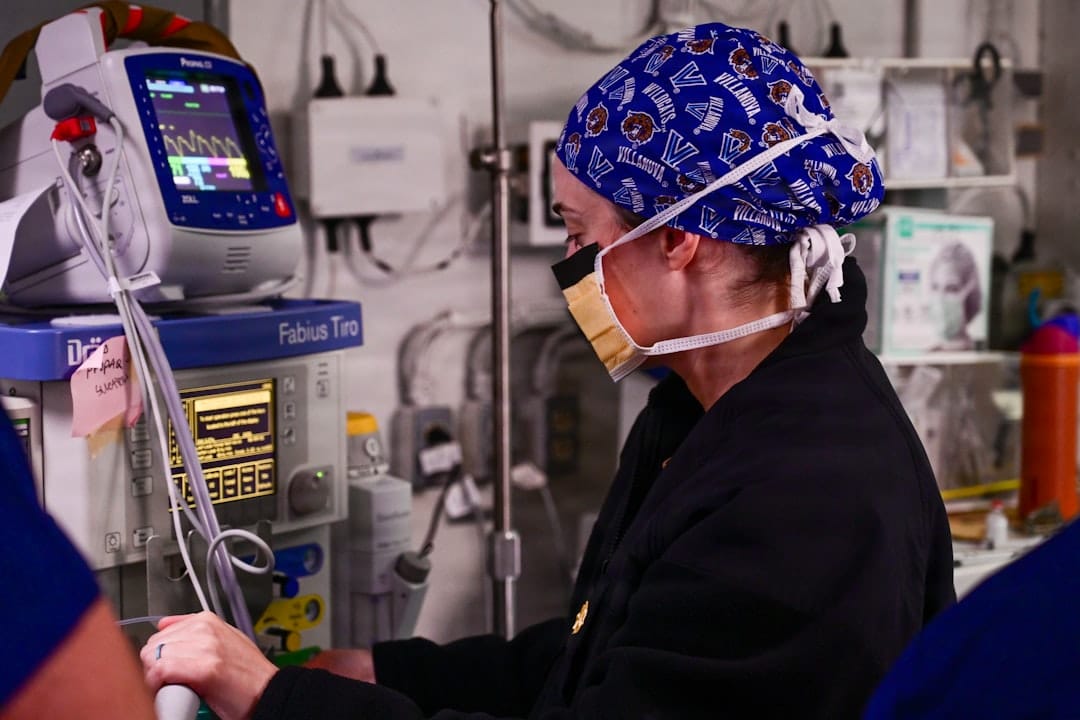
New York City, MMN Correspondent: Imagine being told you need a kidney transplant to survive, but never even getting the chance to begin the journey. That’s the reality for nearly half of Americans with kidney failure who are referred for a transplant. A groundbreaking national study, analyzing data from over 720,000 patients across the United States, reveals a startling gap in access to life-saving care long before anyone reaches the official waitlist. Only 19% of those referred actually complete the full evaluation and get listed. This isn’t just about organ shortages. It’s about who gets a fair shot at a healthier future.
The research, led by NYU Langone Health and published in the Journal of the American Society of Nephrology, is the most comprehensive look yet at where people drop out of the kidney transplant journey. Patients typically get referred after being diagnosed with end-stage renal disease (ESRD), when kidneys lose about 90% of their function. Dialysis can keep you alive, but it’s not a cure. A successful kidney transplant offers a dramatically better quality of life, longer survival, and lower healthcare costs compared to lifelong dialysis. So why do so many people never even start the evaluation?
The study tracked patients through four stages: referral, evaluation, waitlist placement, and actual transplant. At every step, significant numbers fell away. The most eye-opening finding? 48% of patients never initiated the evaluation process. That means they never underwent the medical tests needed to determine eligibility. The problem isn’t donor shortages or surgical capacity. It’s structural and social barriers that stop people before they can even begin.
Several factors strongly predicted whether a patient would move forward. Unmarried individuals, those with severe obesity, people living in rural areas, older adults, Spanish speakers, and those with lower incomes were all significantly less likely to complete the evaluation. Geographic disparities were especially stark. Patients at smaller transplant centers or those in the Southern United States faced greater hurdles. These regions often have fewer transplant programs, limited resources, and higher rates of social vulnerability like poverty, housing instability, and lack of reliable transportation.
The evaluation itself can feel like a full-time job. After referral, patients must undergo a battery of tests: blood work, imaging scans, cancer screenings, psychological evaluations, and cardiovascular assessments. These appointments can stretch over months while patients continue regular dialysis. For many, this means juggling multiple doctor visits, time off work, and financial strain all while managing a debilitating illness. The burden is especially heavy for those without strong social support. Unmarried patients, for example, may struggle to arrange transportation or find someone to accompany them to appointments, increasing the likelihood of missed visits and dropped referrals.
Smaller transplant centers, which serve more rural or underserved populations, may also contribute to the bottleneck. With fewer staff, limited funding, and lower transplant volumes, these centers may adopt stricter eligibility criteria or offer fewer slots, making it harder for candidates to gain approval. In contrast, larger urban centers with more robust infrastructure and higher transplant output tend to see better progression rates through the pipeline.
Researchers point out that attention has traditionally focused on patients already on the waitlist how long they wait, how organs are allocated, and post-transplant outcomes. But this study shifts the spotlight to what happens earlier: the critical phase between referral and waitlist placement. “Our findings suggest that a substantial proportion of people who need a new kidney fall out of the process long before they reach the waitlist, let alone make it to the operating room,” said Dr. Conor Donnelly, lead author and resident at NYU Grossman School of Medicine. “Which transplant center you go to, where you live, and even whether you are married all appear to influence your chances.”
To conduct the study, researchers analyzed electronic health records from Epic Cosmos, a database containing over 300 million patient records across more than 1,850 hospitals including one-third of U.S. transplant centers. The dataset covered adults referred for kidney transplantation between 2014 and 2025, allowing for a longitudinal view of patient trajectories. Using advanced statistical modeling, the team isolated the impact of demographic, socioeconomic, geographic, and clinical variables on progression through each stage.
The implications go beyond individual patient outcomes. If only 19% of referred patients ever get listed, the potential for saving lives and reducing the burden on the healthcare system is severely underutilized. Each year, thousands of Americans die while waiting for a kidney transplant. Meanwhile, millions remain eligible but invisible in the system due to systemic inequities.
Experts stress that solutions must begin with improving access to early education and support. Providing patients with clear, culturally competent guidance about the transplant process, helping them navigate appointments, and offering transportation assistance could dramatically improve retention. Some transplant centers have begun piloting navigator programs where social workers or patient advocates guide candidates through the evaluation steps. These initiatives show promise and should be scaled nationwide.
The study’s co-senior authors, Dr. Allan B. Massie and Dr. Michal A. Mankowski, both of NYU Grossman School of Medicine, called for broader policy changes. They advocate for standardized evaluation protocols across centers, increased funding for rural transplant programs, and integration of social determinants of health into eligibility assessments. Future research will apply similar methods to other organ transplants such as heart, liver, and lung to uncover whether similar patterns exist.
As the demand for organ transplants continues to grow, understanding and addressing the hidden barriers to entry is no longer optional. It’s essential. The goal isn’t just to increase the number of transplants, but to ensure that every eligible patient has a fair chance to begin the journey toward a healthier future. By fixing the system before the waitlist begins, the nation can move closer to a reality where no one is left behind simply because of where they live, who they are, or how much they earn.
Related in Scientific Research
Scientific Research
How Soft Lithium Dendrites Crack Hard Ceramic Batteries: The Discovery That Could Triple EV Range
Imagine a battery that powers your phone for five days, charges your electric car in under 15 minutes, and never catches fire. That’s the promise of solid-state batteries. But for years, a tiny, stubborn problem has kept them stuck in labs: lithium dendrites. These microscopic,…
Read More...
Scientific Research
450,000 Barred Owls Could Be Shot to Save the Spotted Owl: Here’s Why Scientists Say It’s Working
Imagine walking through a silent forest at midnight. You hear a call—a deep, rhythmic hoot—and you raise a shotgun. This isn’t a scene from a thriller. It’s the front line of one of the most ambitious and controversial conservation experiments in American history. In the dense f…
Read More...
Scientific Research
50 Year Quantum Riddle Solved: How Heidelberg Physicists Bridged Two Opposing Particle Theories
Imagine trying to describe a single dancer moving through a crowded dance floor. One theory says the dancer pulls nearby people along, creating a small moving cluster. Another theory says if the dancer stands perfectly still, the crowd around them changes so completely that the…
Read More...
Scientific Research
9 Entangled Particles Found in a Crystal You Can Hold: What This Means for Quantum Tech
Imagine holding a small crystal in your hand, one that fits comfortably in your palm. Now imagine that inside that crystal, particles are connected in a way that defies everything we thought we knew about the quantum world. That is exactly what a team of researchers at TU Wien i…
Read More...
Scientific Research
30 Years Later: Scientists Finally Identify Rye Pollen Molecules That Slow Tumors – What This Means for Cancer Therapy
For nearly three decades, a quiet mystery sat at the edge of natural medicine. Two molecules found in rye pollen seemed to slow tumor growth in animal studies. But no one could figure out their exact shape. That puzzle has now been solved by researchers at Northwestern Universit…
Read More...
Scientific Research
55 Million Affected: Scientists Just Found a New Way Alzheimer’s Kills Brain Cells – And How to Stop It
For decades, the question of how Alzheimer’s disease actually destroys brain cells has been one of the most stubborn mysteries in medicine. We knew toxic proteins like amyloid and tau build up inside neurons. We knew cells eventually die. But the exact mechanism? That was the mi…
Read More...
Scientific Research
UK Heatwave Alert: Temperatures Hit 34°C This Week – Are You Ready for the Third Scorcher of 2026?
Here we go again. The United Kingdom is bracing for its third major heatwave of 2026, with thermometers expected to climb past 34°C in southern and eastern regions. This isn’t just another warm spell – it’s a week-long event that has health officials on high alert from Saturday,…
Read More...
Scientific Research
Quantum Time Reversal Achieved: 5 Ways This Breakthrough Could Power Future Tech
What if you could rewind a moment in time not in your memory, but in the physical world itself? That question has moved from the pages of science fiction into the lab. Researchers at Los Alamos National Laboratory have just demonstrated something extraordinary: they can make qua…
Read More...
Scientific Research
6 Inventors Just Won Europe’s Top Prize – Here’s What They Created That Could Change Your Life
What do oat milk, a malaria vaccine, and recycled EV batteries have in common? They are all powered by the minds of six inventors who just took home the 2026 European Inventor Award. The European Patent Office (EPO) streamed the ceremony live from Berlin, and the winners did not…
Read More...
Scientific Research
7 Reasons Why a Remote Arctic Research Station Is Now the World's Most Watched Geopolitical Hotspot
Imagine a place so quiet that the loudest sound is the crunch of snow under your boots. A place built for science, not strategy. That was the Arctic research station on Svalbard just a few years ago. Today, that same outpost is the center of a global tug-of-war. What changed? Th…
Read More...