
Planting Trees Near Farmlands Cuts Bird Populations by 70%: What This Means for Wetland Conservation
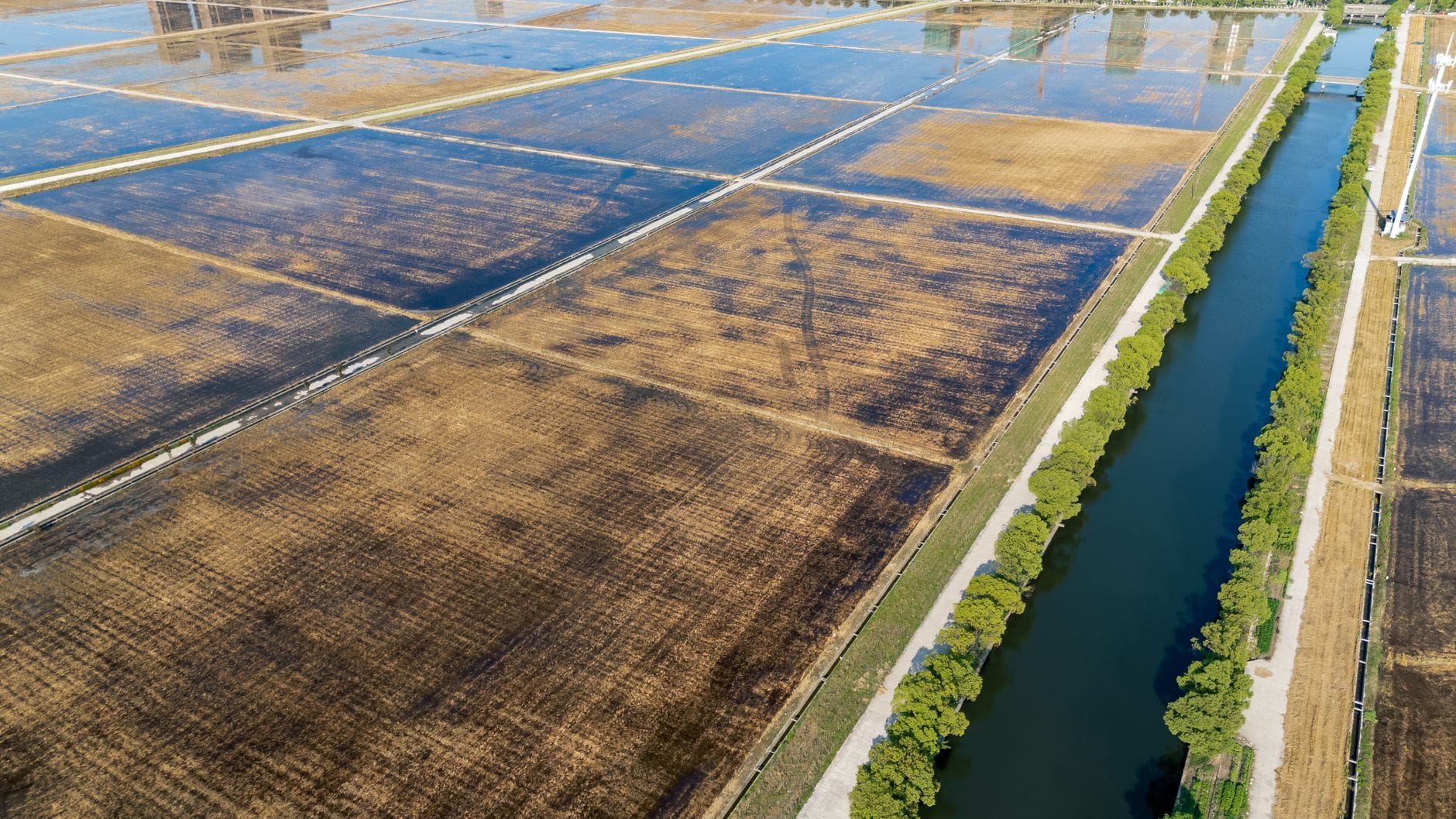
Lake Kahokugata, Japan, MMN Correspondent: For decades, the message has been simple: plant more trees, help the planet. But what if that well intentioned act is actually pushing certain bird species toward the edge? A new study from central Japan’s Lake Kahokugata region is turning a long held conservation belief on its head, and the findings might make you rethink what “green” really means in some landscapes.
Researchers from Hiroshima University, led by Masumi Hisano, set out to understand how shelterbelts—those neat rows of trees farmers plant as windbreaks—affect bird communities in wet agricultural areas. What they discovered was a delicate balancing act. While these tree lines do create cozy microhabitats for some birds like thrushes and warblers, they also act as unexpected barriers for others. In fact, sites next to shelterbelts saw a drop of over 70% in grassland bird abundance compared to open farmland just a kilometer away. Wetland bird diversity took a hit too, especially among species that need wide open spaces to forage and nest.
Why does this matter so much right now? Because agricultural wetlands—think rice paddies and lotus fields—are not just places where food grows. Across Asia, these flooded fields serve as vital substitute habitats for millions of migratory birds traveling along the East Asian Australasian Flyway. That’s a superhighway in the sky that supports over 50 million waterbirds annually, with nearly 300 species recorded in the Lake Kahokugata area alone. These birds depend on open, unobstructed landscapes for feeding, resting, and raising their young. When trees go up, those open spaces shrink.
Hisano describes shelterbelts as “ecological walls.” They fragment the landscape in ways that might not be obvious at first glance. Even a narrow row of trees can alter how birds move, reduce the amount of usable habitat, and even increase their exposure to predators. The study, published in the Journal of Environmental Management, used systematic bird surveys in February and March 2021 and again in June 2023. The point count method—a standard technique where researchers record every bird seen or heard within a fixed radius—revealed a clear pattern: open farmland was far richer in grassland and wetland birds than areas broken up by tree lines.
This is where things get interesting for anyone who cares about conservation. In Europe and North America, hedgerows and shelterbelts are often promoted as biodiversity boosters. They work well in those contexts. But this study shows that what works in one ecosystem can backfire in another. Rice paddies, common across Southeast and East Asia, support unique bird communities adapted to seasonal flooding, shallow water, and open fields. Those conditions are disrupted by even modest tree plantings. It’s a reminder that context is everything in ecology.
The implications ripple outward. Many of the affected birds play important roles in ecosystem services like seed dispersal, insect control, and nutrient cycling. When their numbers drop, the resilience of the entire agricultural wetland can weaken. And because these birds are migratory, the loss of diversity in one region can affect wildlife connectivity across continents. The health of international flyways depends on the health of these stopover sites.
So what’s the way forward? The researchers aren’t saying stop planting trees. They’re saying plant smarter. Instead of blanket policies that push tree expansion everywhere, they advocate for strategic, science based planning. Factors like shelterbelt width, height, spacing, tree species, and even seasonal configuration should be tailored to local conditions. Wider gaps between tree lines could allow birds to move through. Native, low growing species might minimize habitat disruption. The goal is to find a balance that protects crops from wind without turning farmlands into ecological traps.
Future research will dig deeper into how different shelterbelt designs affect predator prey dynamics and habitat connectivity. Scientists also want to understand how seasonal changes—like dry versus flooded periods in rice paddies—influence bird responses to woody structures. That kind of insight is essential for developing adaptive management strategies in dynamic agricultural environments.
The broader takeaway is hopeful. Biodiversity conservation in agriculture doesn’t have to be a choice between trees and birds. It can be about creating a mosaic of open and wooded areas that supports a wider range of species. Sustainable farming can balance structural complexity with the needs of open habitat specialists. That requires collaboration between ecologists, farmers, policymakers, and conservation planners. It’s not about one size fits all solutions. It’s about getting the details right.
As global demand for food and climate resilience grows, so does the need for smarter land use decisions. Agri environmental policies can move beyond simple prescriptions like “plant more trees” and instead promote integrated, evidence driven approaches. The goal is not just to protect crops from wind, but to ensure that farmlands continue to support rich, diverse bird communities—for ecological health, for cultural value, and for the sheer wonder of watching a flock of shorebirds lift off from a flooded rice paddy at dusk.
This study is a gentle but firm reminder that in conservation, good intentions aren’t enough. We have to keep asking questions, keep testing assumptions, and keep refining our approaches. By understanding the nuanced impacts of small scale landscape features, we can design farmlands that remain productive for people while still serving as lifelines for wildlife in an increasingly fragmented world. And that’s a goal worth working toward.
Related in Scientific Research

Scientific Research
How Soft Lithium Dendrites Crack Hard Ceramic Batteries: The Discovery That Could Triple EV Range
Imagine a battery that powers your phone for five days, charges your electric car in under 15 minutes, and never catches fire. That’s the promise of solid-state batteries. But for years, a tiny, stubborn problem has kept them stuck in labs: lithium dendrites. These microscopic,…
Read More...
Scientific Research
450,000 Barred Owls Could Be Shot to Save the Spotted Owl: Here’s Why Scientists Say It’s Working
Imagine walking through a silent forest at midnight. You hear a call—a deep, rhythmic hoot—and you raise a shotgun. This isn’t a scene from a thriller. It’s the front line of one of the most ambitious and controversial conservation experiments in American history. In the dense f…
Read More...
Scientific Research
50 Year Quantum Riddle Solved: How Heidelberg Physicists Bridged Two Opposing Particle Theories
Imagine trying to describe a single dancer moving through a crowded dance floor. One theory says the dancer pulls nearby people along, creating a small moving cluster. Another theory says if the dancer stands perfectly still, the crowd around them changes so completely that the…
Read More...
Scientific Research
9 Entangled Particles Found in a Crystal You Can Hold: What This Means for Quantum Tech
Imagine holding a small crystal in your hand, one that fits comfortably in your palm. Now imagine that inside that crystal, particles are connected in a way that defies everything we thought we knew about the quantum world. That is exactly what a team of researchers at TU Wien i…
Read More...
Scientific Research
30 Years Later: Scientists Finally Identify Rye Pollen Molecules That Slow Tumors – What This Means for Cancer Therapy
For nearly three decades, a quiet mystery sat at the edge of natural medicine. Two molecules found in rye pollen seemed to slow tumor growth in animal studies. But no one could figure out their exact shape. That puzzle has now been solved by researchers at Northwestern Universit…
Read More...
Scientific Research
55 Million Affected: Scientists Just Found a New Way Alzheimer’s Kills Brain Cells – And How to Stop It
For decades, the question of how Alzheimer’s disease actually destroys brain cells has been one of the most stubborn mysteries in medicine. We knew toxic proteins like amyloid and tau build up inside neurons. We knew cells eventually die. But the exact mechanism? That was the mi…
Read More...
Scientific Research
UK Heatwave Alert: Temperatures Hit 34°C This Week – Are You Ready for the Third Scorcher of 2026?
Here we go again. The United Kingdom is bracing for its third major heatwave of 2026, with thermometers expected to climb past 34°C in southern and eastern regions. This isn’t just another warm spell – it’s a week-long event that has health officials on high alert from Saturday,…
Read More...
Scientific Research
Quantum Time Reversal Achieved: 5 Ways This Breakthrough Could Power Future Tech
What if you could rewind a moment in time not in your memory, but in the physical world itself? That question has moved from the pages of science fiction into the lab. Researchers at Los Alamos National Laboratory have just demonstrated something extraordinary: they can make qua…
Read More...
Scientific Research
6 Inventors Just Won Europe’s Top Prize – Here’s What They Created That Could Change Your Life
What do oat milk, a malaria vaccine, and recycled EV batteries have in common? They are all powered by the minds of six inventors who just took home the 2026 European Inventor Award. The European Patent Office (EPO) streamed the ceremony live from Berlin, and the winners did not…
Read More...
Scientific Research
7 Reasons Why a Remote Arctic Research Station Is Now the World's Most Watched Geopolitical Hotspot
Imagine a place so quiet that the loudest sound is the crunch of snow under your boots. A place built for science, not strategy. That was the Arctic research station on Svalbard just a few years ago. Today, that same outpost is the center of a global tug-of-war. What changed? Th…
Read More...