
Saudi Arabia Domestic Workers: 2026 Amnesty Report Reveals Abuse, Wage Theft, and What Every OFW Should Know
We compile, generate and translate using Artificial Intelligence from the below given source. Macro Micro News is responsible for its editorial publication.
Riyadh, Saudi Arabia, MMN Correspondent: If you are an overseas Filipino worker, or you know someone who is, the stories you are about to read carry a message that matters beyond one country. They come from a new Amnesty International briefing released in August 2026, and they reveal what can happen when a job contract promises one thing and the daily reality delivers something far heavier.
The briefing focuses on Filipino women working in Saudi Arabian households. It documents long working hours, withheld wages, and sexual harassment. It also points to the kafala sponsorship system, which ties workers to a single employer, and to the absence of proactive labor inspections. Together, these conditions create a protective gap around domestic work.
Who are the women behind the report? One of them is Gloria, now in her late 40s. She accepted a job in Saudi Arabia when her son entered college and her husband’s salary could not cover the bills. She had worked in Kuwait before and remembered the experience positively. That memory led her to trust a recruitment agency she found on Facebook. The agency processed her papers, arranged medical checks, and provided training at no cost. Her contract stated eight hours of work each day.
What happened after she arrived? The household had seven people, including a family member with a disability. Gloria cooked, cleaned, sorted clothes, and looked after teenagers. From 6 a.m. to 8 p.m., for five months, she had no day off. “After eight hours of work, the family would knock on my door, telling me there was further work in the house. It was continuous,” she told Amnesty. “I would get 15 minutes’ rest [for the whole working day], if I was lucky. I wasn’t allowed a day off.”
Her salary was $400 a month. After sending money to her son for university and accommodation, she kept nothing. During Ramadan, she said, “I thought my body was going to collapse. I was so tired, stressed and barely sleeping.”
When Gloria asked her agency for help, the answer was to speak up for herself. Conditions improved for a short time, then wages started arriving late. She was not paid in full until she returned home. Her own advice is blunt: “You must fight for yourself, because otherwise they’re not going to give you what you deserve.”
The abuse in Gloria’s case was not limited to overwork. One of the employer’s sons shouted at her and sometimes rubbed against her, touching her like he was testing her limits. She feared for her safety and decided to leave after her contract ended. The family tried to keep her. She signed a return contract during leave, then blocked them and cut all contact. “My decision to leave was for my own safety,” she said.
Isabelle’s story began during the pandemic. Her husband lost his job and she had five children to support. A job abroad came as an opportunity. She arrived in Saudi Arabia in July 2023. Her female employer seemed kind at first, offering food and rest. The next day, Isabelle was taken to the employer’s mother’s house, where the workload was intense.
There were nine people in that house. For five days a week, Isabelle worked there. For the other two days, she worked at her employer’s own house, which held seven people. Her contract said five. She was responsible for all the cleaning and for caring for the baby, and she slept beside the child. Food was rationed. She could eat rice only once a week. Most days she survived on instant noodles and one egg. The mother counted the eggs and kept a strict watch.
Sleep nearly disappeared. “I would wake up at around 5am and only sleep at around 2am. I was getting about two hours of sleep every night,” she said. The exhaustion was constant, and so was the fear. Her female employer would ask her to clean the bedroom while the husband was present. One day, Isabelle found him under the bed, masturbating and calling her to lie beside him. She ran to the rooftop and locked the door.
“I was afraid of what might happen if I stayed longer… I feared I would be raped,” she said. She called her husband and asked to go home. It took three months to find a safe escape. Other Filipinos in the area drove her to the embassy in a windowless van. The journey lasted seven hours in extreme heat. She took nothing with her because she was afraid of being accused of stealing. At the embassy, her employer returned her phone and passport and asked her not to file a case against her husband.
These two cases are part of a larger pattern. Amnesty International’s briefing explains that the kafala system gives employers heavy control over a worker’s visa, movement, and ability to leave the country. Domestic workers are often excluded from labor protections that cover other employees. Without proactive inspections, difficult conditions can remain hidden for long periods.
The report includes a clear set of demands. The Saudi government should investigate all allegations of abuse, bring those responsible to justice, and set up labor inspections that do not wait for workers to complain. Amnesty also calls for the kafala system to be abolished and for domestic workers to be included in standard labor laws.
What does this mean for Filipino workers and their families? It reinforces the need for careful verification of agencies, clear contracts, and stronger protections before leaving home. The Philippine government, for its part, has taken steps in the past, including a temporary ban on first-time domestic workers to Saudi Arabia in 2021. The ban was later lifted, and the concerns behind it remain part of the conversation.
Gloria now lives with high blood pressure and anxiety from her time in Saudi Arabia. Isabelle is back in the Philippines with her family, trying to rebuild. Both women chose to speak openly because they want other workers to avoid similar hardship. Their stories show that a job offer can carry unexpected weight. They also show that pressure, from governments and recruiters alike, can push the system toward change. The contract promised a better future. The women behind the report are saying the promise must be honored.
Related in Social Justice

Social Justice
Macao 2026: The Essential Guide to Mastering World Heritage Management
How do we protect our most precious cultural and natural landmarks when urban sprawl and climate change threaten their very existence? This pressing question drives a new initiative launching in the Asia-Pacific region. The World Heritage Centre has joined forces with WHITR-AP S…
Read More...
Social Justice
How You Can Support Cross-Border Diplomacy to Restore the Yellow Sea Tidal Flats for 50 Million Migratory Birds
Imagine standing along a coastline where the rhythm of the tides shapes an entire continent. The Yellow Sea tidal flats stretch across China, North Korea, and South Korea, creating a dynamic intertidal zone that welcomes millions of migratory waterbirds each year. These wetlands…
Read More...
Social Justice
Queer Travel Safety 2026: Destinations on the Rise, the United States Sliding, and What Inclusive Tourism Means for Your Next Journey
What makes a destination feel safe for you as an LGBTQ+ traveller in 2026? The answer just got more complex. New data from ITB Berlin, A3M Global Monitoring, and Diversity Tourism shows that queer travellers are making choices in a fresh way. Legal equality is still on the table…
Read More...
Social Justice
Barcelona’s Walls Speak: 40% More Street Art Demands Justice for All. Here’s What It Says
In a city known for Gaudí and the Mediterranean, there is another language being written across walls. Iusticia Omnibus. Justice for all. The phrase shows up in huge murals, tiny stencils, and quick tags. It is easy to miss if you are not looking. Once you see it, you cannot sto…
Read More...
Social Justice
Pa'lante Siempre: Denise Oliver-Velez's 80-Year Blueprint for Intersectional Liberation Still Demands Your Action
What does it take to keep pushing for justice for nearly eight decades? Denise Oliver-Velez offered an answer with her life. If you have ever felt torn between causes, she is the example you need. Born in 1947 and still organizing until her passing in 2026, she became a bridge b…
Read More...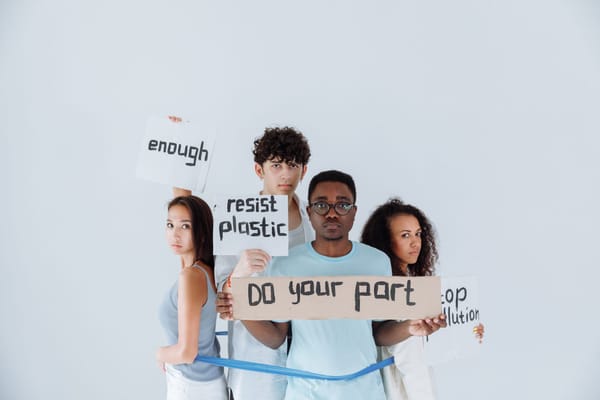
Social Justice
What Can Three Youth Activists Teach Us About Tackling Discrimination, Gun Violence, and Digital Privacy?
What does it take for a young person to turn a painful experience into a force for change? For the activists featured in Amnesty International's Digital Disruptors project, the answer begins with personal history and quickly grows into something much bigger. On International You…
Read More...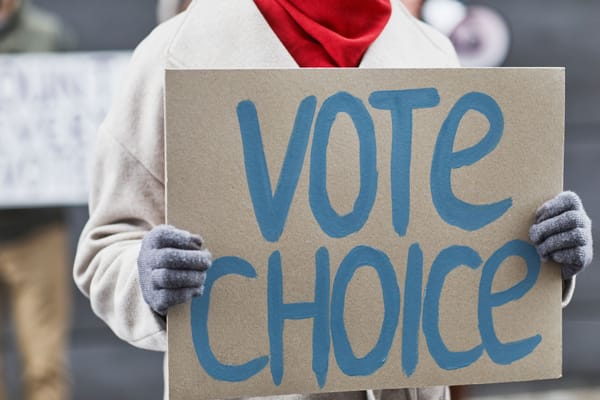
Social Justice
Zambia's 2026 Elections: The Stalled Human Rights Reforms You Need to Watch
Can a country reclaim the promise of democracy after a season of setbacks? As Zambia's 13 August 2026 general elections draw closer, that question is on the minds of many citizens and observers. The country is at a moment of real possibility. The path forward depends on choices…
Read More...
Social Justice
North Carolina Death Penalty Symposium 2026: 20 Years After the Last Execution, You Can Shape What Comes Next
Twenty years have passed since North Carolina carried out an execution. On August 22, 2026, the discussion about what comes next reaches a key moment. The NC Coalition for Alternatives to the Death Penalty (NCCADP) will host a symposium called "Beyond the Death Penalty" at the E…
Read More...
Social Justice
20 Years After North Carolina’s Last Execution: A Landmark Symposium Looks Beyond Capital Punishment
Twenty years have passed since North Carolina carried out an execution. In that time, death row has not disappeared. More than 130 people still live there, and new death sentences are still handed down. On August 22, 2026, the NC Coalition for Alternatives to the Death Penalty (…
Read More...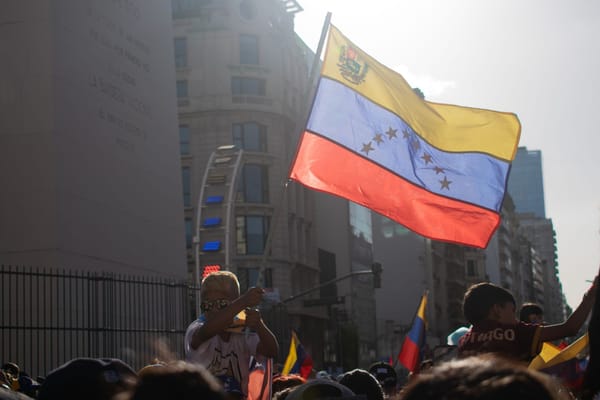
Social Justice
Venezuela Quits the ICC and Rome Statute: What It Means for You and the Future of Justice
The acting government of Venezuela has formally stepped away from the Rome Statute, the international treaty behind the International Criminal Court. Official withdrawal documents reached the UN Secretary-General on July 24, 2026, and appeared in the UN's public registry on Augu…
Read More...