
The Only Workout That Burns Fat and Keeps Muscle After 50 (New 6 Month Study)
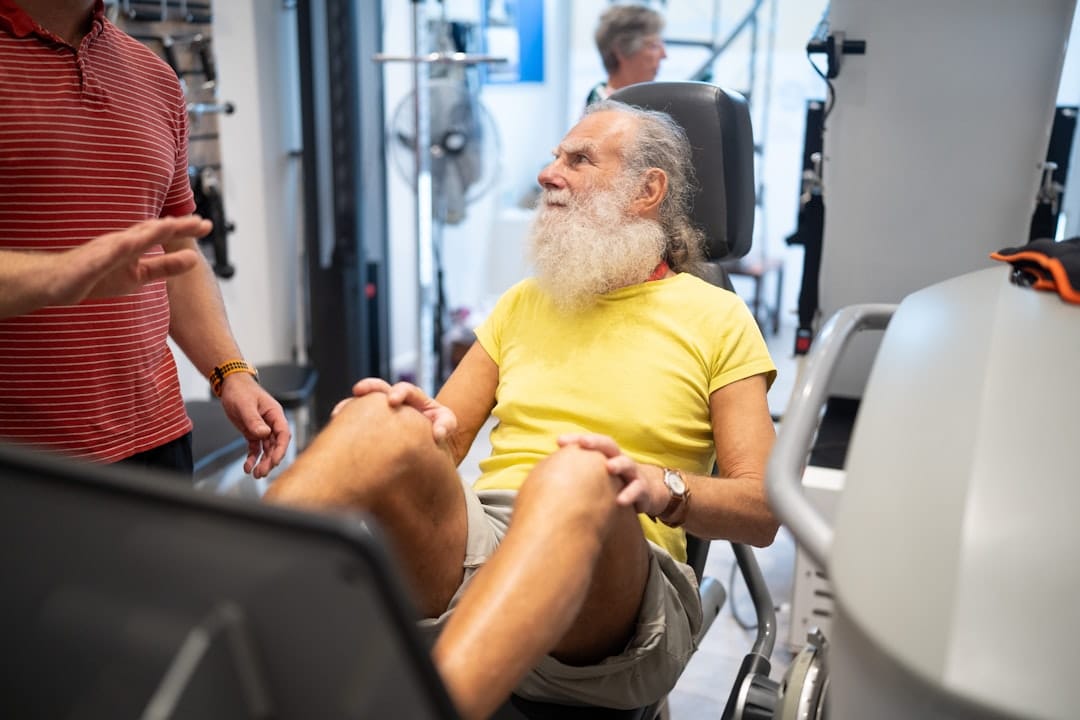
Greater Brisbane, Australia, MMN Correspondent: What if the secret to staying lean and strong as you age wasn’t about spending hours on a treadmill, but about just a few minutes of intense effort? A new six month study from the University of the Sunshine Coast suggests exactly that. Researchers followed over 120 healthy adults in their 70s, all from the Greater Brisbane region, and discovered something that could change how we think about exercise for older adults.
Here’s the finding that stood out: high intensity interval training, or HIIT, did something no other workout could. It helped people lose body fat while actually keeping or even slightly increasing their lean muscle mass. That’s a big deal because after age 50, muscle naturally declines by about 3 to 5 percent each decade. That loss, called sarcopenia, can lead to frailty, falls, and chronic disease. But this study shows it doesn’t have to be inevitable.
The participants exercised three times a week for six months in supervised gym sessions. They were split into three groups: one did HIIT, another did moderate intensity continuous training (like brisk walking or steady cycling), and a third did low intensity continuous training. All three groups lost some fat. But only the HIIT group held onto their muscle. Lead researcher Dr. Grace Rose, an exercise physiologist, put it plainly: “High, medium, and low intensity exercises all led to modest fat loss, but only HIIT retained lean muscle.”
Why does this matter? Because losing muscle while trying to lose fat is a trap. It can slow your metabolism, weaken your joints, and make everyday activities harder. Moderate intensity workouts actually caused a small drop in lean muscle in this study. Low intensity training had mixed results and didn’t do much for body composition at all. So if you’re over 50 and want to get leaner without getting weaker, the type of exercise you choose really matters.
So what makes HIIT so special? It comes down to how your body responds to intense effort. HIIT involves short bursts of near maximal effort, like sprinting or fast resistance movements, followed by brief recovery periods. During those bursts, your muscles are pushed hard. That stress triggers powerful signals that tell your body to build new muscle protein and stop breaking down existing muscle. As UniSC Associate Professor Mia Schaumberg explained, “High intensity training puts more stress on the muscles, giving the body a stronger signal to keep muscle tissue rather than lose it.”
There’s also a bonus effect called EPOC, or excess post exercise oxygen consumption. After a HIIT session, your body keeps burning calories at an elevated rate for hours. That means you’re still torching fat even while you’re resting. And because HIIT preserves muscle, your metabolism stays higher overall. It’s a double win.
The benefits go beyond just looking good. This study found that HIIT significantly reduced visceral fat, the dangerous fat stored around your internal organs. That’s the kind of fat linked to inflammation, heart attacks, and strokes. Participants who did HIIT saw greater reductions in waist circumference and belly fat compared to the other groups. That’s a direct hit to some of the biggest health risks we face as we age.
Of course, HIIT isn’t for everyone without preparation. The intensity requires caution, especially if you have conditions like high blood pressure, arthritis, or joint issues. But in this study, all sessions were supervised by trained professionals who adjusted the intensity to each person’s fitness level. That made HIIT accessible even for beginners who had medical clearance. The key is to start smart and work with someone who knows what they’re doing.
This research arrives at a time when the world is getting older fast. In countries like Japan, South Korea, and parts of Europe, more than 20 percent of the population is already 65 or older. Finding ways to keep people strong and independent is becoming a public health priority. Experts believe that integrating HIIT into community programs, senior centers, and even primary care could save billions in healthcare costs. The World Health Organization estimates that every dollar spent on preventive fitness for seniors can reduce future hospitalization expenses by up to four dollars.
Looking ahead, researchers are exploring how to make HIIT even more effective. Early studies suggest that pairing it with adequate protein intake, around 1.2 to 1.6 grams per kilogram of body weight daily, can boost muscle retention even further. Combining HIIT with resistance training might also amplify the results.
For older adults thinking about starting an exercise routine, the takeaway is clear: quality beats quantity. A few well designed HIIT sessions each week can deliver better results than hours of low impact activity. The key is consistency, gradual progression, and professional guidance. This study offers a hopeful message: you can stay lean, strong, and vibrant well into your later years. You just need the right kind of workout.
Related in Scientific Research
Scientific Research
How Soft Lithium Dendrites Crack Hard Ceramic Batteries: The Discovery That Could Triple EV Range
Imagine a battery that powers your phone for five days, charges your electric car in under 15 minutes, and never catches fire. That’s the promise of solid-state batteries. But for years, a tiny, stubborn problem has kept them stuck in labs: lithium dendrites. These microscopic,…
Read More...
Scientific Research
450,000 Barred Owls Could Be Shot to Save the Spotted Owl: Here’s Why Scientists Say It’s Working
Imagine walking through a silent forest at midnight. You hear a call—a deep, rhythmic hoot—and you raise a shotgun. This isn’t a scene from a thriller. It’s the front line of one of the most ambitious and controversial conservation experiments in American history. In the dense f…
Read More...
Scientific Research
50 Year Quantum Riddle Solved: How Heidelberg Physicists Bridged Two Opposing Particle Theories
Imagine trying to describe a single dancer moving through a crowded dance floor. One theory says the dancer pulls nearby people along, creating a small moving cluster. Another theory says if the dancer stands perfectly still, the crowd around them changes so completely that the…
Read More...
Scientific Research
9 Entangled Particles Found in a Crystal You Can Hold: What This Means for Quantum Tech
Imagine holding a small crystal in your hand, one that fits comfortably in your palm. Now imagine that inside that crystal, particles are connected in a way that defies everything we thought we knew about the quantum world. That is exactly what a team of researchers at TU Wien i…
Read More...
Scientific Research
30 Years Later: Scientists Finally Identify Rye Pollen Molecules That Slow Tumors – What This Means for Cancer Therapy
For nearly three decades, a quiet mystery sat at the edge of natural medicine. Two molecules found in rye pollen seemed to slow tumor growth in animal studies. But no one could figure out their exact shape. That puzzle has now been solved by researchers at Northwestern Universit…
Read More...
Scientific Research
55 Million Affected: Scientists Just Found a New Way Alzheimer’s Kills Brain Cells – And How to Stop It
For decades, the question of how Alzheimer’s disease actually destroys brain cells has been one of the most stubborn mysteries in medicine. We knew toxic proteins like amyloid and tau build up inside neurons. We knew cells eventually die. But the exact mechanism? That was the mi…
Read More...
Scientific Research
UK Heatwave Alert: Temperatures Hit 34°C This Week – Are You Ready for the Third Scorcher of 2026?
Here we go again. The United Kingdom is bracing for its third major heatwave of 2026, with thermometers expected to climb past 34°C in southern and eastern regions. This isn’t just another warm spell – it’s a week-long event that has health officials on high alert from Saturday,…
Read More...
Scientific Research
Quantum Time Reversal Achieved: 5 Ways This Breakthrough Could Power Future Tech
What if you could rewind a moment in time not in your memory, but in the physical world itself? That question has moved from the pages of science fiction into the lab. Researchers at Los Alamos National Laboratory have just demonstrated something extraordinary: they can make qua…
Read More...
Scientific Research
6 Inventors Just Won Europe’s Top Prize – Here’s What They Created That Could Change Your Life
What do oat milk, a malaria vaccine, and recycled EV batteries have in common? They are all powered by the minds of six inventors who just took home the 2026 European Inventor Award. The European Patent Office (EPO) streamed the ceremony live from Berlin, and the winners did not…
Read More...
Scientific Research
7 Reasons Why a Remote Arctic Research Station Is Now the World's Most Watched Geopolitical Hotspot
Imagine a place so quiet that the loudest sound is the crunch of snow under your boots. A place built for science, not strategy. That was the Arctic research station on Svalbard just a few years ago. Today, that same outpost is the center of a global tug-of-war. What changed? Th…
Read More...