
Trump Swapped Planes at NATO Summit After Iran Threat: What You Need to Know
We compile, generate and translate using Artificial Intelligence from the below given source. Macro Micro News is responsible for its editorial publication.
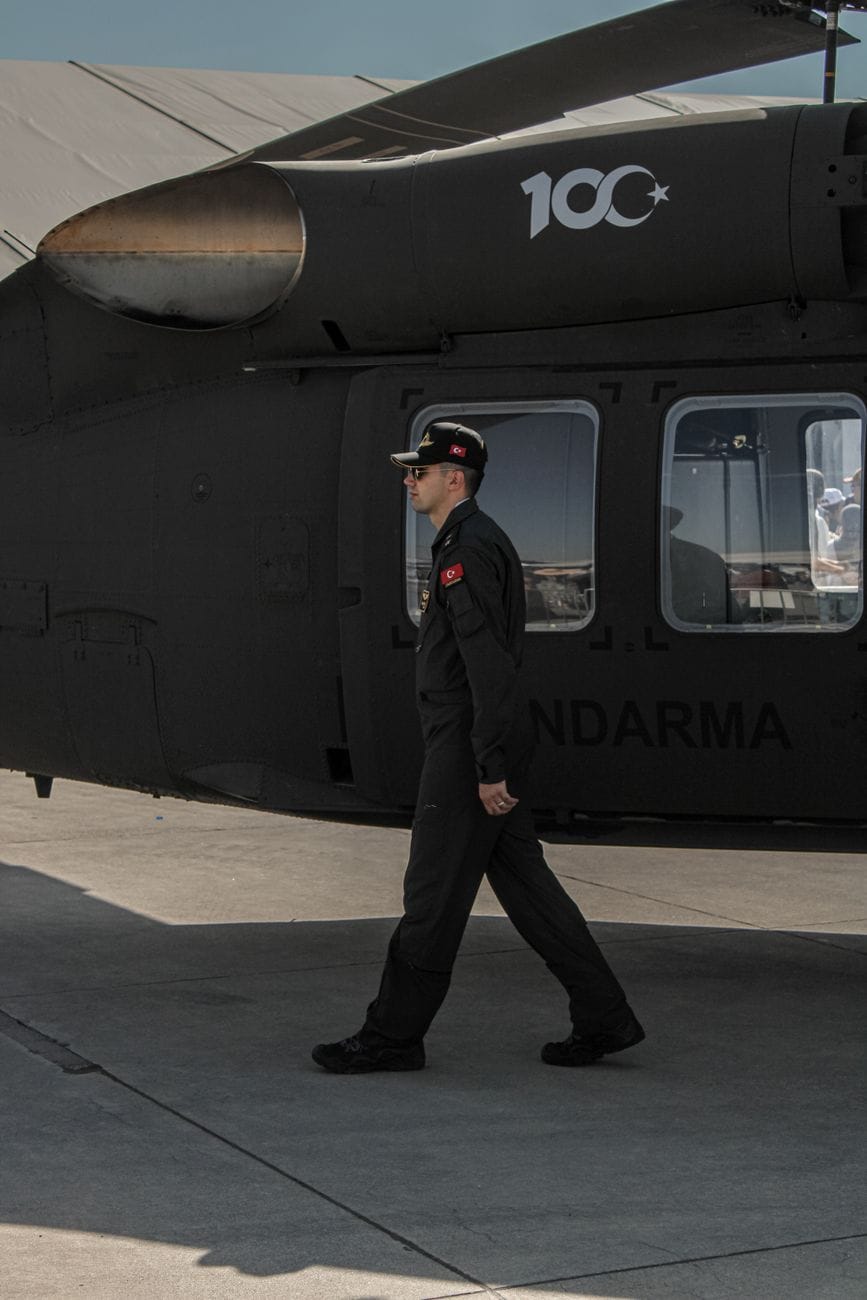
Ankara, Turkey, MMN Correspondent: The story of President Trump's departure from the NATO summit in Turkey has taken a notable turn. On 8 July, the aircraft shown on live television was not the one that carried the president home. A credible missile threat connected to Iran changed the plan, and the switch happened in plain sight without most people noticing.
Trump confirmed the move during a press briefing on Tuesday. "I go by Secret Service and the military. They wanted me to go in a different flight, different plane. I just have to do what they say." That statement came after CBS News and the Washington Post described an elaborate operation at Ankara airport.
Every public appearance by a president contains layers that most people never notice. This time, one of those layers became visible. The operation blended a familiar image with a hidden reality. Trump had flown into Ankara aboard a newer Boeing 747-8, a plane gifted by Qatar. He then announced plans to leave on the older Air Force One "for old time's sake." Television crews captured him climbing the steps of the familiar presidential jet. Planners had arranged for that image to reach the world.
Once Trump stepped beyond the cameras, the plan shifted. A catering truck had been raised to the opposite side of the aircraft. Trump moved onto it and was taken to a smaller C-32A military jet, a modified Boeing 757 often assigned to the vice president. Defense Secretary Pete Hegseth joined that aircraft separately through external stairs, which gave the departure an additional layer of normalcy.
On the larger plane, journalists and some White House staff were asked to close their window shades. They were not told the reason. They could not see the transfer on the other side. Every action on that tarmac was coordinated around one goal: keeping the president away from an identified risk.
The intelligence behind this operation was specific enough to trigger an unusual response. Officials with knowledge of the situation told CBS News and the Washington Post that Iran had planned to fire a missile at the presidential plane. The threat appeared shortly after American forces renewed military strikes on Iran, with negotiations to end the conflict at a standstill. Trump had described himself as Iran's "number one target" during the summit. That phrase took on new meaning once the flight plan changed.
What makes this operation especially interesting is the way it layered visibility and discretion. The decoy aircraft drew attention. The smaller military aircraft moved under that cover. Journalists and staff unknowingly occupied the plane that analysts considered a target. They were protected by the very fact that the world believed the president was on board. That is a heavy responsibility to place on people who were never asked for consent.
Security teams have long used decoys to confuse adversaries. Cold War presidents did the same thing when global tensions ran high. This operation feels different because of its precision. The catering truck, the window shades, the separate boarding path, and the alternate jet all worked in sequence. It was a coordinated performance designed to protect one person while everyone around him followed a script without knowing it.
Trump said the military jet he boarded was at "greater risk" than the decoy plane. He did not expand on that point. His answer draws attention to a trade-off that is rarely discussed. A president and a support team can face different levels of exposure in the same moment. The question for the public is how those choices are made and who gets to know about them.
The current relationship between the United States and Iran is shaped by years of conflict. The 2018 withdrawal from the nuclear deal, the 2020 operation that took the life of General Qassem Soleimani, and the Iranian response that followed are all pieces of a larger puzzle. The July strikes added another chapter. In that environment, a plan to target a national leader does not appear from nowhere. Intelligence agencies watch for it constantly, and their awareness can change the shape of a presidential trip in an instant.
This episode also opens a conversation about transparency in presidential movements. The full details of the threat remain protected for operational reasons. The people who boarded the decoy plane were a key part of the protective plan, and they had no chance to opt in or out. Their experience calls for a closer look at how security decisions are communicated to everyone involved.
The operation ended without incident. Trump returned to Washington, and the threat did not materialize. The story of the swapped planes now belongs to a wider conversation about security, trust, and the unseen calculations behind every presidential arrival and departure. It also serves as a reminder that the most important movements of a leader are not always the ones we see on screen.
Related in Global Trend
Politics
Europe's Competitiveness Comeback: 6 Battlegrounds Every Business Leader Must Watch
What happens when the old economic certainties fade? You build new ones. Ursula von der Leyen took the stage at La Rencontre des Entrepreneurs de France, held at Roland Garros, and delivered a straightforward message to business leaders: Europe will produce, invest and protect.…
Read More...
Scientific Research
See the Ocean Breathe: Sentinel-6B Tracks El Niño and Rising Sea Levels Across 90% of Earth
. Hundreds of miles above Earth, satellites are watching the ocean breathe. The surface rises and falls with warmth, and those small changes tell a huge story about the planet. Sentinel-6B joined that story in November 2025, and it is already showing what a single satellite can…
Read More...
Politics
Europeans, Electrification Is Europe's Way Out After Two Energy Crises. Here's the 46% by 2040 Plan
Can Europe ever feel truly secure about its energy future? After two major energy crises in five years, that question is front and center. European Commission President Ursula von der Leyen used her video address to the Offshore Northern Seas conference in Stavanger to deliver a…
Read More...
Politics
European Commission’s Major Decisions: €4.5M Fuel Aid, Pratt & Whitney Case, LNG Shipping, Ukraine’s 35th Independence Day – What They Mean for You
One decision could ease the pressure on fishing businesses dealing with expensive fuel. Another might give aircraft maintenance providers more freedom to source used parts. Then there’s a new LNG shipping venture, a day of remembrance, and a huge vote of confidence in Ukraine. A…
Read More...
Global Trend
EPAC 2026 Enrolment Open Until 15 September: Which Modular Patent Administration Exam Module Will You Pass First?
The next European Patent Administration Certification (EPAC) examination is set for 5 November 2026, with enrolment open until 15 September. This year brings a major change. The examination is fully modular. Each successfully completed module leads to an EPO Diploma, and candida…
Read More...
Global Trend
ATM 2026: Experience-Led Growth Is Transforming Middle East Hospitality. Are You Ready?
What does the next era of Middle East hospitality look like? The answer will take shape at Arabian Travel Market 2026, where the region’s hotel leaders, investors and technology pioneers gather from 14 to 17 September at Dubai World Trade Centre. The theme “Travel 2040: Driving…
Read More...
Global Trend
Planning a Festive Escape? Anguilla Named No. 1 Caribbean Destination for 2026 by Virtuoso
If you are planning a festive escape, this is a name you need to know. Virtuoso has just placed Anguilla at the top of the Caribbean for festive travel, and the news carries serious weight. The island is now ranked No. 1 in the region and No. 3 globally for the 2026 holiday seas…
Read More...
Global Trend
Canada in Autumn: 5 Quaint Towns, Harvest Festivals, and Food Trails You'll Want to Explore This Fall
Autumn in Canada shows up with arms full of red and gold. The nights get cooler, the air smells like wood smoke, and small towns suddenly have something to celebrate. If you're planning a fall trip, this is the season to hit the road and explore vineyards, harbours, farm fields,…
Read More...
Global Trend
Where Do $40 Billion in Caribbean Tourism Dollars Really Go? CHTA and FIU Launch Landmark Study
Tourism has long been the beating heart of the Caribbean economy. A pressing question continues to hover over the region: how much of the money visitors spend actually stays in Caribbean communities? A new partnership between the Caribbean Hotel and Tourism Association (CHTA) an…
Read More...
Global Trend
Discover Ancient Blessings and Modern Elephant Science at World Elephant Day 2026 in Thailand’s Golden Triangle
World Elephant Day has become one of the most important dates on the conservation calendar. Every 12 August, the global community looks closely at the challenges elephants face and the people who care for them. In 2026, Anantara Golden Triangle Elephant Camp & Resort turned the…
Read More...