
What Happens When Chatbots Learn Inside Virtual Worlds? The Next Leap in AI Reasoning
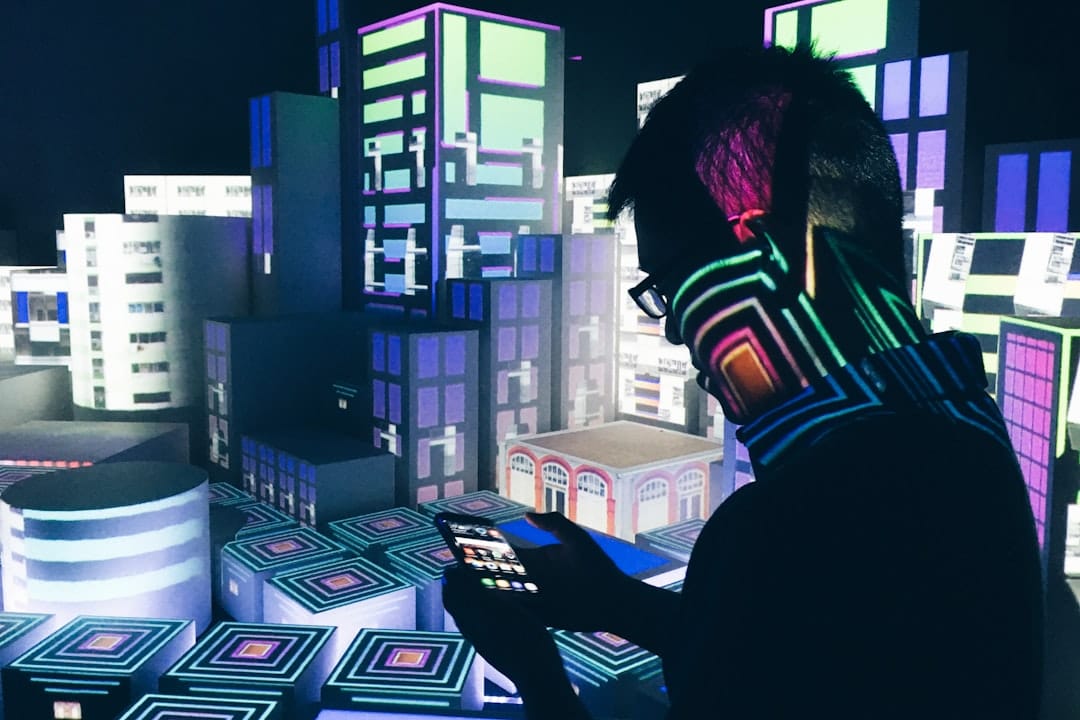
San Francisco, MMN Correspondent: You ask a chatbot for travel advice. It suggests a flight, a hotel, a restaurant. But what if the flight gets canceled, the hotel loses your reservation, and the restaurant is closed for a private event? Most chatbots today would freeze, offer a generic apology, or suggest you call customer support. The next generation of AI, however, is being trained to handle exactly this kind of chaos. And the training ground isn’t a database of text. It’s a simulated world.
This shift is quietly reshaping the entire field of conversational AI. Instead of just matching patterns in millions of sentences, researchers are now placing AI agents inside digital environments that mirror real life. Think of it as a flight simulator for the mind. In these virtual spaces, an AI can practice making decisions, recover from mistakes, and learn to read the room literally and figuratively. The goal isn’t just to answer questions. It’s to understand what’s happening around the question.
Consider a simple scenario: a user says, “I’m stressed about my trip.” A traditional chatbot might offer breathing exercises or a list of travel tips. A world trained AI, however, has spent hours inside a simulated airport where flights are delayed, bags are lost, and passengers show frustration. It has learned that stress often means the user needs reassurance, a quick alternative, and a calm tone. That kind of contextual awareness comes from experience, not from a script.
One of the most exciting developments involves reinforcement learning inside these virtual ecosystems. An AI agent might be placed in a simulated city where weather changes on the fly, local events pop up, and resources are limited. Every time it successfully reroutes a traveler or handles an upset customer with empathy, it gets a reward. Over thousands of trials, the agent develops a kind of street smarts. In a recent study, an AI trained this way completed complex tasks 40% more accurately under pressure than models trained on static data alone. That’s not just an improvement. It’s a different kind of intelligence.
What makes this approach so powerful is that it allows AI to practice rare or high stakes events that rarely appear in training data. How often does a customer service bot encounter a genuine emergency? Almost never. But in a simulation, you can create a hundred emergencies in an hour. The AI learns to prioritize, to ask clarifying questions, and to escalate when needed. It learns the difference between a frustrated user and a frightened one. That nuance is hard to teach with text alone.
Multimodal inputs are adding another layer of richness. Modern simulations now include avatars that show facial expressions, voice tones, and even subtle body language. An AI can learn to detect when a user is confused by a furrowed brow or excited by a faster speaking pace. This opens the door to emotionally intelligent interactions that feel natural and responsive. Imagine a virtual tutor that notices you’re struggling with a concept and changes its teaching style on the spot. That’s the direction we’re heading.
Of course, building these worlds is no small feat. Creating a realistic simulation requires massive computing power, careful programming, and constant validation. Developers must ensure the virtual environment reflects cultural norms, social dynamics, and ethical boundaries. A poorly designed simulation could teach an AI to be overly aggressive in negotiations or to ignore certain user groups. To prevent this, teams now run adversarial tests and incorporate human feedback loops. Real users interact with the AI in controlled settings, and their observations help refine the model. It’s a collaborative process between humans and machines.
The applications are already expanding beyond customer service. In healthcare, AI therapists are training in simulated patient sessions to improve mental health support. In education, virtual classrooms allow AI tutors to adapt to different learning styles. In business, AI agents practice negotiations and crisis management, helping human teams prepare for real world challenges. These systems are becoming tools for growth, not just convenience.
There are still hurdles. No simulation can perfectly capture the messiness of real life. There’s a risk that an AI becomes too specialized to its virtual training ground and struggles when faced with genuine unpredictability. Energy consumption is another concern, as large scale simulations require significant resources. But the trajectory is promising. The focus has shifted from making chatbots that sound smart to making agents that think and adapt.
What we’re witnessing is a fundamental change in how we define intelligence in machines. It’s no longer about having the right answer. It’s about navigating a world where the right answer changes. And the most exciting part? We’re just beginning to explore what these world trained agents can do. The next time you ask a chatbot for help, don’t be surprised if it seems to understand more than you said. It might have already lived through your problem a thousand times in a world built just for learning.
Related in Scientific Research

Scientific Research
How Soft Lithium Dendrites Crack Hard Ceramic Batteries: The Discovery That Could Triple EV Range
Imagine a battery that powers your phone for five days, charges your electric car in under 15 minutes, and never catches fire. That’s the promise of solid-state batteries. But for years, a tiny, stubborn problem has kept them stuck in labs: lithium dendrites. These microscopic,…
Read More...
Scientific Research
450,000 Barred Owls Could Be Shot to Save the Spotted Owl: Here’s Why Scientists Say It’s Working
Imagine walking through a silent forest at midnight. You hear a call—a deep, rhythmic hoot—and you raise a shotgun. This isn’t a scene from a thriller. It’s the front line of one of the most ambitious and controversial conservation experiments in American history. In the dense f…
Read More...
Scientific Research
50 Year Quantum Riddle Solved: How Heidelberg Physicists Bridged Two Opposing Particle Theories
Imagine trying to describe a single dancer moving through a crowded dance floor. One theory says the dancer pulls nearby people along, creating a small moving cluster. Another theory says if the dancer stands perfectly still, the crowd around them changes so completely that the…
Read More...
Scientific Research
9 Entangled Particles Found in a Crystal You Can Hold: What This Means for Quantum Tech
Imagine holding a small crystal in your hand, one that fits comfortably in your palm. Now imagine that inside that crystal, particles are connected in a way that defies everything we thought we knew about the quantum world. That is exactly what a team of researchers at TU Wien i…
Read More...
Scientific Research
30 Years Later: Scientists Finally Identify Rye Pollen Molecules That Slow Tumors – What This Means for Cancer Therapy
For nearly three decades, a quiet mystery sat at the edge of natural medicine. Two molecules found in rye pollen seemed to slow tumor growth in animal studies. But no one could figure out their exact shape. That puzzle has now been solved by researchers at Northwestern Universit…
Read More...
Scientific Research
55 Million Affected: Scientists Just Found a New Way Alzheimer’s Kills Brain Cells – And How to Stop It
For decades, the question of how Alzheimer’s disease actually destroys brain cells has been one of the most stubborn mysteries in medicine. We knew toxic proteins like amyloid and tau build up inside neurons. We knew cells eventually die. But the exact mechanism? That was the mi…
Read More...
Scientific Research
UK Heatwave Alert: Temperatures Hit 34°C This Week – Are You Ready for the Third Scorcher of 2026?
Here we go again. The United Kingdom is bracing for its third major heatwave of 2026, with thermometers expected to climb past 34°C in southern and eastern regions. This isn’t just another warm spell – it’s a week-long event that has health officials on high alert from Saturday,…
Read More...
Scientific Research
Quantum Time Reversal Achieved: 5 Ways This Breakthrough Could Power Future Tech
What if you could rewind a moment in time not in your memory, but in the physical world itself? That question has moved from the pages of science fiction into the lab. Researchers at Los Alamos National Laboratory have just demonstrated something extraordinary: they can make qua…
Read More...
Scientific Research
6 Inventors Just Won Europe’s Top Prize – Here’s What They Created That Could Change Your Life
What do oat milk, a malaria vaccine, and recycled EV batteries have in common? They are all powered by the minds of six inventors who just took home the 2026 European Inventor Award. The European Patent Office (EPO) streamed the ceremony live from Berlin, and the winners did not…
Read More...
Scientific Research
7 Reasons Why a Remote Arctic Research Station Is Now the World's Most Watched Geopolitical Hotspot
Imagine a place so quiet that the loudest sound is the crunch of snow under your boots. A place built for science, not strategy. That was the Arctic research station on Svalbard just a few years ago. Today, that same outpost is the center of a global tug-of-war. What changed? Th…
Read More...