
What You Need to Know About South Africa’s Offshore Oil Court Battle: Communities Take On Shell and TotalEnergies
We compile, generate and translate using Artificial Intelligence from the below given source. Macro Micro News is responsible for its editorial publication.
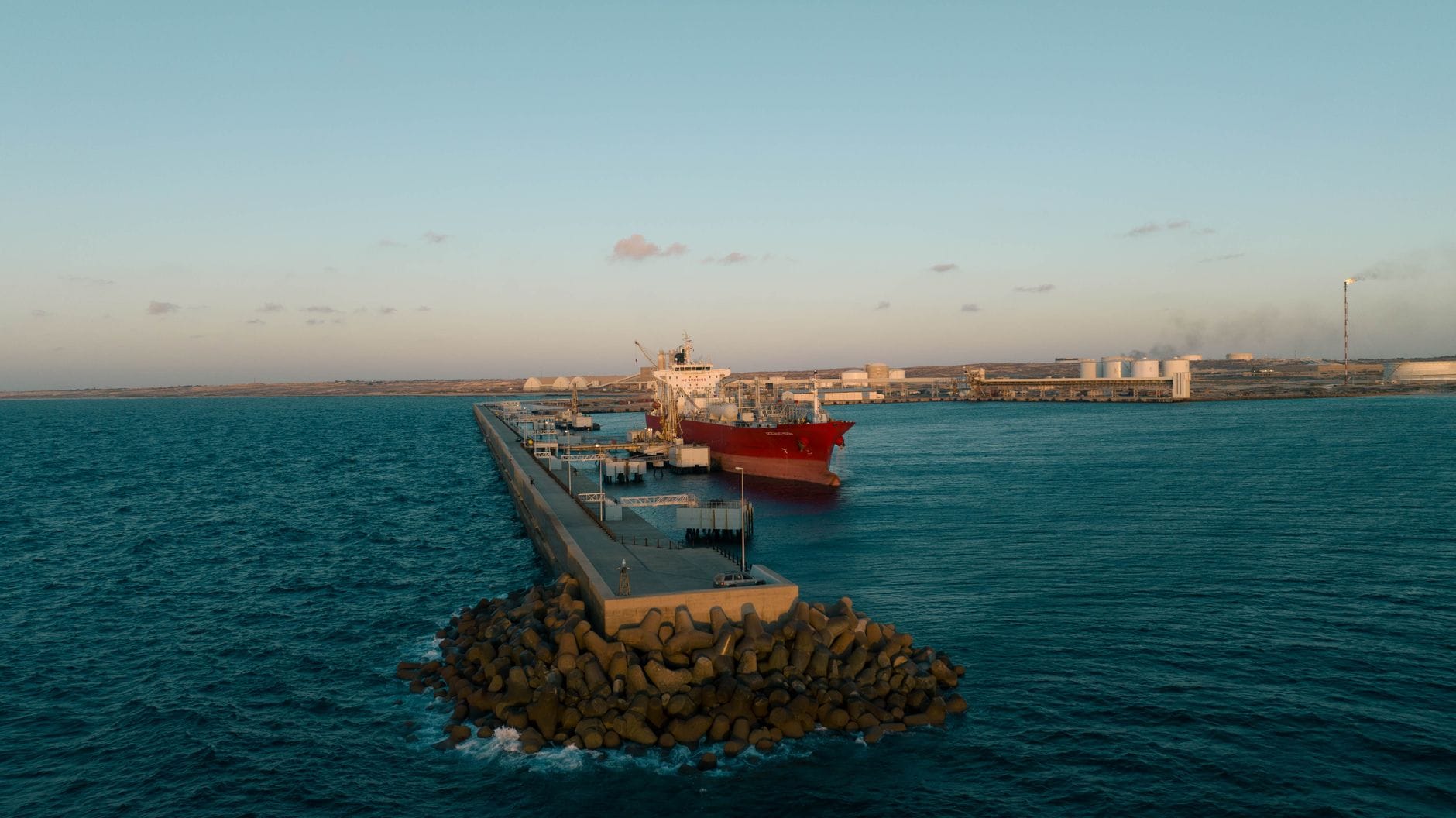
Saldanha Bay, South Africa, MMN Correspondent: Layers of red dust still coat Saldanha Bay, a reminder of the iron ore exports that transformed a quiet coastal fishing town in the 1970s. Today, the same bay is being prepared for a different role. The South African government wants to turn it into the country's oil and gas hub. More than 95 percent of the ocean along South Africa's nearly 3,000-kilometre coastline is now open to offshore exploration, and the push is known as Operation Phakisa.
Operation Phakisa started in 2014 with an ambitious goal: to gain the full advantage of the country's marine resources. The plan calls for 30 exploration wells in ten years. Government estimates point to an average production of 370,000 barrels of oil and gas per day over a 20-year period. Saldanha Bay is earmarked as the central logistics base for this activity. Aquaculture, maritime transport, and ocean tourism are also part of the same strategy.
Two major court cases are now testing this vision. Communities along South Africa's west and east coasts, supported by national civil society groups, have challenged permits held by Shell and TotalEnergies. They argue that local people were not consulted before exploration rights were granted. They also ask the courts to consider the social and environmental consequences for places such as Saldanha Bay, where many families have depended on the ocean for generations.
Melissa Groenink-Groves, programme manager at legal nonprofit Natural Justice, says the cases could set a precedent for the region. When communities win in court, she explains, those successes can inspire others to defend their rights in their own contexts. The legal challenges also contribute to the growth of climate litigation in South Africa and may guide how environmental impact assessments are conducted in future.
The debate stretches far beyond South Africa's borders. More than 1,000 offshore platforms are already in operation around the world. Scientists say industrial activity at sea can affect marine life and interfere with the ocean's ability to absorb heat from the atmosphere. That makes the South African court outcomes relevant to anyone paying attention to ocean conservation and climate policy.
One of the cases involves a fishing cooperative based about 400 kilometres north of Saldanha Bay. The Aukotowa Fisheries Cooperative, backed by The Green Connection and Natural Justice, has taken TotalEnergies to court over a 30,000-square-kilometre block off the west coast. The block lies within the Orange Basin, an area recognised as an important sanctuary for endangered species by researchers at Nelson Mandela University's Institute for Coastal and Marine Research.
The cooperative says the company's environmental impact assessment was flawed because it did not account for the project's contribution to climate change. It also argues that the government placed the profits of a multinational corporation above the livelihoods of vulnerable coastal communities. The Western Cape High Court heard the matter in late March and is expected to deliver a ruling later this year. Walter Steenkamp, chairperson of the cooperative, asks directly: “For whom is the development? Definitely not for us.” TotalEnergies has said in a statement that it is a responsible operator and fully committed to complying with all applicable South African legislation.
On the country's eastern coast, another case has progressed through the courts. Sustaining the Wild Coast and partner organisations have been challenging an exploration permit held by Shell and Impact Africa since 2021. Their position is that affected communities were not consulted, which is a legal requirement in South Africa. Sinegugu Zukulu, one of the plaintiffs, said in 2022 that oil and gas would lead to more emissions, and that in the face of climate change, this approach is wholly irresponsible. Lower courts ruled in favour of the challengers. The case is now before the Constitutional Court, which reserved judgment in September 2025. A decision against the companies would be final and would bring the exploration permit to an end.
Groenink-Groves says exploration licences under Operation Phakisa have often been granted without a proper assessment of the risks. In particular, she points to the impact an oil spill could have on small-scale fishers, the dangers of drilling in ultra-deep waters, and the absence of full accounting for climate change associated with oil and gas exploitation. Some applications also overlooked coastal management laws and cross-border environmental risks. Shell and South Africa's Department of Mineral and Petroleum Resources did not respond to written requests for comment.
Fishers along the coast say their heritage is tied to the sea. Carmelita Mostert, a third-generation fisher from Saldanha Bay and a member of advocacy group Coastal Links, speaks with clarity: “The ocean is our source of life.” For her and many others, offshore drilling is not just an industrial project. It is a test of whether their communities can continue to exist alongside state-backed energy development.
The government sees Operation Phakisa as a tool for socioeconomic development. South Africa has high levels of poverty and inequality, and the oil and gas push is framed as a way to create opportunities. Minister of Mineral and Petroleum Resources Gwede Mantashe has described the court cases as anti-development and accused environmental organisations of being fronts for foreign interests. Communities involved in the cases see their legal action as a way to claim a voice in those decisions.
Sifiso Dladla, a campaigner at human rights organisation groundWork, notes that the fossil fuel industry is deeply connected to state finances. Oil and gas companies contribute more than ten percent of South Africa's gross tax revenue. Dladla says this relationship influences the space available for an inclusive energy system. Politicians need money to win elections, he explains, and mining companies need government support to protect their interests.
Political economist Patrick Bond argues that Operation Phakisa only appears to make economic sense when social and environmental harms are left out of the equation. If a genuine social cost of carbon were applied to an African fossil fuel project, he says, few projects would be able to justify themselves. Bond also highlights public and private financial support for oil companies, including the French government's 20 percent stake in TotalEnergies, as a factor that shapes the balance of power in these disputes.
The outcomes will send a strong signal across Africa. Courts are being asked to weigh community consent, climate science, and ocean health alongside industrial ambitions. The decisions may shape not only South Africa's offshore energy future but also the strategies of fossil fuel companies and grassroots movements across the continent.
For Carmelita Mostert, a future without expanded oil and gas would make life simpler and better. She hopes communities will stand strong and make their voices heard. The legal process is about more than permits and profits. It is about who gets to decide what happens to the ocean, and whether the people who know those waters best will have a place at the table.
Related in Global Warming
Scientific Research
How PLOS Climate Is Reshaping Global Science: The Open Access Advantage
In the fast-moving world of scientific communication, open access journals are doing more than just sharing papers. They are breaking down walls that have long kept knowledge out of reach. PLOS Climate stands at the center of this shift. As a key part of the Public Library of Sc…
Read More...
Scientific Research
PLOS Climate: How Open Access is Reshaping Global Warming Solutions
The landscape of scientific publishing is shifting beneath our feet. Accessibility and transparency are no longer just nice-to-have features; they are the bedrock upon which we address the most pressing challenges of our time. The Public Library of Science (PLOS), a nonprofit ba…
Read More...
Scientific Research
PLOS Climate: Why Broken Links Threaten Global Science Access
The digital landscape of scientific communication is shifting beneath our feet. As climate research accelerates, the integrity and accessibility of this data have become paramount. Specialized journals like PLOS Climate face constant challenges regarding content availability and…
Read More...
Scientific Research
Why Climate Data Links Fail: The Open Access Fix You Need Now
Imagine clicking a link to the latest climate study only to hit a dead end. That frustrating 'Page Not Found' error is more than a technical glitch. It represents a significant barrier in the fight against misinformation and delayed action. When vital research on global warming…
Read More...
Scientific Research
PLOS Climate: The Open Access Frontier for Global Warming Research
The landscape of scientific publishing is shifting rapidly. Accessibility and transparency are no longer just ideals but necessities. PLOS, a nonprofit organization based in California, stands at the forefront of this movement. They champion open access to peer-reviewed research…
Read More...
Global Warming
COP17 Mongolia: The Desertification Summit Deciding Your Food and Water Future
Around 10,000 people are heading into a national park near Ulaanbaatar this week. They've gathered for COP17, the seventeenth Conference of Parties to the United Nations Convention to Combat Desertification. The meeting runs from August 17 to 28, and it could determine how farms…
Read More...
Global Warming
Plastics Treaty Draft Leaves Out Production Cuts: What It Means for You and the Planet
The newest draft of the global plastics treaty has arrived, and it is missing something many countries consider essential. Chilean ambassador Julio Cordano, the diplomat chairing the United Nations talks, released the document as an informal reference text. It reads a lot like a…
Read More...
Global Warming
UK Wildfire Crisis 2026: 71% of England in Drought and Firefighters Overwhelmed, Are We Ready for What's Next?
The United Kingdom is living through a fire emergency that keeps growing. Dry landscapes, repeated heatwaves, and shifting wind patterns have turned large parts of the country into a potential tinderbox. Firefighters are working long shifts to contain flames in Hampshire, Nottin…
Read More...
Global Warming
Canada’s Out-of-Control Wildfires: 22,000 Flee British Columbia, and What That Means for Your Community
Summerland received its evacuation order with little time to spare. Across British Columbia, around 22,000 people have now left their homes as 102 active wildfires spread through the province. Nearly half of those fires are listed as uncontrolled. The Bald Range fire grew to mor…
Read More...
Global Warming
Super El Niño 2026 Could Bring Flooding to Western US: Here's What Forecasters Are Watching
Something big is taking shape across the Pacific Ocean, and its effects are expected to reach the United States this winter. Climate scientists are tracking what could become one of the strongest El Niño events on record. If the forecasts hold, the western and south-eastern part…
Read More...