
Why Your Waistline Expands With Age: The Newly Found Stem Cell Driving Belly Fat Growth
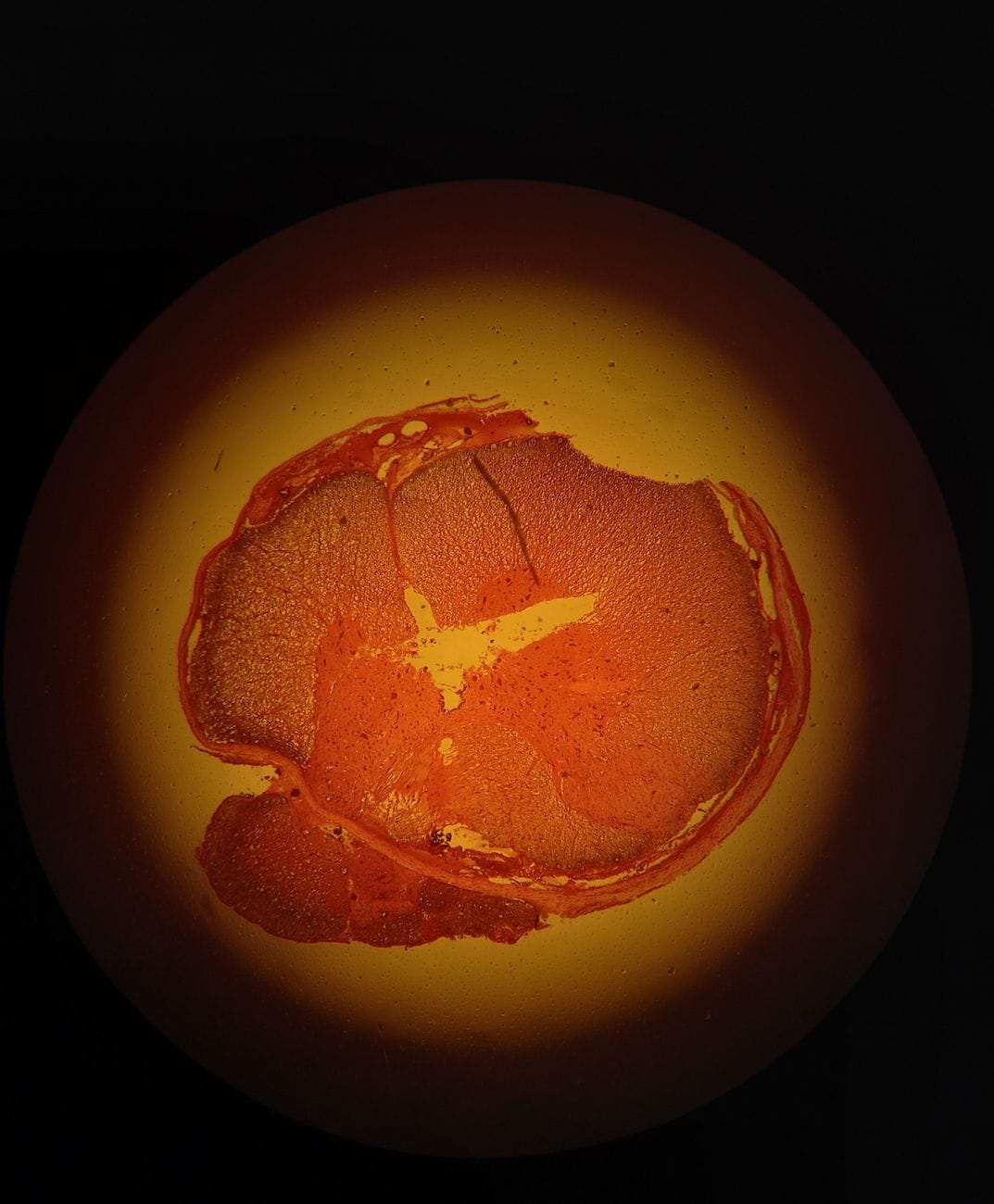
Duarte, California, MMN Correspondent: Have you ever noticed that even when the scale doesn’t budge, your pants feel a little tighter around the middle? You’re not imagining it. For years, scientists have watched this happen and wondered why the body seems to store fat in the abdomen as we get older. Now, a team from City of Hope and UCLA has found a surprising answer hiding inside your own fat tissue. It’s not just about eating more or moving less. It’s about a specific type of stem cell that wakes up in middle age and starts building new fat cells right where you least want them.
These cells are called committed preadipocytes, age-specific, or CP-As for short. Think of them as tiny construction workers that suddenly show up in your forties or fifties and begin laying down fresh fat tissue. Unlike most cells in your body that slow down with age, these become more active. They don’t just enlarge existing fat cells. They create brand new ones. And they seem to prefer the belly area. This changes how we understand age related weight gain. It’s not simply a matter of old fat cells getting bigger. Your body is actively manufacturing new ones.
The researchers started by looking at adipocyte progenitor cells, which live inside white adipose tissue, the kind of fat that stores energy. For a long time, the common belief was that as we age, our existing fat cells just swell up. But when the team transplanted progenitor cells from older mice into younger mice, something remarkable happened. The older cells quickly produced a flood of new fat cells inside the young hosts. When they did the reverse, putting young cells into older mice, those cells stayed quiet. This told the scientists that the drive to create new fat is built into the cells themselves, not triggered by the environment around them.
Using single cell RNA sequencing, the team watched gene activity in individual cells across different ages. In young mice, these progenitor cells were mostly silent. But in middle aged mice, they lit up. A cascade of molecular events kicked off, leading to fat cell production. The master switch turned out to be a signaling pathway called leukemia inhibitory factor receptor, or LIFR. In young animals, LIFR is barely active in fat tissue. In middle age, it becomes essential for CP-As to multiply and turn into mature fat cells. When the researchers blocked LIFR in older mice, new fat cell formation dropped significantly. That was the proof they needed.
What does this mean for humans? The team examined fat tissue samples from people of different ages using the same sequencing tools. They found cells that look and act just like CP-As, especially in middle aged adults. These human cells also showed a strong tendency to generate new fat cells. The same biological process appears to be at work in us. That cross species consistency is a big deal. It suggests that what works in mice might eventually work in people.
Why should you care about this? Belly fat, especially the kind that wraps around your internal organs, is not just a cosmetic issue. It’s metabolically active. It releases inflammatory molecules that can mess with your insulin sensitivity and raise your risk for type 2 diabetes, heart disease, and even faster biological aging. Current strategies like diet, exercise, and medications focus on managing calories or appetite. None of them directly address the root cause of new fat cell formation. This discovery opens a new path. If scientists can figure out how to target CP-As or disrupt the LIFR pathway, they might be able to prevent or even reverse abdominal fat accumulation.
Researchers are already planning next steps. They want to see if drugs that inhibit LIFR signaling can safely reduce belly fat in animals. They are also exploring ways to selectively eliminate CP-As or reprogram them to become something other than fat cells. Animal studies are underway to track how these cells behave over time and to test the safety of potential interventions. It will take years before any of this reaches human trials, but the foundation is solid.
This discovery also challenges a long held assumption about aging. We tend to think that everything in the body declines with time. But here is a type of stem cell that becomes more potent as we get older. That suggests aging is not just a slow decay. It involves programmed shifts in how cells behave. Understanding those shifts could lead to better strategies not only for managing belly fat but for promoting healthier aging overall. It’s a reminder that the body is full of surprises, and sometimes the most frustrating changes are actually clues to deeper biological processes.
For now, the practical takeaway is this. The research is promising, but clinical applications are still a ways off. Human trials will be needed to make sure that targeting CP-As or LIFR doesn’t interfere with other important functions. Still, this work represents a real shift in how we think about fat and aging. If future treatments can successfully modulate these cells, people might be able to maintain leaner, healthier bodies well into later life without extreme lifestyle changes. It’s not just about looking good. It’s about living longer, stronger, and with fewer chronic diseases. The journey from lab to real world therapy is long, but every step brings us closer to rewriting what it means to grow older.
Related in Scientific Research
Scientific Research
How Soft Lithium Dendrites Crack Hard Ceramic Batteries: The Discovery That Could Triple EV Range
Imagine a battery that powers your phone for five days, charges your electric car in under 15 minutes, and never catches fire. That’s the promise of solid-state batteries. But for years, a tiny, stubborn problem has kept them stuck in labs: lithium dendrites. These microscopic,…
Read More...
Scientific Research
450,000 Barred Owls Could Be Shot to Save the Spotted Owl: Here’s Why Scientists Say It’s Working
Imagine walking through a silent forest at midnight. You hear a call—a deep, rhythmic hoot—and you raise a shotgun. This isn’t a scene from a thriller. It’s the front line of one of the most ambitious and controversial conservation experiments in American history. In the dense f…
Read More...
Scientific Research
50 Year Quantum Riddle Solved: How Heidelberg Physicists Bridged Two Opposing Particle Theories
Imagine trying to describe a single dancer moving through a crowded dance floor. One theory says the dancer pulls nearby people along, creating a small moving cluster. Another theory says if the dancer stands perfectly still, the crowd around them changes so completely that the…
Read More...
Scientific Research
9 Entangled Particles Found in a Crystal You Can Hold: What This Means for Quantum Tech
Imagine holding a small crystal in your hand, one that fits comfortably in your palm. Now imagine that inside that crystal, particles are connected in a way that defies everything we thought we knew about the quantum world. That is exactly what a team of researchers at TU Wien i…
Read More...
Scientific Research
30 Years Later: Scientists Finally Identify Rye Pollen Molecules That Slow Tumors – What This Means for Cancer Therapy
For nearly three decades, a quiet mystery sat at the edge of natural medicine. Two molecules found in rye pollen seemed to slow tumor growth in animal studies. But no one could figure out their exact shape. That puzzle has now been solved by researchers at Northwestern Universit…
Read More...
Scientific Research
55 Million Affected: Scientists Just Found a New Way Alzheimer’s Kills Brain Cells – And How to Stop It
For decades, the question of how Alzheimer’s disease actually destroys brain cells has been one of the most stubborn mysteries in medicine. We knew toxic proteins like amyloid and tau build up inside neurons. We knew cells eventually die. But the exact mechanism? That was the mi…
Read More...
Scientific Research
UK Heatwave Alert: Temperatures Hit 34°C This Week – Are You Ready for the Third Scorcher of 2026?
Here we go again. The United Kingdom is bracing for its third major heatwave of 2026, with thermometers expected to climb past 34°C in southern and eastern regions. This isn’t just another warm spell – it’s a week-long event that has health officials on high alert from Saturday,…
Read More...
Scientific Research
Quantum Time Reversal Achieved: 5 Ways This Breakthrough Could Power Future Tech
What if you could rewind a moment in time not in your memory, but in the physical world itself? That question has moved from the pages of science fiction into the lab. Researchers at Los Alamos National Laboratory have just demonstrated something extraordinary: they can make qua…
Read More...
Scientific Research
6 Inventors Just Won Europe’s Top Prize – Here’s What They Created That Could Change Your Life
What do oat milk, a malaria vaccine, and recycled EV batteries have in common? They are all powered by the minds of six inventors who just took home the 2026 European Inventor Award. The European Patent Office (EPO) streamed the ceremony live from Berlin, and the winners did not…
Read More...
Scientific Research
7 Reasons Why a Remote Arctic Research Station Is Now the World's Most Watched Geopolitical Hotspot
Imagine a place so quiet that the loudest sound is the crunch of snow under your boots. A place built for science, not strategy. That was the Arctic research station on Svalbard just a few years ago. Today, that same outpost is the center of a global tug-of-war. What changed? Th…
Read More...