
100,000 German Jobs at Risk: What’s Driving the Industrial Exodus and How to Stop It
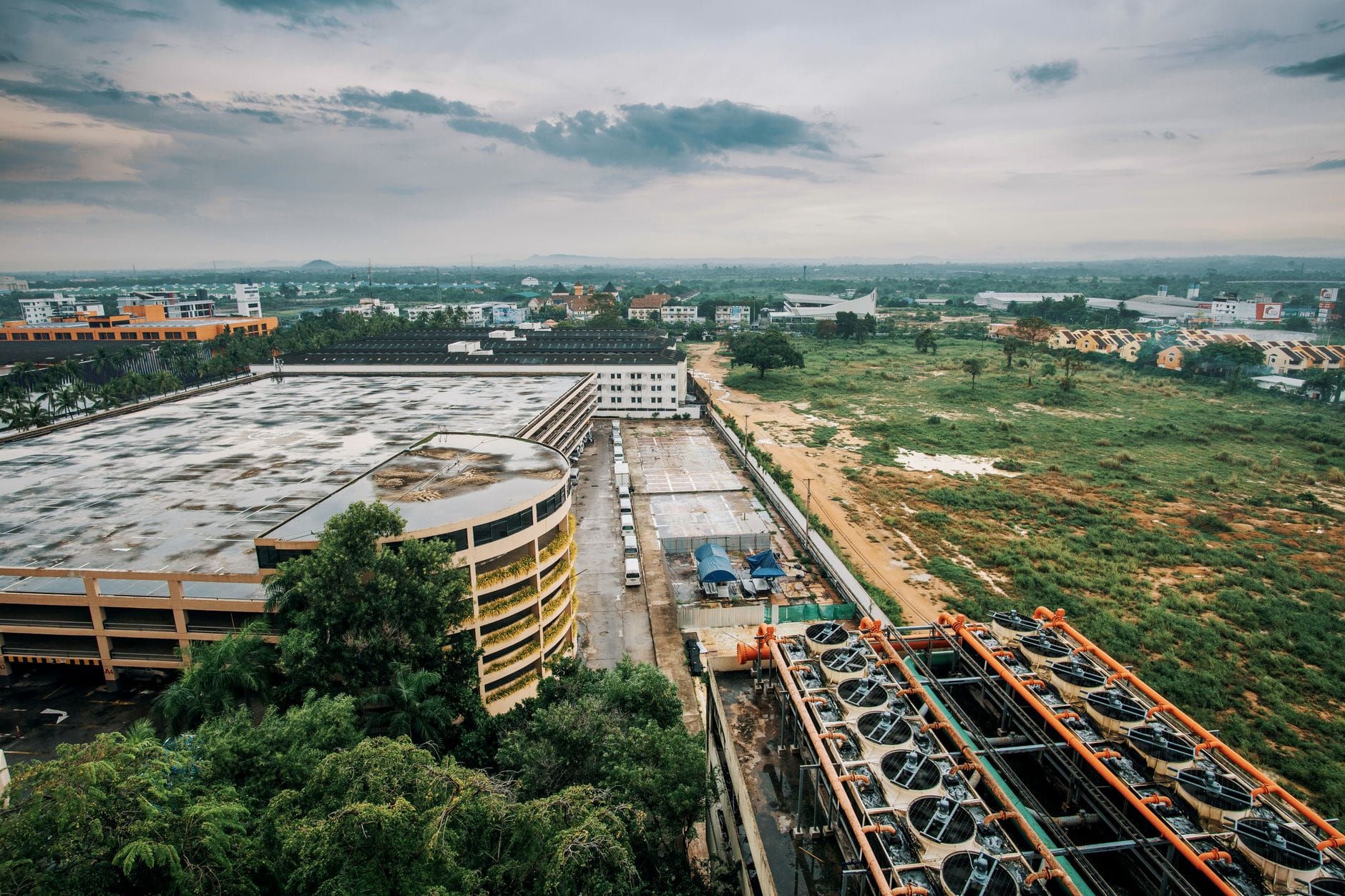
Berlin, Germany, MMN Correspondent: Germany’s industrial engine is sputtering, and the warning lights are flashing red. New corporate surveys from June 2026 reveal that up to 100,000 jobs could be moved abroad within the next twelve months. That’s not a distant forecast. It’s a live countdown. The question on everyone’s mind is simple: what’s pushing companies to pack up and leave one of Europe’s most storied manufacturing hubs?
The data tells a clear story. Nearly 60 percent of German industrial firms now plan to cut domestic jobs. They cite rising energy costs, heavy regulatory loads, and a tax system that feels more like a penalty than a partnership. These aren’t small startups. These are the backbone companies that have powered Germany’s economy for decades. And they’re looking elsewhere.
Energy prices are a major factor. In 2026, industrial electricity rates in Germany are nearly 50 percent higher than in neighboring Poland or the Czech Republic. That gap makes it hard to compete without constant subsidies, which aren’t a long-term fix. Companies are asking a fair question: why pay more for power when you can move production to a place where energy is affordable and reliable?
Regulations add another layer. A 2025 study by the German Institute for Economic Research found that German businesses face more compliance requirements per employee than any other EU country. Environmental standards, labor laws, digital reporting mandates. Each one makes sense on its own, but together they create a thicket that slows down operations and raises costs. For a manufacturer, time is money. And right now, too much time is spent on paperwork.
Taxes are the third leg of this stool. Corporate tax rates, including social security contributions, often exceed 30 percent for medium sized enterprises. That’s well above the EU average. Meanwhile, countries like Hungary, Slovakia, and parts of Eastern Europe are rolling out red carpets with lower taxes, simpler rules, and cheaper energy. They’re not just competing. They’re winning.
This isn’t just about jobs leaving. It’s about what leaves with them. Manufacturing drives research and development, supply chains, and high skilled employment. When a factory closes, the engineering team often follows. So do the training programs and the innovation labs. That creates a cycle: fewer skilled workers mean less innovation, which means weaker competitiveness, which leads to more relocations. It’s a spiral that’s hard to reverse once it starts.
Even Germany’s most iconic companies are reevaluating. Automakers, chemical producers, precision engineering firms. They’re expanding in Southeastern Europe, India, and Mexico. Places where labor and energy costs are lower. These aren’t desperate moves. They’re strategic decisions based on where the business environment is most favorable.
There’s also a national security angle. A weakened industrial base reduces strategic autonomy in critical sectors like semiconductors, renewable technology, and defense systems. With global supply chains under strain from geopolitical tensions and climate disruptions, relying on foreign production increases vulnerability. Germany’s ability to act independently in a crisis depends on keeping its industrial capabilities at home.
Regional governments are already stepping up. Bavaria, Baden-Württemberg, and North Rhine-Westphalia have launched emergency task forces to retain businesses and attract new ones. But without federal support and systemic reform, these efforts can only go so far. The real change needs to happen at the national level.
Experts point to a few key measures that could turn things around. Lowering energy costs through targeted infrastructure investments. Simplifying regulations. Reducing corporate tax burdens. Introducing competitive incentive packages for green industry. Countries like Estonia and Denmark have shown that a pro business climate can coexist with environmental goals. It’s not an either or choice.
The current government has promised a “wirtschaftliche Wende” an economic transformation. But so far, tangible reforms have been slow to materialize. Coalition disagreements have delayed or diluted proposals. A planned reduction in business taxes was shelved after opposition to cuts in social spending. Yet evidence shows that lower taxes correlate with increased investment and job creation. The math is clear, but the politics are messy.
Time is running out. If no decisive action is taken by late 2026, economists warn that the cumulative effect could cause permanent damage to Germany’s industrial identity. The loss of 100,000 jobs would represent a 4 percent decline in the nation’s total industrial workforce. That’s comparable to the impact of the 2008 financial crisis, but unfolding in real time.
The broader European context adds urgency. As the EU pushes forward with ambitious green transition goals, member states must balance sustainability with economic viability. Germany’s experience offers a valuable lesson: without careful planning and supportive frameworks, aggressive environmental policies can inadvertently trigger industrial flight.
A holistic strategy is needed. One that integrates energy affordability, regulatory efficiency, tax fairness, and innovation funding. That’s how Germany can reclaim its position as a leader in advanced manufacturing and secure long term prosperity. The path forward is clear. The only question is whether the will to act will arrive before the jobs are gone.
Related in Politics
Politics
Poland’s Political Crossroads: Why Konfederacja Is Pushing for a State Tribunal Trial Over Ukraine Policy
Poland’s political landscape is heating up as the far-right coalition Konfederacja demands that former Minister of Justice Paweł Kosiniak-Kamysza face a State Tribunal trial. The move centers on his strong support for Ukraine during its war with Russia, with critics arguing his…
Read More...
Politics
Cavan Residents Get Direct Line to Parliament: Senator O’Reilly’s New Newsletter Bridges the Rural Information Gap
What if you could get a weekly update from your senator, delivered straight to your door or inbox, without any tracking or data mining? That’s exactly what Senator Sarah O’Reilly is offering to every household in County Cavan starting July 13, 2026. The initiative, announced on…
Read More...
Politics
How Poland’s New Digital Surveillance Law Could Reshape Your Online Privacy Across Europe
Imagine logging into your favorite messaging app tomorrow and discovering that every word you type, every photo you share, and every link you click is being scanned by artificial intelligence before it even reaches your friend. That scenario is no longer hypothetical. It is now…
Read More...
Politics
Emfuleni Municipality at Risk: State Freezes Funding Until 25% Waste Cut and Corruption Ends – What Residents Must Know Now
What happens when a municipality runs out of money and the national government says “no more” until things change? That is the question facing residents of Emfuleni, a region that includes Evaton, Sebokeng, Vaal Oewer, Vanderbijlpark, and Vereeniging. On July 9, 2026, the Nation…
Read More...
Politics
Volkswagen Faces 100,000 Job Cuts: Is Germany’s EV Dream Crumbling?
Deep in the heart of Germany’s industrial belt, a quiet storm is brewing. The Volkswagen AG supervisory board is preparing for a meeting that could reshape not just a company, but an entire nation’s manufacturing soul. Four German factories may close. Up to 100,000 jobs could va…
Read More...
Politics
Are Mandatory iPads in Irish Schools Worth the Cost? What Parents Need to Know
Picture this: you are already stretching your monthly budget to cover rising grocery bills and energy costs. Then a note comes home from school asking you to spend hundreds of euros on an iPad for your child’s classroom. For families across Ireland, this scenario is becoming inc…
Read More...
Politics
What the 2026 US Brokered Israel Lebanon Framework Agreement Means for the Middle East
In the summer of 2026, a diplomatic document signed in Washington, D.C., has set the Middle East ablaze with debate. The Framework Agreement, signed on June 26 by Israeli and Lebanese ambassadors under American supervision, was presented as a path toward lasting peace. Instead,…
Read More...
Politics
Electricity Tariff Suspension in Mogalakwena: What R100 to R200 Hike Pause Means for Your Energy Bills and South Africa’s Fair Pricing Future
MMN Correspondent: In early July 2026, the Mogalakwena Local Municipality made a decision that caught the attention of energy watchers across South Africa. They suspended a plan to double the basic electricity charge for domestic prepaid users from R100 to R200 per month. For a…
Read More...
Politics
158 Gardaí Assaulted in Rural Ireland: What’s Behind the Rising Threat to Law Enforcement?
Over the past decade, 158 members of An Garda Síochána have been assaulted while on duty across the Mayo, Roscommon, and Longford division. That’s not just a number. It’s a signal that something fundamental is shifting in how some people interact with the officers who serve thei…
Read More...
Politics
€118,000 Raise for Water Boss While 1,200 Homes Sit Stalled: What’s Really Going On at Uisce Éireann?
Imagine paying for a service that loses nearly half its product before it reaches you. Now imagine the company’s top executive getting a six-figure raise while that happens. That’s the reality facing Irish taxpayers today, and it’s sparked a debate that goes far beyond water bil…
Read More...