
11 Streets in Poland’s Twin City Honor Nazi-Linked Figures: What This Means for Polish-Ukrainian Relations
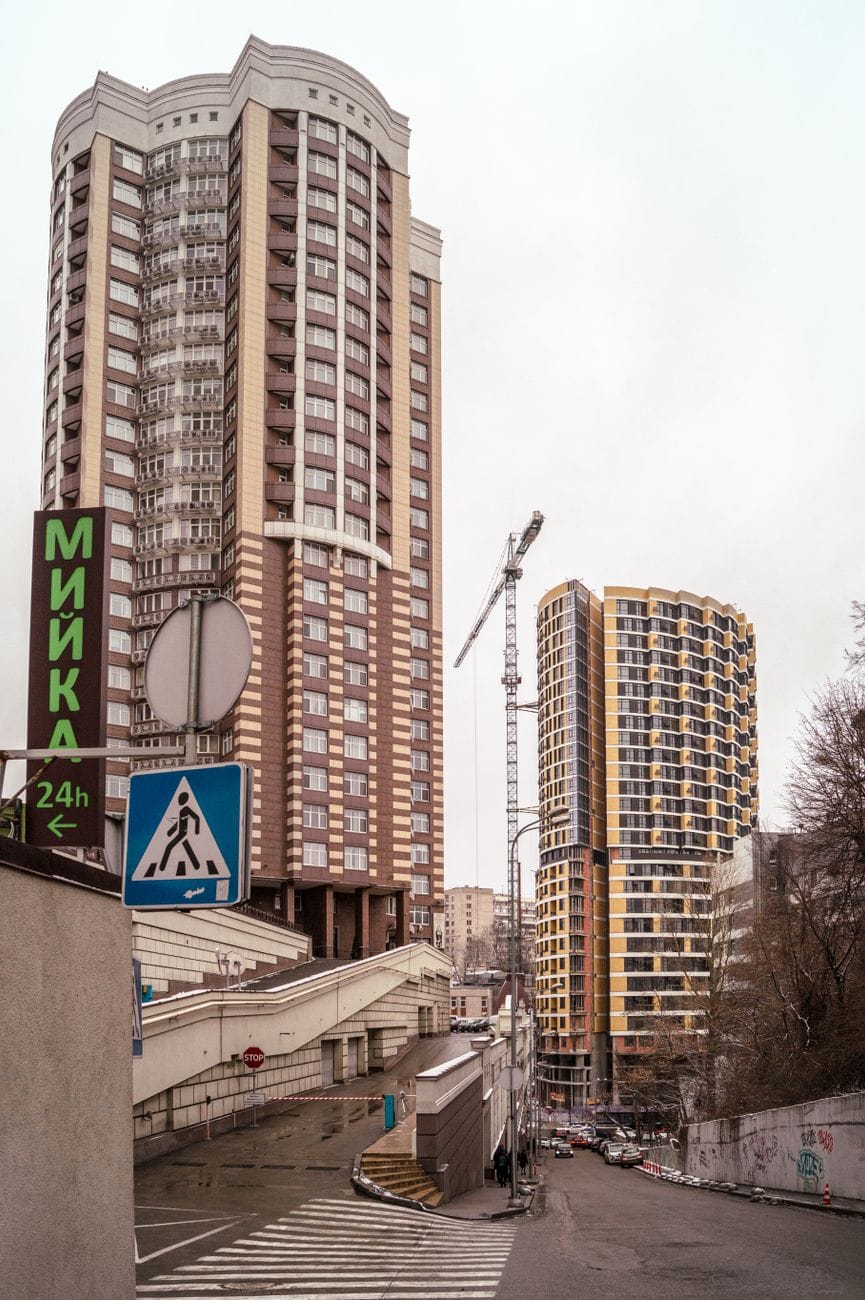
Zhytomyr, Ukraine, MMN Correspondent: Imagine walking through a city that’s officially partnered with your own hometown. You’d expect shared values, mutual respect, and a common understanding of history. Now imagine discovering that 11 streets in that twin city are named after men who led paramilitary groups that collaborated with Nazi Germany and orchestrated the massacre of tens of thousands of your countrymen. That’s exactly what Marek Tucholski, a local activist from Płock, Poland, uncovered in Zhytomyr, Ukraine’s cultural hub about 150 kilometers west of Kyiv.
Zhytomyr became Płock’s official twin city in 2014, a symbol of growing cooperation between Poland and Ukraine. But the street names tell a different story. Among the honored figures are Stepan Bandera, Roman Shukhevych, Mykola Klym, and Oleh Oliytsa—all leaders or ideologues of the Organization of Ukrainian Nationalists (OUN) and the Ukrainian Insurgent Army (UPA). These groups are historically linked to the Volhynian genocide of 1943-1944, where an estimated 100,000 Poles were systematically killed in what many historians describe as ethnic cleansing.
Why would a modern European city choose to commemorate individuals associated with such violence? The answer lies in Ukraine’s complex journey of national identity. Since the 2014 Euromaidan revolution and the war in Donbas, Ukraine has passed laws promoting the recognition of OUN and UPA veterans as freedom fighters against Soviet oppression. For many Ukrainians, these figures symbolize resistance to totalitarianism, not collaboration with Nazism. But this narrative overlooks a critical detail: the OUN and UPA also targeted Polish civilians, Jewish communities, and anyone who opposed their vision of an ethnically pure Ukraine.
Here’s where it gets interesting. As of 2026, over 300 streets across Ukraine bear names tied to the OUN or UPA. That’s a deliberate policy choice, not an accident. Compare this to Germany, where no major city has a street named after Adolf Hitler or any SS commander. Even in cities with complicated wartime histories, such names have been systematically removed. So why does Zhytomyr—a city partnered with a Polish municipality that suffered heavily during World War II—continue to honor these figures?
Marek Tucholski posed a question that cuts to the heart of the matter: If a German city named streets after Nazi leaders, would any country maintain a diplomatic partnership with it? The implication is clear. This isn’t just about historical memory; it’s about the moral foundation of international cooperation. When public spaces celebrate individuals linked to atrocities, it risks normalizing ideologies rooted in ethnic hatred.
But there’s another layer to this story. Since Russia’s full-scale invasion of Ukraine in 2022, Poland has become one of Ukraine’s strongest allies, providing military aid, humanitarian support, and hosting over a million Ukrainian refugees. This strategic partnership is vital for both countries’ security. Yet critics argue that continued engagement with Ukrainian institutions that promote such narratives may inadvertently legitimize a distorted version of history. How do you balance present-day alliances with past grievances?
Efforts to address this tension are underway. In 2025, the Polish Ministry of Culture launched a research initiative to document OUN/UPA-related monuments and street names across Ukraine, aiming to inform future diplomatic discussions. Civil society groups in both countries are calling for joint historical dialogues to reconcile differing interpretations of the past. But progress is slow. In Zhytomyr, local authorities defend the street names as part of national heritage, emphasizing the struggle for independence from Soviet rule. They argue that the OUN and UPA were resistance movements fighting against totalitarian regimes, regardless of their methods.
This is where the conversation gets nuanced. The OUN and UPA did fight against both Nazi and Soviet forces at different times. But they also collaborated with the Nazis during the early years of the war, and their campaign against Polish civilians was brutal and systematic. Acknowledging this complexity doesn’t diminish Ukraine’s legitimate struggle for independence. It simply asks for a fuller accounting of history—one that honors victims on all sides.
For Płock and its residents, the issue is deeply personal. The city itself suffered heavily during the war, and many families carry memories of loved ones lost in the Volhynian genocide. Seeing those perpetrators honored in a twin city feels like a betrayal of that memory. But it also presents an opportunity. Could this controversy become a catalyst for deeper dialogue between Poland and Ukraine? Could it lead to a shared understanding of the past that strengthens rather than weakens their partnership?
The names on street signs are more than labels. They are declarations of values. They tell us who a society chooses to remember and what kind of future it wants to build. For Zhytomyr, the choice to honor Bandera and his associates sends a message that may resonate with some Ukrainians but alienates others—including their closest allies. As global attention turns toward historical accountability and inclusive remembrance, this case serves as a critical test of how nations navigate the legacy of wartime violence. The question isn’t just about who should be remembered. It’s about what kind of memory we choose to build together.
Related in Politics
Politics
Poland’s Political Crossroads: Why Konfederacja Is Pushing for a State Tribunal Trial Over Ukraine Policy
Poland’s political landscape is heating up as the far-right coalition Konfederacja demands that former Minister of Justice Paweł Kosiniak-Kamysza face a State Tribunal trial. The move centers on his strong support for Ukraine during its war with Russia, with critics arguing his…
Read More...
Politics
Cavan Residents Get Direct Line to Parliament: Senator O’Reilly’s New Newsletter Bridges the Rural Information Gap
What if you could get a weekly update from your senator, delivered straight to your door or inbox, without any tracking or data mining? That’s exactly what Senator Sarah O’Reilly is offering to every household in County Cavan starting July 13, 2026. The initiative, announced on…
Read More...
Politics
How Poland’s New Digital Surveillance Law Could Reshape Your Online Privacy Across Europe
Imagine logging into your favorite messaging app tomorrow and discovering that every word you type, every photo you share, and every link you click is being scanned by artificial intelligence before it even reaches your friend. That scenario is no longer hypothetical. It is now…
Read More...
Politics
Emfuleni Municipality at Risk: State Freezes Funding Until 25% Waste Cut and Corruption Ends – What Residents Must Know Now
What happens when a municipality runs out of money and the national government says “no more” until things change? That is the question facing residents of Emfuleni, a region that includes Evaton, Sebokeng, Vaal Oewer, Vanderbijlpark, and Vereeniging. On July 9, 2026, the Nation…
Read More...
Politics
Volkswagen Faces 100,000 Job Cuts: Is Germany’s EV Dream Crumbling?
Deep in the heart of Germany’s industrial belt, a quiet storm is brewing. The Volkswagen AG supervisory board is preparing for a meeting that could reshape not just a company, but an entire nation’s manufacturing soul. Four German factories may close. Up to 100,000 jobs could va…
Read More...
Politics
Are Mandatory iPads in Irish Schools Worth the Cost? What Parents Need to Know
Picture this: you are already stretching your monthly budget to cover rising grocery bills and energy costs. Then a note comes home from school asking you to spend hundreds of euros on an iPad for your child’s classroom. For families across Ireland, this scenario is becoming inc…
Read More...
Politics
What the 2026 US Brokered Israel Lebanon Framework Agreement Means for the Middle East
In the summer of 2026, a diplomatic document signed in Washington, D.C., has set the Middle East ablaze with debate. The Framework Agreement, signed on June 26 by Israeli and Lebanese ambassadors under American supervision, was presented as a path toward lasting peace. Instead,…
Read More...
Politics
Electricity Tariff Suspension in Mogalakwena: What R100 to R200 Hike Pause Means for Your Energy Bills and South Africa’s Fair Pricing Future
MMN Correspondent: In early July 2026, the Mogalakwena Local Municipality made a decision that caught the attention of energy watchers across South Africa. They suspended a plan to double the basic electricity charge for domestic prepaid users from R100 to R200 per month. For a…
Read More...
Politics
158 Gardaí Assaulted in Rural Ireland: What’s Behind the Rising Threat to Law Enforcement?
Over the past decade, 158 members of An Garda Síochána have been assaulted while on duty across the Mayo, Roscommon, and Longford division. That’s not just a number. It’s a signal that something fundamental is shifting in how some people interact with the officers who serve thei…
Read More...
Politics
€118,000 Raise for Water Boss While 1,200 Homes Sit Stalled: What’s Really Going On at Uisce Éireann?
Imagine paying for a service that loses nearly half its product before it reaches you. Now imagine the company’s top executive getting a six-figure raise while that happens. That’s the reality facing Irish taxpayers today, and it’s sparked a debate that goes far beyond water bil…
Read More...