
35% by 2035: How the EU and UK Are Electrifying the World and What It Means for Your Energy Future
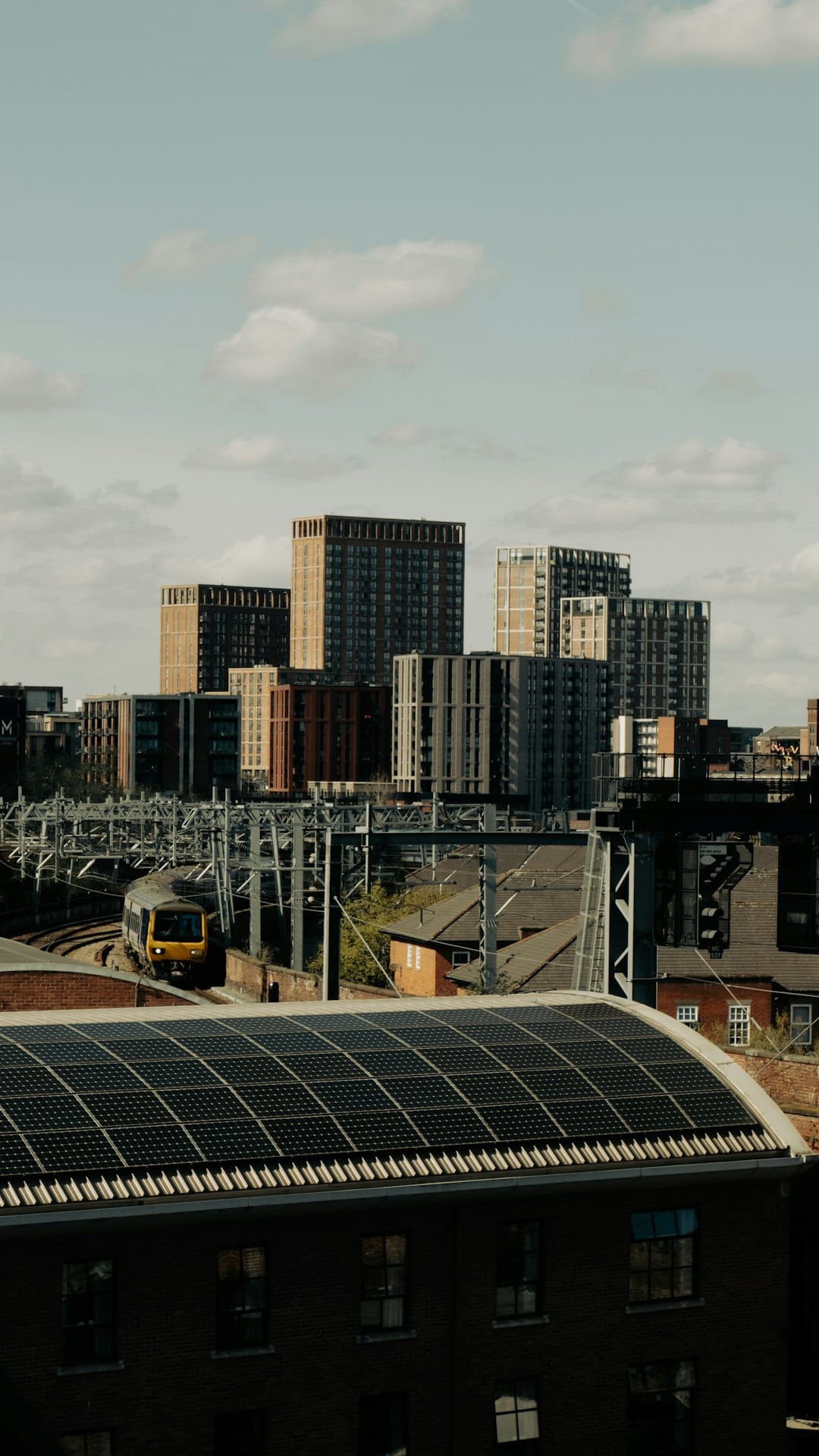
London, United Kingdom, MMN Correspondent: Imagine a world where your car, your home heating, and even your factory all run on clean electricity. That vision just took a massive leap forward. At a high level summit inside London’s historic Mansion House, energy ministers, business leaders, and UN Secretary General António Guterres came together with a single bold message: electrification is the most powerful tool we have to move beyond fossil fuels. And they’re not just talking about it. They’ve set a concrete target to electrify 35% of all global energy use by 2035. That’s a jump from today’s 20% level, and it’s a milestone that could keep the world within the 1.5°C warming limit set by the Paris Agreement.
The timing couldn’t be more telling. As a record breaking heatwave gripped the UK capital, the urgency of shifting away from carbon intensive energy sources became impossible to ignore. According to the International Renewable Energy Agency (IRENA), we need to nearly double the pace of electrification adoption over the next decade. That means unprecedented investment, major infrastructure upgrades, and coordinated action across borders. But here’s the good news: the technology is ready. Electric vehicles, heat pumps, and industrial electrification are no longer experimental. They are mature, scalable, and increasingly affordable.
At the heart of this campaign is a newly launched global coordination platform co led by the European Commission and the UK government. Think of it as a central hub where countries can share best practices, align policies, and mobilize funding. Founding members include Brazil (which will host COP30), Australia and Türkiye (co hosts of COP31), Ethiopia (incoming COP32 president), Canada, the Philippines, and South Korea. The platform is designed to help nations, especially developing ones, build the technical capacity and financial frameworks needed to accelerate their own electrification journeys.
EU Energy Commissioner Dan Jorgensen framed the transition as a strategic choice. “We are choosing transformation over turbulence,” he said. His point is simple: clean electricity reduces dependence on imported oil and gas, strengthens national resilience, and insulates economies from global market shocks. Recent disruptions to shipping through the Strait of Hormuz, triggered by regional conflicts, have laid bare the vulnerability of fossil fuel supply chains. Electrification offers a decentralized, domestically sustainable alternative that is far less exposed to geopolitical volatility.
UK Energy Secretary Ed Miliband reinforced that message with a focus on tangible benefits. “This is not just about climate,” he declared. “It’s about sovereignty, stability, and long term prosperity.” He pointed to stable domestic prices, job creation in green industries, and protection from external shocks as direct outcomes of a clean electrification strategy. With EVs and heat pumps now mainstream, the conversation has shifted from whether we can do it to how fast we can scale up and bring costs down.
Of course, the upfront cost of adopting electrified technologies remains a significant barrier, especially for households and businesses in low and middle income countries. IRENA estimates that annual clean energy investment needs to reach roughly $1 trillion by 2030, double the current rate. Yet developing nations still face systemic challenges in accessing capital. UN chief Guterres called for deep reforms in the global financial architecture, urging institutions to reduce lending risks, lower interest rates, and attract private investment through innovative mechanisms like green bonds and blended finance models.
Palau’s President Surangel Whipps Jr. described electrification as a “powerful weapon in our arsenal” against rising sea levels and climate induced disasters. But he stressed that progress depends on “fit for purpose investment that is fast, predictable, and accessible.” Small island states, which contribute minimally to global emissions, are among the most vulnerable to climate impacts. For them, a resilient, decentralized energy system isn’t just an environmental goal. It’s a matter of survival.
Beyond finance, the success of the electrification drive hinges on modernizing the grid. Many regions still rely on aging power networks that struggle to integrate variable renewable sources like solar and wind. Without smart grids, battery storage, and digital monitoring systems, surges in renewable generation can cause instability or lead to wasted energy. Experts emphasize that grid expansion and digitalization must happen in parallel with technology adoption. You can’t have one without the other.
The political landscape adds another layer of complexity. While dozens of nations rally behind the 35 by 35 goal, some face internal shifts that could slow progress. Colombia, for example, has a new leadership that signaled plans to lift bans on oil and gas exploration and scale back renewable incentives. That raises questions about potential setbacks in Latin America’s climate efforts. Still, the overall momentum is strong. A coalition of over 60 governments, led by the Netherlands and Colombia, recently met in Santa Marta to align national electrification strategies with the UNFCCC agenda. Their vision includes harmonizing standards, promoting cross border interconnections, and accelerating regulatory reforms to speed up deployment of EVs and clean heating systems.
As COP31 approaches, the electrification pledge stands as one of the most ambitious and actionable commitments yet proposed in the climate arena. It represents a shift from incremental change to systemic transformation. Clean electricity is becoming the backbone of modern economies, replacing fossil fuels across transportation, manufacturing, buildings, and agriculture. With technological readiness, economic viability, and growing political consensus converging, the world may be entering a new era defined not by energy scarcity, but by energy abundance. Clean, secure, and democratic. The challenge now is scaling up with speed, equity, and unity. The age of clean electrification is no longer a distant dream. It is here, and it is accelerating.
Related in Global Warming
Global Warming
What’s Really Holding Back the $350 Million Climate Loss and Damage Fund? 180 Projects, $2.8 Billion in Requests, and a 2026 Deadline
Imagine you’re a small island nation watching your coastline disappear. Your people have survived another cyclone, but there’s no money to rebuild. You hear about a new global fund designed exactly for this moment. You apply. You wait. And then you learn the fund has only enough…
Read More...
Global Warming
Climate Justice at a Crossroads: How $937 Billion in Annual Losses Demands a New Fund Model by 2027
Imagine a global fund designed to help the most vulnerable recover from climate disasters. It was created with hope and fanfare in 2022. Now, just a few years later, that fund is running on empty. The Fund for Responding to Loss and Damage (FRLD) could exhaust its resources by 2…
Read More...
Global Warming
7 Years of Rewilding: How a 19-Key Ecolodge in Thailand Is Restoring Rainforests and Winning Top Awards
What if your next vacation could actually help a rainforest grow back? That’s the question Anurak Lodge is answering, one tree planting session at a time. Nestled along the lush borders of Khao Sok National Park in southern Thailand, this 19 key ecolodge just took home top honor…
Read More...
Global Warming
Coastal Communities Hold the Key to a $2.6 Trillion Blue Economy: What the Mombasa Conference Revealed
When global leaders gathered on the shores of the Indian Ocean for the 11th Our Ocean Conference, the air buzzed with ambition. Billions of dollars in new commitments were announced. Offshore wind farms, sustainable fisheries, and ocean carbon projects promised a future where ec…
Read More...
Global Warming
4 Ugandan Farmers vs. a 1,443 km Oil Pipeline: Can a London Court Stop It?
Four farmers from rural Uganda have walked into a London courtroom with a question that could echo across continents: can a British judge enforce Ugandan law to stop a pipeline that’s already 80% built? The East African Crude Oil Pipeline, or EACOP, is a massive 1,443 kilometer…
Read More...
Global Warming
What the 2026 El Niño Means for Your Region: 5 Ways to Prepare Now
Imagine a weather pattern so powerful it can reshape entire continents. That is exactly what scientists are tracking right now. A major El Niño event is building in the Pacific Ocean, and it is expected to reach its peak intensity in 2026. This is not just another seasonal shift…
Read More...
Global Warming
Over 25 Dead in U.S. Heatwave: What’s Driving the 100°F Crisis?
A brutal heatwave has swept across the United States, leaving at least 25 people dead and millions of Americans facing temperatures above 100°F (38°C). This isn’t just another hot summer day. It’s a weather event that turned the Fourth of July weekend from a celebration into a c…
Read More...
Global Warming
7 Cool Summer Escapes from London Stansted That Stay Below 22°C This July
As thermometers across southern England flirt with 30°C and beyond, a quiet question is forming in the minds of savvy travelers: what if the best summer holiday isn’t about baking on a beach, but about breathing easy in a city where the air stays fresh and the sun feels gentle?…
Read More...
Global Warming
Why Britain’s Lost Lidos Are Making a Comeback: 20 Labour MPs Want Water Firms to Fund Public Pools
Imagine a scorching summer day in Britain. The heat is relentless. You crave a cool escape, but the nearest public pool is miles away or closed for good. That’s the reality for millions today. But a growing movement of Labour MPs and policy experts is working to change that. The…
Read More...
Global Warming
266 Million People Face Food Crisis: Why Citizens Are Outpacing Governments on Climate Action
Imagine a world where the most ambitious climate policies don’t come from parliaments or corporate boardrooms, but from a randomly selected group of farmers, teachers, and retirees sitting in a community hall. That world is already here. While national governments struggle to tu…
Read More...