
Coastal Communities Hold the Key to a $2.6 Trillion Blue Economy: What the Mombasa Conference Revealed
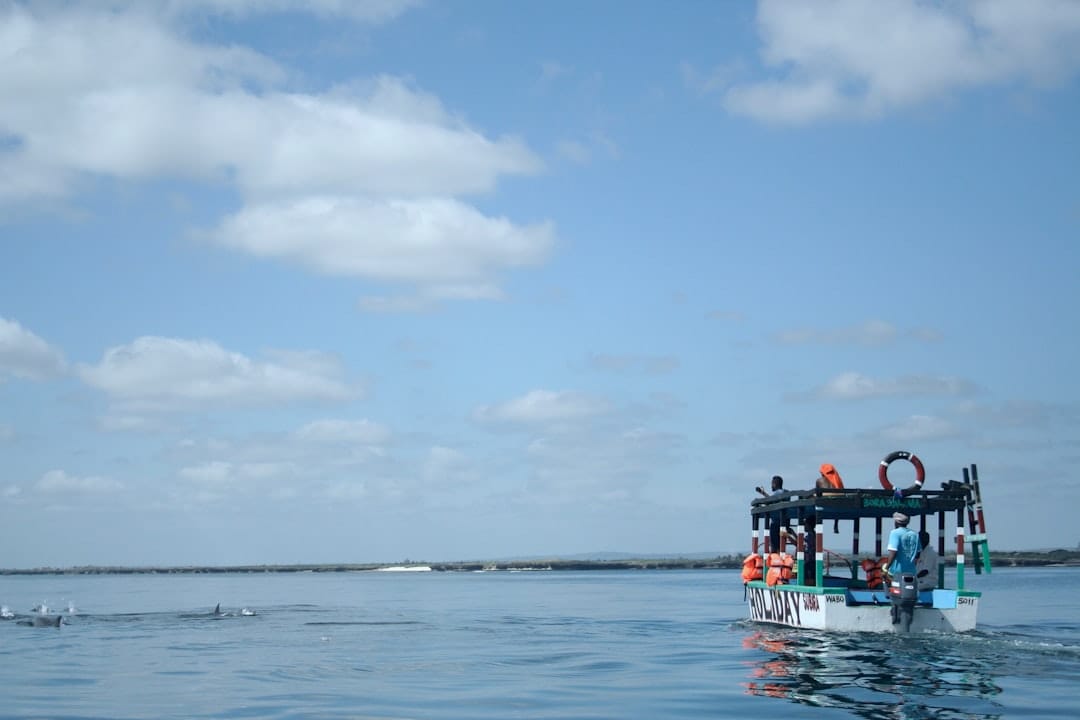
Mombasa, Kenya, MMN Correspondent: When global leaders gathered on the shores of the Indian Ocean for the 11th Our Ocean Conference, the air buzzed with ambition. Billions of dollars in new commitments were announced. Offshore wind farms, sustainable fisheries, and ocean carbon projects promised a future where economic growth and environmental health go hand in hand. But as the applause faded, a quieter, more urgent conversation emerged: who actually gets to shape this blue revolution?
The blue economy is no longer a fringe idea. According to the OECD, its value has doubled from $1.3 trillion in 1995 to $2.6 trillion in 2020, with projections suggesting it could quadruple by 2050. That kind of growth attracts attention. At the Mombasa conference alone, $6.4 billion was pledged across sectors. The largest chunk, $2.86 billion, went to sustainable blue economy initiatives. Another $1.75 billion targeted sustainable fisheries, and $1.18 billion was earmarked for ocean climate action. These numbers signal a global shift: oceans are now central to both prosperity and planetary stability.
Yet behind the headlines, a pattern repeats. Coastal communities, the very people who have lived alongside the sea for generations, often learn about major projects only after decisions have been made. Neville van Rooy of The Green Connection in South Africa put it plainly: “Communities need to be taken seriously. Just because they are struggling does not mean they lack vision.” His words echo a deeper truth. Inclusivity isn’t just a nice idea. It’s a practical necessity for long term success.
Consider the Lamu Port project in Kenya. Planned in a fragile coastal zone and a UNESCO World Heritage site, it faced fierce opposition from residents and environmental advocates. Critics pointed to inadequate public consultation, threats to traditional fishing grounds, and risks to cultural heritage. In 2019, Kenya’s National Environment Tribunal revoked the project’s environmental license due to flawed assessments and insufficient community engagement. The courts later upheld that decision. It was a clear reminder that transparency and participation aren’t optional. They are legal and ethical requirements.
Farida Aliwa, executive director of Natural Justice, highlighted another layer. Even well intentioned projects can miss the mark. She pointed to blue carbon initiatives where local communities were asked to plant mangroves or monitor seagrass beds but had no say over carbon revenue distribution or long term management. “They provided labor and knowledge, but outside developers retained control,” she noted. “This isn’t just inequity. It’s a violation of rights.”
The same dynamic plays out in offshore wind and marine protected areas. When planned without community input, these projects can disrupt small scale fishers’ access to traditional grounds and displace livelihoods. The solution isn’t to abandon these initiatives. It’s to integrate local knowledge from the start. A promising model emerged in 2020 when 14 countries, including Australia, Chile, and Kenya, launched a joint initiative to co develop sustainable ocean plans with coastal communities. By embedding indigenous and local expertise into national strategies, these nations aim to align development with both ecological integrity and social equity.
Of course, contradictions remain. Some of the same countries pushing for sustainable ocean plans continue to pursue new offshore oil and gas exploration. Environmental NGOs have documented how fossil fuel expansion undermines climate goals and threatens marine biodiversity hotspots. As the world transitions to renewable energy, ensuring that shift is just and inclusive is paramount.
Legal frameworks across Africa are evolving to address these challenges. Strategic litigation is increasingly used to hold governments accountable for environmental and human rights violations linked to ocean projects. Court rulings on environmental impact assessments and licensing decisions are empowering communities to defend their rights. Still, civic space for environmental defenders continues to shrink in many regions. Activists face harassment, legal intimidation, and restrictions on protest. Without strong protections and participatory governance, even the most well funded blue economy initiatives risk deepening inequality.
Cynthia Barzuna of the World Resources Institute emphasized that involving communities in planning, not just consultation, is essential. “Once people are part of designing, implementing, and monitoring sustainable ocean plans, we move from top down mandates to shared stewardship,” she said.
Looking ahead, the success of the blue economy won’t be measured solely by investment volume or GDP contribution. It will be measured by whether coastal populations, especially Indigenous peoples and small scale fishers, see tangible improvements in their lives, livelihoods, and sovereignty over their marine environments. As global momentum builds around ocean based solutions, one truth stands out: sustainability without inclusion is unsustainable. The ocean’s future depends not just on technology and finance, but on justice, transparency, and respect for those who have lived alongside the sea for generations. The time has come to ensure that the blue economy doesn’t leave anyone behind, but lifts everyone up.
Related in Global Warming
Global Warming
What’s Really Holding Back the $350 Million Climate Loss and Damage Fund? 180 Projects, $2.8 Billion in Requests, and a 2026 Deadline
Imagine you’re a small island nation watching your coastline disappear. Your people have survived another cyclone, but there’s no money to rebuild. You hear about a new global fund designed exactly for this moment. You apply. You wait. And then you learn the fund has only enough…
Read More...
Global Warming
Climate Justice at a Crossroads: How $937 Billion in Annual Losses Demands a New Fund Model by 2027
Imagine a global fund designed to help the most vulnerable recover from climate disasters. It was created with hope and fanfare in 2022. Now, just a few years later, that fund is running on empty. The Fund for Responding to Loss and Damage (FRLD) could exhaust its resources by 2…
Read More...
Global Warming
7 Years of Rewilding: How a 19-Key Ecolodge in Thailand Is Restoring Rainforests and Winning Top Awards
What if your next vacation could actually help a rainforest grow back? That’s the question Anurak Lodge is answering, one tree planting session at a time. Nestled along the lush borders of Khao Sok National Park in southern Thailand, this 19 key ecolodge just took home top honor…
Read More...
Global Warming
4 Ugandan Farmers vs. a 1,443 km Oil Pipeline: Can a London Court Stop It?
Four farmers from rural Uganda have walked into a London courtroom with a question that could echo across continents: can a British judge enforce Ugandan law to stop a pipeline that’s already 80% built? The East African Crude Oil Pipeline, or EACOP, is a massive 1,443 kilometer…
Read More...
Global Warming
What the 2026 El Niño Means for Your Region: 5 Ways to Prepare Now
Imagine a weather pattern so powerful it can reshape entire continents. That is exactly what scientists are tracking right now. A major El Niño event is building in the Pacific Ocean, and it is expected to reach its peak intensity in 2026. This is not just another seasonal shift…
Read More...
Global Warming
Over 25 Dead in U.S. Heatwave: What’s Driving the 100°F Crisis?
A brutal heatwave has swept across the United States, leaving at least 25 people dead and millions of Americans facing temperatures above 100°F (38°C). This isn’t just another hot summer day. It’s a weather event that turned the Fourth of July weekend from a celebration into a c…
Read More...
Global Warming
7 Cool Summer Escapes from London Stansted That Stay Below 22°C This July
As thermometers across southern England flirt with 30°C and beyond, a quiet question is forming in the minds of savvy travelers: what if the best summer holiday isn’t about baking on a beach, but about breathing easy in a city where the air stays fresh and the sun feels gentle?…
Read More...
Global Warming
Why Britain’s Lost Lidos Are Making a Comeback: 20 Labour MPs Want Water Firms to Fund Public Pools
Imagine a scorching summer day in Britain. The heat is relentless. You crave a cool escape, but the nearest public pool is miles away or closed for good. That’s the reality for millions today. But a growing movement of Labour MPs and policy experts is working to change that. The…
Read More...
Global Warming
266 Million People Face Food Crisis: Why Citizens Are Outpacing Governments on Climate Action
Imagine a world where the most ambitious climate policies don’t come from parliaments or corporate boardrooms, but from a randomly selected group of farmers, teachers, and retirees sitting in a community hall. That world is already here. While national governments struggle to tu…
Read More...
Global Warming
How Indigenous Women in Guatemala Are Using Ancient Farming Secrets to Fight Climate Change (and It’s Working)
Imagine a lake so sacred that the Maya people have lived beside it for centuries, drawing life from its waters and wisdom from its shores. That’s Lake Atitlán, a shimmering jewel in Guatemala’s volcanic highlands. But beneath its beauty, a quiet crisis has been brewing. Rainfall…
Read More...