
40+ Garda Officers Pulled from Dublin’s High Crime Zones for EU Presidency: Who’s Left to Protect Ballymun and Finglas?
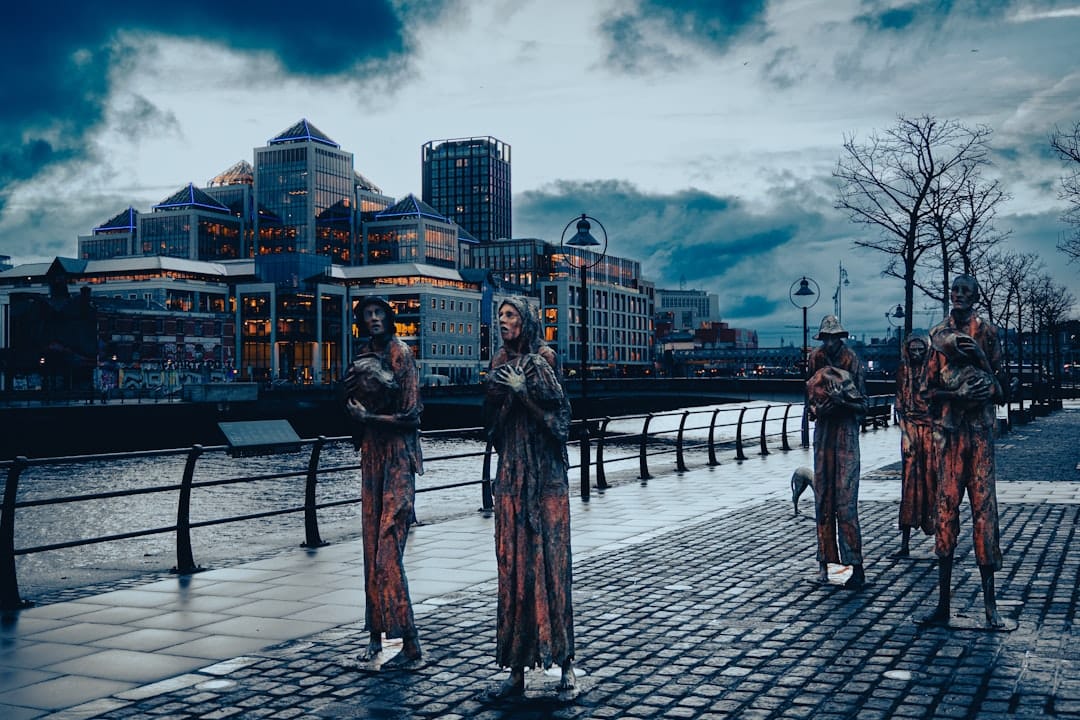
Dublin, Ireland, MMN Correspondent: As Ireland gears up to take the rotating presidency of the European Union in July 2026, a quiet but consequential shift is happening on the streets of Dublin. More than 40 uniformed Garda officers are being temporarily moved from two of the city’s busiest policing districts—Ballymun and Finglas—to support high-level security operations tied to the EU leadership role. The operation, called Operation Brehon, is designed to protect visiting dignitaries and host diplomatic summits. But the question on many minds is simple: what happens to the neighborhoods these officers leave behind?
Ballymun and Finglas are not just any districts. They are among the most demanding in the country, serving densely populated urban areas with historically higher rates of violent crime, drug offenses, and property theft. According to the Central Statistics Office and Garda Crime Records, Finglas handled over 18,000 recorded incidents in 2025 alone, while Ballymun logged more than 17,500. These numbers include serious assaults and burglaries. Losing nearly half a dozen experienced officers from each station means fewer patrols, slower response times, and cases that may sit idle.
What makes this redeployment particularly interesting is where the officers are not coming from. Less than ten Garda members are being reassigned from the affluent coastal areas of Blackrock and Dun Laoghaire—regions with lower crime density and stronger local resources. This has led some to wonder whether the decision is based on operational need or something else entirely. The contrast is hard to ignore.
Aontú leader Peadar Tóibín has been vocal about the lack of transparency. He wants to know exactly how many officers are being moved, where they are coming from, and how long they will be gone. “These are not desk jobs,” he said. “They are frontline roles where real-time response and continuity matter. When an officer leaves mid-case, it can lead to lost evidence, missed suspects, and victims left without closure.” His concerns resonate with residents who have already seen delays in investigations and court preparations.
Operation Brehon, named after the ancient Irish legal code, involves collaboration between the Garda Síochána, the Defence Forces, and private security contractors. Internal reports suggest that up to 500 officers nationwide may be reassigned during the six-month presidency, with most concentrated in Dublin and Cork. But here is the twist: many of these officers will not be investigating crimes or engaging with the community. Instead, they will be stationed at fixed locations—intersections, barricades, and entry points—performing what some inside the force call “scarecrow” duties. These are ceremonial or static security roles with minimal public interaction and limited impact on actual crime reduction.
This raises a deeper question about priorities. Is it wise to prioritize symbolic security over community policing? The Irish government says the redeployment is necessary to meet strict EU security protocols and protect national prestige. Failure to comply could affect diplomatic relations and future cooperation. But experts from the Institute of Public Administration point out that even a small reduction in officers in high-crime zones can increase the risk of unsolved crimes by up to 12% over three months. With the reassignment lasting six months, the potential consequences are significant.
Victims of crime in these areas may not even know their cases have been paused. Advocacy groups like the Irish Penal Reform Trust and the National Council for the Prevention of Crime are calling for an urgent review. They want to ensure that the pursuit of international obligations does not come at the expense of local justice.
As the EU presidency approaches, the call for a comprehensive audit of Operation Brehon is growing louder. Opposition parties are urging the Minister for Justice to release a detailed breakdown of officer movements, including the specific units affected, expected return dates, and contingency plans for maintaining service levels in deprived areas. Independent oversight, they argue, is essential to keep public safety at the forefront.
Ireland is stepping onto a global stage, and the balance between national representation and local responsibility is delicate. The challenge is not just about hosting world leaders safely. It is about ensuring that the communities that sustain the nation are not left behind in the process. The coming months will test whether Ireland can achieve both diplomatic success and social equity—or if the cost of prestige will be measured in broken trust and stalled justice.
In the meantime, residents of Ballymun, Finglas, and similar areas continue to ask one simple question: Who is protecting us while we are being protected by others?
Related in Politics
Politics
Poland’s Political Crossroads: Why Konfederacja Is Pushing for a State Tribunal Trial Over Ukraine Policy
Poland’s political landscape is heating up as the far-right coalition Konfederacja demands that former Minister of Justice Paweł Kosiniak-Kamysza face a State Tribunal trial. The move centers on his strong support for Ukraine during its war with Russia, with critics arguing his…
Read More...
Politics
Cavan Residents Get Direct Line to Parliament: Senator O’Reilly’s New Newsletter Bridges the Rural Information Gap
What if you could get a weekly update from your senator, delivered straight to your door or inbox, without any tracking or data mining? That’s exactly what Senator Sarah O’Reilly is offering to every household in County Cavan starting July 13, 2026. The initiative, announced on…
Read More...
Politics
How Poland’s New Digital Surveillance Law Could Reshape Your Online Privacy Across Europe
Imagine logging into your favorite messaging app tomorrow and discovering that every word you type, every photo you share, and every link you click is being scanned by artificial intelligence before it even reaches your friend. That scenario is no longer hypothetical. It is now…
Read More...
Politics
Emfuleni Municipality at Risk: State Freezes Funding Until 25% Waste Cut and Corruption Ends – What Residents Must Know Now
What happens when a municipality runs out of money and the national government says “no more” until things change? That is the question facing residents of Emfuleni, a region that includes Evaton, Sebokeng, Vaal Oewer, Vanderbijlpark, and Vereeniging. On July 9, 2026, the Nation…
Read More...
Politics
Volkswagen Faces 100,000 Job Cuts: Is Germany’s EV Dream Crumbling?
Deep in the heart of Germany’s industrial belt, a quiet storm is brewing. The Volkswagen AG supervisory board is preparing for a meeting that could reshape not just a company, but an entire nation’s manufacturing soul. Four German factories may close. Up to 100,000 jobs could va…
Read More...
Politics
Are Mandatory iPads in Irish Schools Worth the Cost? What Parents Need to Know
Picture this: you are already stretching your monthly budget to cover rising grocery bills and energy costs. Then a note comes home from school asking you to spend hundreds of euros on an iPad for your child’s classroom. For families across Ireland, this scenario is becoming inc…
Read More...
Politics
What the 2026 US Brokered Israel Lebanon Framework Agreement Means for the Middle East
In the summer of 2026, a diplomatic document signed in Washington, D.C., has set the Middle East ablaze with debate. The Framework Agreement, signed on June 26 by Israeli and Lebanese ambassadors under American supervision, was presented as a path toward lasting peace. Instead,…
Read More...
Politics
Electricity Tariff Suspension in Mogalakwena: What R100 to R200 Hike Pause Means for Your Energy Bills and South Africa’s Fair Pricing Future
MMN Correspondent: In early July 2026, the Mogalakwena Local Municipality made a decision that caught the attention of energy watchers across South Africa. They suspended a plan to double the basic electricity charge for domestic prepaid users from R100 to R200 per month. For a…
Read More...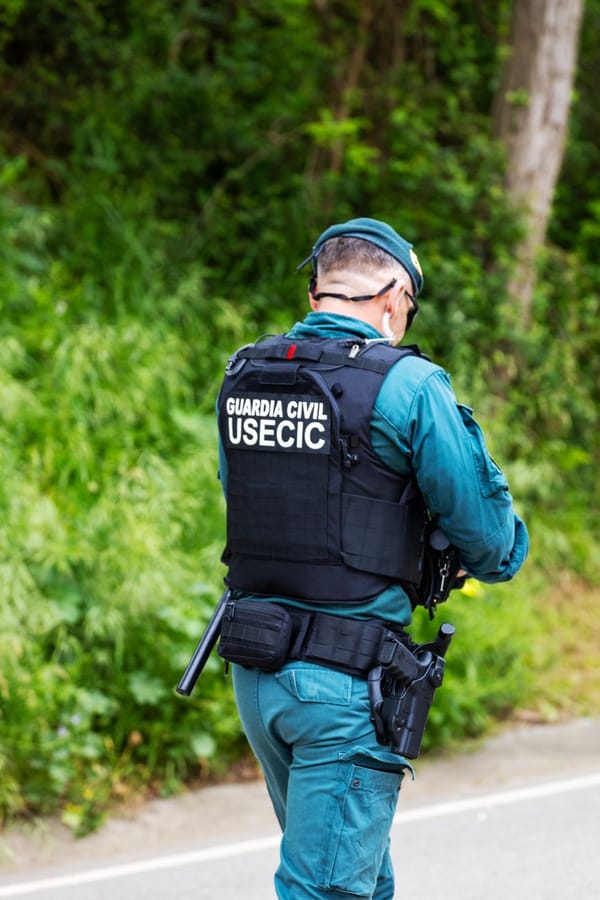
Politics
158 Gardaí Assaulted in Rural Ireland: What’s Behind the Rising Threat to Law Enforcement?
Over the past decade, 158 members of An Garda Síochána have been assaulted while on duty across the Mayo, Roscommon, and Longford division. That’s not just a number. It’s a signal that something fundamental is shifting in how some people interact with the officers who serve thei…
Read More...
Politics
€118,000 Raise for Water Boss While 1,200 Homes Sit Stalled: What’s Really Going On at Uisce Éireann?
Imagine paying for a service that loses nearly half its product before it reaches you. Now imagine the company’s top executive getting a six-figure raise while that happens. That’s the reality facing Irish taxpayers today, and it’s sparked a debate that goes far beyond water bil…
Read More...