
430,000 Square Kilometers of New Offshore Drilling Threatens Marine Life: What This Means for Our Oceans

Global, Nishant Shrivastava: Imagine an area the size of Sweden. Now picture it carved up for oil and gas drilling, right on top of some of the most vibrant marine habitats on Earth. That is exactly what a new report from a coalition of 12 environmental organizations has uncovered. The analysis maps out 430,000 square kilometers of newly planned offshore drilling zones across 11 nations, and here is the catch: these zones overlap with coral reefs, mangrove forests, seagrass meadows, and the migration routes of whales, sea turtles, sharks, and dugongs. The question is, how did we get here, and what does it mean for the future of our oceans?
One of the most striking findings is that a third of these proposed offshore blocks sit inside marine and coastal protected areas. These are places that already have legal safeguards meant to keep them safe. Yet, countries like Kenya, Indonesia, Australia, Tanzania, and Norway are moving ahead with new licensing rounds, often framing them as steps toward economic growth and energy security. The tension between short-term energy gains and long-term environmental health has never been more visible.
Take Kenya as an example. The country is preparing to open 50 offshore blocks in the Lamu Basin, a region recognized as one of East Africa’s premier marine biodiversity zones. This area is home to extensive mangroves and coral reefs that serve as nurseries for fish, breeding grounds for sea turtles, and habitats for the endangered dugong. These ecosystems are already under pressure from rising ocean temperatures, acidification, and pollution. Now, they face additional threats from seismic surveys, underwater noise, dredging, increased shipping, chemical discharges, and the risk of oil spills. Kenya is also set to host the Our Ocean Conference in Mombasa, a high-profile event promoting ocean diplomacy. The contrast between these two paths raises an important question: can a country champion ocean protection while expanding fossil fuel exploration in its most sensitive waters?
In Australia, the Otway Basin is back in the spotlight after a four-year pause on offshore exploration. The basin sits just one kilometer from marine sanctuaries that are critical for pygmy blue whales, which travel thousands of kilometers each year to reproduce in these waters. Deep-sea species like orange roughy, known to live over 140 years, add another layer of urgency. American energy firm ConocoPhillips has received approval for exploratory drilling, and scientists warn that even small disturbances can ripple through delicate marine food webs. The question here is not just about one project, but about the precedent it sets for other sensitive areas.
The report also examines new liquefied natural gas (LNG) export projects in Argentina, Alaska, Mexico, and Tanzania, along with expanded licensing in Cameroon, Jamaica, Norway, and Trinidad and Tobago. These developments are not isolated. They point to a coordinated push for fossil fuel expansion across continents. While governments cite energy independence and job creation, the environmental costs often remain unaccounted for in official cost-benefit analyses. This pattern raises a broader question: are we trading long-term ocean health for short-term energy gains?
This expansion comes at a time when two major global commitments are in play. The Kunming-Montreal Global Biodiversity Framework, adopted in 2022, calls for protecting at least 30% of Earth’s land and oceans by 2030. The first-ever Transitioning Away from Fossil Fuels summit in Santa Marta in 2026 saw around 60 countries commit to establishing fossil fuel-free zones in ecologically sensitive regions. These pledges were designed to prevent development in areas where environmental harm would be severe. Yet, the current trajectory of offshore drilling suggests a gap between what is promised and what is practiced.
Environmental advocates argue that financial institutions, governments, and corporations must stop funding new offshore oil and gas projects. They point to renewable alternatives like offshore wind, tidal energy, and green hydrogen as technologies that can provide clean energy without compromising marine life. The opportunity here is not just to avoid harm, but to redirect investment toward solutions that benefit both people and the planet.
Protecting marine biodiversity is not just an ecological goal. It is a socioeconomic one. Coastal communities around the world depend on healthy oceans for fishing, tourism, and cultural practices. Damage to mangroves and coral reefs can reduce fish stocks, increase vulnerability to storms, and threaten livelihoods. In Kenya, millions of people rely on the marine environment for food and income. Opening the Lamu Basin to drilling risks undermining decades of community-led conservation and local resilience efforts.
The cumulative impact of multiple stressors climate change, overfishing, pollution, and industrial development creates a perfect storm for ecosystem collapse. Scientists warn that once key species disappear or habitats degrade beyond recovery, the entire marine web suffers. The loss of apex predators like sharks or keystone species like dugongs can trigger cascading effects that destabilize entire ecosystems. The question is not whether we can afford to act, but whether we can afford not to.
As the world prepares for COP31, co-chaired by Australia, these findings serve as a reminder that climate action must include robust marine protection policies. Governments have an opportunity to reconcile their climate commitments with their energy policies. Financial institutions can adopt stricter environmental screening criteria. Companies can be held accountable for environmental due diligence before receiving permits. The path forward requires transparency, science-based decision-making, and inclusive governance. Indigenous communities, local fishers, and scientific experts must be part of planning processes to ensure that development does not come at the cost of ecological integrity.
Public awareness and political pressure will play a crucial role in shaping a future where energy needs are met without sacrificing the health of the oceans. The choices made today will determine whether future generations inherit a vibrant, biodiverse ocean or a depleted, silent seabed. The window to act is narrowing, but the opportunity to choose a different path is still open.
Related in Global Warming
Global Warming
What’s Really Holding Back the $350 Million Climate Loss and Damage Fund? 180 Projects, $2.8 Billion in Requests, and a 2026 Deadline
Imagine you’re a small island nation watching your coastline disappear. Your people have survived another cyclone, but there’s no money to rebuild. You hear about a new global fund designed exactly for this moment. You apply. You wait. And then you learn the fund has only enough…
Read More...
Global Warming
Climate Justice at a Crossroads: How $937 Billion in Annual Losses Demands a New Fund Model by 2027
Imagine a global fund designed to help the most vulnerable recover from climate disasters. It was created with hope and fanfare in 2022. Now, just a few years later, that fund is running on empty. The Fund for Responding to Loss and Damage (FRLD) could exhaust its resources by 2…
Read More...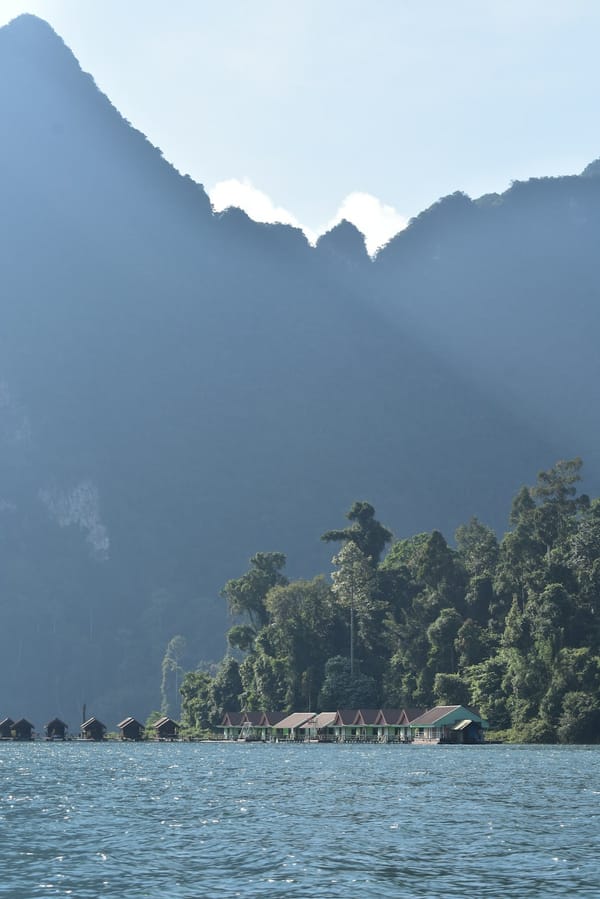
Global Warming
7 Years of Rewilding: How a 19-Key Ecolodge in Thailand Is Restoring Rainforests and Winning Top Awards
What if your next vacation could actually help a rainforest grow back? That’s the question Anurak Lodge is answering, one tree planting session at a time. Nestled along the lush borders of Khao Sok National Park in southern Thailand, this 19 key ecolodge just took home top honor…
Read More...
Global Warming
Coastal Communities Hold the Key to a $2.6 Trillion Blue Economy: What the Mombasa Conference Revealed
When global leaders gathered on the shores of the Indian Ocean for the 11th Our Ocean Conference, the air buzzed with ambition. Billions of dollars in new commitments were announced. Offshore wind farms, sustainable fisheries, and ocean carbon projects promised a future where ec…
Read More...
Global Warming
4 Ugandan Farmers vs. a 1,443 km Oil Pipeline: Can a London Court Stop It?
Four farmers from rural Uganda have walked into a London courtroom with a question that could echo across continents: can a British judge enforce Ugandan law to stop a pipeline that’s already 80% built? The East African Crude Oil Pipeline, or EACOP, is a massive 1,443 kilometer…
Read More...
Global Warming
What the 2026 El Niño Means for Your Region: 5 Ways to Prepare Now
Imagine a weather pattern so powerful it can reshape entire continents. That is exactly what scientists are tracking right now. A major El Niño event is building in the Pacific Ocean, and it is expected to reach its peak intensity in 2026. This is not just another seasonal shift…
Read More...
Global Warming
Over 25 Dead in U.S. Heatwave: What’s Driving the 100°F Crisis?
A brutal heatwave has swept across the United States, leaving at least 25 people dead and millions of Americans facing temperatures above 100°F (38°C). This isn’t just another hot summer day. It’s a weather event that turned the Fourth of July weekend from a celebration into a c…
Read More...
Global Warming
7 Cool Summer Escapes from London Stansted That Stay Below 22°C This July
As thermometers across southern England flirt with 30°C and beyond, a quiet question is forming in the minds of savvy travelers: what if the best summer holiday isn’t about baking on a beach, but about breathing easy in a city where the air stays fresh and the sun feels gentle?…
Read More...
Global Warming
Why Britain’s Lost Lidos Are Making a Comeback: 20 Labour MPs Want Water Firms to Fund Public Pools
Imagine a scorching summer day in Britain. The heat is relentless. You crave a cool escape, but the nearest public pool is miles away or closed for good. That’s the reality for millions today. But a growing movement of Labour MPs and policy experts is working to change that. The…
Read More...
Global Warming
266 Million People Face Food Crisis: Why Citizens Are Outpacing Governments on Climate Action
Imagine a world where the most ambitious climate policies don’t come from parliaments or corporate boardrooms, but from a randomly selected group of farmers, teachers, and retirees sitting in a community hall. That world is already here. While national governments struggle to tu…
Read More...