
6 Criteria That Could Decide Where Mining Is Banned Forever in the Clean Energy Race
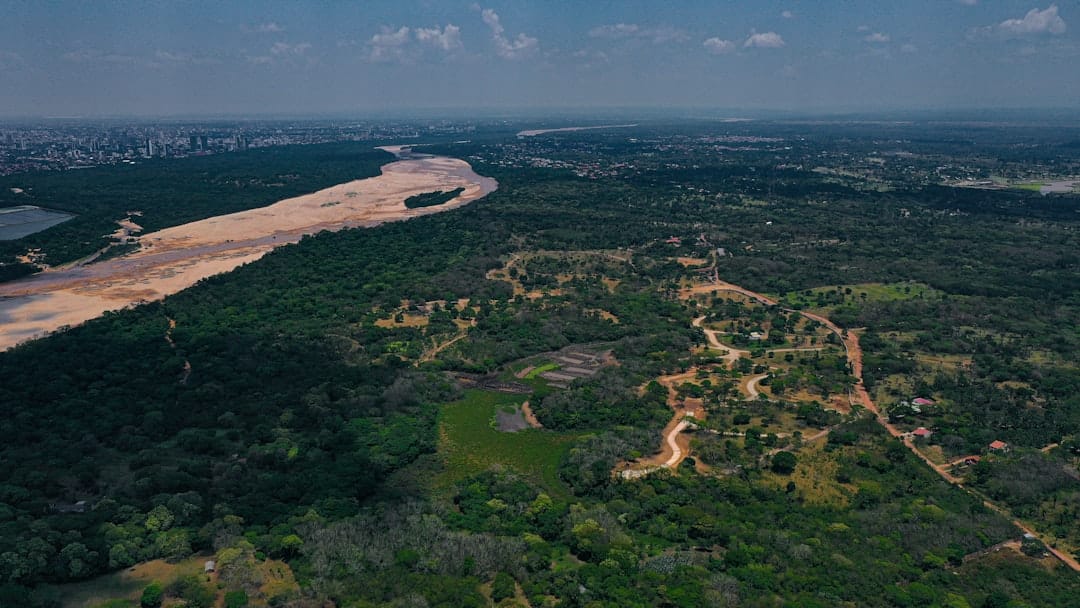
Global, MMN Correspondent: Picture this: the world is racing toward a future powered by the sun, the wind, and the earth’s own minerals. But here’s the twist that keeps environmental scientists up at night. The very metals we need for electric cars, wind turbines, and batteries are being pulled from some of the most fragile places on the planet. Think lithium from the salt flats of Chile’s Atacama Desert. Think nickel from the lush rainforests of Indonesia. It’s a paradox that begs a question: can we build a clean energy future without destroying the ecosystems we’re trying to save?
That’s where the idea of “no-go mining zones” comes in. It’s not about stopping mining altogether. It’s about drawing a line in the sand. Or rather, in the peat, the forest, and the watershed. A coalition of environmental groups, Indigenous organizations, and scientists has developed a framework that identifies exactly which areas should be permanently off limits to extraction. And the criteria are surprisingly straightforward.
First, any land already protected under international agreements like UNESCO World Heritage Sites or Ramsar wetlands gets an automatic pass. Second, areas with high conservation value think intact tropical rainforests, biodiversity hotspots, and habitats for endangered species are out of bounds. Third, carbon rich ecosystems like peatlands, mangroves, and old growth forests that act as massive carbon sponges are protected. Fourth, critical water bodies and watersheds that supply drinking water and support agriculture are off the table. Fifth, Indigenous Peoples’ territories and lands traditionally occupied by local communities are respected. And sixth, small island ecosystems and other ecologically sensitive areas that could suffer irreversible damage are preserved.
Consider the Amazon Basin. It’s home to over 195,000 Indigenous people and one of the largest remaining tropical forests on Earth. Satellite data reveals that mining concessions now threaten roughly 363,000 square kilometers of protected land in the region. That’s an area larger than Germany. When mining drives deforestation there, it doesn’t just destroy trees. It releases centuries of stored carbon into the atmosphere and disrupts the lives of communities that have lived in harmony with the forest for generations. Experts argue that the Amazon should be a global no-go zone because of its irreplaceable role in climate regulation and biodiversity.
Now shift your gaze to Europe. In Finnish Lapland, a proposed nickel mine sits on ancient peat bogs that store more carbon per hectare than any other land type on Earth. These peatlands are legally protected under the EU’s Natura 2000 network. Yet political pressure is pushing the project forward. It’s a stark reminder that even the strongest environmental safeguards can be eroded when economic interests collide with ecological ones.
But here’s the hopeful part. The push for no-go zones isn’t just about saying no. It’s about saying yes to smarter extraction. Research shows that enough mineral reserves exist outside these restricted areas to meet global clean energy needs. Canada, Australia, and parts of Eastern Europe hold significant deposits of lithium and cobalt without encroaching on high value ecosystems. And there’s another layer to this story: reducing our reliance on primary mining altogether.
Imagine a world where we design electric vehicles to last longer, invest in public transportation, and embrace car sharing. Imagine recovering metals from discarded electronics, batteries, and vehicles through urban mining. A recent study found that by 2050, Europe could satisfy nearly half of its critical mineral needs this way. That’s a circular economy in action, one that reduces environmental harm and geopolitical dependency at the same time.
For Indigenous communities, this is about justice as much as ecology. Studies show that over 70% of large scale mining projects in the Global South occur in or near Indigenous territories without adequate consultation. By establishing no-go zones, policymakers can uphold both planetary boundaries and human rights. It’s a framework that respects Free, Prior, and Informed Consent, a principle that has been too often ignored.
Some developing nations see mining as a fast track to economic growth. But history tells a different story. The resource curse economic volatility, corruption, and environmental collapse has plagued many countries that relied too heavily on extraction. Diversifying economies through education, technology, and sustainable agriculture offers a more resilient path. Countries like Costa Rica and Bhutan have shown that development can thrive without sacrificing ecological integrity.
The transition to clean energy doesn’t have to repeat the mistakes of the fossil fuel era. By defining what cannot be mined and why, we can protect the world’s most vulnerable ecosystems and respect the rights of Indigenous communities. It’s not a barrier to progress. It’s a foundation for a truly just and sustainable energy future. The question isn’t whether we can afford to create no-go zones. It’s whether we can afford not to.
Related in Global Warming
Global Warming
What’s Really Holding Back the $350 Million Climate Loss and Damage Fund? 180 Projects, $2.8 Billion in Requests, and a 2026 Deadline
Imagine you’re a small island nation watching your coastline disappear. Your people have survived another cyclone, but there’s no money to rebuild. You hear about a new global fund designed exactly for this moment. You apply. You wait. And then you learn the fund has only enough…
Read More...
Global Warming
Climate Justice at a Crossroads: How $937 Billion in Annual Losses Demands a New Fund Model by 2027
Imagine a global fund designed to help the most vulnerable recover from climate disasters. It was created with hope and fanfare in 2022. Now, just a few years later, that fund is running on empty. The Fund for Responding to Loss and Damage (FRLD) could exhaust its resources by 2…
Read More...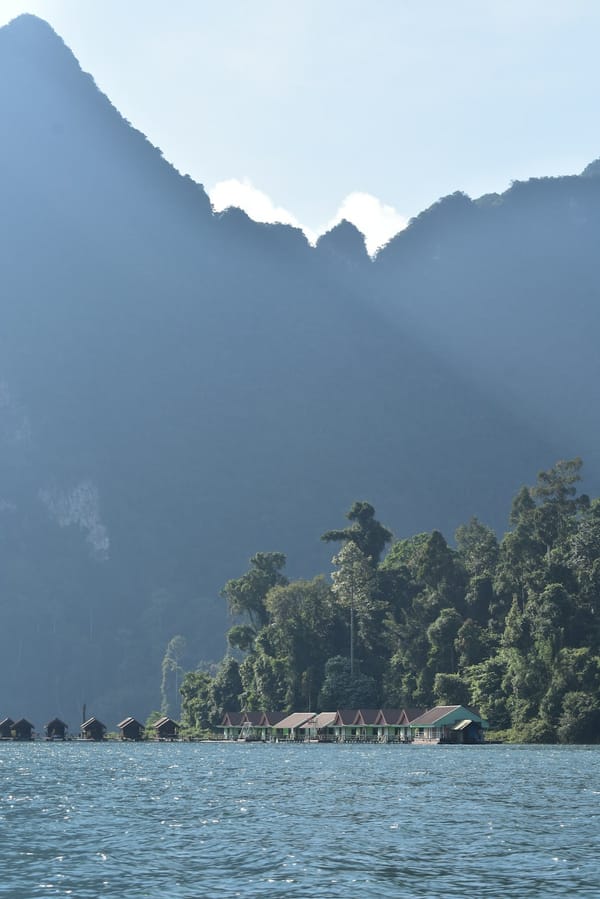
Global Warming
7 Years of Rewilding: How a 19-Key Ecolodge in Thailand Is Restoring Rainforests and Winning Top Awards
What if your next vacation could actually help a rainforest grow back? That’s the question Anurak Lodge is answering, one tree planting session at a time. Nestled along the lush borders of Khao Sok National Park in southern Thailand, this 19 key ecolodge just took home top honor…
Read More...
Global Warming
Coastal Communities Hold the Key to a $2.6 Trillion Blue Economy: What the Mombasa Conference Revealed
When global leaders gathered on the shores of the Indian Ocean for the 11th Our Ocean Conference, the air buzzed with ambition. Billions of dollars in new commitments were announced. Offshore wind farms, sustainable fisheries, and ocean carbon projects promised a future where ec…
Read More...
Global Warming
4 Ugandan Farmers vs. a 1,443 km Oil Pipeline: Can a London Court Stop It?
Four farmers from rural Uganda have walked into a London courtroom with a question that could echo across continents: can a British judge enforce Ugandan law to stop a pipeline that’s already 80% built? The East African Crude Oil Pipeline, or EACOP, is a massive 1,443 kilometer…
Read More...
Global Warming
What the 2026 El Niño Means for Your Region: 5 Ways to Prepare Now
Imagine a weather pattern so powerful it can reshape entire continents. That is exactly what scientists are tracking right now. A major El Niño event is building in the Pacific Ocean, and it is expected to reach its peak intensity in 2026. This is not just another seasonal shift…
Read More...
Global Warming
Over 25 Dead in U.S. Heatwave: What’s Driving the 100°F Crisis?
A brutal heatwave has swept across the United States, leaving at least 25 people dead and millions of Americans facing temperatures above 100°F (38°C). This isn’t just another hot summer day. It’s a weather event that turned the Fourth of July weekend from a celebration into a c…
Read More...
Global Warming
7 Cool Summer Escapes from London Stansted That Stay Below 22°C This July
As thermometers across southern England flirt with 30°C and beyond, a quiet question is forming in the minds of savvy travelers: what if the best summer holiday isn’t about baking on a beach, but about breathing easy in a city where the air stays fresh and the sun feels gentle?…
Read More...
Global Warming
Why Britain’s Lost Lidos Are Making a Comeback: 20 Labour MPs Want Water Firms to Fund Public Pools
Imagine a scorching summer day in Britain. The heat is relentless. You crave a cool escape, but the nearest public pool is miles away or closed for good. That’s the reality for millions today. But a growing movement of Labour MPs and policy experts is working to change that. The…
Read More...
Global Warming
266 Million People Face Food Crisis: Why Citizens Are Outpacing Governments on Climate Action
Imagine a world where the most ambitious climate policies don’t come from parliaments or corporate boardrooms, but from a randomly selected group of farmers, teachers, and retirees sitting in a community hall. That world is already here. While national governments struggle to tu…
Read More...