
60,000 Asylum Applications in 4 Years: Is Ireland’s Sovereignty at Risk Under the New EU Migration Pact?
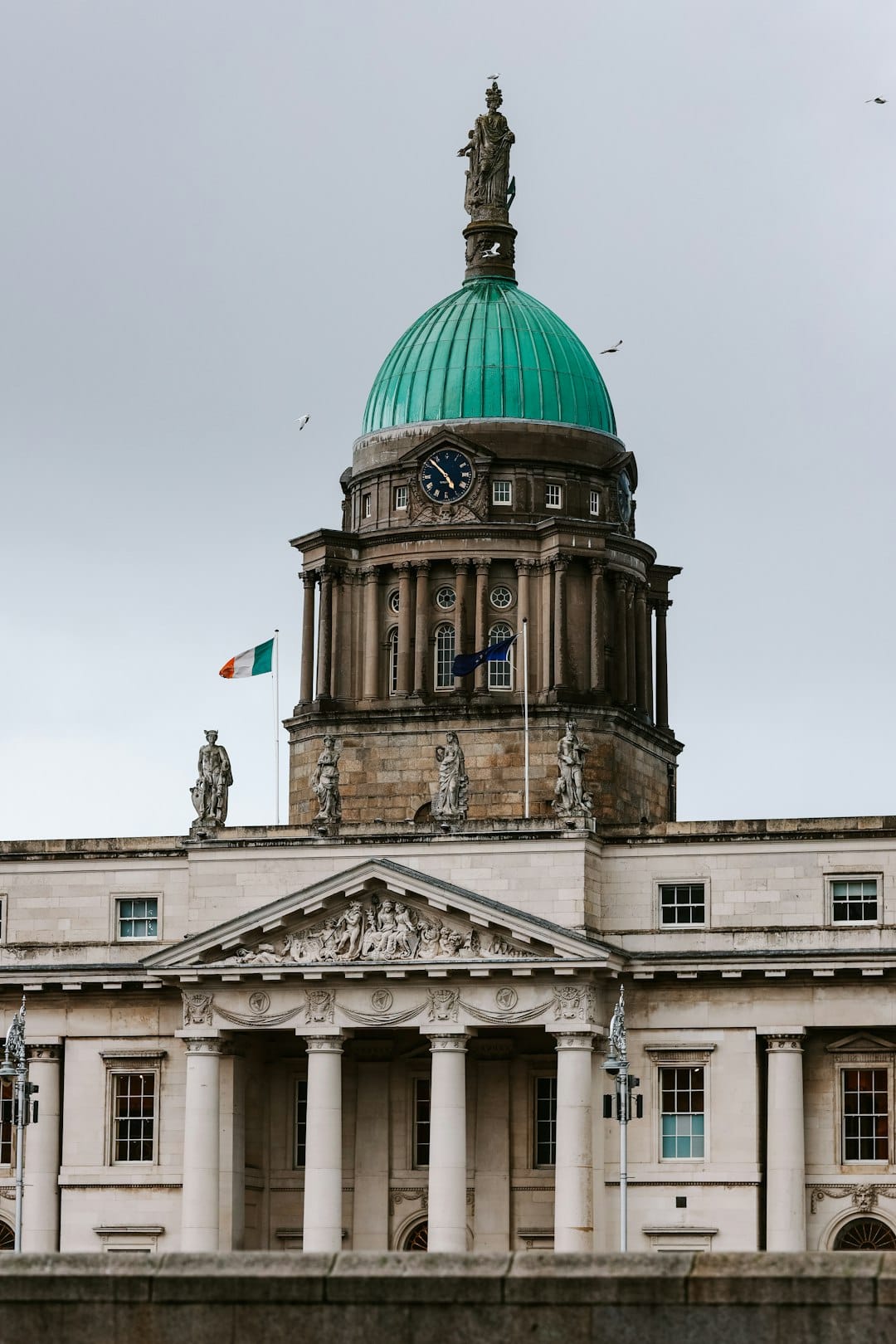
Dublin, Ireland, MMN Correspondent: Ireland is facing a defining moment in its immigration story. Over the past four years, nearly 60,000 people have sought asylum here, a dramatic leap from the historical norm of just 2,000 to 3,000 annually. This surge has placed immense pressure on housing, healthcare, schools, and the justice system. Now, a new European Union migration agreement promises to streamline how asylum seekers are processed and distributed across member states. But for many Irish citizens and political groups, the pact raises a pressing question: who gets to decide who enters Ireland?
At the heart of the debate is a mechanism called mandatory relocation quotas. Under the proposed rules, Ireland would be legally required to accept a set number of asylum seekers based on EU wide calculations, regardless of how many people the country can realistically accommodate. Critics see this as a transfer of sovereign authority from Dublin to Brussels. Instead of setting migration policy based on local needs and infrastructure limits, Ireland would follow a one size fits all framework designed far from its shores. Is this a step toward European solidarity or a loss of national control?
One of the most curious gaps in the pact involves the border with Northern Ireland. An estimated 80% of new arrivals enter the Republic through the UK, taking advantage of the open border established by the Good Friday Agreement. Unlike other EU nations with external borders, Ireland has no physical barrier with the UK. Yet the EU Migration Pact does not include measures to monitor or regulate this specific route. This leaves a significant loophole, raising concerns about unchecked movement without corresponding enforcement. How can a migration policy be effective if it ignores the primary entry point?
Public services are already stretched thin. Ireland’s housing crisis is among the most acute in Europe, with over 12,000 people in emergency accommodation or sleeping rough in 2025. Schools in cities like Dublin and Cork report overcrowding, hospitals face persistent bed shortages, and prisons operate at more than 130% capacity. In this environment, introducing additional populations without adequate planning or infrastructure support feels like a gamble. The question is not whether Ireland should welcome people in need, but whether the system can handle the pace of change.
Aontú, a political party advocating for humane but controlled migration, emphasizes that their position is rooted in practical national interest, not xenophobia. They support humanitarian entry for those fleeing war and persecution, but argue that compassion must be paired with realistic capacity assessments. This perspective mirrors a broader European trend. Recent Eurobarometer surveys show that over 65% of Irish respondents believe migration should be managed more strictly, with strong support for vetting processes and integration programs. The public seems to want order, not closed doors.
The EU Migration Pact, however, has been criticized for being too centralized. It applies a uniform framework that ignores regional differences. Countries like Germany and Sweden have historically absorbed larger numbers due to robust infrastructure and social systems. Smaller nations like Ireland lack the same resources. The pact does not offer financial or technical assistance to help host countries adapt, placing an uneven burden on those already facing fiscal constraints. Is it fair to expect the same from every member state?
Timing adds another layer of concern. Although discussions began in 2020, final negotiations concluded only in early 2026, with full rollout expected by 2027. This leaves little room for Ireland to conduct impact assessments, update legislation, or build reception facilities. There is no clear plan for how asylum seekers will be housed, supported, or integrated into communities, especially in rural areas where local authorities have limited experience with large scale displacement. Preparation feels like an afterthought.
Opponents also point to weak accountability. If Ireland fails to meet its quota, there are no immediate sanctions, only long term diplomatic pressure and potential fines. This creates a perception of soft enforcement, undermining the credibility of the entire system. At the same time, the pact offers no incentives for countries to reduce illegal crossings or improve conditions in origin countries. It focuses on redistribution after arrival rather than prevention. Could a more balanced approach yield better outcomes for everyone?
As the Irish government prepares to vote on ratification, civil society groups, trade unions, and local councils are calling for a national referendum. They argue that such a consequential shift in sovereignty demands direct public input. Public consultations held in May 2026 revealed that 72% of participants opposed mandatory quotas, citing fears of cultural dilution, economic strain, and loss of democratic control. The people want a voice in this decision.
Looking ahead, Ireland’s approach to migration will shape its future in terms of demographics, social cohesion, economic stability, and international standing. The EU Migration Pact represents a turning point in how nations balance solidarity with autonomy. For Ireland, the challenge is to find a middle path: upholding humanitarian commitments while protecting citizens’ quality of life and constitutional independence. The debate is far from over. As data mounts and public anxiety grows, the need for transparent, evidence based policy becomes ever more urgent. Whether Ireland chooses to resist, negotiate, or comply, the decisions made in the coming months will echo for decades.
Related in Politics
Politics
Poland’s Political Crossroads: Why Konfederacja Is Pushing for a State Tribunal Trial Over Ukraine Policy
Poland’s political landscape is heating up as the far-right coalition Konfederacja demands that former Minister of Justice Paweł Kosiniak-Kamysza face a State Tribunal trial. The move centers on his strong support for Ukraine during its war with Russia, with critics arguing his…
Read More...
Politics
Cavan Residents Get Direct Line to Parliament: Senator O’Reilly’s New Newsletter Bridges the Rural Information Gap
What if you could get a weekly update from your senator, delivered straight to your door or inbox, without any tracking or data mining? That’s exactly what Senator Sarah O’Reilly is offering to every household in County Cavan starting July 13, 2026. The initiative, announced on…
Read More...
Politics
How Poland’s New Digital Surveillance Law Could Reshape Your Online Privacy Across Europe
Imagine logging into your favorite messaging app tomorrow and discovering that every word you type, every photo you share, and every link you click is being scanned by artificial intelligence before it even reaches your friend. That scenario is no longer hypothetical. It is now…
Read More...
Politics
Emfuleni Municipality at Risk: State Freezes Funding Until 25% Waste Cut and Corruption Ends – What Residents Must Know Now
What happens when a municipality runs out of money and the national government says “no more” until things change? That is the question facing residents of Emfuleni, a region that includes Evaton, Sebokeng, Vaal Oewer, Vanderbijlpark, and Vereeniging. On July 9, 2026, the Nation…
Read More...
Politics
Volkswagen Faces 100,000 Job Cuts: Is Germany’s EV Dream Crumbling?
Deep in the heart of Germany’s industrial belt, a quiet storm is brewing. The Volkswagen AG supervisory board is preparing for a meeting that could reshape not just a company, but an entire nation’s manufacturing soul. Four German factories may close. Up to 100,000 jobs could va…
Read More...
Politics
Are Mandatory iPads in Irish Schools Worth the Cost? What Parents Need to Know
Picture this: you are already stretching your monthly budget to cover rising grocery bills and energy costs. Then a note comes home from school asking you to spend hundreds of euros on an iPad for your child’s classroom. For families across Ireland, this scenario is becoming inc…
Read More...
Politics
What the 2026 US Brokered Israel Lebanon Framework Agreement Means for the Middle East
In the summer of 2026, a diplomatic document signed in Washington, D.C., has set the Middle East ablaze with debate. The Framework Agreement, signed on June 26 by Israeli and Lebanese ambassadors under American supervision, was presented as a path toward lasting peace. Instead,…
Read More...
Politics
Electricity Tariff Suspension in Mogalakwena: What R100 to R200 Hike Pause Means for Your Energy Bills and South Africa’s Fair Pricing Future
MMN Correspondent: In early July 2026, the Mogalakwena Local Municipality made a decision that caught the attention of energy watchers across South Africa. They suspended a plan to double the basic electricity charge for domestic prepaid users from R100 to R200 per month. For a…
Read More...
Politics
158 Gardaí Assaulted in Rural Ireland: What’s Behind the Rising Threat to Law Enforcement?
Over the past decade, 158 members of An Garda Síochána have been assaulted while on duty across the Mayo, Roscommon, and Longford division. That’s not just a number. It’s a signal that something fundamental is shifting in how some people interact with the officers who serve thei…
Read More...
Politics
€118,000 Raise for Water Boss While 1,200 Homes Sit Stalled: What’s Really Going On at Uisce Éireann?
Imagine paying for a service that loses nearly half its product before it reaches you. Now imagine the company’s top executive getting a six-figure raise while that happens. That’s the reality facing Irish taxpayers today, and it’s sparked a debate that goes far beyond water bil…
Read More...