
Australia’s Climate Paradox: Record Renewables Meet Rising Denial as COP31 Nears – What’s Next?
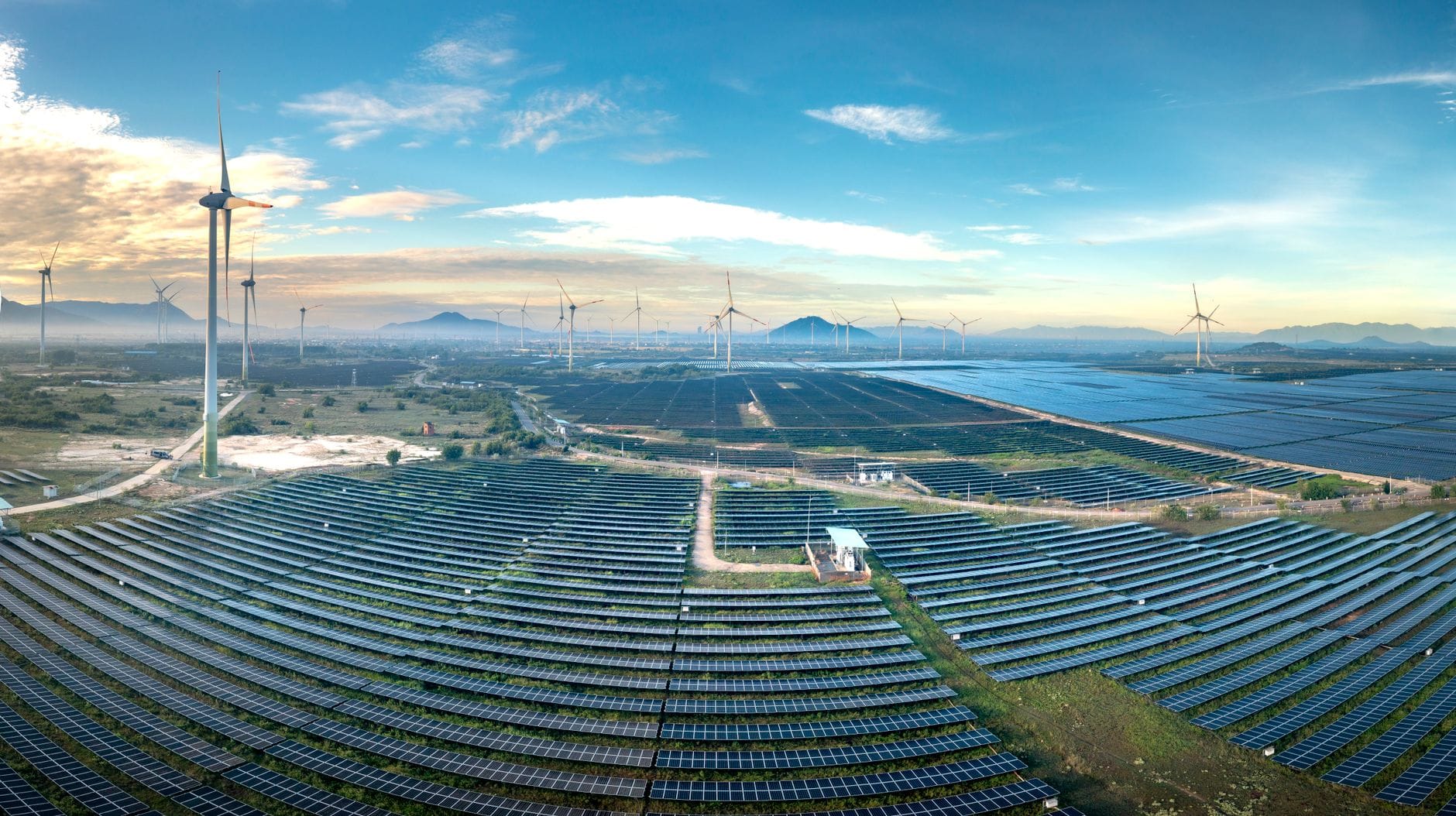
Canberra, MMN Correspondent: Imagine a country where solar panels cover nearly 40% of rooftops, wind farms power entire regions, and a record-breaking summer heatwave was weathered without a single blackout. Now imagine that same country’s political stage hosting a party that wants to abolish its own climate department. That’s the puzzle Australia presents today, and it’s a story the world needs to understand.
As Australia steps into a leadership role ahead of the 2026 UN Climate Change Conference (COP31), something unexpected is happening. Climate denial isn’t fading away. It’s making a comeback, and it’s happening in a nation that has quietly become a renewable energy powerhouse. The question is: how can a country build one of the world’s fastest clean energy transitions while its political conversation drifts backward?
The rise of Pauline Hanson’s One Nation Party offers part of the answer. Tapping into voter frustration with traditional politics, the party has openly questioned the reality of worsening extreme weather and called for dismantling the Department of Climate Change, Energy, Environment and Water. Critics see this as a convenient distraction from real challenges, but the party’s growing influence reflects a deeper unease about how change is managed.
Here’s where the numbers get interesting. Australia now generates over 40% of its electricity from solar and wind, closing in on the 50% mark that experts call a tipping point for a stable, sustainable grid. Large-scale solar farms stretch across Queensland, offshore wind projects are taking shape in Western Australia, and battery storage systems are smoothing out peak demand. During the recent summer heatwave, the grid held firm, proving that clean energy can deliver when it matters most.
Yet the political narrative often ignores these wins. While renewable power has become the cheapest source of new electricity, beating coal and gas on cost, the Albanese government walks a tightrope. It promotes electric vehicle adoption and rooftop solar incentives, but it also approves new liquefied natural gas terminals. These decisions raise a fair question: can a country lead on climate while expanding fossil fuel exports?
Enter Chris Bowen, Australia’s Minister for Climate Change and Energy. As the nation prepares for key UN talks in Bonn and Antalya, Turkey, Bowen has put forward a bold vision: electrify the global economy by 2035. His plan aims to increase electricity’s share of final energy use from just over 20% to 35%, transforming how homes are heated, factories run, and transport moves. It’s a vision rooted in decades of economic research, including the Stern Review’s finding that early climate action saves far more than it costs.
Bowen’s message is simple: electrification can tackle both climate instability and energy insecurity. For developing nations in the Pacific and sub-Saharan Africa, replacing diesel generators with solar microgrids offers a path to reliable, affordable power. For industrial regions like Germany, shifting heavy manufacturing to electric processes can cut emissions without losing productivity. The logic is compelling, but the media response has been mixed. Some outlets have focused on personal attacks rather than policy substance, while others have recycled old denialist talking points.
The irony isn’t lost on observers. Australians are embracing renewables at record rates, driven by falling costs and practical benefits. Community energy cooperatives are growing, green hydrogen projects are attracting private investment, and the country is positioning itself as a future exporter of clean fuels. Yet the political conversation sometimes feels stuck in a previous decade.
This disconnect matters because the stakes are high. The 2025 National Climate Risk Assessment detailed escalating threats from sea-level rise, prolonged droughts, intensified bushfires, and extreme rainfall. By 2050, climate disruptions could cost the economy hundreds of billions annually without decisive action. The report received little public attention, but its projections remain a quiet warning.
On the global stage, the UN climate process is under strain. Many countries struggle to meet their commitments, and the absence of U.S. leadership in recent years has created a gap that Australia is uniquely positioned to fill. But filling that gap requires more than diplomatic speeches. It demands coordinated action backed by credible investment and transparent accountability.
The good news is that market forces are increasingly on the side of climate action. Solar panels, wind turbines, and battery storage are now not just environmentally preferable but economically superior. In Australia, residential solar adoption has reached nearly 40% of households, and the private sector is betting big on clean energy. The path forward is clear, but it’s not automatic.
Political inertia, misinformation, and conflicting interests between state and federal governments can slow momentum. Without sustained public engagement and leadership that prioritizes science over ideology, even the most promising technologies may fail to deliver systemic change.
Australia stands at a crossroads. It can continue with fragmented policy and ideological polarization, or it can emerge as a true leader in the global transition to a low-carbon future. The coming months will reveal whether the country chooses courage over convenience, facts over fiction, and long-term survival over short-term gain. The world is watching, and the time to act is now.
Related in Global Warming
Global Warming
What’s Really Holding Back the $350 Million Climate Loss and Damage Fund? 180 Projects, $2.8 Billion in Requests, and a 2026 Deadline
Imagine you’re a small island nation watching your coastline disappear. Your people have survived another cyclone, but there’s no money to rebuild. You hear about a new global fund designed exactly for this moment. You apply. You wait. And then you learn the fund has only enough…
Read More...
Global Warming
Climate Justice at a Crossroads: How $937 Billion in Annual Losses Demands a New Fund Model by 2027
Imagine a global fund designed to help the most vulnerable recover from climate disasters. It was created with hope and fanfare in 2022. Now, just a few years later, that fund is running on empty. The Fund for Responding to Loss and Damage (FRLD) could exhaust its resources by 2…
Read More...
Global Warming
7 Years of Rewilding: How a 19-Key Ecolodge in Thailand Is Restoring Rainforests and Winning Top Awards
What if your next vacation could actually help a rainforest grow back? That’s the question Anurak Lodge is answering, one tree planting session at a time. Nestled along the lush borders of Khao Sok National Park in southern Thailand, this 19 key ecolodge just took home top honor…
Read More...
Global Warming
Coastal Communities Hold the Key to a $2.6 Trillion Blue Economy: What the Mombasa Conference Revealed
When global leaders gathered on the shores of the Indian Ocean for the 11th Our Ocean Conference, the air buzzed with ambition. Billions of dollars in new commitments were announced. Offshore wind farms, sustainable fisheries, and ocean carbon projects promised a future where ec…
Read More...
Global Warming
4 Ugandan Farmers vs. a 1,443 km Oil Pipeline: Can a London Court Stop It?
Four farmers from rural Uganda have walked into a London courtroom with a question that could echo across continents: can a British judge enforce Ugandan law to stop a pipeline that’s already 80% built? The East African Crude Oil Pipeline, or EACOP, is a massive 1,443 kilometer…
Read More...
Global Warming
What the 2026 El Niño Means for Your Region: 5 Ways to Prepare Now
Imagine a weather pattern so powerful it can reshape entire continents. That is exactly what scientists are tracking right now. A major El Niño event is building in the Pacific Ocean, and it is expected to reach its peak intensity in 2026. This is not just another seasonal shift…
Read More...
Global Warming
Over 25 Dead in U.S. Heatwave: What’s Driving the 100°F Crisis?
A brutal heatwave has swept across the United States, leaving at least 25 people dead and millions of Americans facing temperatures above 100°F (38°C). This isn’t just another hot summer day. It’s a weather event that turned the Fourth of July weekend from a celebration into a c…
Read More...
Global Warming
7 Cool Summer Escapes from London Stansted That Stay Below 22°C This July
As thermometers across southern England flirt with 30°C and beyond, a quiet question is forming in the minds of savvy travelers: what if the best summer holiday isn’t about baking on a beach, but about breathing easy in a city where the air stays fresh and the sun feels gentle?…
Read More...
Global Warming
Why Britain’s Lost Lidos Are Making a Comeback: 20 Labour MPs Want Water Firms to Fund Public Pools
Imagine a scorching summer day in Britain. The heat is relentless. You crave a cool escape, but the nearest public pool is miles away or closed for good. That’s the reality for millions today. But a growing movement of Labour MPs and policy experts is working to change that. The…
Read More...
Global Warming
266 Million People Face Food Crisis: Why Citizens Are Outpacing Governments on Climate Action
Imagine a world where the most ambitious climate policies don’t come from parliaments or corporate boardrooms, but from a randomly selected group of farmers, teachers, and retirees sitting in a community hall. That world is already here. While national governments struggle to tu…
Read More...