
Brazil’s Rare Earth Strategy: 20 Million Tons of Clean Energy Metals That Could Reshape Global Supply Chains
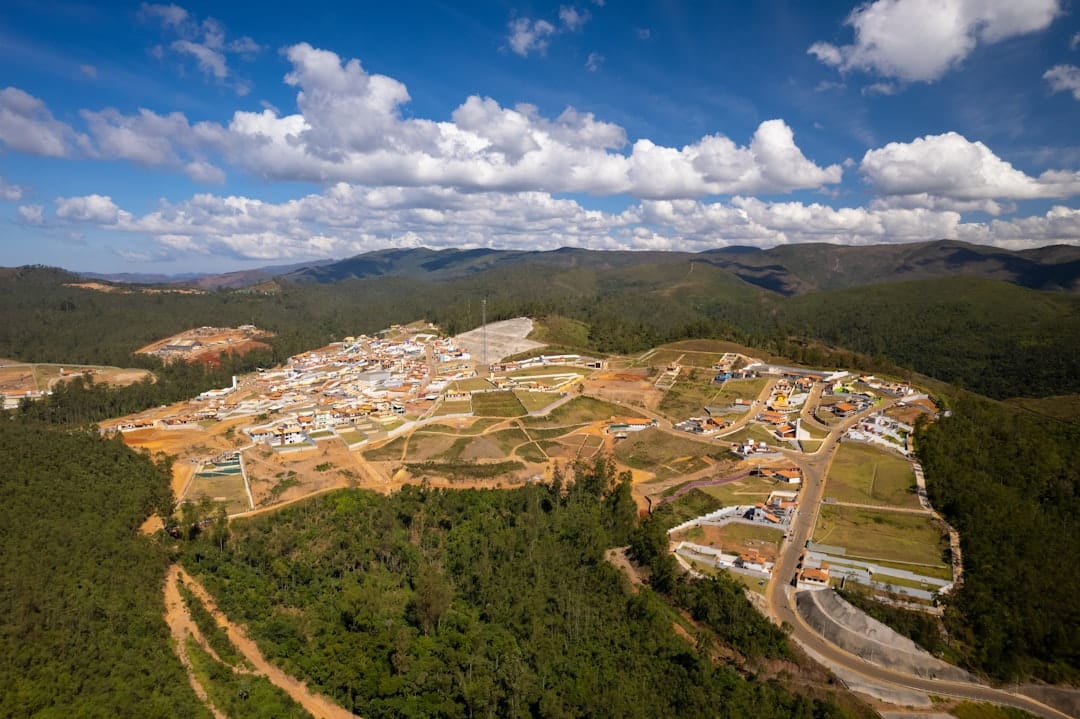
Brasília, MMN Correspondent: Imagine a country sitting on 20 million tons of something the entire world is scrambling for. That’s Brazil right now, and the something is rare earth elements the metals that make electric vehicles move, wind turbines spin, and smartphones work. While China has dominated this market for decades, Brazil is quietly positioning itself as the next big player in the clean energy metals game.
Rare earth elements aren’t actually rare. They’re just tricky to extract and process. China currently handles about 70 percent of global production and nearly 90 percent of processing. That concentration has made everyone from Washington to Brussels nervous. They want alternatives. Brazil, with the world’s second largest reserves, offers a compelling answer.
What makes Brazil especially interesting is the type of rare earths it holds. Most of its deposits are in ionic clay formations, which are richer in heavy rare earth elements like dysprosium and terbium. These are the high value metals used in permanent magnets for EV motors and wind generators. And because ionic clays require less energy to process than hard rock deposits, Brazilian mines could be both cheaper and more sustainable.
The Brazilian government has noticed the opportunity. A new Critical Minerals Bill recently passed the lower house of Congress, creating a $380 million Guarantee Fund for Mineral Activity. The legislation gives priority status to strategic mining projects during environmental licensing and requires companies to invest in domestic research and development. A new Committee for Strategic and Critical Minerals will oversee which projects move forward, bringing together federal agencies, state governments, industry, and civil society.
President Luiz Inácio Lula da Silva has made it clear that Brazil is open for business from all sides. After a meeting with former U.S. President Donald Trump in May 2026, Lula said Brazil welcomes investment from both American and Chinese firms. This neutral stance allows Brazil to maintain strong ties with both superpowers while capitalizing on the global shift in mineral geopolitics.
The United States is already backing this effort. American mining company USA Rare Earths has partnered with Brazil’s Serra Verde Group to develop the Pela Ema mine in Minas Gerais. According to CEO Barbara Humpton, this is the only site outside Asia capable of supplying all four major rare earths lanthanum, cerium, neodymium, and praseodymium at scale. The U.S. Department of Energy and DARPA have provided financial and technical support, signaling Washington’s strategic interest in reducing reliance on Chinese supply chains.
Canadian company Aclara is conducting feasibility studies at the $680 million Carina mine, while Australian firms Meteoric Resources and Viridis Energy are advancing plans for additional ionic clay projects. These developments show growing Western confidence in Brazil’s potential as a reliable source of critical minerals.
Not everyone is celebrating. Environmental and Indigenous rights organizations have raised concerns about the legislation. Critics point out that the bill lacks explicit requirements for free, prior, and informed consent from Indigenous communities that could be affected by mining operations. The Articulation of Indigenous Peoples of Brazil warned that the legislation risks undermining ancestral territories without adequate safeguards. Adriana Pinheiro of Observatório do Clima noted that while the bill promotes domestic processing, it does not establish mandatory quotas unlike Indonesia and Malaysia, which have banned raw exports to force local refining.
Mônica Sodré, a senior fellow at the Brazilian Center for International Relations, acknowledges these concerns but emphasizes that Brazil’s existing environmental permitting framework is extensive and should be applied on a case by case basis. She cautions against allowing precautionary concerns to paralyze progress, noting that delays in mining development could lead to significant social and economic costs.
Brazil has another advantage that often goes unnoticed. About half of the country’s electricity comes from hydropower, giving it a substantial edge in low carbon mining and refining. This renewable energy base makes Brazil an attractive destination for companies looking to meet ESG standards and reduce the carbon footprint of their supply chains.
China remains Brazil’s largest trade partner, with bilateral imports tripling between 2024 and 2025. But the rise of Western investment suggests a strategic pivot. As the U.S. and Europe push for diversified supply chains, Brazil’s role could evolve from a mere exporter of raw materials to a key hub for value added processing and manufacturing.
With over 2,700 rare earths projects currently under consideration according to Brazil’s National Mining Agency, the country is poised for rapid expansion. Success will depend not only on policy execution but also on balancing economic growth with environmental stewardship and community inclusion.
Brazil’s ambition is not just to compete in the global rare earth market but to redefine it. By leveraging its geological advantages, renewable energy infrastructure, and strategic neutrality, Brazil aims to become a cornerstone of the clean energy economy. Whether it succeeds hinges on its ability to turn legislative promise into sustainable reality before the next wave of global demand hits.
Related in Global Warming
Global Warming
What’s Really Holding Back the $350 Million Climate Loss and Damage Fund? 180 Projects, $2.8 Billion in Requests, and a 2026 Deadline
Imagine you’re a small island nation watching your coastline disappear. Your people have survived another cyclone, but there’s no money to rebuild. You hear about a new global fund designed exactly for this moment. You apply. You wait. And then you learn the fund has only enough…
Read More...
Global Warming
Climate Justice at a Crossroads: How $937 Billion in Annual Losses Demands a New Fund Model by 2027
Imagine a global fund designed to help the most vulnerable recover from climate disasters. It was created with hope and fanfare in 2022. Now, just a few years later, that fund is running on empty. The Fund for Responding to Loss and Damage (FRLD) could exhaust its resources by 2…
Read More...
Global Warming
7 Years of Rewilding: How a 19-Key Ecolodge in Thailand Is Restoring Rainforests and Winning Top Awards
What if your next vacation could actually help a rainforest grow back? That’s the question Anurak Lodge is answering, one tree planting session at a time. Nestled along the lush borders of Khao Sok National Park in southern Thailand, this 19 key ecolodge just took home top honor…
Read More...
Global Warming
Coastal Communities Hold the Key to a $2.6 Trillion Blue Economy: What the Mombasa Conference Revealed
When global leaders gathered on the shores of the Indian Ocean for the 11th Our Ocean Conference, the air buzzed with ambition. Billions of dollars in new commitments were announced. Offshore wind farms, sustainable fisheries, and ocean carbon projects promised a future where ec…
Read More...
Global Warming
4 Ugandan Farmers vs. a 1,443 km Oil Pipeline: Can a London Court Stop It?
Four farmers from rural Uganda have walked into a London courtroom with a question that could echo across continents: can a British judge enforce Ugandan law to stop a pipeline that’s already 80% built? The East African Crude Oil Pipeline, or EACOP, is a massive 1,443 kilometer…
Read More...
Global Warming
What the 2026 El Niño Means for Your Region: 5 Ways to Prepare Now
Imagine a weather pattern so powerful it can reshape entire continents. That is exactly what scientists are tracking right now. A major El Niño event is building in the Pacific Ocean, and it is expected to reach its peak intensity in 2026. This is not just another seasonal shift…
Read More...
Global Warming
Over 25 Dead in U.S. Heatwave: What’s Driving the 100°F Crisis?
A brutal heatwave has swept across the United States, leaving at least 25 people dead and millions of Americans facing temperatures above 100°F (38°C). This isn’t just another hot summer day. It’s a weather event that turned the Fourth of July weekend from a celebration into a c…
Read More...
Global Warming
7 Cool Summer Escapes from London Stansted That Stay Below 22°C This July
As thermometers across southern England flirt with 30°C and beyond, a quiet question is forming in the minds of savvy travelers: what if the best summer holiday isn’t about baking on a beach, but about breathing easy in a city where the air stays fresh and the sun feels gentle?…
Read More...
Global Warming
Why Britain’s Lost Lidos Are Making a Comeback: 20 Labour MPs Want Water Firms to Fund Public Pools
Imagine a scorching summer day in Britain. The heat is relentless. You crave a cool escape, but the nearest public pool is miles away or closed for good. That’s the reality for millions today. But a growing movement of Labour MPs and policy experts is working to change that. The…
Read More...
Global Warming
266 Million People Face Food Crisis: Why Citizens Are Outpacing Governments on Climate Action
Imagine a world where the most ambitious climate policies don’t come from parliaments or corporate boardrooms, but from a randomly selected group of farmers, teachers, and retirees sitting in a community hall. That world is already here. While national governments struggle to tu…
Read More...