
China's $150 Billion Coal-Chemicals Bet: Will History Repeat Itself?
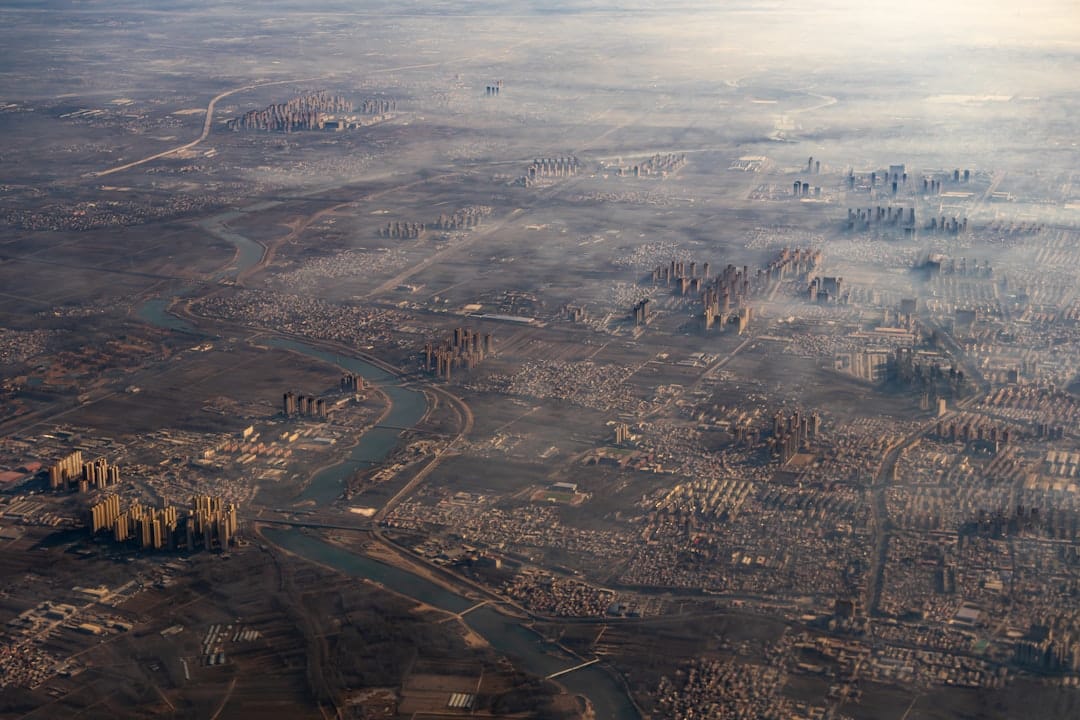
Beijing, China, MMN Correspondent: China is making a massive bet on coal. Three new large scale coal to gas and coal to chemical projects launched in early 2026, worth around $10 billion, signal a major industrial push. The goal? Replace imported oil and gas with domestic coal. This move comes as global energy prices spike due to the Iran conflict and lingering insecurity from Russia's 2022 invasion of Ukraine. But here is the question that keeps climate experts up at night: could this surge undermine China's hard earned reputation as a clean energy leader?
At the heart of this expansion is modern coal chemistry. These technologies turn coal into synthetic fuels, plastics, fertilizers, and other chemicals through gasification. Four main pathways are getting the most attention: coal to gas, coal to liquids, coal to olefins, and coal to ethylene glycol. According to Global Energy Monitor, proposed and underway coal to gas capacity is now nearly three times what is already operating. Over 34 major projects are in planning or construction, representing more than 1 trillion yuan or $150 billion in planned investment. If all these projects move forward, they could add roughly 300 million tonnes of annual coal demand. That is equivalent to South Africa's entire current coal mining output.
Where is this boom happening? Mostly in Xinjiang, which accounts for over half of all proposed modern coal chemical projects. Inner Mongolia, Shaanxi, and Ningxia follow closely. These regions have abundant low cost coal reserves, making them natural hubs for China's strategy to boost energy self sufficiency and reduce exposure to volatile global markets. But this concentration also raises serious environmental and social questions. Water stress, land degradation, and increased air pollution are real concerns in these already vulnerable ecosystems.
Despite being marketed as modern and innovative, coal chemical technologies are not new. The foundational processes were developed in the early 20th century, often during wartime fuel shortages. Germany relied on coal to liquid fuels during World War II. Apartheid era South Africa built similar infrastructure to bypass international sanctions. Once affordable oil and gas became widely available, most nations abandoned the sector. Why? Because it is energy intensive, consumes massive amounts of water, and produces disproportionately high greenhouse gas emissions compared to conventional alternatives.
China itself tried this experiment in the 2010s. Driven by soaring oil prices and energy security concerns, dozens of projects were launched. Many were delayed, suspended, or scrapped. Of the few that reached operation, three out of four coal to gas plants reportedly ran at a loss for much of their first decade. Several large facilities delivered poor returns despite substantial government subsidies. The lessons from that failed chapter are painfully relevant today.
So what is different now? Not the technology. It is policy. Proponents claim recent advances have made coal chemistry more efficient. But the reality is that these projects remain highly sensitive to fluctuations in global oil and gas prices. When prices rise, coal derived products appear competitive. When they fall, the economics collapse. The real driver behind the current revival is deliberate policy support. In 2022, Beijing introduced a key regulatory change exempting coal used as an industrial feedstock from certain energy consumption controls. This effectively lowered the cost barrier for coal chemical projects and encouraged further investment.
This policy shift highlights a deeper structural issue: the coal chemicals sector is fundamentally dependent on state intervention to survive. Without favorable regulations, subsidies, and relaxed environmental oversight, it would struggle to compete. As China accelerates its renewable energy deployment, adding record amounts of solar and wind power annually, the demand for coal in electricity generation is declining. Yet this new industrial expansion creates artificial, long term demand for coal in non electric sectors, counteracting broader decarbonization efforts.
Critically, converting coal into chemicals and fuels releases significantly more CO2 than producing equivalent products from oil or gas. Even with proposed carbon capture and green hydrogen integration, the scalability is limited. For example, Sinopec's flagship coal to olefins plant, paired with a 10,000 tonne per year green hydrogen pilot, displaces less than 2% of its total coal usage. Scaling such measures across the entire proposed buildout would require enormous quantities of clean energy. Energy that could instead be deployed to decarbonize transportation, manufacturing, or power grids.
Experts argue that China has a unique opportunity to lead in cleaner alternatives. Instead of doubling down on fossil based chemical pathways, the country could leverage its industrial capacity and policy muscle to pioneer green ammonia for agriculture, bio based plastics, CO2 derived feedstocks, and e fuels for aviation and shipping. These emerging technologies align better with long term climate goals and offer greater potential for export and global leadership.
The stakes are high. By investing in another generation of coal dependent infrastructure, China risks creating stranded assets. Facilities that may become uneconomical or obsolete as global climate policies tighten. It also jeopardizes its credibility as a climate champion, particularly ahead of COP31 and upcoming international climate negotiations. International observers are watching closely. If China proceeds with this expansion, it may signal a retreat from net zero commitments and weaken global momentum toward decarbonization.
In essence, China stands at a crossroads. It can either repeat the mistakes of the past, investing in outdated, polluting industries under the guise of energy security. Or it can seize the moment to redefine its industrial future around sustainable, innovative, and low carbon pathways. The choice will shape not only China's own energy trajectory but also the global fight against climate change.
Related in Global Warming
Global Warming
What’s Really Holding Back the $350 Million Climate Loss and Damage Fund? 180 Projects, $2.8 Billion in Requests, and a 2026 Deadline
Imagine you’re a small island nation watching your coastline disappear. Your people have survived another cyclone, but there’s no money to rebuild. You hear about a new global fund designed exactly for this moment. You apply. You wait. And then you learn the fund has only enough…
Read More...
Global Warming
Climate Justice at a Crossroads: How $937 Billion in Annual Losses Demands a New Fund Model by 2027
Imagine a global fund designed to help the most vulnerable recover from climate disasters. It was created with hope and fanfare in 2022. Now, just a few years later, that fund is running on empty. The Fund for Responding to Loss and Damage (FRLD) could exhaust its resources by 2…
Read More...
Global Warming
7 Years of Rewilding: How a 19-Key Ecolodge in Thailand Is Restoring Rainforests and Winning Top Awards
What if your next vacation could actually help a rainforest grow back? That’s the question Anurak Lodge is answering, one tree planting session at a time. Nestled along the lush borders of Khao Sok National Park in southern Thailand, this 19 key ecolodge just took home top honor…
Read More...
Global Warming
Coastal Communities Hold the Key to a $2.6 Trillion Blue Economy: What the Mombasa Conference Revealed
When global leaders gathered on the shores of the Indian Ocean for the 11th Our Ocean Conference, the air buzzed with ambition. Billions of dollars in new commitments were announced. Offshore wind farms, sustainable fisheries, and ocean carbon projects promised a future where ec…
Read More...
Global Warming
4 Ugandan Farmers vs. a 1,443 km Oil Pipeline: Can a London Court Stop It?
Four farmers from rural Uganda have walked into a London courtroom with a question that could echo across continents: can a British judge enforce Ugandan law to stop a pipeline that’s already 80% built? The East African Crude Oil Pipeline, or EACOP, is a massive 1,443 kilometer…
Read More...
Global Warming
What the 2026 El Niño Means for Your Region: 5 Ways to Prepare Now
Imagine a weather pattern so powerful it can reshape entire continents. That is exactly what scientists are tracking right now. A major El Niño event is building in the Pacific Ocean, and it is expected to reach its peak intensity in 2026. This is not just another seasonal shift…
Read More...
Global Warming
Over 25 Dead in U.S. Heatwave: What’s Driving the 100°F Crisis?
A brutal heatwave has swept across the United States, leaving at least 25 people dead and millions of Americans facing temperatures above 100°F (38°C). This isn’t just another hot summer day. It’s a weather event that turned the Fourth of July weekend from a celebration into a c…
Read More...
Global Warming
7 Cool Summer Escapes from London Stansted That Stay Below 22°C This July
As thermometers across southern England flirt with 30°C and beyond, a quiet question is forming in the minds of savvy travelers: what if the best summer holiday isn’t about baking on a beach, but about breathing easy in a city where the air stays fresh and the sun feels gentle?…
Read More...
Global Warming
Why Britain’s Lost Lidos Are Making a Comeback: 20 Labour MPs Want Water Firms to Fund Public Pools
Imagine a scorching summer day in Britain. The heat is relentless. You crave a cool escape, but the nearest public pool is miles away or closed for good. That’s the reality for millions today. But a growing movement of Labour MPs and policy experts is working to change that. The…
Read More...
Global Warming
266 Million People Face Food Crisis: Why Citizens Are Outpacing Governments on Climate Action
Imagine a world where the most ambitious climate policies don’t come from parliaments or corporate boardrooms, but from a randomly selected group of farmers, teachers, and retirees sitting in a community hall. That world is already here. While national governments struggle to tu…
Read More...