
Germany’s Lay Judge System Faces a Major Overhaul: What Hubig’s Screening Plan Means for Your Right to Serve in Court
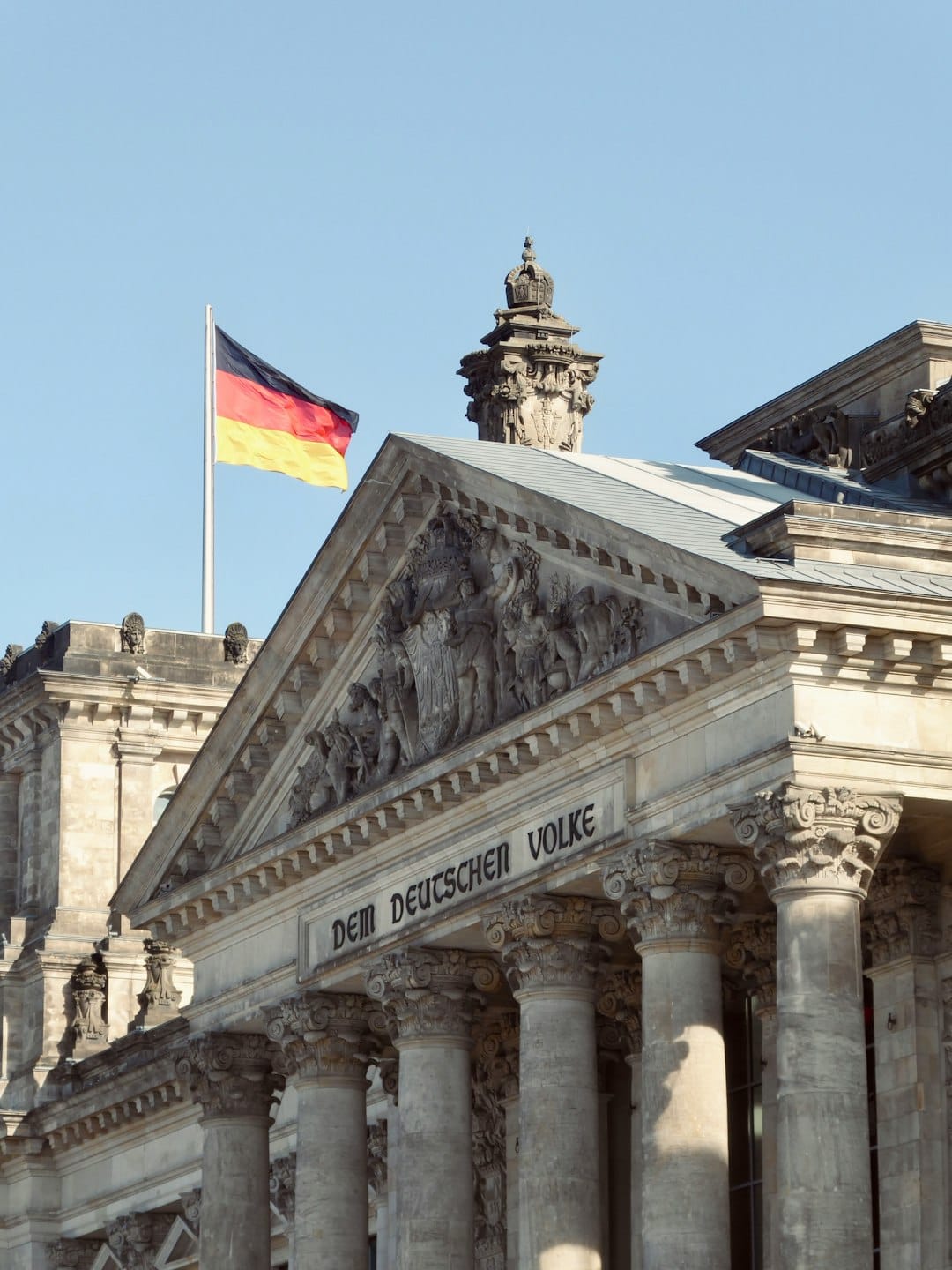
Berlin, Germany, MMN Correspondent: Imagine you’re called to serve as a lay judge in a German courtroom. You’re a teacher, a retiree, or a small business owner. You’ve never been in trouble. You believe in fairness. But now, before you can take your seat, the government wants to scroll through your social media, check your private messages, and maybe even ask intelligence agencies about your political leanings. That’s the future Federal Minister of Justice Stefanie Hubig is proposing, and it has the entire country talking.
On June 17, 2026, Hubig announced a plan to screen all prospective Schöffen—Germany’s 85,000 volunteer lay judges—for extremist ties, especially right-wing affiliations. The goal sounds reasonable: protect the courts from people whose beliefs might undermine public trust. But here’s the question that’s sparking heated debates from Berlin to Munich: At what point does protecting the judiciary start to threaten its independence?
Schöffen aren’t just symbolic figures. They sit alongside professional judges in regional and higher regional courts, helping decide guilt, weigh evidence, and determine sentences. They’re chosen by lottery from the general population, with only one requirement: they must support the democratic order outlined in Germany’s Basic Law. No background checks. No social media audits. Just a commitment to the constitution. That’s been the system for decades, and it’s worked remarkably well.
Hubig’s reform would change that. Under the new plan, candidates would face pre-emptive vetting: background checks, social media surveillance, and even consultations with federal monitoring bodies. The idea is to catch extremists before they ever sit in a courtroom. But critics, including Stephan Brandner of the Alternative für Deutschland, see a different picture. “This is a dangerous political attack on the rule of law,” Brandner said. “Schöffen are supposed to represent the people’s voice. When the state starts filtering citizens by their political views, it erodes democracy itself.”
Brandner’s point cuts to the heart of the matter. Germany’s legal system was rebuilt after World War II specifically to prevent the kind of ideological purges that happened under the Nazis. The Basic Law guarantees that judges—including lay judges—answer only to the law, not to the government of the day. Introducing a screening process, even with good intentions, blurs that line. It raises a question that legal scholars are now asking openly: Who decides what counts as extremism? And what happens when that definition shifts with the political winds?
Dr. Anja Meier, a constitutional law professor at the University of Munich, puts it this way: “The danger isn’t the intent. It’s the execution. If the criteria for disqualification become vague—like ‘right-wing sympathies’ without clear evidence—the system becomes vulnerable to abuse. We need to protect democracy, but the methods must be proportionate and transparent.”
Here’s where the data gets interesting. According to the Federal Ministry of Justice, fewer than 0.3% of Schöffen candidates have violated constitutional principles in the last ten years. That’s a tiny fraction. The vast majority of applicants come from all walks of life: students, retirees, healthcare workers, teachers. They’re ordinary people committed to impartial justice. So the idea that extremist infiltration is a widespread problem lacks solid evidence. That’s fueling skepticism about whether this reform is really about security—or something else.
Supporters of the plan point to isolated incidents, like a 2024 case in Saxony where a Schöffe was removed after being identified in a neo-Nazi forum. They argue that modern threats—social media radicalization, online conspiracy networks—require modern solutions. And they’re not wrong to want vigilance. But even among supporters, there’s unease. The lack of clear guidelines, the absence of appeal mechanisms, and the potential for political misuse remain unresolved. Civil rights groups like the German Human Rights Foundation and the Berlin Bar Association have called for a full parliamentary review before any changes take effect.
This debate isn’t just about Schöffen. It’s about the broader tension between security and liberty in a digital age. Should something you posted online five years ago disqualify you from public service? What happens when algorithmic tools flag users based on keywords, leading to false positives? These are questions that go far beyond the courtroom.
Public opinion is split right down the middle. A recent INSA survey found that 52% of Germans support stricter screening, citing concerns about fairness and security. But 48% oppose it, fearing it could chill free speech and discourage civic participation. Among younger voters, opposition is even stronger, with 63% worried about government overreach.
Germany is at a crossroads. On one side, there’s a legitimate desire to keep extremists out of the justice system. On the other, there’s a deep commitment to the rule of law, transparency, and individual freedoms. The outcome of this policy battle could set a precedent not just for Germany, but for democracies everywhere grappling with similar tensions. The path forward requires robust legal safeguards, clear definitions, public oversight, and a commitment to due process. Only then can Germany ensure its courts remain not only fair and effective—but truly independent.
Related in Politics
Politics
Poland’s Political Crossroads: Why Konfederacja Is Pushing for a State Tribunal Trial Over Ukraine Policy
Poland’s political landscape is heating up as the far-right coalition Konfederacja demands that former Minister of Justice Paweł Kosiniak-Kamysza face a State Tribunal trial. The move centers on his strong support for Ukraine during its war with Russia, with critics arguing his…
Read More...
Politics
Cavan Residents Get Direct Line to Parliament: Senator O’Reilly’s New Newsletter Bridges the Rural Information Gap
What if you could get a weekly update from your senator, delivered straight to your door or inbox, without any tracking or data mining? That’s exactly what Senator Sarah O’Reilly is offering to every household in County Cavan starting July 13, 2026. The initiative, announced on…
Read More...
Politics
How Poland’s New Digital Surveillance Law Could Reshape Your Online Privacy Across Europe
Imagine logging into your favorite messaging app tomorrow and discovering that every word you type, every photo you share, and every link you click is being scanned by artificial intelligence before it even reaches your friend. That scenario is no longer hypothetical. It is now…
Read More...
Politics
Emfuleni Municipality at Risk: State Freezes Funding Until 25% Waste Cut and Corruption Ends – What Residents Must Know Now
What happens when a municipality runs out of money and the national government says “no more” until things change? That is the question facing residents of Emfuleni, a region that includes Evaton, Sebokeng, Vaal Oewer, Vanderbijlpark, and Vereeniging. On July 9, 2026, the Nation…
Read More...
Politics
Volkswagen Faces 100,000 Job Cuts: Is Germany’s EV Dream Crumbling?
Deep in the heart of Germany’s industrial belt, a quiet storm is brewing. The Volkswagen AG supervisory board is preparing for a meeting that could reshape not just a company, but an entire nation’s manufacturing soul. Four German factories may close. Up to 100,000 jobs could va…
Read More...
Politics
Are Mandatory iPads in Irish Schools Worth the Cost? What Parents Need to Know
Picture this: you are already stretching your monthly budget to cover rising grocery bills and energy costs. Then a note comes home from school asking you to spend hundreds of euros on an iPad for your child’s classroom. For families across Ireland, this scenario is becoming inc…
Read More...
Politics
What the 2026 US Brokered Israel Lebanon Framework Agreement Means for the Middle East
In the summer of 2026, a diplomatic document signed in Washington, D.C., has set the Middle East ablaze with debate. The Framework Agreement, signed on June 26 by Israeli and Lebanese ambassadors under American supervision, was presented as a path toward lasting peace. Instead,…
Read More...
Politics
Electricity Tariff Suspension in Mogalakwena: What R100 to R200 Hike Pause Means for Your Energy Bills and South Africa’s Fair Pricing Future
MMN Correspondent: In early July 2026, the Mogalakwena Local Municipality made a decision that caught the attention of energy watchers across South Africa. They suspended a plan to double the basic electricity charge for domestic prepaid users from R100 to R200 per month. For a…
Read More...
Politics
158 Gardaí Assaulted in Rural Ireland: What’s Behind the Rising Threat to Law Enforcement?
Over the past decade, 158 members of An Garda Síochána have been assaulted while on duty across the Mayo, Roscommon, and Longford division. That’s not just a number. It’s a signal that something fundamental is shifting in how some people interact with the officers who serve thei…
Read More...
Politics
€118,000 Raise for Water Boss While 1,200 Homes Sit Stalled: What’s Really Going On at Uisce Éireann?
Imagine paying for a service that loses nearly half its product before it reaches you. Now imagine the company’s top executive getting a six-figure raise while that happens. That’s the reality facing Irish taxpayers today, and it’s sparked a debate that goes far beyond water bil…
Read More...