
How a Single Email Labeled a Farmer’s Plea as ‘Amusement’ Could Cost South Africa Billions in Trade and Trust
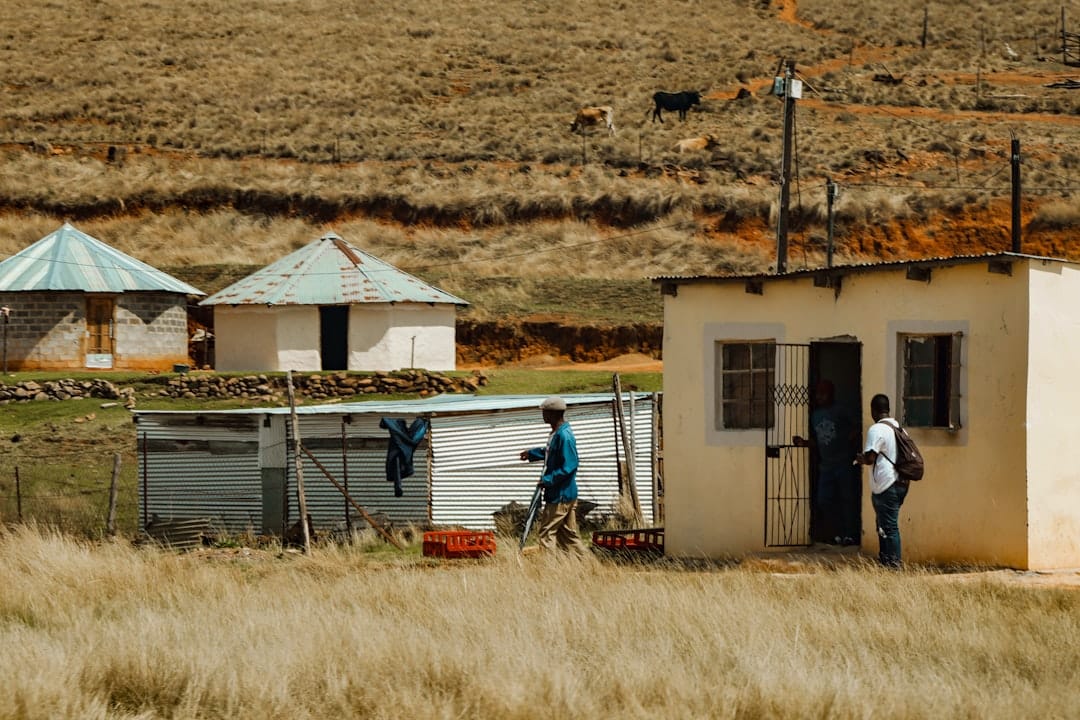
Pretoria, South Africa, MMN Correspondent: In June 2026, a brief email from the office of South Africa’s Minister of Agriculture did something no policy document or press release could: it laid bare a growing chasm between government and the people it serves. The message, sent by Chief of Staff Jana le Roux to senior department officials, carried a simple attachment with the note: “Attached just received for some amusement.” The attachment was a formal request from agricultural stakeholders seeking urgent talks on the nation’s foot-and-mouth disease (FMD) vaccination strategy.
What makes this moment so pivotal isn’t the email itself, but what it reveals about how a crisis is being managed. FMD is a highly contagious viral disease affecting cattle, sheep, and goats. For a country like South Africa, which has long held an FMD-free status with vaccination, the stakes are enormous. Between January and May 2026, the Onderstepoort Veterinary Institute confirmed over 180 cases across Limpopo, Mpumalanga, and the Eastern Cape. That’s more than triple the annual average of previous years. Emergency quarantine zones, movement restrictions, and heightened border surveillance are now the new normal.
The agriculture sector contributes roughly 3.5% to South Africa’s GDP and supports nearly 4 million jobs. When a disease like FMD spreads unchecked, it doesn’t just threaten livestock. It threatens trade relationships with major partners like the European Union, China, and Middle Eastern nations, all of which maintain strict phytosanitary standards. Any sign of poor disease control could trigger trade bans costing billions annually.
So why would a request from farmers on the frontlines of this battle be treated as entertainment? That’s the question that has sparked national outrage. The Freedom Front Plus (VF Plus), a party with deep roots in farming communities, has called for an independent investigation. Dr. Wynand Boshoff, the party’s spokesperson, put it plainly: “Foot-and-mouth disease is not a joke. It is a catastrophe in the making.”
Social media erupted within hours. Hashtags like #NotForAmusement and #RespectOurFarmers trended nationally. Farmers’ associations, including the South African Agricultural Union and the National Wool Growers Association, condemned the incident as emblematic of a broader disconnect. Many farmers reported delays in receiving vaccines, confusion over movement permits, and a growing sense of abandonment by the state.
Veterinary experts have weighed in with a clear message: every day counts. Dr. Thandiwe Mokoena, an epidemiologist at the University of Pretoria, noted that a delay of even two weeks can double the number of affected farms. “Dismissing stakeholder input through sarcasm undermines trust and jeopardizes containment efforts,” she said.
This incident isn’t just about one email. It’s about the culture within South Africa’s civil service. Critics point to a top-down approach that often sidelines frontline voices. The fact that a request from farmers was treated as a joke suggests a disconnect between policymakers and those they serve. The VF Plus is now calling for structural reforms: transparency audits, mandatory stakeholder consultation protocols, and disciplinary action against any official found responsible.
While holding one person accountable won’t fix systemic issues, symbolic accountability matters. As Dr. Boshoff argued, “We cannot rebuild trust without showing that disrespect will not be tolerated. This isn’t about politics. It’s about survival of our farms, our economy, and our food security.”
As the investigation unfolds, international markets are watching closely. South Africa’s agricultural future hangs in the balance. The outcome of this inquiry may determine not just who is held accountable, but whether the nation can maintain its reputation as a reliable trading partner in the face of biological threats. In times of crisis, tone matters as much as policy. A single email can expose deep fractures in governance. The question now is whether those fractures can be repaired before the damage becomes irreversible.
Related in Politics
Politics
Poland’s Political Crossroads: Why Konfederacja Is Pushing for a State Tribunal Trial Over Ukraine Policy
Poland’s political landscape is heating up as the far-right coalition Konfederacja demands that former Minister of Justice Paweł Kosiniak-Kamysza face a State Tribunal trial. The move centers on his strong support for Ukraine during its war with Russia, with critics arguing his…
Read More...
Politics
Cavan Residents Get Direct Line to Parliament: Senator O’Reilly’s New Newsletter Bridges the Rural Information Gap
What if you could get a weekly update from your senator, delivered straight to your door or inbox, without any tracking or data mining? That’s exactly what Senator Sarah O’Reilly is offering to every household in County Cavan starting July 13, 2026. The initiative, announced on…
Read More...
Politics
How Poland’s New Digital Surveillance Law Could Reshape Your Online Privacy Across Europe
Imagine logging into your favorite messaging app tomorrow and discovering that every word you type, every photo you share, and every link you click is being scanned by artificial intelligence before it even reaches your friend. That scenario is no longer hypothetical. It is now…
Read More...
Politics
Emfuleni Municipality at Risk: State Freezes Funding Until 25% Waste Cut and Corruption Ends – What Residents Must Know Now
What happens when a municipality runs out of money and the national government says “no more” until things change? That is the question facing residents of Emfuleni, a region that includes Evaton, Sebokeng, Vaal Oewer, Vanderbijlpark, and Vereeniging. On July 9, 2026, the Nation…
Read More...
Politics
Volkswagen Faces 100,000 Job Cuts: Is Germany’s EV Dream Crumbling?
Deep in the heart of Germany’s industrial belt, a quiet storm is brewing. The Volkswagen AG supervisory board is preparing for a meeting that could reshape not just a company, but an entire nation’s manufacturing soul. Four German factories may close. Up to 100,000 jobs could va…
Read More...
Politics
Are Mandatory iPads in Irish Schools Worth the Cost? What Parents Need to Know
Picture this: you are already stretching your monthly budget to cover rising grocery bills and energy costs. Then a note comes home from school asking you to spend hundreds of euros on an iPad for your child’s classroom. For families across Ireland, this scenario is becoming inc…
Read More...
Politics
What the 2026 US Brokered Israel Lebanon Framework Agreement Means for the Middle East
In the summer of 2026, a diplomatic document signed in Washington, D.C., has set the Middle East ablaze with debate. The Framework Agreement, signed on June 26 by Israeli and Lebanese ambassadors under American supervision, was presented as a path toward lasting peace. Instead,…
Read More...
Politics
Electricity Tariff Suspension in Mogalakwena: What R100 to R200 Hike Pause Means for Your Energy Bills and South Africa’s Fair Pricing Future
MMN Correspondent: In early July 2026, the Mogalakwena Local Municipality made a decision that caught the attention of energy watchers across South Africa. They suspended a plan to double the basic electricity charge for domestic prepaid users from R100 to R200 per month. For a…
Read More...
Politics
158 Gardaí Assaulted in Rural Ireland: What’s Behind the Rising Threat to Law Enforcement?
Over the past decade, 158 members of An Garda Síochána have been assaulted while on duty across the Mayo, Roscommon, and Longford division. That’s not just a number. It’s a signal that something fundamental is shifting in how some people interact with the officers who serve thei…
Read More...
Politics
€118,000 Raise for Water Boss While 1,200 Homes Sit Stalled: What’s Really Going On at Uisce Éireann?
Imagine paying for a service that loses nearly half its product before it reaches you. Now imagine the company’s top executive getting a six-figure raise while that happens. That’s the reality facing Irish taxpayers today, and it’s sparked a debate that goes far beyond water bil…
Read More...