
How Vicente Bruna Is Reshaping Chilean Politics One Community at a Time: Inside the Ñuble Campaign That’s Building a New Republican Base
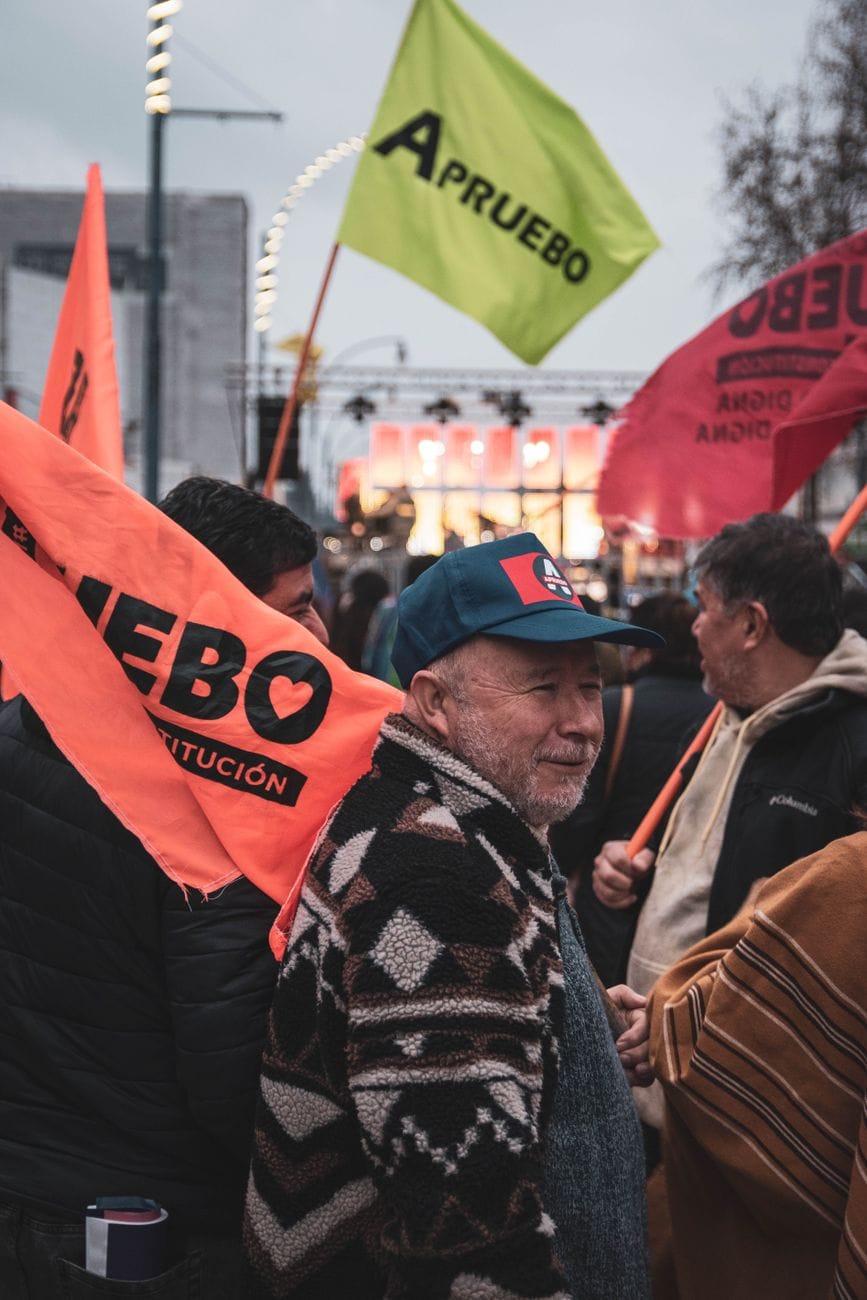
Ñuble Region, Chile, MMN Correspondent: What happens when a national political party decides to stop talking from the capital and start listening in the countryside? You get a day like June 12, 2026, when Vicente Bruna, Secretary General of the Partido Republicano de Chile, crisscrossed the Region of Ñuble with a clear mission: not just to campaign, but to connect. This wasn’t a typical political tour. It was a deliberate, ground-level effort to weave the party’s values into the fabric of local life, one town hall, one farm, and one handshake at a time.
The first stop was San Carlos, a city where the conversation quickly turned from abstract ideology to concrete problems. Bruna sat down with militants, community leaders, and elected officials to talk about what keeps people up at night: crumbling roads, public safety concerns, and the slow grind of economic recovery. The room wasn’t filled with applause lines. It was filled with questions. How do we make democracy work better here? How do we ensure that promises made in Santiago actually reach our streets? The answers, Bruna suggested, start with transparency and a willingness to listen before acting.
From there, the journey moved to Coihueco, a municipality where agriculture isn’t just an industry—it’s a way of life. Farmers’ associations, youth representatives, and council members gathered to discuss issues that don’t make national headlines but shape daily existence: sustainable land use, rural electrification, and access to credit for small producers. Bruna didn’t offer easy solutions. Instead, he asked questions. What works on the ground? What doesn’t? The exchange revealed a party that is learning to tailor its policies to local realities, rather than imposing one-size-fits-all answers. It’s a shift that many in the room found refreshing.
Chillán became the day’s centerpiece, hosting two events that captured the campaign’s dual focus. First, a formal dialogue with Regional Delegate Diego Sepúlveda, where the two leaders explored how national and regional governments can collaborate more effectively. Then, a larger gathering of over 70 activists, many of whom had been involved in previous campaigns or civic projects. The energy in the room was palpable. Ideas flew around voter outreach, digital tools, and the need for stronger coordination between district branches. Bruna used the moment to announce a new regional training program, designed to equip local leaders with skills in political communication, community organizing, and data-driven campaigning. The message was clear: the party is investing in people, not just platforms.
One of the most telling moments came during a private meeting with Jairo del Pino, the Mayor of Pinto. Here, the conversation turned to urban planning, public transportation, and tax incentives for small businesses. Del Pino didn’t hold back his praise for the Partido Republicano’s willingness to engage constructively with local government. He pointed to tangible results from past collaborations: waste management reforms that actually worked, school modernization projects that stayed on budget. Their discussion reflected a broader trend in Chilean politics, where the old walls between national parties and municipal administrations are slowly coming down. Cooperation, it seems, is becoming the new currency of governance.
By the end of the day, more than 100 individuals had participated in various forums across the region. But the numbers only tell part of the story. What stood out was the quality of the conversations. People weren’t just showing up to be seen. They were showing up to be heard. And the party’s leadership was listening. This wasn’t a top-down lecture. It was a two-way exchange, a recognition that the best ideas often come from the communities themselves.
The campaign also made a point of engaging the next generation. In dedicated sessions with young republicans, the focus shifted to digital activism, social media strategy, and youth-led civic innovation. One proposal that emerged was the creation of a regional youth council within the party structure. It’s an idea that’s now under review by the national executive committee. Whether or not it moves forward, the fact that it was proposed at all signals a party that understands the need to evolve. Young voters don’t just want to be courted during election season. They want to be involved year-round.
This kind of grassroots approach isn’t happening in a vacuum. Since its reorganization in 2023, the Partido Republicano has seen steady growth, particularly in central and southern Chile. Official party records show a 42% increase in membership between 2024 and 2025, with the highest gains in regions like Ñuble, Araucanía, and Biobío. Analysts attribute this expansion to a renewed emphasis on community-based organizing, anti-corruption messaging, and a platform centered on fiscal responsibility, rule of law, and regional autonomy. The numbers suggest that the strategy is working.
Recent municipal elections offer further evidence. In 2024, the Partido Republicano secured representation in 18 of the 29 municipalities in Ñuble, including key positions in Chillán and San Carlos. These victories have given the party valuable experience in governance and policy implementation. They’ve also created a feedback loop: local wins fuel national momentum, and national support strengthens local campaigns. It’s a virtuous cycle that the party hopes to replicate in other regions, starting with Valparaíso and La Araucanía later in 2026.
What’s happening in Ñuble is more than a political campaign. It’s a case study in how to revitalize traditional party structures through localized action, digital connectivity, and inclusive dialogue. As Bruna concluded his tour, he reaffirmed the party’s mission: to build a nation rooted in shared responsibility, institutional integrity, and genuine civic participation. The road ahead is long, but the direction is clear. With its focus on territory, talent, and trust, the Partido Republicano is positioning itself not just as a contender in elections, but as a lasting force in the communities that make up Chile.
Related in Politics
Politics
Poland’s Political Crossroads: Why Konfederacja Is Pushing for a State Tribunal Trial Over Ukraine Policy
Poland’s political landscape is heating up as the far-right coalition Konfederacja demands that former Minister of Justice Paweł Kosiniak-Kamysza face a State Tribunal trial. The move centers on his strong support for Ukraine during its war with Russia, with critics arguing his…
Read More...
Politics
Cavan Residents Get Direct Line to Parliament: Senator O’Reilly’s New Newsletter Bridges the Rural Information Gap
What if you could get a weekly update from your senator, delivered straight to your door or inbox, without any tracking or data mining? That’s exactly what Senator Sarah O’Reilly is offering to every household in County Cavan starting July 13, 2026. The initiative, announced on…
Read More...
Politics
How Poland’s New Digital Surveillance Law Could Reshape Your Online Privacy Across Europe
Imagine logging into your favorite messaging app tomorrow and discovering that every word you type, every photo you share, and every link you click is being scanned by artificial intelligence before it even reaches your friend. That scenario is no longer hypothetical. It is now…
Read More...
Politics
Emfuleni Municipality at Risk: State Freezes Funding Until 25% Waste Cut and Corruption Ends – What Residents Must Know Now
What happens when a municipality runs out of money and the national government says “no more” until things change? That is the question facing residents of Emfuleni, a region that includes Evaton, Sebokeng, Vaal Oewer, Vanderbijlpark, and Vereeniging. On July 9, 2026, the Nation…
Read More...
Politics
Volkswagen Faces 100,000 Job Cuts: Is Germany’s EV Dream Crumbling?
Deep in the heart of Germany’s industrial belt, a quiet storm is brewing. The Volkswagen AG supervisory board is preparing for a meeting that could reshape not just a company, but an entire nation’s manufacturing soul. Four German factories may close. Up to 100,000 jobs could va…
Read More...
Politics
Are Mandatory iPads in Irish Schools Worth the Cost? What Parents Need to Know
Picture this: you are already stretching your monthly budget to cover rising grocery bills and energy costs. Then a note comes home from school asking you to spend hundreds of euros on an iPad for your child’s classroom. For families across Ireland, this scenario is becoming inc…
Read More...
Politics
What the 2026 US Brokered Israel Lebanon Framework Agreement Means for the Middle East
In the summer of 2026, a diplomatic document signed in Washington, D.C., has set the Middle East ablaze with debate. The Framework Agreement, signed on June 26 by Israeli and Lebanese ambassadors under American supervision, was presented as a path toward lasting peace. Instead,…
Read More...
Politics
Electricity Tariff Suspension in Mogalakwena: What R100 to R200 Hike Pause Means for Your Energy Bills and South Africa’s Fair Pricing Future
MMN Correspondent: In early July 2026, the Mogalakwena Local Municipality made a decision that caught the attention of energy watchers across South Africa. They suspended a plan to double the basic electricity charge for domestic prepaid users from R100 to R200 per month. For a…
Read More...
Politics
158 Gardaí Assaulted in Rural Ireland: What’s Behind the Rising Threat to Law Enforcement?
Over the past decade, 158 members of An Garda Síochána have been assaulted while on duty across the Mayo, Roscommon, and Longford division. That’s not just a number. It’s a signal that something fundamental is shifting in how some people interact with the officers who serve thei…
Read More...
Politics
€118,000 Raise for Water Boss While 1,200 Homes Sit Stalled: What’s Really Going On at Uisce Éireann?
Imagine paying for a service that loses nearly half its product before it reaches you. Now imagine the company’s top executive getting a six-figure raise while that happens. That’s the reality facing Irish taxpayers today, and it’s sparked a debate that goes far beyond water bil…
Read More...