
How Vicente Bruna Is Reshaping Chile’s Republican Party from the Ground Up in Coquimbo
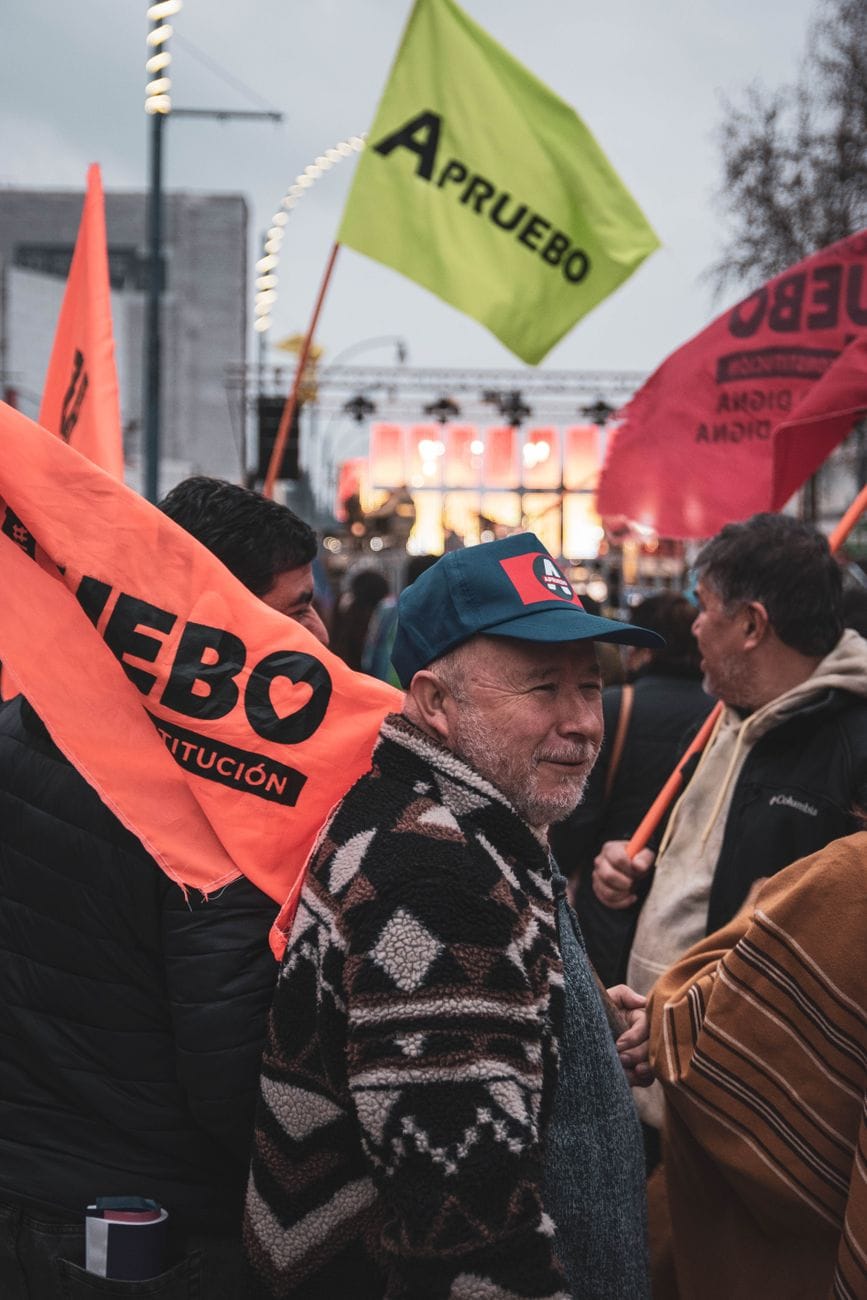
Los Vilos & La Serena, Coquimbo Region, Chile, MMN Correspondent: What happens when a national political party decides to stop talking and start listening? In Chile’s Coquimbo region, that question is being answered in real time. On June 22, 2026, Vicente Bruna, Secretary General of the Partido Republicano de Chile, stepped out of the capital and into the coastal towns and urban centers of this diverse region. His mission? Not just to reorganize local leadership, but to rewrite the party’s relationship with its own grassroots.
The tour kicked off in Los Vilos, a fishing community where the ocean meets a growing awareness of environmental challenges. Around 15 party members gathered in a modest community center. But this wasn’t a typical political meeting with speeches from the top. Instead, Bruna opened the floor to local voices. Fishermen talked about infrastructure gaps. Small business owners shared frustrations about economic stagnation. Parents asked about sustainable development that doesn’t leave their children behind. The message was clear: the party’s regional reorganization isn’t a directive from Santiago. It’s a collaborative effort to make local leadership more responsive and accountable.
Then came La Serena, the region’s cultural and economic heart. Nearly 70 militants filled a forum space, and the energy was palpable. This wasn’t a passive audience. People debated how to modernize internal communications. They brainstormed ways to strengthen digital outreach. They asked tough questions about how to connect the party’s national ideology with the everyday realities of Coquimbo’s mining towns, agricultural valleys, and coastal communities. Bruna’s response? The Republican Party’s core values—civic responsibility, institutional integrity, economic pragmatism—must be flexible enough to fit local contexts. One size does not fit all.
This reorganization is part of a larger blueprint unveiled earlier in 2026. The plan includes phased leadership renewal, training programs for new cadres, and specialized working groups focused on education, environmental policy, and urban planning. The goal is to decentralize decision-making and give regional branches more autonomy while keeping ideological coherence intact. Internal party documents suggest this shift is a direct response to declining voter engagement in non-metropolitan areas. Instead of waiting for people to come to the party, the party is going to them.
Why Coquimbo? With over 480,000 residents, the region is a microcosm of Chile’s broader challenges. It has bustling urban centers like La Serena, rural communities dependent on agriculture, and mining zones where copper and lithium extraction drive the economy. Water scarcity, climate vulnerability, and labor market shifts tied to the energy transition are daily realities here. According to the National Statistics Institute (INE), Coquimbo’s GDP has grown 3.4% annually over the past three years, largely thanks to mining and tourism. But inequality persists. Rural communes still lack reliable healthcare, digital connectivity, and quality education. The Republican Party’s outreach aims to bridge that gap by promoting inclusive development models rooted in transparency and participatory governance.
Bruna’s visit also taps into a national conversation about political renewal. After the 2021 constitutional process and the 2023 legislative elections, trust in traditional parties has eroded. Many Chileans are looking for alternatives that emphasize stability, rule of law, and efficient public administration. The Republican Party, historically aligned with conservative-liberal values, is positioning itself as a pragmatic middle ground—neither left-wing coalitions nor right-wing populist movements. By engaging directly with militants, Bruna is signaling a departure from centralized leadership styles. Face-to-face interactions, listening sessions, and transparent communication are becoming the new norm. This approach resonates particularly with younger voters who value authenticity over performative politics.
Looking ahead, the party plans to replicate this model in other regions like Valparaíso, Maule, and Ñuble, with tours scheduled through the second half of 2026. The ultimate vision is a nationwide network of empowered local chapters capable of mobilizing support, shaping policy agendas, and fielding competitive candidates in upcoming municipal and national elections. Success will depend on sustained investment in human capital, technological infrastructure, and community-based organizing. Early signs are promising. Party members in Coquimbo are showing strong enthusiasm, especially in areas where local leaders have been absent or ineffective. As one participant in the La Serena meeting put it, “This isn’t just about reorganizing a committee. It’s about rebuilding trust in politics through action.”
With the 2026 municipal elections approaching and the 2029 presidential race already on the horizon, the Republican Party’s renewed focus on territory could reshape Chile’s political landscape. By anchoring its strategy in local realities, fostering internal cohesion, and embracing adaptive leadership, the party is laying the groundwork for a resurgence rooted in civic engagement and long-term vision. The question now is whether other parties will follow suit—or stay stuck in the old ways.
Related in Politics
Politics
Poland’s Political Crossroads: Why Konfederacja Is Pushing for a State Tribunal Trial Over Ukraine Policy
Poland’s political landscape is heating up as the far-right coalition Konfederacja demands that former Minister of Justice Paweł Kosiniak-Kamysza face a State Tribunal trial. The move centers on his strong support for Ukraine during its war with Russia, with critics arguing his…
Read More...
Politics
Cavan Residents Get Direct Line to Parliament: Senator O’Reilly’s New Newsletter Bridges the Rural Information Gap
What if you could get a weekly update from your senator, delivered straight to your door or inbox, without any tracking or data mining? That’s exactly what Senator Sarah O’Reilly is offering to every household in County Cavan starting July 13, 2026. The initiative, announced on…
Read More...
Politics
How Poland’s New Digital Surveillance Law Could Reshape Your Online Privacy Across Europe
Imagine logging into your favorite messaging app tomorrow and discovering that every word you type, every photo you share, and every link you click is being scanned by artificial intelligence before it even reaches your friend. That scenario is no longer hypothetical. It is now…
Read More...
Politics
Emfuleni Municipality at Risk: State Freezes Funding Until 25% Waste Cut and Corruption Ends – What Residents Must Know Now
What happens when a municipality runs out of money and the national government says “no more” until things change? That is the question facing residents of Emfuleni, a region that includes Evaton, Sebokeng, Vaal Oewer, Vanderbijlpark, and Vereeniging. On July 9, 2026, the Nation…
Read More...
Politics
Volkswagen Faces 100,000 Job Cuts: Is Germany’s EV Dream Crumbling?
Deep in the heart of Germany’s industrial belt, a quiet storm is brewing. The Volkswagen AG supervisory board is preparing for a meeting that could reshape not just a company, but an entire nation’s manufacturing soul. Four German factories may close. Up to 100,000 jobs could va…
Read More...
Politics
Are Mandatory iPads in Irish Schools Worth the Cost? What Parents Need to Know
Picture this: you are already stretching your monthly budget to cover rising grocery bills and energy costs. Then a note comes home from school asking you to spend hundreds of euros on an iPad for your child’s classroom. For families across Ireland, this scenario is becoming inc…
Read More...
Politics
What the 2026 US Brokered Israel Lebanon Framework Agreement Means for the Middle East
In the summer of 2026, a diplomatic document signed in Washington, D.C., has set the Middle East ablaze with debate. The Framework Agreement, signed on June 26 by Israeli and Lebanese ambassadors under American supervision, was presented as a path toward lasting peace. Instead,…
Read More...
Politics
Electricity Tariff Suspension in Mogalakwena: What R100 to R200 Hike Pause Means for Your Energy Bills and South Africa’s Fair Pricing Future
MMN Correspondent: In early July 2026, the Mogalakwena Local Municipality made a decision that caught the attention of energy watchers across South Africa. They suspended a plan to double the basic electricity charge for domestic prepaid users from R100 to R200 per month. For a…
Read More...
Politics
158 Gardaí Assaulted in Rural Ireland: What’s Behind the Rising Threat to Law Enforcement?
Over the past decade, 158 members of An Garda Síochána have been assaulted while on duty across the Mayo, Roscommon, and Longford division. That’s not just a number. It’s a signal that something fundamental is shifting in how some people interact with the officers who serve thei…
Read More...
Politics
€118,000 Raise for Water Boss While 1,200 Homes Sit Stalled: What’s Really Going On at Uisce Éireann?
Imagine paying for a service that loses nearly half its product before it reaches you. Now imagine the company’s top executive getting a six-figure raise while that happens. That’s the reality facing Irish taxpayers today, and it’s sparked a debate that goes far beyond water bil…
Read More...