
Ireland’s Cost-of-Living Crisis: Will a Dáil Motion Freeze Fuel and Carbon Taxes to Save Households €1 Billion?
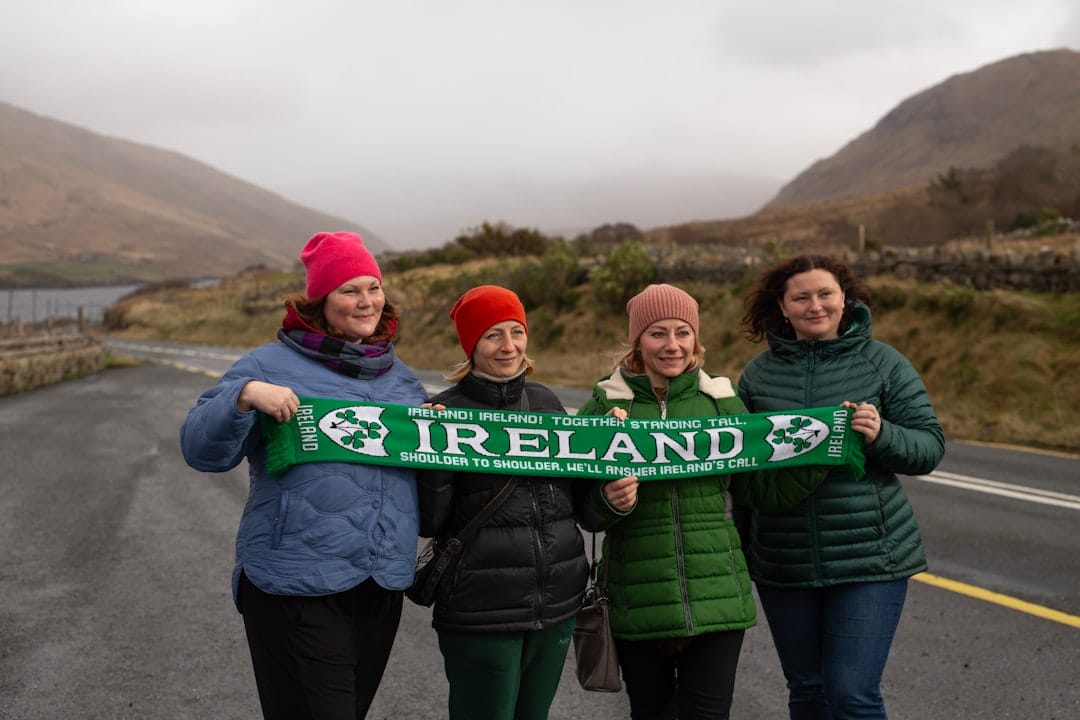
Dublin, Ireland, MMN Correspondent: Ireland is at a crossroads. As the cost of living continues to climb, a bold political move is set to challenge the government’s fiscal strategy head on. On Wednesday, June 29, 2026, Aontú, a growing nationalist party, will introduce a landmark motion in the Dáil Éireann. The goal? To freeze fuel taxes and halt planned carbon tax increases that could reshape the financial landscape for millions of households.
At the core of this proposal is a simple question: should temporary tax cuts become permanent? Earlier this year, widespread public protests led to a temporary suspension of excise duty increases on diesel and petrol. Those cuts are scheduled to expire on July 31. Aontú’s motion argues they should stay. The party also opposes the upcoming October 2026 carbon tax increase, an annual adjustment that has become a central point of national debate since its introduction in 2021.
Leader Peadar Tóibín has framed the motion as a lifeline. “If this motion passes, life will be significantly more affordable for millions of people here,” he stated. His words carry weight, especially as the Central Bank of Ireland warns that inflationary pressures are likely to intensify in the coming months. Global oil prices have surged recently due to geopolitical instability and supply chain disruptions, adding urgency to the discussion.
The numbers paint a stark picture. Ireland is now the most expensive country in Europe for essential living costs. Cross border comparisons show Irish households pay, on average, 35% more than their EU counterparts. Housing costs are the highest in the EU. Energy bills are 57% above the continental average. Health expenditures are nearly 85% higher than the EU norm. These figures are not abstract statistics; they represent real strain on household budgets across the country.
Perhaps the most alarming data point is this: one third of Irish households are currently in energy arrears. This statistic reflects both systemic inefficiencies and the direct impact of high utility pricing. The burden is especially heavy in rural and low income communities, where public transport options are limited and reliance on personal vehicles remains high. For these families, a fuel tax freeze is not a political talking point; it is a matter of daily survival.
Aontú’s argument centers on the idea that continued reliance on fuel and carbon taxation during a national emergency is economically unsound and morally questionable. The carbon tax, introduced just a few years ago, generated over €1 billion in revenue in the previous fiscal year alone. While intended as a tool for environmental sustainability, critics argue it disproportionately affects lower and middle income earners who cannot easily switch to electric vehicles or reduce their driving.
“Carbon tax didn’t exist until a few years ago and it took in over one billion euro last year,” Tóibín noted. “In the jaws of a cost of living crisis, this government made more on fuel taxes than ever. This is absolutely wrong.”
The motion specifically targets two major policy decisions: the planned reinstatement of excise duties on diesel (32 cents per liter) and petrol (27 cents per liter) after July 31, and the automatic October increase in carbon tax, which has been a recurring feature since 2021 and is scheduled to continue annually until 2030.
Support for the initiative has already gained momentum through an online petition launched by Aontú, which has attracted over 1,100 signatures in just weeks. The petition urges the government to prioritize affordability over punitive taxation and calls for transparency in how tax revenues are allocated, particularly in relation to green infrastructure projects that may benefit wealthier citizens more than those in need.
Economists and social policy experts have begun to weigh in on the broader implications. Some argue that while short term relief through tax freezes could ease pressure on households, long term environmental goals may suffer if carbon pricing is abandoned. Others emphasize that equitable transition policies must include targeted support for vulnerable populations, such as subsidies for home insulation, expanded public transit access, and affordable electric vehicle incentives, before imposing additional financial burdens.
The motion is being presented under Private Members’ Business (PMB), meaning it does not carry the same legislative weight as government sponsored bills but serves as a powerful platform for public debate. It is expected to spark intense discussion among opposition parties, with some expressing cautious sympathy while others remain committed to maintaining current environmental commitments.
As Ireland grapples with a confluence of global and domestic challenges, including inflation, housing shortages, and energy insecurity, the Aontú motion represents a pivotal moment in the national conversation about fairness, fiscal responsibility, and sustainable development. Whether the motion succeeds or not, its introduction signals a growing public demand for alternative economic models that place human well being at the center of policy making.
With energy prices continuing to fluctuate and inflationary trends showing no signs of abating, the outcome of this Dáil debate could influence future political strategies and shape the direction of Ireland’s economic recovery. For now, millions of families are watching closely, hoping that their voices, amplified through petitions, protests, and parliamentary advocacy, will finally lead to tangible relief in their daily lives.
The motion stands as a clear signal that the cost of living crisis is no longer just an economic issue. It is a moral one. And in a nation where basic necessities are becoming increasingly unaffordable, the question is no longer whether the government can afford to act, but whether it can afford not to.
Related in Politics
Politics
Poland’s Political Crossroads: Why Konfederacja Is Pushing for a State Tribunal Trial Over Ukraine Policy
Poland’s political landscape is heating up as the far-right coalition Konfederacja demands that former Minister of Justice Paweł Kosiniak-Kamysza face a State Tribunal trial. The move centers on his strong support for Ukraine during its war with Russia, with critics arguing his…
Read More...
Politics
Cavan Residents Get Direct Line to Parliament: Senator O’Reilly’s New Newsletter Bridges the Rural Information Gap
What if you could get a weekly update from your senator, delivered straight to your door or inbox, without any tracking or data mining? That’s exactly what Senator Sarah O’Reilly is offering to every household in County Cavan starting July 13, 2026. The initiative, announced on…
Read More...
Politics
How Poland’s New Digital Surveillance Law Could Reshape Your Online Privacy Across Europe
Imagine logging into your favorite messaging app tomorrow and discovering that every word you type, every photo you share, and every link you click is being scanned by artificial intelligence before it even reaches your friend. That scenario is no longer hypothetical. It is now…
Read More...
Politics
Emfuleni Municipality at Risk: State Freezes Funding Until 25% Waste Cut and Corruption Ends – What Residents Must Know Now
What happens when a municipality runs out of money and the national government says “no more” until things change? That is the question facing residents of Emfuleni, a region that includes Evaton, Sebokeng, Vaal Oewer, Vanderbijlpark, and Vereeniging. On July 9, 2026, the Nation…
Read More...
Politics
Volkswagen Faces 100,000 Job Cuts: Is Germany’s EV Dream Crumbling?
Deep in the heart of Germany’s industrial belt, a quiet storm is brewing. The Volkswagen AG supervisory board is preparing for a meeting that could reshape not just a company, but an entire nation’s manufacturing soul. Four German factories may close. Up to 100,000 jobs could va…
Read More...
Politics
Are Mandatory iPads in Irish Schools Worth the Cost? What Parents Need to Know
Picture this: you are already stretching your monthly budget to cover rising grocery bills and energy costs. Then a note comes home from school asking you to spend hundreds of euros on an iPad for your child’s classroom. For families across Ireland, this scenario is becoming inc…
Read More...
Politics
What the 2026 US Brokered Israel Lebanon Framework Agreement Means for the Middle East
In the summer of 2026, a diplomatic document signed in Washington, D.C., has set the Middle East ablaze with debate. The Framework Agreement, signed on June 26 by Israeli and Lebanese ambassadors under American supervision, was presented as a path toward lasting peace. Instead,…
Read More...
Politics
Electricity Tariff Suspension in Mogalakwena: What R100 to R200 Hike Pause Means for Your Energy Bills and South Africa’s Fair Pricing Future
MMN Correspondent: In early July 2026, the Mogalakwena Local Municipality made a decision that caught the attention of energy watchers across South Africa. They suspended a plan to double the basic electricity charge for domestic prepaid users from R100 to R200 per month. For a…
Read More...
Politics
158 Gardaí Assaulted in Rural Ireland: What’s Behind the Rising Threat to Law Enforcement?
Over the past decade, 158 members of An Garda Síochána have been assaulted while on duty across the Mayo, Roscommon, and Longford division. That’s not just a number. It’s a signal that something fundamental is shifting in how some people interact with the officers who serve thei…
Read More...
Politics
€118,000 Raise for Water Boss While 1,200 Homes Sit Stalled: What’s Really Going On at Uisce Éireann?
Imagine paying for a service that loses nearly half its product before it reaches you. Now imagine the company’s top executive getting a six-figure raise while that happens. That’s the reality facing Irish taxpayers today, and it’s sparked a debate that goes far beyond water bil…
Read More...