
Is an AI Report Targeting Germany's AfD a Threat to Democracy or a Political Tool? 3,000 Pages of Data Spark a National Debate
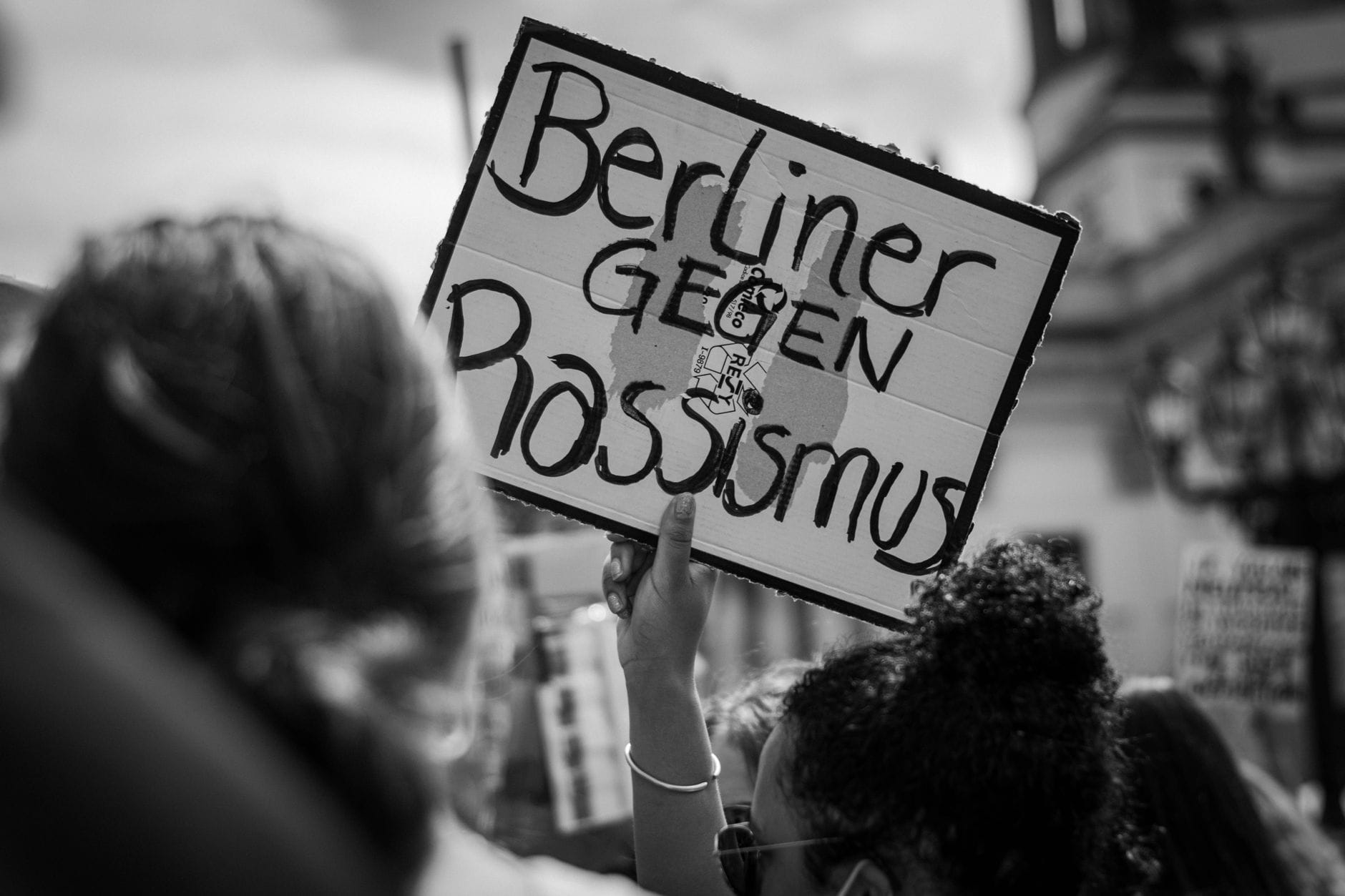
Berlin, Germany, MMN Correspondent: A massive 3,000 page report has landed in the middle of Germany’s political landscape, and it’s stirring up a storm. The document, released by an organization called the Gesellschaft für Freiheitsrechte (Society for Civil Liberties), claims to use artificial intelligence to analyze patterns of extremism and anti democratic rhetoric within the Alternative für Deutschland (AfD), the country’s strongest opposition party. But instead of settling debates, it has ignited a fierce new one: is this a legitimate effort to protect democratic institutions, or a calculated move to sideline a political rival?
Stephan Brandner, the AfD’s deputy federal spokesperson, didn’t hold back. He called the report “laughable and helpless,” arguing that its sheer size is meant to overwhelm rather than inform. “Three thousand pages of algorithm driven analysis isn’t scholarship,” he said. “It’s information warfare.” His point raises a fair question: when does data become a weapon? The report draws on public speeches, social media posts, and internal party communications, but critics say the methodology is opaque. How much of this is human judgment, and how much is machine interpretation?
The timing of the release adds another layer. It came just as regional politicians from the SPD, especially in Thuringia, began calling for a formal ban on the AfD. In Thuringia, the AfD narrowly cleared the 5% electoral threshold, and the SPD is struggling to hold onto its traditional stronghold. Some see the push for a ban as less about constitutional concerns and more about electoral survival. Germany’s Basic Law does allow for party bans under Article 18, but the bar is high. Only two parties have faced such proceedings in decades, and both were rejected for lack of evidence.
What makes this case different is the role of artificial intelligence. The report’s backers say AI allows for a scale of analysis that humans alone couldn’t achieve. But critics, including constitutional law professor Dr. Lena Hartmann from the University of Hamburg, warn of a slippery slope. “If we let algorithms decide what threatens democracy, we risk replacing judicial reasoning with automated suspicion,” she noted. That’s a concern that goes beyond Germany. Across Europe, far right and populist movements are gaining ground, and governments are grappling with how to respond without overstepping.
The Gesellschaft für Freiheitsrechte itself is a relatively new player. Its connections to environmental and left leaning networks, including foundations that have historically opposed right wing populism, have fueled questions about bias. Brandner pointed out that the group’s funders include advocacy organizations with clear political leanings. Does that make the report invalid? Not necessarily. But it does mean readers should approach it with the same skepticism they’d apply to any politically charged document.
Public opinion on the AfD remains deeply split. A May 2026 survey by INSA found that 47% of Germans see the party as a threat to democracy, while 38% view it as a legitimate opposition force. The remaining 15% are undecided. These numbers show a society wrestling with a fundamental question: where is the line between protecting democratic values and suppressing dissent? The AfD’s rhetoric has evolved since its founding in 2013, becoming more moderate on some policy issues while retaining hardline stances on cultural topics. But moderation doesn’t erase concerns about long term direction.
Supporters of the report argue that it’s a necessary tool for accountability. They point to the AfD’s controversial positions on immigration, national identity, and historical memory as reasons for scrutiny. And they note that AI driven analysis can reveal patterns that human observers might miss. But the flip side is that algorithms have their own biases, often reflecting the assumptions of their creators. Without transparency in how the data was collected and interpreted, the report risks being seen as a political hit job rather than a neutral assessment.
What happens next is uncertain. The report could lead to a formal investigation, or it could fade into the background of Germany’s ongoing political drama. But one thing is clear: the debate over the AfD is no longer just about speeches and votes. It’s about data, code, and the algorithms that increasingly shape our understanding of political reality. As this technology becomes more common, the question isn’t just whether the AfD poses a threat to democracy. It’s whether the tools we use to answer that question are themselves democratic.
Related in Politics
Politics
Poland’s Political Crossroads: Why Konfederacja Is Pushing for a State Tribunal Trial Over Ukraine Policy
Poland’s political landscape is heating up as the far-right coalition Konfederacja demands that former Minister of Justice Paweł Kosiniak-Kamysza face a State Tribunal trial. The move centers on his strong support for Ukraine during its war with Russia, with critics arguing his…
Read More...
Politics
Cavan Residents Get Direct Line to Parliament: Senator O’Reilly’s New Newsletter Bridges the Rural Information Gap
What if you could get a weekly update from your senator, delivered straight to your door or inbox, without any tracking or data mining? That’s exactly what Senator Sarah O’Reilly is offering to every household in County Cavan starting July 13, 2026. The initiative, announced on…
Read More...
Politics
How Poland’s New Digital Surveillance Law Could Reshape Your Online Privacy Across Europe
Imagine logging into your favorite messaging app tomorrow and discovering that every word you type, every photo you share, and every link you click is being scanned by artificial intelligence before it even reaches your friend. That scenario is no longer hypothetical. It is now…
Read More...
Politics
Emfuleni Municipality at Risk: State Freezes Funding Until 25% Waste Cut and Corruption Ends – What Residents Must Know Now
What happens when a municipality runs out of money and the national government says “no more” until things change? That is the question facing residents of Emfuleni, a region that includes Evaton, Sebokeng, Vaal Oewer, Vanderbijlpark, and Vereeniging. On July 9, 2026, the Nation…
Read More...
Politics
Volkswagen Faces 100,000 Job Cuts: Is Germany’s EV Dream Crumbling?
Deep in the heart of Germany’s industrial belt, a quiet storm is brewing. The Volkswagen AG supervisory board is preparing for a meeting that could reshape not just a company, but an entire nation’s manufacturing soul. Four German factories may close. Up to 100,000 jobs could va…
Read More...
Politics
Are Mandatory iPads in Irish Schools Worth the Cost? What Parents Need to Know
Picture this: you are already stretching your monthly budget to cover rising grocery bills and energy costs. Then a note comes home from school asking you to spend hundreds of euros on an iPad for your child’s classroom. For families across Ireland, this scenario is becoming inc…
Read More...
Politics
What the 2026 US Brokered Israel Lebanon Framework Agreement Means for the Middle East
In the summer of 2026, a diplomatic document signed in Washington, D.C., has set the Middle East ablaze with debate. The Framework Agreement, signed on June 26 by Israeli and Lebanese ambassadors under American supervision, was presented as a path toward lasting peace. Instead,…
Read More...
Politics
Electricity Tariff Suspension in Mogalakwena: What R100 to R200 Hike Pause Means for Your Energy Bills and South Africa’s Fair Pricing Future
MMN Correspondent: In early July 2026, the Mogalakwena Local Municipality made a decision that caught the attention of energy watchers across South Africa. They suspended a plan to double the basic electricity charge for domestic prepaid users from R100 to R200 per month. For a…
Read More...
Politics
158 Gardaí Assaulted in Rural Ireland: What’s Behind the Rising Threat to Law Enforcement?
Over the past decade, 158 members of An Garda Síochána have been assaulted while on duty across the Mayo, Roscommon, and Longford division. That’s not just a number. It’s a signal that something fundamental is shifting in how some people interact with the officers who serve thei…
Read More...
Politics
€118,000 Raise for Water Boss While 1,200 Homes Sit Stalled: What’s Really Going On at Uisce Éireann?
Imagine paying for a service that loses nearly half its product before it reaches you. Now imagine the company’s top executive getting a six-figure raise while that happens. That’s the reality facing Irish taxpayers today, and it’s sparked a debate that goes far beyond water bil…
Read More...