
Is Germany’s Democracy Failing? 63% of Voters Say Politicians Are Out of Touch – Here’s What They Really Want
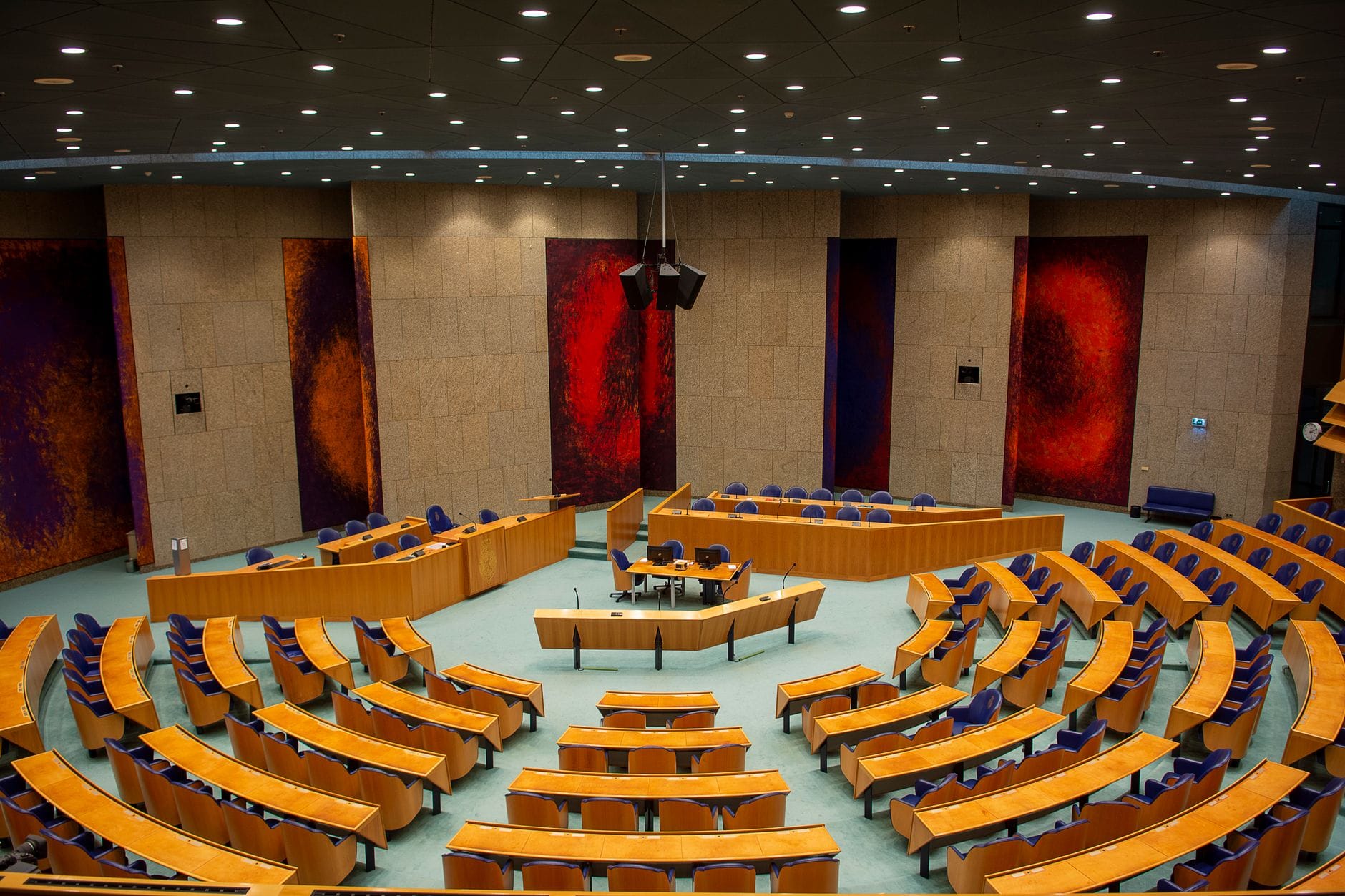
Berlin, Germany, MMN Correspondent: What happens when a democracy starts measuring its health by the number of seats filled by each gender rather than by the quality of decisions made in those seats? That is the question now echoing through Germany’s political corridors after a bold challenge from Stephan Brandner, deputy national spokesperson for the Alternative for Deutschland (AfD). On June 22, 2026, Brandner took aim at a proposal from 80 members of the SPD parliamentary group who signed an open declaration called 'Demokratie braucht Parität' – Democracy Needs Parity. Their goal: legislate gender equality in the Bundestag. But Brandner’s response cut to the heart of a deeper issue.
The SPD’s push for mandatory gender quotas sounds progressive on the surface. After all, who would argue against equal representation? Yet beneath the banner of inclusivity lies a tension that many voters feel but few politicians address. Brandner put it bluntly: democracy does not thrive on quotas. It thrives on quality, merit, and genuine representation rooted in public trust. And the numbers back him up. A 2025 Eurobarometer report found that only 41% of Europeans trust their national parliaments. In Germany, the German Institute for Economic Research (DIW) reports that nearly 63% of citizens believe their elected officials are disconnected from everyday life.
So what do people actually want? Not more women or more men in office, according to Brandner. They want solutions. Inflation, housing shortages, migration pressures, and economic stagnation top the list. A 2026 study by the Friedrich Naumann Foundation confirms this: 78% of German respondents ranked economic performance as the most important factor in evaluating political leadership. Gender representation and cultural diversity? Far lower on the list. This is not about dismissing diversity. It is about recognizing that when policies become performative, they risk losing the very trust they aim to build.
Countries like France, Spain, and Sweden have experimented with gender quotas since the early 2000s. The European Parliament’s own analysis shows that while these policies increased female participation, they did not consistently improve policy outcomes or public satisfaction. In some cases, younger voters actually turned away from parties with quota systems, viewing them as tokenistic. Norway and Iceland, often held up as gender equality models, saw slower GDP growth between 2020 and 2024 compared to Germany and South Korea – nations with lower gender parity scores but stronger industrial output.
Germany’s current mixed-member proportional system already ensures representation through party lists. It has worked since 1949. Brandner warns that assigning seats based on gender rather than votes erodes the foundation of democracy: the free choice of the citizen. Instead of quotas, he advocates for transparency, accountability, and performance. Stricter candidate vetting, mandatory public disclosure of political resumes, and greater scrutiny of policy proposals before implementation. Quality means ensuring that those who govern are qualified, competent, and answerable – not just diverse in appearance.
This perspective is gaining traction across Europe. In Austria, the 2025 Citizen Assembly on Democracy Reform proposed eliminating artificial diversity targets in favor of merit-based selection. In the Netherlands, a 2024 parliamentary commission recommended revising party nomination rules to prioritize experience and policy expertise over identity markers. These are not fringe ideas. They reflect a growing movement for democratic renewal that puts substance above symbolism.
Of course, advocates for quotas point to historical underrepresentation and systemic barriers. They note that in Nordic countries, targeted initiatives have helped women secure over 40% of parliamentary seats – well above the EU average of 35%. But Brandner argues that true inclusion comes from participation, not mandates. When people feel their voices matter and see tangible results from policies, representation follows naturally. Performative policies, on the other hand, erode credibility.
As Germany looks toward its next federal election in 2029, the debate over democratic legitimacy is intensifying. Digital engagement platforms, citizens’ initiatives, and demands for political transparency are reshaping expectations. Voters are no longer satisfied with symbolic gestures. They want action. The lesson from Berlin may prove pivotal for democracies everywhere: democracy thrives not when it looks balanced, but when it delivers results. The path forward lies not in rigid quotas, but in cultivating a political culture where every vote counts, every voice matters, and every decision is judged by its impact – not its optics.
Related in Politics
Politics
Poland’s Political Crossroads: Why Konfederacja Is Pushing for a State Tribunal Trial Over Ukraine Policy
Poland’s political landscape is heating up as the far-right coalition Konfederacja demands that former Minister of Justice Paweł Kosiniak-Kamysza face a State Tribunal trial. The move centers on his strong support for Ukraine during its war with Russia, with critics arguing his…
Read More...
Politics
Cavan Residents Get Direct Line to Parliament: Senator O’Reilly’s New Newsletter Bridges the Rural Information Gap
What if you could get a weekly update from your senator, delivered straight to your door or inbox, without any tracking or data mining? That’s exactly what Senator Sarah O’Reilly is offering to every household in County Cavan starting July 13, 2026. The initiative, announced on…
Read More...
Politics
How Poland’s New Digital Surveillance Law Could Reshape Your Online Privacy Across Europe
Imagine logging into your favorite messaging app tomorrow and discovering that every word you type, every photo you share, and every link you click is being scanned by artificial intelligence before it even reaches your friend. That scenario is no longer hypothetical. It is now…
Read More...
Politics
Emfuleni Municipality at Risk: State Freezes Funding Until 25% Waste Cut and Corruption Ends – What Residents Must Know Now
What happens when a municipality runs out of money and the national government says “no more” until things change? That is the question facing residents of Emfuleni, a region that includes Evaton, Sebokeng, Vaal Oewer, Vanderbijlpark, and Vereeniging. On July 9, 2026, the Nation…
Read More...
Politics
Volkswagen Faces 100,000 Job Cuts: Is Germany’s EV Dream Crumbling?
Deep in the heart of Germany’s industrial belt, a quiet storm is brewing. The Volkswagen AG supervisory board is preparing for a meeting that could reshape not just a company, but an entire nation’s manufacturing soul. Four German factories may close. Up to 100,000 jobs could va…
Read More...
Politics
Are Mandatory iPads in Irish Schools Worth the Cost? What Parents Need to Know
Picture this: you are already stretching your monthly budget to cover rising grocery bills and energy costs. Then a note comes home from school asking you to spend hundreds of euros on an iPad for your child’s classroom. For families across Ireland, this scenario is becoming inc…
Read More...
Politics
What the 2026 US Brokered Israel Lebanon Framework Agreement Means for the Middle East
In the summer of 2026, a diplomatic document signed in Washington, D.C., has set the Middle East ablaze with debate. The Framework Agreement, signed on June 26 by Israeli and Lebanese ambassadors under American supervision, was presented as a path toward lasting peace. Instead,…
Read More...
Politics
Electricity Tariff Suspension in Mogalakwena: What R100 to R200 Hike Pause Means for Your Energy Bills and South Africa’s Fair Pricing Future
MMN Correspondent: In early July 2026, the Mogalakwena Local Municipality made a decision that caught the attention of energy watchers across South Africa. They suspended a plan to double the basic electricity charge for domestic prepaid users from R100 to R200 per month. For a…
Read More...
Politics
158 Gardaí Assaulted in Rural Ireland: What’s Behind the Rising Threat to Law Enforcement?
Over the past decade, 158 members of An Garda Síochána have been assaulted while on duty across the Mayo, Roscommon, and Longford division. That’s not just a number. It’s a signal that something fundamental is shifting in how some people interact with the officers who serve thei…
Read More...
Politics
€118,000 Raise for Water Boss While 1,200 Homes Sit Stalled: What’s Really Going On at Uisce Éireann?
Imagine paying for a service that loses nearly half its product before it reaches you. Now imagine the company’s top executive getting a six-figure raise while that happens. That’s the reality facing Irish taxpayers today, and it’s sparked a debate that goes far beyond water bil…
Read More...