
Is Poland Still Governed by Its Own People? 5 Signs Foreign Influence Is Reshaping National Policy
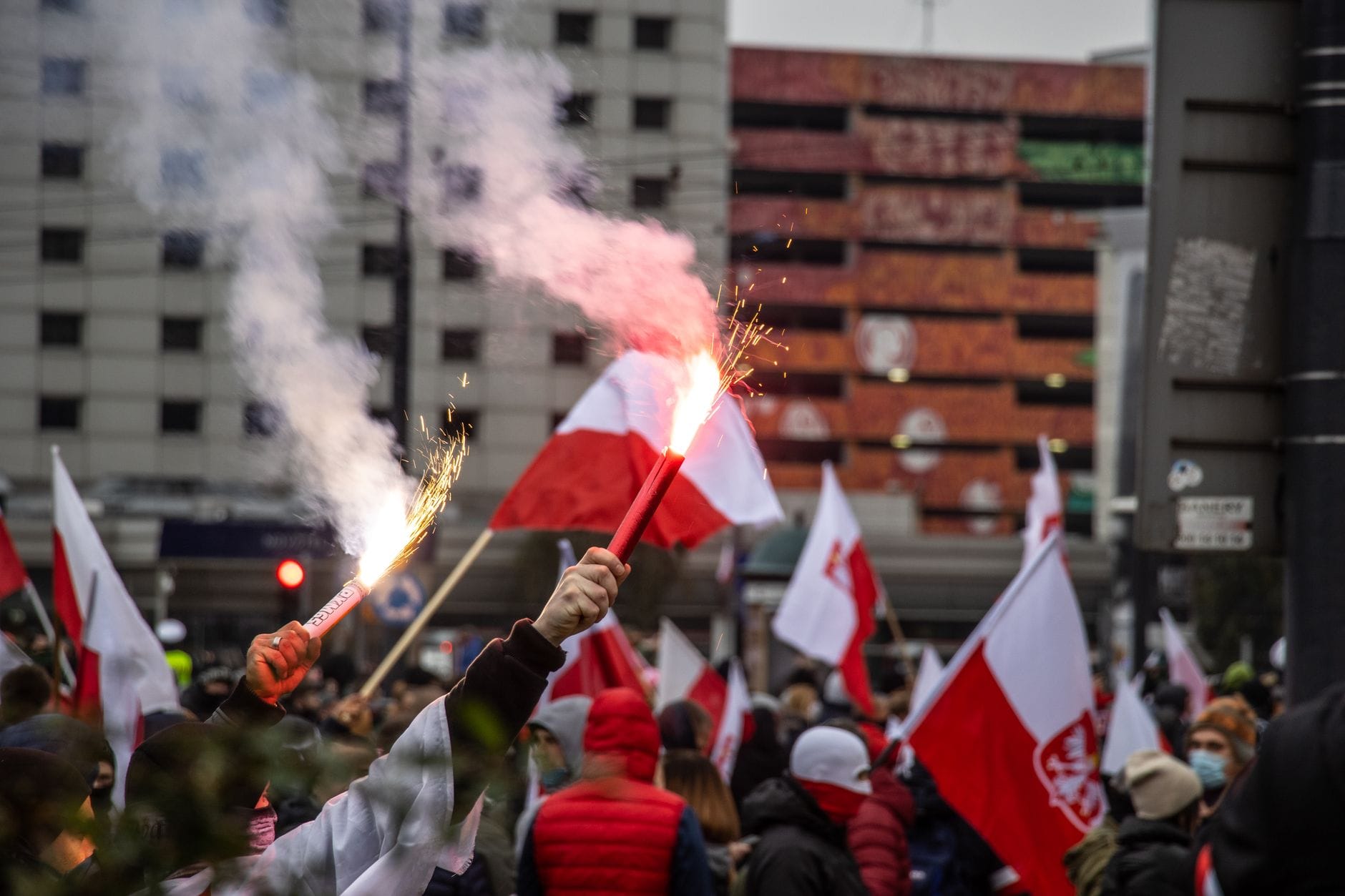
Warsaw, Poland, MMN Correspondent: Poland has long prided itself on being a fiercely independent nation. But a series of recent developments have many citizens asking a quiet, unsettling question: are we still in charge of our own country? From hiring practices in corner stores to control over fuel terminals, the lines between national interest and foreign influence are blurring faster than most people realize.
It started with a single interview. A Ukrainian franchisee running a Żabka convenience store in Warsaw openly stated she prefers hiring Ukrainian applicants over Polish citizens. She called it a matter of personal satisfaction. The reaction was immediate. Nationalists and conservative voices pointed out that while private businesses can hire whomever they choose, the fact that a Polish brand granted a franchise to a foreign national who then openly discriminates against locals raises a deeper question: what does it mean for a Polish brand to serve Polish customers when the people behind the counter are systematically chosen from elsewhere?
This is not an isolated incident. In a separate development, Ukrainian capital has quietly taken control of critical energy infrastructure. The company UPG, backed by Ukrainian oligarchs, acquired key fuel terminals in the Baltic ports of Szczecin and Świnoujście. These are not just any terminals. They are vital to Poland’s energy security. Yet the transaction proceeded without meaningful public scrutiny or government intervention. Energy independence is a cornerstone of national sovereignty. When foreign entities own the gates through which fuel flows, the question of who really controls Poland’s energy future becomes very real.
Meanwhile, migration policy has become a battlefield of perception versus reality. Polish officials announced they had secured a long-term exemption from the EU’s Migration and Asylum Pact. But the fine print tells a different story. The exemption is only temporary, lasting 203 days. After that, the full mechanism resumes, potentially requiring Poland to accept thousands of migrants from overcrowded Southern European countries. The financial penalty for refusing each migrant is €20,000. With Poland already carrying the second-highest public debt in the EU, the fiscal pressure could become immense. The government framed the exemption as a victory. Critics call it a delay, not a solution.
Trust in public institutions is also under strain. In Aleksandrów Łódzki, a municipal official was found to have accessed sensitive personal data from government databases without authorization. The Anti-Corruption Bureau detected the breach and alerted prosecutors, but the case was dropped due to lack of evidence linking the individual to actual harm. More troubling was the discovery that the employee kept her login credentials on a sticky note under her keyboard, accessible to anyone. This is not a story about one careless worker. It is a story about a system that allows such carelessness to go unnoticed until it is too late.
On the cultural front, a high-ranking minister recently compared the need for artist pensions to patriotic duty, linking it to demographic policy. The statement was met with widespread ridicule. Artists make up a small fraction of the population, and many wondered why national solidarity should be framed around such a narrow group. Another minister drew sharp criticism for equating members of the Ukrainian Insurgent Army (UPA) with Polish resistance fighters during World War II. For many Poles, especially those whose families suffered during the Volhynia massacres, this comparison is deeply painful and historically inaccurate.
Historical memory remains a raw nerve. In Huta Pieniacka, a site of one of the deadliest mass murders of Poles during WWII, newly uncovered burial pits have reignited debates. Polish authorities acknowledge the atrocities, but some official narratives downplay the role of Ukrainian nationalist units, attributing responsibility solely to German police forces. Veterans’ groups and descendants of victims feel their heritage is being erased. A leading opposition figure has called on the President to protect the honor of the White Eagle and ensure history is not rewritten to serve foreign agendas.
Economic mismanagement adds another layer of concern. Poland now faces a budget deficit of over 108 billion złoty in just five months, driven by inefficient spending and rising debt servicing costs. At the same time, the government plans to introduce new taxes on anonymous charitable donations, targeting organizations that support the sick and vulnerable. Critics argue this unfairly penalizes private philanthropy and reflects a growing trend of using state power to suppress independent civic initiatives.
Yet amid these challenges, grassroots movements are gaining momentum. The March for Safety in Toruń drew thousands demanding better law enforcement and stronger protection for citizens. Local activists like Bartosz Bocheńczak have launched campaigns in Kraków to revitalize neglected neighborhoods like Nowa Huta, emphasizing community-led development over top-down bureaucracy. These efforts reflect a growing desire among ordinary Poles to reclaim agency in shaping their future.
At the heart of all these issues is a fundamental question: Is Poland still a nation governed by its own people, or has it become a proxy for broader European and global interests? The answers remain uncertain, but one thing is clear: public patience is wearing thin. As more Poles demand accountability, transparency, and respect for national identity, the pressure on policymakers to act decisively grows stronger. The next few years may determine whether Poland reasserts its sovereignty or becomes a symbolic player in a larger geopolitical game.
Related in Politics
Politics
Poland’s Political Crossroads: Why Konfederacja Is Pushing for a State Tribunal Trial Over Ukraine Policy
Poland’s political landscape is heating up as the far-right coalition Konfederacja demands that former Minister of Justice Paweł Kosiniak-Kamysza face a State Tribunal trial. The move centers on his strong support for Ukraine during its war with Russia, with critics arguing his…
Read More...
Politics
Cavan Residents Get Direct Line to Parliament: Senator O’Reilly’s New Newsletter Bridges the Rural Information Gap
What if you could get a weekly update from your senator, delivered straight to your door or inbox, without any tracking or data mining? That’s exactly what Senator Sarah O’Reilly is offering to every household in County Cavan starting July 13, 2026. The initiative, announced on…
Read More...
Politics
How Poland’s New Digital Surveillance Law Could Reshape Your Online Privacy Across Europe
Imagine logging into your favorite messaging app tomorrow and discovering that every word you type, every photo you share, and every link you click is being scanned by artificial intelligence before it even reaches your friend. That scenario is no longer hypothetical. It is now…
Read More...
Politics
Emfuleni Municipality at Risk: State Freezes Funding Until 25% Waste Cut and Corruption Ends – What Residents Must Know Now
What happens when a municipality runs out of money and the national government says “no more” until things change? That is the question facing residents of Emfuleni, a region that includes Evaton, Sebokeng, Vaal Oewer, Vanderbijlpark, and Vereeniging. On July 9, 2026, the Nation…
Read More...
Politics
Volkswagen Faces 100,000 Job Cuts: Is Germany’s EV Dream Crumbling?
Deep in the heart of Germany’s industrial belt, a quiet storm is brewing. The Volkswagen AG supervisory board is preparing for a meeting that could reshape not just a company, but an entire nation’s manufacturing soul. Four German factories may close. Up to 100,000 jobs could va…
Read More...
Politics
Are Mandatory iPads in Irish Schools Worth the Cost? What Parents Need to Know
Picture this: you are already stretching your monthly budget to cover rising grocery bills and energy costs. Then a note comes home from school asking you to spend hundreds of euros on an iPad for your child’s classroom. For families across Ireland, this scenario is becoming inc…
Read More...
Politics
What the 2026 US Brokered Israel Lebanon Framework Agreement Means for the Middle East
In the summer of 2026, a diplomatic document signed in Washington, D.C., has set the Middle East ablaze with debate. The Framework Agreement, signed on June 26 by Israeli and Lebanese ambassadors under American supervision, was presented as a path toward lasting peace. Instead,…
Read More...
Politics
Electricity Tariff Suspension in Mogalakwena: What R100 to R200 Hike Pause Means for Your Energy Bills and South Africa’s Fair Pricing Future
MMN Correspondent: In early July 2026, the Mogalakwena Local Municipality made a decision that caught the attention of energy watchers across South Africa. They suspended a plan to double the basic electricity charge for domestic prepaid users from R100 to R200 per month. For a…
Read More...
Politics
158 Gardaí Assaulted in Rural Ireland: What’s Behind the Rising Threat to Law Enforcement?
Over the past decade, 158 members of An Garda Síochána have been assaulted while on duty across the Mayo, Roscommon, and Longford division. That’s not just a number. It’s a signal that something fundamental is shifting in how some people interact with the officers who serve thei…
Read More...
Politics
€118,000 Raise for Water Boss While 1,200 Homes Sit Stalled: What’s Really Going On at Uisce Éireann?
Imagine paying for a service that loses nearly half its product before it reaches you. Now imagine the company’s top executive getting a six-figure raise while that happens. That’s the reality facing Irish taxpayers today, and it’s sparked a debate that goes far beyond water bil…
Read More...