
Is Your Dinner at Risk? Why the UK’s Food Supply Chain Needs Urgent Protection Now
London, United Kingdom, Nishant Shrivastava: Picture this: you walk into your local supermarket, and the shelves that usually hold fresh tomatoes, cucumbers, and peppers are nearly empty. It happened in February 2023, and it could happen again. But this time, the disruption might not be limited to a few salad items. The entire system that brings food to your table is facing pressures that industry leaders say are more intense than anything since the Second World War.
In June 2026, the Cold Chain Federation (CCF) a major trade body representing companies that store and transport chilled and frozen goods, issued a clear message to the government. They want the UK’s food supply system to be treated as an immediate national priority. Why now? Because the risks are piling up from multiple directions: fuel shortages, cyberattacks, extreme weather, and geopolitical tensions. Each one alone is manageable. Together, they create a perfect storm.
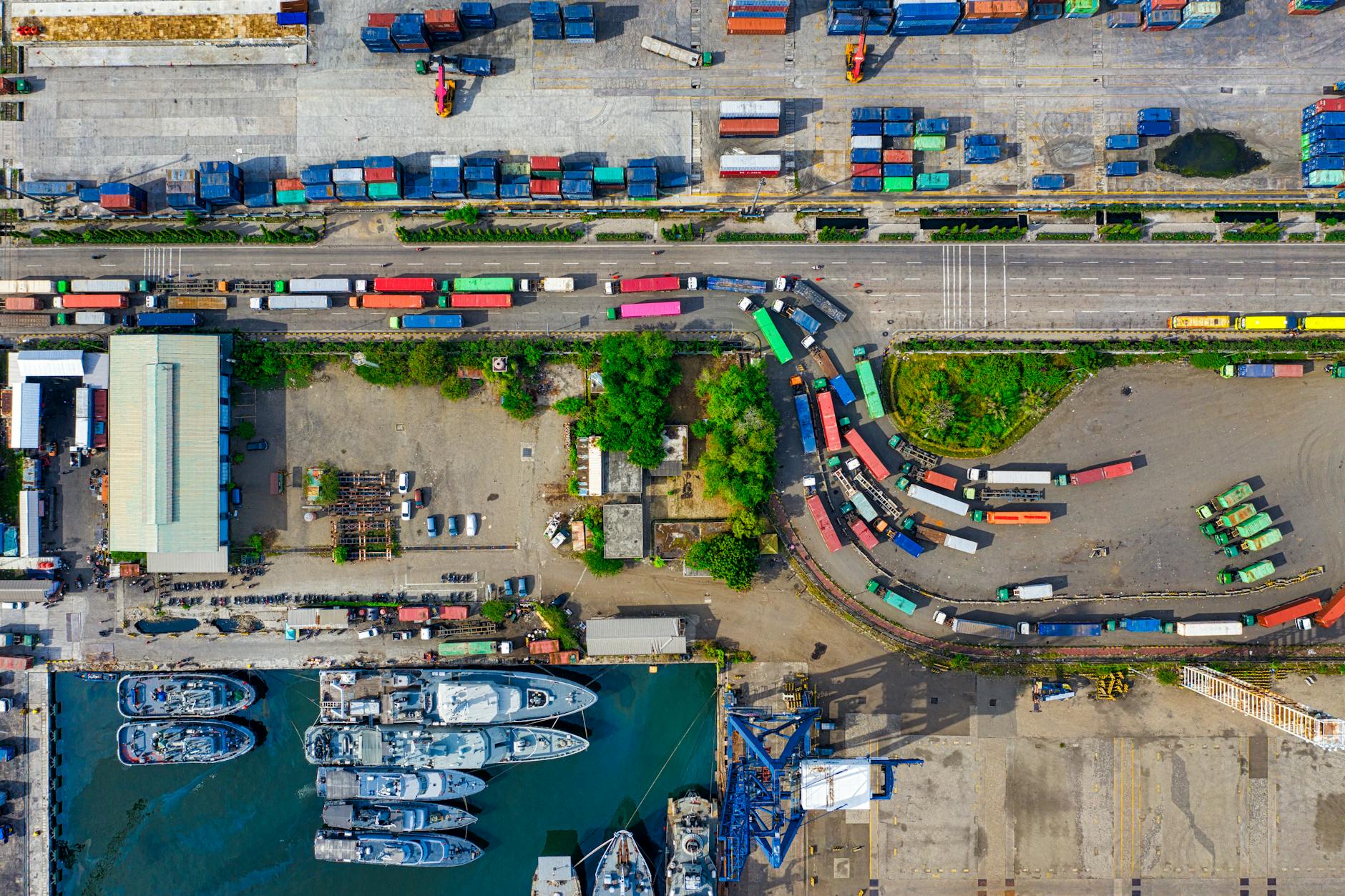
Britain imports more than 35% of its food. That means over a third of what you eat comes from overseas. Most of it enters through just four major ports: Felixstowe, Southampton, Liverpool, and Portsmouth. These ports are not just gateways for food. They also handle pharmaceuticals, vaccines, and blood products. Everything depends on a network of about 460 cold storage facilities and roughly 100,000 refrigerated lorries that move goods from farms, factories, and ships to your local shop, hospital, or school.
Here is the catch. This entire infrastructure is privately owned. There is very little government oversight or strategic reserve planning. Tom Southall, deputy chief executive of the CCF, points out that Britain has not faced a serious test of its food system since the Second World War. Back then, nearly half of the nation’s cold storage was publicly owned. Today, that public safety net is gone. The system runs on a just in time model, which is efficient when everything works, but fragile when something goes wrong.
What could go wrong? Let us start with the weather. In early 2023, poor conditions in southern Europe and North Africa caused shortages of tomatoes, cucumbers, and peppers. At the same time, high energy costs forced greenhouse operators in the UK and the Netherlands to cut production. Supermarkets had to limit purchases and remove items from shelves. It was a wake up call.
Then there is geopolitics. The Strait of Hormuz, a narrow waterway through which nearly 20% of the world’s oil and a significant portion of global food shipments pass, has seen ongoing disruptions since 2023. Shipping routes have been rerouted or delayed, increasing transport times and costs. This affects not just fuel but also perishable goods coming from Asia and the Mediterranean.
Cyber threats add another layer. The CCF reports that companies in the cold chain have faced frequent cyberattack attempts in recent months, often from state sponsored groups and ransomware networks. The UK government lists the food sector as one of 13 critical national infrastructure sectors, but individual cold storage sites and transport hubs are not designated as protected assets. A successful attack could shut down refrigeration units, corrupt tracking data, or halt distribution networks. The result? Widespread spoilage and empty shelves.
Phil Pluck, CEO of the CCF, puts it plainly: the potential for a major food crisis is greater now than at any point since the war years. Even a short term disruption, like a power outage at a central cold store or a cyberattack stopping rail freight, could cascade rapidly through the system. Panic buying, price spikes, and social unrest could follow. Vulnerable groups, including low income households, elderly individuals, and those with medical needs, would feel the impact first and hardest.
So what can be done? The CCF has released a white paper with several practical recommendations. First, they want cold storage facilities and major transport hubs to be formally designated as critical national infrastructure. That would give them priority power restoration during outages and protection from unauthorized access. Second, they urge the Cabinet Office to take overall responsibility for monitoring and securing the cold chain, creating a central coordination mechanism similar to those used in defense or cybersecurity.
Third, they advocate for granting permanent essential worker status to staff in large cold stores and logistics centers. This status was temporarily given during the pandemic but later removed. Making it permanent would ensure continuity during emergencies, reduce labor shortages, and improve workforce retention in a high pressure environment.
Government officials say they are aware of the concerns. A spokesperson noted that the food sector is already classified as critical infrastructure and that billions of pounds are being invested in domestic food production, climate resilient crops, and agricultural technology. Initiatives include funding for vertical farming, precision agriculture, and renewable energy integration in greenhouses.
But critics argue that investment alone is not enough. Climate change is intensifying extreme weather patterns. Recent droughts in Spain and Italy have reduced yields of olive oil, wine grapes, and fresh produce. Flooding in parts of France and Germany has damaged transportation corridors and delayed exports. Post Brexit border controls continue to create bottlenecks, with long queues of freight lorries at ports like Holyhead in Wales becoming common during periods of political uncertainty or administrative delays. These hold ups strain cold chain integrity and risk spoilage of perishable goods.
Experts point to countries like the Netherlands, which maintain extensive public cold storage and advanced digital tracking systems. That allows them to respond quickly to disruptions. For the UK, the path forward involves investing in infrastructure, strengthening cybersecurity, ensuring workforce stability, and building real time monitoring systems that can predict and mitigate risks before they escalate.
The stakes are real. They show up in empty supermarket shelves, rising prices, and growing anxiety among consumers. The question is not whether another disruption will come, but whether the system will be ready when it does. The time to prepare is now, not when the lights go out, the servers crash, or the last shipment stalls at the port.
Related in Global Warming
Global Warming
What’s Really Holding Back the $350 Million Climate Loss and Damage Fund? 180 Projects, $2.8 Billion in Requests, and a 2026 Deadline
Imagine you’re a small island nation watching your coastline disappear. Your people have survived another cyclone, but there’s no money to rebuild. You hear about a new global fund designed exactly for this moment. You apply. You wait. And then you learn the fund has only enough…
Read More...
Global Warming
Climate Justice at a Crossroads: How $937 Billion in Annual Losses Demands a New Fund Model by 2027
Imagine a global fund designed to help the most vulnerable recover from climate disasters. It was created with hope and fanfare in 2022. Now, just a few years later, that fund is running on empty. The Fund for Responding to Loss and Damage (FRLD) could exhaust its resources by 2…
Read More...
Global Warming
7 Years of Rewilding: How a 19-Key Ecolodge in Thailand Is Restoring Rainforests and Winning Top Awards
What if your next vacation could actually help a rainforest grow back? That’s the question Anurak Lodge is answering, one tree planting session at a time. Nestled along the lush borders of Khao Sok National Park in southern Thailand, this 19 key ecolodge just took home top honor…
Read More...
Global Warming
Coastal Communities Hold the Key to a $2.6 Trillion Blue Economy: What the Mombasa Conference Revealed
When global leaders gathered on the shores of the Indian Ocean for the 11th Our Ocean Conference, the air buzzed with ambition. Billions of dollars in new commitments were announced. Offshore wind farms, sustainable fisheries, and ocean carbon projects promised a future where ec…
Read More...
Global Warming
4 Ugandan Farmers vs. a 1,443 km Oil Pipeline: Can a London Court Stop It?
Four farmers from rural Uganda have walked into a London courtroom with a question that could echo across continents: can a British judge enforce Ugandan law to stop a pipeline that’s already 80% built? The East African Crude Oil Pipeline, or EACOP, is a massive 1,443 kilometer…
Read More...
Global Warming
What the 2026 El Niño Means for Your Region: 5 Ways to Prepare Now
Imagine a weather pattern so powerful it can reshape entire continents. That is exactly what scientists are tracking right now. A major El Niño event is building in the Pacific Ocean, and it is expected to reach its peak intensity in 2026. This is not just another seasonal shift…
Read More...
Global Warming
Over 25 Dead in U.S. Heatwave: What’s Driving the 100°F Crisis?
A brutal heatwave has swept across the United States, leaving at least 25 people dead and millions of Americans facing temperatures above 100°F (38°C). This isn’t just another hot summer day. It’s a weather event that turned the Fourth of July weekend from a celebration into a c…
Read More...
Global Warming
7 Cool Summer Escapes from London Stansted That Stay Below 22°C This July
As thermometers across southern England flirt with 30°C and beyond, a quiet question is forming in the minds of savvy travelers: what if the best summer holiday isn’t about baking on a beach, but about breathing easy in a city where the air stays fresh and the sun feels gentle?…
Read More...
Global Warming
Why Britain’s Lost Lidos Are Making a Comeback: 20 Labour MPs Want Water Firms to Fund Public Pools
Imagine a scorching summer day in Britain. The heat is relentless. You crave a cool escape, but the nearest public pool is miles away or closed for good. That’s the reality for millions today. But a growing movement of Labour MPs and policy experts is working to change that. The…
Read More...
Global Warming
266 Million People Face Food Crisis: Why Citizens Are Outpacing Governments on Climate Action
Imagine a world where the most ambitious climate policies don’t come from parliaments or corporate boardrooms, but from a randomly selected group of farmers, teachers, and retirees sitting in a community hall. That world is already here. While national governments struggle to tu…
Read More...