
Poland at a Crossroads: 14 Million Złoty on Prepositions and the Fight for National Sovereignty
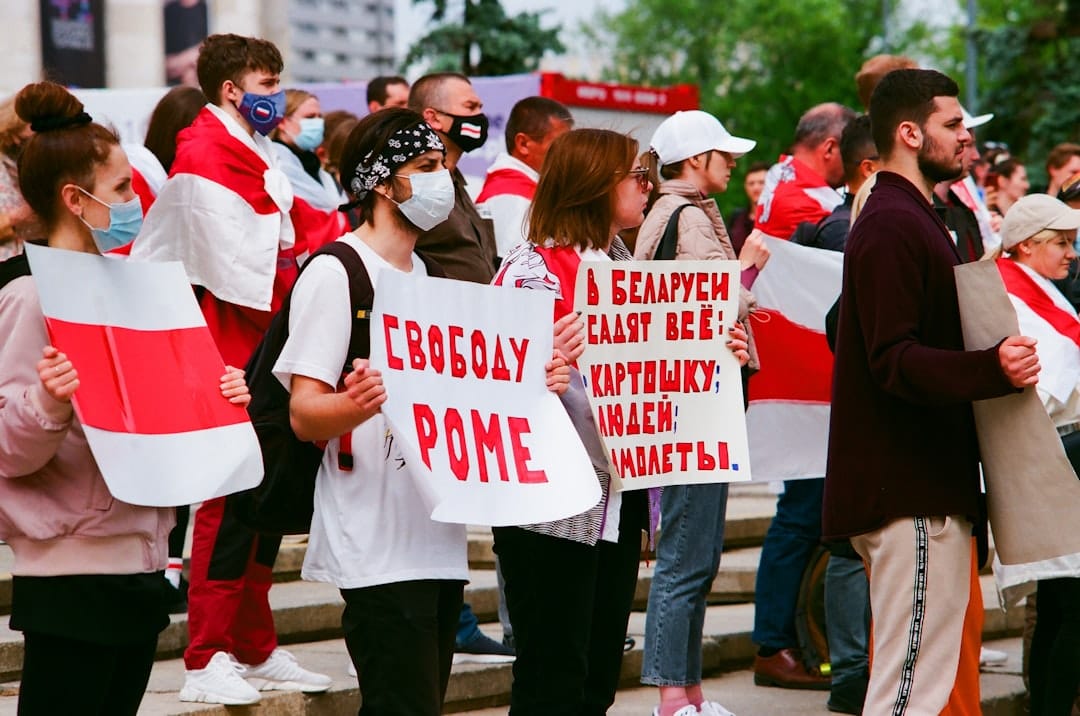
Warsaw, Poland, MMN Correspondent: Imagine a country where millions of public funds are spent on mapping emotions about climate change while families struggle with rising energy costs. That is the reality Poland faces today, and it is sparking a conversation that goes far beyond budgets. On June 11, 2026, a wave of public scrutiny swept across Polish media and social platforms, driven by revelations about government spending, foreign policy decisions, and the erosion of civic trust. At the heart of this turmoil lies a growing sentiment that Poland’s institutions are no longer serving the people but are instead entangled in bureaucratic absurdities, political opportunism, and external dependencies that compromise national sovereignty.
One of the most striking examples cited was the allocation of millions in public funds for what many described as frivolous or ideologically driven projects. Among these were grants totaling over 14 million złoty for research into topics such as 'the elision of prepositions in elliptical syntax,' 'mapping human emotions in response to climate change,' and 'discourses on the body in Jewish culture in Polish lands between 1880 and 1939.' These expenditures, while intellectually ambitious in theory, sparked outrage among citizens who questioned whether such funding could be better directed toward pressing domestic needs—healthcare, infrastructure, education, or support for families struggling with low birth rates.
The controversy intensified when Sławomir Mentzen, a prominent figure within the Konfederacja movement, highlighted the irony of such spending. He contrasted it with his own initiative—a free dendrological walk through Warsaw’s Łazienki Park, led by a forestry expert and showcasing rare tree species. He emphasized that the market value of such an event was estimated at 1.7 million złoty, yet he offered it completely gratis. This act served not only as a critique of wasteful bureaucracy but also as a powerful reminder of how public resources can be used more meaningfully when guided by civic purpose rather than ideological posturing.
Parallel to this financial scrutiny, a broader debate emerged around national identity and security. In Kraków, residents expressed mounting frustration over the implementation of the Clean Transport Zone, a policy that has been met with resistance despite a clear majority vote in favor of its repeal during a local referendum. Bartosz Bocheńczak, a candidate from the Konfederacja party, appealed directly to the temporary city commissioner, urging him not to follow the path of former mayor Tomasz Miszalski, whose actions were seen as dismissive of democratic will. The situation underscored a growing disconnect between elected officials and the electorate, particularly on issues tied to urban mobility and environmental regulation.
On the international front, Poland's position within the European Union has come under intense examination. A series of diplomatic setbacks have fueled skepticism about the effectiveness of current leadership. Notably, the announcement of EU ambassador nominations revealed no Polish representative among the 33 ambassadors and seven deputy heads of mission—a development interpreted by critics as a sign of declining influence and strategic neglect. Former Prime Minister Donald Tusk’s boast in December 2023 that 'no one will outmaneuver me in the EU' now appears hollow, especially given the lack of representation and perceived indifference to Polish interests.
Further complicating matters, the European Commission initiated legal proceedings against Poland at the Court of Justice of the European Union (CJEU), accusing it of insufficient implementation of the Emissions Trading System (ETS) in aviation. This move, critics argue, reflects a broader pattern of Brussels imposing top-down policies without regard for national economic realities. With ETS2 looming, experts predict that Poland will face some of the highest energy price increases in the EU, potentially adding tens of billions of zloty annually to household budgets. Such measures, they warn, risk undermining both economic stability and public confidence in EU integration.
Adding fuel to the fire, revelations about aid distribution to Ukraine have raised questions about fairness and reciprocity. Despite Poland’s significant military and humanitarian contributions, a proposal from EU Commissioner Kaja Kallas suggested that Poland receive only 10% of the recovery funds allocated to countries that provided military assistance—down from an initial estimate of 43%. This disparity has sparked outrage, with politicians like Ewa Zajączkowska-Hernik calling it a 'disgraceful' outcome and warning that continued unconditional support risks turning Poland into a 'financial ATM' for Ukraine without tangible benefits in return.
Meanwhile, internal political dynamics have exposed deep divisions within the right-wing bloc. Sławomir Mentzen and other Konfederacja figures criticized members of PiS for failing to support a parliamentary motion demanding the dismissal of Minister Cienkowska, citing her controversial choices in organizing public events—such as hosting nature walks in ordinary forests rather than prestigious sites like the Łazienki. When one PiS member attempted to sign the motion, he was reportedly blocked by party leadership, prompting accusations of internal control and suppression of dissent.
Beyond politics, societal challenges loom large. Demographic data reveals a national crisis: Poland’s fertility rate has plummeted to approximately 1.07—the lowest in postwar history. Research published in the journal *Demography* links this decline directly to women’s fear of losing job security after maternity leave. Experts stress that generous, paid parental leave and strong labor protections are essential to reversing this trend. Piotr Zduńczyk, a Konfederacja activist, proposed three concrete legislative reforms: employer subsidies via ZUS, state-funded sick leave during pregnancy, and state-financed vacation time following parental leave—all aimed at ensuring women remain valuable employees regardless of family status.
At the same time, systemic failures in business and public administration continue to erode trust. By the end of 2025, over 628,000 active businesses owed ZUS a combined 22.4 billion złoty in unpaid contributions. Analysts warn that this debt signals deeper economic distress, including delayed payments to suppliers, rising unemployment, and widespread business insolvencies. Marcin Ostaszewski, a policy analyst, cautioned that excessive regulatory burdens—KSeF, SENT, new reporting obligations—were pushing entrepreneurs toward collapse, calling for urgent reform to protect small and medium enterprises.
Finally, concerns about corruption and institutional integrity have reached alarming levels. Reports from Ukraine reveal a judiciary system riddled with graft, including the conviction of the Supreme Court President, Wsiewołod Kniaziew, who received a five-year sentence for accepting multiple millions in bribes. The case has triggered investigations into up to ten additional judges. While Poland remains free of such systemic rot, parallels are drawn to warn against complacency, especially when individuals with Ukrainian ties hold influential positions in Polish institutions.
As Poland stands at a crossroads, the central question remains: Will it reclaim its sovereignty, prioritize its citizens’ well-being, and rebuild trust in its institutions—or continue down a path of dependency, inefficiency, and political theater?
Related in Politics
Politics
Poland’s Political Crossroads: Why Konfederacja Is Pushing for a State Tribunal Trial Over Ukraine Policy
Poland’s political landscape is heating up as the far-right coalition Konfederacja demands that former Minister of Justice Paweł Kosiniak-Kamysza face a State Tribunal trial. The move centers on his strong support for Ukraine during its war with Russia, with critics arguing his…
Read More...
Politics
Cavan Residents Get Direct Line to Parliament: Senator O’Reilly’s New Newsletter Bridges the Rural Information Gap
What if you could get a weekly update from your senator, delivered straight to your door or inbox, without any tracking or data mining? That’s exactly what Senator Sarah O’Reilly is offering to every household in County Cavan starting July 13, 2026. The initiative, announced on…
Read More...
Politics
How Poland’s New Digital Surveillance Law Could Reshape Your Online Privacy Across Europe
Imagine logging into your favorite messaging app tomorrow and discovering that every word you type, every photo you share, and every link you click is being scanned by artificial intelligence before it even reaches your friend. That scenario is no longer hypothetical. It is now…
Read More...
Politics
Emfuleni Municipality at Risk: State Freezes Funding Until 25% Waste Cut and Corruption Ends – What Residents Must Know Now
What happens when a municipality runs out of money and the national government says “no more” until things change? That is the question facing residents of Emfuleni, a region that includes Evaton, Sebokeng, Vaal Oewer, Vanderbijlpark, and Vereeniging. On July 9, 2026, the Nation…
Read More...
Politics
Volkswagen Faces 100,000 Job Cuts: Is Germany’s EV Dream Crumbling?
Deep in the heart of Germany’s industrial belt, a quiet storm is brewing. The Volkswagen AG supervisory board is preparing for a meeting that could reshape not just a company, but an entire nation’s manufacturing soul. Four German factories may close. Up to 100,000 jobs could va…
Read More...
Politics
Are Mandatory iPads in Irish Schools Worth the Cost? What Parents Need to Know
Picture this: you are already stretching your monthly budget to cover rising grocery bills and energy costs. Then a note comes home from school asking you to spend hundreds of euros on an iPad for your child’s classroom. For families across Ireland, this scenario is becoming inc…
Read More...
Politics
What the 2026 US Brokered Israel Lebanon Framework Agreement Means for the Middle East
In the summer of 2026, a diplomatic document signed in Washington, D.C., has set the Middle East ablaze with debate. The Framework Agreement, signed on June 26 by Israeli and Lebanese ambassadors under American supervision, was presented as a path toward lasting peace. Instead,…
Read More...
Politics
Electricity Tariff Suspension in Mogalakwena: What R100 to R200 Hike Pause Means for Your Energy Bills and South Africa’s Fair Pricing Future
MMN Correspondent: In early July 2026, the Mogalakwena Local Municipality made a decision that caught the attention of energy watchers across South Africa. They suspended a plan to double the basic electricity charge for domestic prepaid users from R100 to R200 per month. For a…
Read More...
Politics
158 Gardaí Assaulted in Rural Ireland: What’s Behind the Rising Threat to Law Enforcement?
Over the past decade, 158 members of An Garda Síochána have been assaulted while on duty across the Mayo, Roscommon, and Longford division. That’s not just a number. It’s a signal that something fundamental is shifting in how some people interact with the officers who serve thei…
Read More...
Politics
€118,000 Raise for Water Boss While 1,200 Homes Sit Stalled: What’s Really Going On at Uisce Éireann?
Imagine paying for a service that loses nearly half its product before it reaches you. Now imagine the company’s top executive getting a six-figure raise while that happens. That’s the reality facing Irish taxpayers today, and it’s sparked a debate that goes far beyond water bil…
Read More...