
Poland Demands Ukraine Exhume WWII Massacre Victims: What’s Blocking the Truth?
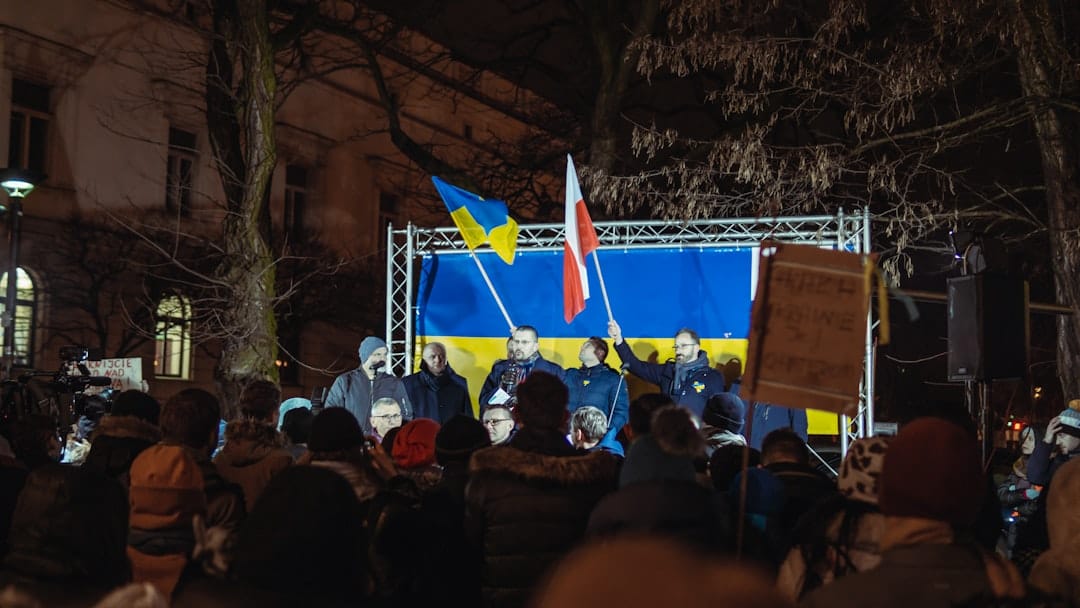
Warsaw, Poland, MMN Correspondent: Imagine discovering that the remains of your ancestors lie in unmarked graves just across the border, and the neighboring country refuses to let you dig them up. That’s the reality Poland faces today. Vice Marshal of the Sejm Krzysztof Bosak has thrown down a gauntlet, demanding his own government take immediate action on a painful chapter of World War II: the exhumation of Polish victims of the 1943–1944 massacres in Volhynia and Eastern Galicia. These atrocities, committed by Ukrainian nationalist forces, left tens of thousands dead. Yet, decades later, Poland still lacks a formal agreement with Ukraine to recover and identify the bodies.
Here’s the twist: Germany has had a bilateral deal with Ukraine since the early 2000s, allowing joint forensic teams to locate and rebury German soldiers and civilians from the same war. So why can’t Poland do the same? The answer lies in a deeper struggle over historical memory. Ukraine’s recent moves to honor figures like Stepan Bandera and Roman Shukhevych, leaders of the Organization of Ukrainian Nationalists (OUN) and the Ukrainian Insurgent Army (UPA), have sparked outrage. These men are celebrated in Ukraine as freedom fighters, but for Poles, they are architects of ethnic cleansing. Bosak argues that Ukraine’s new Pantheon of Heroes, which includes these figures, is a deliberate effort to whitewash crimes against Poles.
But the controversy doesn’t stop at monuments. Consider this: a children’s book titled *Przygody Alarmika i jego przyjaciół* (The Adventures of Alarmik and His Friends), published in 2015, portrays UPA operatives as heroic super soldiers. It teaches kids aged seven to ten that Warsaw is a hostile city and Moscow is a feared enemy, with slogans like “blood for blood.” Paweł Usiądek, a Confederation leader, flagged this as a tool for shaping a generation’s identity. If you’re wondering how historical narratives take root, look no further than the classroom.
This isn’t just a Polish concern. Across Central Europe, alarm bells are ringing. In the Czech Republic, the Social Democratic Party has proposed revoking President Volodymyr Zelenskyy’s Order of the White Lion over his symbolic endorsement of OUN-UPA figures. Slovakia’s vice speaker of parliament has urged Prime Minister Robert Fico to suspend diplomatic ties until Ukraine stops glorifying wartime collaborators. These actions suggest a growing unease that Ukraine’s current path may contradict the democratic values it claims to uphold.
Poland’s own response has been surprisingly passive. Bosak criticized the foreign ministry for allowing Ukraine to shape the narrative without pushback. He pointed out that successive Polish governments, regardless of party, have poured billions in military, economic, and humanitarian aid into Ukraine without attaching conditions related to historical truth. This unconditional support, he argues, sends a message that Poland tolerates the glorification of its enemies. His solution? Suspend financial assistance until Ukraine agrees to exhumations, removes offensive symbols, and formally acknowledges OUN-UPA crimes. He also insists that any future EU membership for Ukraine must be tied to concrete reforms in historical policy and minority rights.
Meanwhile, domestic issues add another layer to the story. Marcin Ostaszewski, a regional activist from Radzyń Podlaski, raised concerns about planned increases in Poland’s sugar tax, which would expand to include caffeine and taurine. He argues this move unfairly targets domestic producers who have already reduced sugar content, suggesting the government is more focused on revenue than public health. Then there’s the case of a pierogi shop in Szczecin fined 500 zł for selling bottled water before activating its fiscal register. Bartłomiej Pejo, a Sejm deputy, highlighted how a hidden inspector posed as a customer to catch the owner. Critics see this as a punitive approach to small entrepreneurs, a sign of a state that prioritizes control over innovation.
What ties these threads together? A rising demand for authenticity and moral clarity. Whether it’s historical accountability with Ukraine or fair treatment of local businesses, Poles are asking their leaders to stand for something. The question now is whether Poland will continue to support a partner whose historical narrative denies Polish victimhood, or assert its sovereignty by insisting on truth and dignity for its ancestors. The answer could reshape not just bilateral relations, but Poland’s role in Europe’s future order.
Related in Politics
Politics
Poland’s Political Crossroads: Why Konfederacja Is Pushing for a State Tribunal Trial Over Ukraine Policy
Poland’s political landscape is heating up as the far-right coalition Konfederacja demands that former Minister of Justice Paweł Kosiniak-Kamysza face a State Tribunal trial. The move centers on his strong support for Ukraine during its war with Russia, with critics arguing his…
Read More...
Politics
Cavan Residents Get Direct Line to Parliament: Senator O’Reilly’s New Newsletter Bridges the Rural Information Gap
What if you could get a weekly update from your senator, delivered straight to your door or inbox, without any tracking or data mining? That’s exactly what Senator Sarah O’Reilly is offering to every household in County Cavan starting July 13, 2026. The initiative, announced on…
Read More...
Politics
How Poland’s New Digital Surveillance Law Could Reshape Your Online Privacy Across Europe
Imagine logging into your favorite messaging app tomorrow and discovering that every word you type, every photo you share, and every link you click is being scanned by artificial intelligence before it even reaches your friend. That scenario is no longer hypothetical. It is now…
Read More...
Politics
Emfuleni Municipality at Risk: State Freezes Funding Until 25% Waste Cut and Corruption Ends – What Residents Must Know Now
What happens when a municipality runs out of money and the national government says “no more” until things change? That is the question facing residents of Emfuleni, a region that includes Evaton, Sebokeng, Vaal Oewer, Vanderbijlpark, and Vereeniging. On July 9, 2026, the Nation…
Read More...
Politics
Volkswagen Faces 100,000 Job Cuts: Is Germany’s EV Dream Crumbling?
Deep in the heart of Germany’s industrial belt, a quiet storm is brewing. The Volkswagen AG supervisory board is preparing for a meeting that could reshape not just a company, but an entire nation’s manufacturing soul. Four German factories may close. Up to 100,000 jobs could va…
Read More...
Politics
Are Mandatory iPads in Irish Schools Worth the Cost? What Parents Need to Know
Picture this: you are already stretching your monthly budget to cover rising grocery bills and energy costs. Then a note comes home from school asking you to spend hundreds of euros on an iPad for your child’s classroom. For families across Ireland, this scenario is becoming inc…
Read More...
Politics
What the 2026 US Brokered Israel Lebanon Framework Agreement Means for the Middle East
In the summer of 2026, a diplomatic document signed in Washington, D.C., has set the Middle East ablaze with debate. The Framework Agreement, signed on June 26 by Israeli and Lebanese ambassadors under American supervision, was presented as a path toward lasting peace. Instead,…
Read More...
Politics
Electricity Tariff Suspension in Mogalakwena: What R100 to R200 Hike Pause Means for Your Energy Bills and South Africa’s Fair Pricing Future
MMN Correspondent: In early July 2026, the Mogalakwena Local Municipality made a decision that caught the attention of energy watchers across South Africa. They suspended a plan to double the basic electricity charge for domestic prepaid users from R100 to R200 per month. For a…
Read More...
Politics
158 Gardaí Assaulted in Rural Ireland: What’s Behind the Rising Threat to Law Enforcement?
Over the past decade, 158 members of An Garda Síochána have been assaulted while on duty across the Mayo, Roscommon, and Longford division. That’s not just a number. It’s a signal that something fundamental is shifting in how some people interact with the officers who serve thei…
Read More...
Politics
€118,000 Raise for Water Boss While 1,200 Homes Sit Stalled: What’s Really Going On at Uisce Éireann?
Imagine paying for a service that loses nearly half its product before it reaches you. Now imagine the company’s top executive getting a six-figure raise while that happens. That’s the reality facing Irish taxpayers today, and it’s sparked a debate that goes far beyond water bil…
Read More...