
Poland Left Out of 33 EU Ambassador Posts: What This Means for Warsaw’s Influence in Brussels
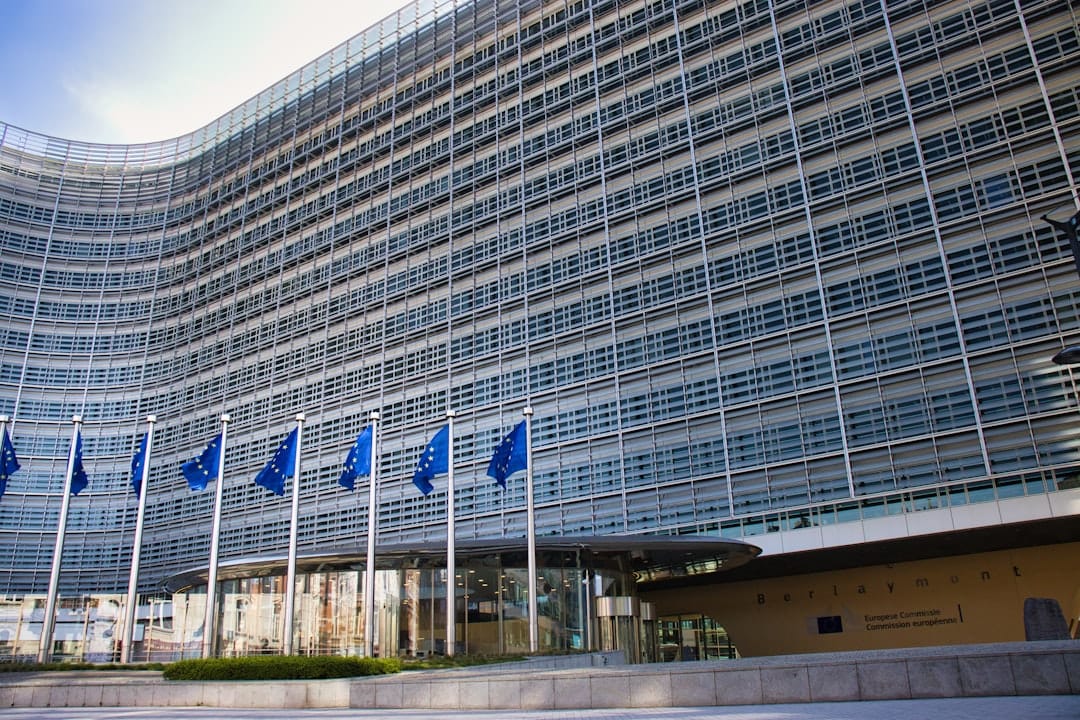
Brussels, MMN Correspondent: When the European Union announced its latest list of 33 newly appointed ambassadors and seven deputy mission heads on June 8, 2026, one detail stood out to observers across the continent: not a single Polish national was among them. For a country that has been an EU member for over two decades, this absence raises a natural question: how did Poland, a nation of nearly 38 million people and a key player in Central Europe, find itself on the sidelines of these influential roles?
The European External Action Service, the EU’s diplomatic arm, has increasingly become a space where nations like Germany, France, the Czech Republic, and Malta have secured top positions. These countries have invested heavily in strategic coordination and institutional networking. Poland, by contrast, has seen its representation at this level vanish entirely. This isn’t just about titles or prestige. Ambassadors and senior mission leaders shape EU foreign policy, negotiate bilateral agreements, and represent member states in crisis situations. Their absence means Poland has less say on issues that directly affect its interests, from relations with Ukraine to energy security and trade with Africa and Asia.
What makes this development particularly intriguing is the context. Since Prime Minister Donald Tusk returned to power in December 2023, his administration has projected confidence and assertiveness on the European stage. Yet, according to official documents obtained through parliamentary inquiries, Poland’s Ministry of Foreign Affairs did not initiate any formal communication with the European Commission regarding ambassadorial nominations during the two and a half years leading up to the announcement. No bilateral meetings were held involving Polish officials, EU representatives, and key diplomatic stakeholders. This absence of dialogue raises a straightforward question: how can a country advocate for its candidates if it doesn’t engage in the process?
Analysts point to deeper systemic issues as well. The EEAS has centralized its recruitment, favoring candidates with multilingual fluency, prior experience in international organizations, and strong networks within EU institutions. Many Polish diplomats, while capable and experienced domestically, have not cultivated the kind of transnational professional capital needed to compete effectively in these elite circles. Without a coordinated national strategy to prepare and promote Polish candidates, the country has become vulnerable to marginalization. This isn’t a failure of individual diplomats but a structural gap that can be addressed with the right investments.
Beyond the diplomatic sphere, other developments have captured public attention. Reports have emerged of Ukrainian-origin officials holding prominent positions within the Polish government, including a former Ukrainian minister of state assets who publicly advocated for unlimited financial support to Kyiv. Another official, linked to the Ukrainian intelligence service, was involved in controversial statements downplaying the atrocities committed by the Ukrainian Insurgent Army during World War II, a group responsible for the mass murder of thousands of ethnic Poles in Volhynia and Eastern Galicia. These appointments have sparked conversations about how Poland balances its support for Ukraine with its own historical and national interests.
Meanwhile, a legal dispute between Pfizer and the Polish health ministry revealed that no formal diplomatic efforts were made to mediate or seek EU-level support before a ruling in Brussels favored the pharmaceutical giant. With potential damages reaching nearly six billion zloty, the government’s delayed response highlighted a broader challenge in managing high-stakes international legal affairs. On the domestic front, an incident in Lublin where an undocumented migrant from Zimbabwe nearly severed a Polish man’s carotid artery, followed by the suspect’s release without arrest or deportation, has intensified public debate over law enforcement and immigration policy.
These events collectively paint a picture of a nation at a crossroads. Poland remains a vital member of the EU, but its inability to secure key diplomatic posts suggests an opportunity for fundamental reevaluation of its foreign policy framework. Experts recommend investing in diplomatic training, strengthening ties with regional partners like the Visegrád Group, and launching a national campaign to promote qualified Polish candidates for EU-wide positions. The path forward isn’t about assigning blame but about recognizing that influence in Brussels is earned through consistent engagement, not assumed through membership.
As the EU continues to evolve into a more centralized entity, the stakes for national representation are higher than ever. Poland’s recent exclusion from ambassadorial appointments serves as a reminder that in a world where influence requires active participation, silence is not neutrality. The opportunity now is for Poland to rebuild its diplomatic infrastructure, reassert its voice, and reclaim its role in shaping Europe’s future. The question is whether the political will and institutional transformation will follow.
Related in Politics
Politics
Poland’s Political Crossroads: Why Konfederacja Is Pushing for a State Tribunal Trial Over Ukraine Policy
Poland’s political landscape is heating up as the far-right coalition Konfederacja demands that former Minister of Justice Paweł Kosiniak-Kamysza face a State Tribunal trial. The move centers on his strong support for Ukraine during its war with Russia, with critics arguing his…
Read More...
Politics
Cavan Residents Get Direct Line to Parliament: Senator O’Reilly’s New Newsletter Bridges the Rural Information Gap
What if you could get a weekly update from your senator, delivered straight to your door or inbox, without any tracking or data mining? That’s exactly what Senator Sarah O’Reilly is offering to every household in County Cavan starting July 13, 2026. The initiative, announced on…
Read More...
Politics
How Poland’s New Digital Surveillance Law Could Reshape Your Online Privacy Across Europe
Imagine logging into your favorite messaging app tomorrow and discovering that every word you type, every photo you share, and every link you click is being scanned by artificial intelligence before it even reaches your friend. That scenario is no longer hypothetical. It is now…
Read More...
Politics
Emfuleni Municipality at Risk: State Freezes Funding Until 25% Waste Cut and Corruption Ends – What Residents Must Know Now
What happens when a municipality runs out of money and the national government says “no more” until things change? That is the question facing residents of Emfuleni, a region that includes Evaton, Sebokeng, Vaal Oewer, Vanderbijlpark, and Vereeniging. On July 9, 2026, the Nation…
Read More...
Politics
Volkswagen Faces 100,000 Job Cuts: Is Germany’s EV Dream Crumbling?
Deep in the heart of Germany’s industrial belt, a quiet storm is brewing. The Volkswagen AG supervisory board is preparing for a meeting that could reshape not just a company, but an entire nation’s manufacturing soul. Four German factories may close. Up to 100,000 jobs could va…
Read More...
Politics
Are Mandatory iPads in Irish Schools Worth the Cost? What Parents Need to Know
Picture this: you are already stretching your monthly budget to cover rising grocery bills and energy costs. Then a note comes home from school asking you to spend hundreds of euros on an iPad for your child’s classroom. For families across Ireland, this scenario is becoming inc…
Read More...
Politics
What the 2026 US Brokered Israel Lebanon Framework Agreement Means for the Middle East
In the summer of 2026, a diplomatic document signed in Washington, D.C., has set the Middle East ablaze with debate. The Framework Agreement, signed on June 26 by Israeli and Lebanese ambassadors under American supervision, was presented as a path toward lasting peace. Instead,…
Read More...
Politics
Electricity Tariff Suspension in Mogalakwena: What R100 to R200 Hike Pause Means for Your Energy Bills and South Africa’s Fair Pricing Future
MMN Correspondent: In early July 2026, the Mogalakwena Local Municipality made a decision that caught the attention of energy watchers across South Africa. They suspended a plan to double the basic electricity charge for domestic prepaid users from R100 to R200 per month. For a…
Read More...
Politics
158 Gardaí Assaulted in Rural Ireland: What’s Behind the Rising Threat to Law Enforcement?
Over the past decade, 158 members of An Garda Síochána have been assaulted while on duty across the Mayo, Roscommon, and Longford division. That’s not just a number. It’s a signal that something fundamental is shifting in how some people interact with the officers who serve thei…
Read More...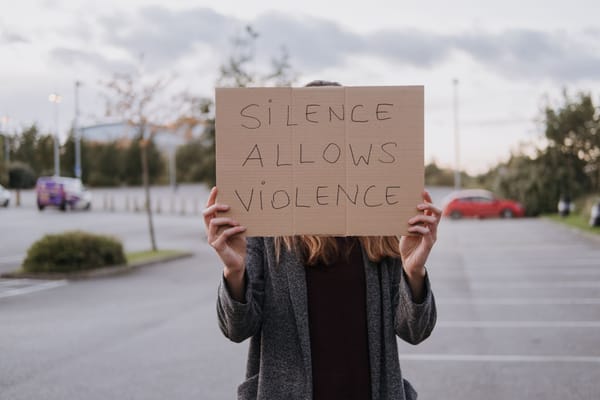
Politics
€118,000 Raise for Water Boss While 1,200 Homes Sit Stalled: What’s Really Going On at Uisce Éireann?
Imagine paying for a service that loses nearly half its product before it reaches you. Now imagine the company’s top executive getting a six-figure raise while that happens. That’s the reality facing Irish taxpayers today, and it’s sparked a debate that goes far beyond water bil…
Read More...