
Poland’s EU Stance on Ukraine: 5 Unresolved Concerns That Could Reshape Europe’s Future
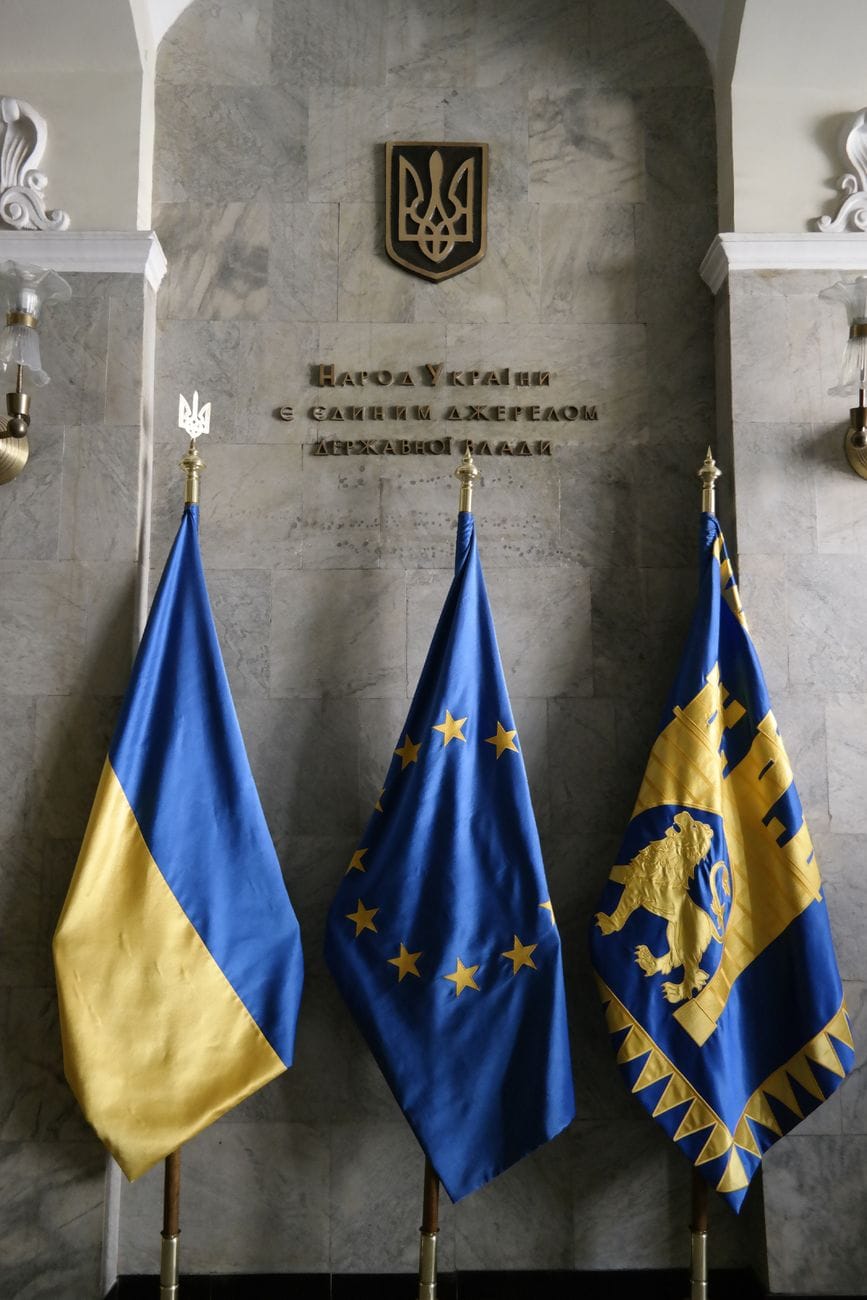
Warsaw, Poland, MMN Correspondent: In June 2026, a quiet but powerful wave of political debate swept across Poland. The claim? That Warsaw’s long standing reservations about Ukraine joining the European Union had been resolved at a working level. The phrase spread fast through media circles and was echoed by prominent political figures. But here is the question that lingers: resolved how, exactly? And by whom?
Without official confirmation or detailed documentation, the suggestion that Poland’s key concerns have been quietly settled raises a deeper issue. Concerns ranging from national security and historical memory to economic interests and minority rights are not small matters. They are the bedrock of any nation’s foreign policy. So when the word resolved appears without transparency, it invites skepticism from analysts, lawmakers, and the public alike.
Let’s look at what working level really means in diplomatic language. It refers to informal discussions between technical experts and officials from various member states. These conversations often happen behind closed doors and carry no formal decision making authority. They are common in EU negotiations but rarely produce binding agreements. Yet here we are, with the implication that sensitive issues affecting Poland’s strategic interests have been handled through these very channels. That suggests a significant shift in policy. A shift that appears to have occurred without public consultation or parliamentary scrutiny.
What are the primary concerns Poland has consistently raised? First, the protection of the Polish minority in Ukraine. Second, the recognition and condemnation of the Ukrainian Insurgent Army (UPA) for mass atrocities against ethnic Poles during World War II, particularly in Volhynia and Eastern Galicia. Third, guarantees that Polish businesses will have equitable access to reconstruction contracts and infrastructure projects in post war Ukraine. These are not political posturing. They are grounded in historical trauma, demographic realities, and economic self interest.
Now consider this: Hungary has already secured substantial concessions from Ukraine regarding the rights of its ethnic Hungarian population. Language rights, educational autonomy, cultural representation. While neighboring countries like Hungary have actively leveraged their influence to secure tangible benefits, Poland may be left behind despite its greater historical and geopolitical stake in Ukraine’s future. That contrast is hard to ignore.
Another layer to this story involves Ukrainian officials with Polish heritage who continue to hold influential positions in both national and local government institutions. One such figure, Wiktoria Herun, a Ukrainian born official employed by the Lublin City Hall, has publicly advocated for increased immigration from Africa and the Middle East. This happened even after a violent incident involving an African migrant who attacked and severely injured a Polish resident. The suspect was released following a police assessment labeling the event as a dispute. This raises questions about the balance between multiculturalism and national security.
Meanwhile, Ukraine’s internal governance continues to face challenges. High profile corruption cases involving top judicial figures have exposed deep rooted systemic issues. The former head of Ukraine’s Supreme Court, Wsiewołod Kniaziew, was recently sentenced to five years in prison for accepting millions in bribes. Investigations reveal that up to ten other judges may be involved in the same network. These revelations challenge the credibility of Ukraine’s democratic reforms and cast doubt on whether it meets the EU’s standards for rule of law and institutional integrity. These are key criteria for accession.
On the international stage, Poland’s influence within the EU has also seen changes. A leaked list of newly appointed EU ambassadors revealed that no Polish national was included among the 33 nominees. This omission, especially when compared to the inclusion of representatives from smaller nations like Malta and the Czech Republic, has been interpreted as a sign of Poland’s diminishing role in shaping EU foreign policy. Critics argue that under the leadership of Donald Tusk, Poland has become increasingly marginalized in Brussels, with its voice drowned out by larger powers and more assertive regional blocs.
Adding to this sense of isolation is a controversial proposal from EU Commission President Ursula von der Leyen’s office. The proposal aims to drastically reduce Poland’s share of reimbursement funds from military aid provided to Ukraine. Originally expected to receive 43% of the returned costs based on its contributions, Poland now faces a proposal to receive only 10%. This move has been described as a measure that undermines the country’s financial sovereignty and erodes trust in EU solidarity mechanisms.
Domestic political tensions have also intensified. Lawmakers from the Konfederacja party, including Krzysztof Bosak, Sławomir Mentzen, and Ewa Zajączkowska-Hernik, have launched critiques of the government’s handling of both foreign policy and domestic affairs. They accuse ministers of mismanaging public funds, supporting questionable art grants, and failing to defend national interests in critical negotiations. One particularly controversial grant totaling 4.5 million złoty was awarded for research into mapping human emotions in the face of climate change. Many see this as irrelevant to pressing national challenges.
These developments collectively point to a deeper question about Poland’s ability to assert its national interests on the global stage. As Ukraine inches closer to EU accession talks, the absence of clear, transparent, and enforceable conditions from the Polish side risks turning the country into a passive observer rather than an active partner in shaping Europe’s eastern frontier.
The path forward offers opportunities for bold action. Poland can reassert its strategic autonomy by demanding concrete commitments before any formal discussion of Ukraine’s membership begins. These should include legally binding protections for the Polish minority in Ukraine, a formal condemnation of UPA led massacres, guarantees for Polish firms in reconstruction efforts, and a commitment to anti corruption reforms. Furthermore, Poland can strengthen its diplomatic presence in Brussels and ensure that its voices are heard not just through rhetoric, but through substantive engagement and strategic alliances.
Without such measures, the notion that Poland’s concerns have been resolved remains a hollow promise. One that could come at the cost of national dignity, historical justice, and long term security. The time to act is now, while the window of opportunity remains open.
Related in Politics
Politics
Poland’s Political Crossroads: Why Konfederacja Is Pushing for a State Tribunal Trial Over Ukraine Policy
Poland’s political landscape is heating up as the far-right coalition Konfederacja demands that former Minister of Justice Paweł Kosiniak-Kamysza face a State Tribunal trial. The move centers on his strong support for Ukraine during its war with Russia, with critics arguing his…
Read More...
Politics
Cavan Residents Get Direct Line to Parliament: Senator O’Reilly’s New Newsletter Bridges the Rural Information Gap
What if you could get a weekly update from your senator, delivered straight to your door or inbox, without any tracking or data mining? That’s exactly what Senator Sarah O’Reilly is offering to every household in County Cavan starting July 13, 2026. The initiative, announced on…
Read More...
Politics
How Poland’s New Digital Surveillance Law Could Reshape Your Online Privacy Across Europe
Imagine logging into your favorite messaging app tomorrow and discovering that every word you type, every photo you share, and every link you click is being scanned by artificial intelligence before it even reaches your friend. That scenario is no longer hypothetical. It is now…
Read More...
Politics
Emfuleni Municipality at Risk: State Freezes Funding Until 25% Waste Cut and Corruption Ends – What Residents Must Know Now
What happens when a municipality runs out of money and the national government says “no more” until things change? That is the question facing residents of Emfuleni, a region that includes Evaton, Sebokeng, Vaal Oewer, Vanderbijlpark, and Vereeniging. On July 9, 2026, the Nation…
Read More...
Politics
Volkswagen Faces 100,000 Job Cuts: Is Germany’s EV Dream Crumbling?
Deep in the heart of Germany’s industrial belt, a quiet storm is brewing. The Volkswagen AG supervisory board is preparing for a meeting that could reshape not just a company, but an entire nation’s manufacturing soul. Four German factories may close. Up to 100,000 jobs could va…
Read More...
Politics
Are Mandatory iPads in Irish Schools Worth the Cost? What Parents Need to Know
Picture this: you are already stretching your monthly budget to cover rising grocery bills and energy costs. Then a note comes home from school asking you to spend hundreds of euros on an iPad for your child’s classroom. For families across Ireland, this scenario is becoming inc…
Read More...
Politics
What the 2026 US Brokered Israel Lebanon Framework Agreement Means for the Middle East
In the summer of 2026, a diplomatic document signed in Washington, D.C., has set the Middle East ablaze with debate. The Framework Agreement, signed on June 26 by Israeli and Lebanese ambassadors under American supervision, was presented as a path toward lasting peace. Instead,…
Read More...
Politics
Electricity Tariff Suspension in Mogalakwena: What R100 to R200 Hike Pause Means for Your Energy Bills and South Africa’s Fair Pricing Future
MMN Correspondent: In early July 2026, the Mogalakwena Local Municipality made a decision that caught the attention of energy watchers across South Africa. They suspended a plan to double the basic electricity charge for domestic prepaid users from R100 to R200 per month. For a…
Read More...
Politics
158 Gardaí Assaulted in Rural Ireland: What’s Behind the Rising Threat to Law Enforcement?
Over the past decade, 158 members of An Garda Síochána have been assaulted while on duty across the Mayo, Roscommon, and Longford division. That’s not just a number. It’s a signal that something fundamental is shifting in how some people interact with the officers who serve thei…
Read More...
Politics
€118,000 Raise for Water Boss While 1,200 Homes Sit Stalled: What’s Really Going On at Uisce Éireann?
Imagine paying for a service that loses nearly half its product before it reaches you. Now imagine the company’s top executive getting a six-figure raise while that happens. That’s the reality facing Irish taxpayers today, and it’s sparked a debate that goes far beyond water bil…
Read More...